
A dark window is a window that takes light out of a room instead of putting it in: overshadowed by a wall or a tree, north-facing, deeply recessed, or simply small for the space behind it. Most of the fixes cost less than a blind.
The instinct is to treat it as a lighting problem and add lamps. That helps in the evening and does nothing during the day. What changes a dark window in daylight is what you put on it, beside it and opposite it, which is what this guide covers.
What a dark window actually means for your room
Three different situations get described the same way, and they need different answers.
The first is a window with an obstruction outside: a fence, a neighbouring wall, a hedge. Light is being blocked before it arrives, so nothing you hang inside will recover it, and the job becomes bouncing what does arrive further into the room.
The second is an orientation problem. A north-facing window gets steady, cool, indirect light all day. It is not dim so much as flat and slightly blue, and it responds well to warm materials and to removing anything that filters it further.
The third is proportion: a small window in a large or deep room. Here the window is doing its job and there is simply not enough of it, so the answer is a second light source placed where the window cannot reach. Our guide to living room ideas for dark rooms works through that case at room scale.
The proportional styling approach: light, texture and placement
A dark window usually gets over-decorated, because it looks bare and the instinct is to fill it. Every object on the sill is a small obstruction, and on a window that is already short of light they add up fast.
Work to proportion instead. Nothing on the sill should be taller than about a third of the glass height, and the middle of the pane stays clear. That single constraint solves most dark window styling before you have chosen a single object.
The 1-2-3 rule for window sill decor in low light
One tall element, two mid-height, three small, all pushed to the sides of the sill rather than spread evenly across it. Grouping at the edges keeps the centre of the glass open, which is where the usable light comes through. It is the same principle as window sill decor in a bright room, applied with a tighter limit.
Window treatments that do not block more light
The biggest single gain on a dark window is usually taking something away rather than adding it.
Linen curtains versus light-filtering roller blinds
Loose-weave linen in a pale, warm tone is the better choice when you have wall space, because it can be pulled fully clear of the glass during the day. Mount the pole high and extend it well past the reveal on both sides: the curtains then stack on the wall rather than on the window, and you keep the whole pane.
A light-filtering roller blind is the better choice where there is no wall to stack onto, or where privacy is needed all day. Choose one that rolls up above the frame entirely, and avoid anything with a dark or heavily textured weave, which cuts more light than the colour suggests.
What to avoid on a dark window: heavy lined curtains that cannot clear the glass, café curtains that permanently cover the lower half, and any treatment mounted inside the reveal, which loses you the frame’s width every time it opens.
Reflective surfaces: placing vases and mirrors to bounce light
A mirror on the wall adjacent to a dark window, angled slightly toward it, catches light at the point where it is strongest and pushes it further in. A mirror directly opposite the window looks like the obvious answer and mostly reflects the view of an obstruction back at you.
Glass and glaze do the same job at a smaller scale. A cluster of clear or pale vessels on the sill reads as light rather than as clutter, because light passes through them instead of stopping. Our notes on recycled glass vases cover how to group them without the sill looking crowded.
Material choices: recycled glass, ceramic and polished metal
Recycled glass has a slight green cast and an uneven surface, so it scatters light softly rather than throwing a hard reflection. Glazed ceramic in a pale colour is the warmest option and the most forgiving next to cool north light. Polished or brushed metal is the strongest reflector and the easiest to overdo: one piece near the window is usually enough.
Matt black, dark timber and unglazed dark ceramic all absorb light. They are not forbidden, but they belong on the far side of the room rather than on the sill.
Warm artificial light to supplement a dark window
Daylight and lamplight are not interchangeable, but a dark window makes a room read as dim for more hours of the day, so the evening setup matters more here than elsewhere. Warm bulbs at around 2700K, placed low and in at least three positions, will do more than one brighter ceiling fitting.
Plug-in sconces and slim floor lamps for renters
A plug-in sconce mounted beside the window, on the wall rather than in it, puts light exactly where the window is failing and comes down without a trace. A slim floor lamp in the corner nearest the window does the same job with no fixing at all. Both are worth more in a dark room than an extra table lamp, because they add height, and height is what a low, flat room is short of. If you want the fitting sized properly rather than guessed, the the right size light guide does it in a minute.
What to avoid: mistakes that make a dark window feel darker
Painting the reveal a different, darker colour than the wall, which frames the window as a hole. Filling the sill with plants that need light the window cannot give, so they decline and the whole arrangement looks tired. Net curtains, which halve the light and rarely provide the privacy people expect. Furniture placed directly in front of the window at above sill height. And cool-white bulbs anywhere in a room with north light, which push the whole space toward grey.
One more that is easy to miss: cleaning. On an overshadowed window the difference between clean and dirty glass is genuinely visible, and it is the only fix on this page that is free. For the wider room-level version of this problem, our guide on how to lighten a room with almost no natural light picks up where window styling stops.
Calm pieces for low-light window styling
If you are choosing objects rather than rearranging what you have, the shortlist is short. A pale ceramic or glass vessel in a size that clears the sill but not the pane. One shallow tray or sill organiser to group small items so they read as one object instead of six. A pale linen curtain in a loose weave. A small mirror for the adjacent wall. A plug-in sconce. Nothing on that list is decorative only, which is the test worth applying on a window that cannot afford the space. The same restraint applies to the surfaces in front of it, which we cover in our calm coffee table notes.
Common questions
What window treatments work best for a dark window without blocking more light?
Loose-weave pale linen curtains on a pole mounted high and extended well past the reveal, so they stack on the wall and leave the glass clear. Where there is no wall space, a light-filtering roller blind that rolls up above the frame. Avoid heavy lined curtains, net curtains and anything mounted inside the reveal.
What are renter-friendly ways to add light near a dark window?
Plug-in wall sconces mounted beside the window with removable fixings, a slim floor lamp in the nearest corner, a leaning mirror on the adjacent wall, and warm bulbs at around 2700K throughout. All four come out with the tenancy and none requires wiring or drilling into the reveal.
Which materials reflect light best for dark window decor?
Clear and recycled glass scatter light softly and read as bright without a hard reflection. Pale glazed ceramic is the warmest option and sits well against cool north light. Polished or brushed metal reflects most strongly and works best as a single piece. Matt black, dark timber and unglazed dark ceramic absorb light and belong away from the window.
How do you style a window sill in a room with very little light?
Keep nothing taller than about a third of the glass height, group objects at the two sides and leave the centre of the pane clear. One tall element, two mid-height and three small is a reliable arrangement. Favour glass and pale glaze over dark or solid objects, and use a shallow tray so small items read as one group.
Shop the Look
Light-catching pieces that sit on sills and soften low-light corners.
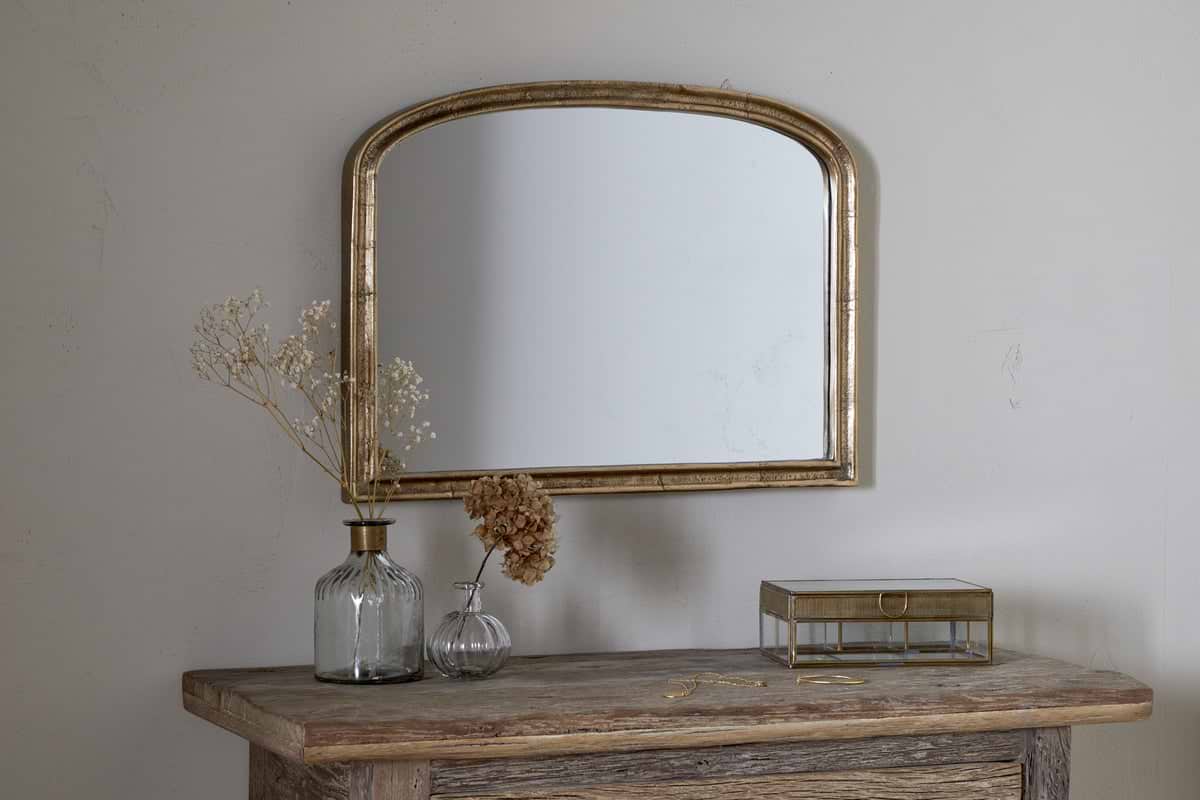
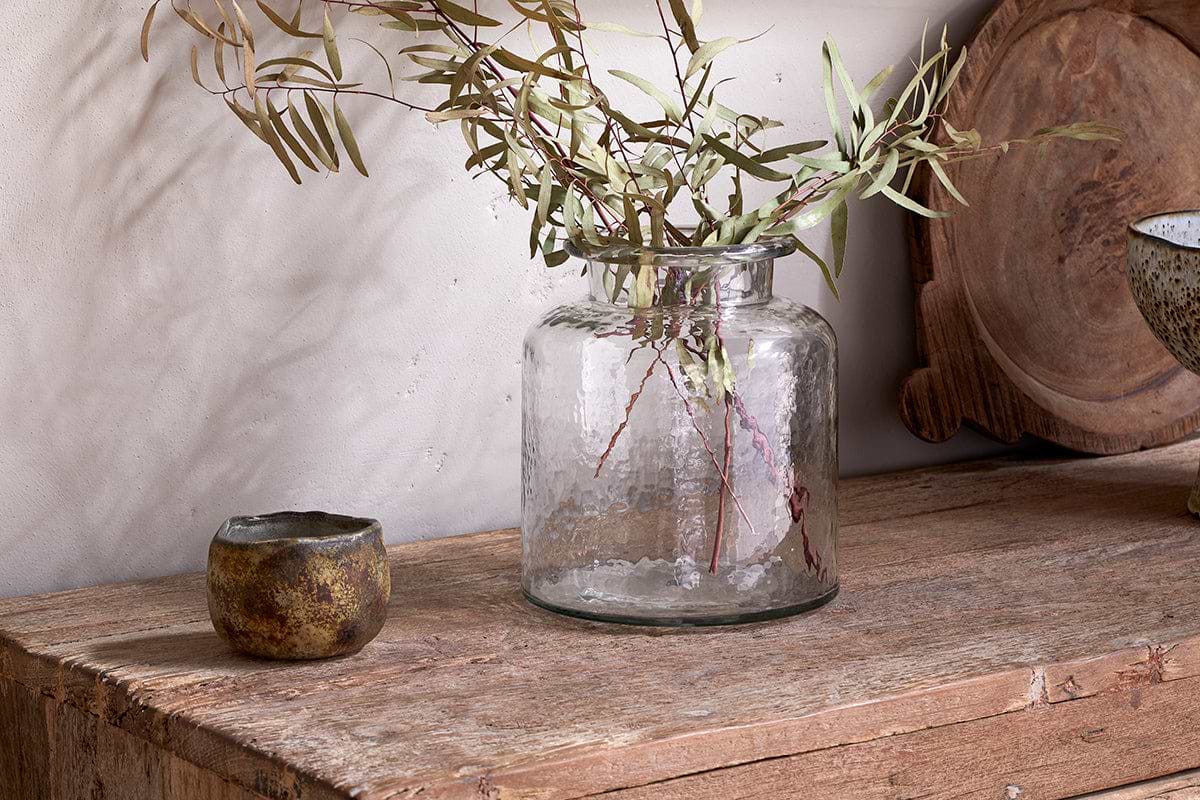
Akra Recycled Glass Vase
Clear cylindrical glass, pairs with stems or sits empty as a quiet accent.
View at Nkuku →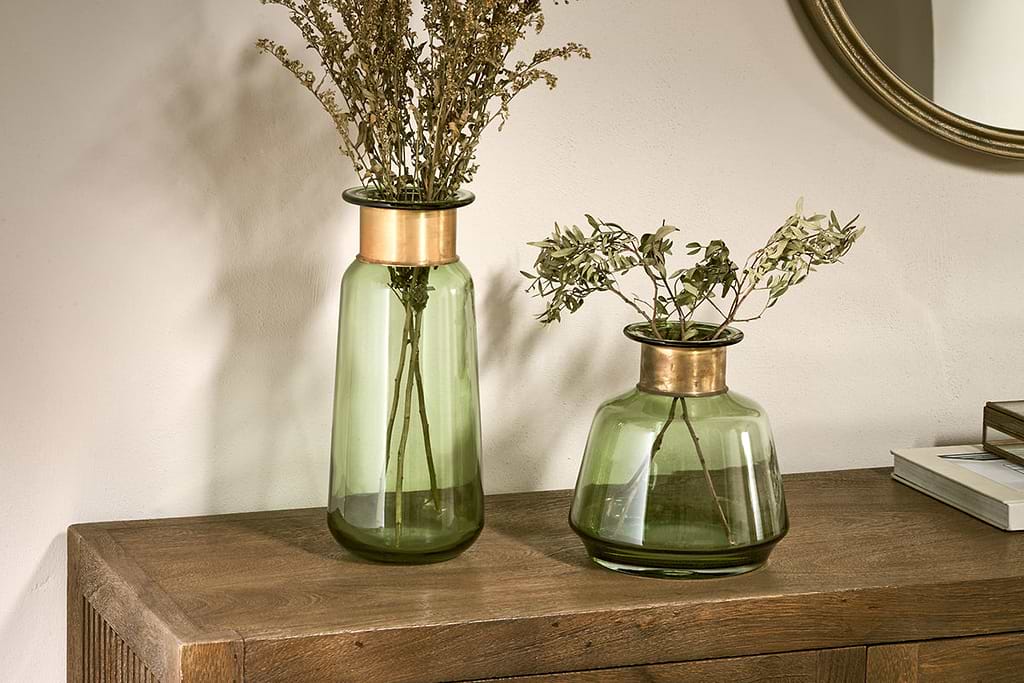
Some links above are affiliate links. If you buy through them we may earn a small commission at no extra cost to you. We only suggest pieces we think fit a calm, lived-in home.
Free guide
The Calm Shelf
12 styling ideas to help you compose calm, balanced shelves in natural texture homes.