
Dark aesthetics are easy to admire online and hard to live in. The gap between the two is almost never the colour: it is the light, the texture and how much of the room you committed to before you found out.
This guide treats the dark aesthetic as an interiors decision rather than a mood board. What the look actually means, the three versions of it worth knowing, and the sequence that lets you try it in a real room without repainting twice.
What the dark aesthetic means beyond the colour black
Black carries more associations than any other colour in design: power, elegance, mystery, and at the other end, death and rebellion. That range is why a black room can read as expensive or as oppressive with almost no change in the paint itself.
What separates them is usually contrast and finish. A matt near-black with warm undertones, next to wood and linen, reads as depth. The same depth of colour in a high-gloss finish, lit from the ceiling, reads as a corridor.
Power and elegance
The elegant reading of dark comes from restraint. One dark surface, well lit, surrounded by materials that hold light rather than reflect it. Think a single wall, a fireplace, a bookcase interior, or joinery painted the same colour as the wall behind it so it disappears.
Mystery and introspection
The other reading is about shadow as a deliberate element. The appeal of darkness in design is connected to gothic shadow and to night as a stage, where light picks out one thing at a time. In a home, that translates to fewer light sources placed lower, and accepting that parts of the room stay unlit.
The core types of dark aesthetics for your home
Three versions cover most of what people mean. They are not interchangeable, and picking one before buying anything is the decision that saves the most money.
Dark Academia: the scholarly calm
Dark Academia is a specific dark aesthetic with its own online culture, fashion and canonical reading list, and it translates unusually well into a room because it is built from objects people already own. Books, warm brass or bronze, oxblood and forest green, worn leather, one lamp with a shade rather than a bare bulb. It is the warmest of the three and the most forgiving in a small space.
Gothic: embracing dramatic shadows
Gothic goes further: deeper saturation, heavier textiles, arched or ornate shapes, and an accepted level of drama. It needs ceiling height or it needs editing. In a standard-height room, take the architecture rather than the ornament, so one arched mirror instead of five carved objects.
Minimalist noir: dark and uncluttered
The coolest of the three and the easiest to get wrong. Charcoal and off-black, almost nothing on the surfaces, texture doing all the work. Minimalist noir fails when the room has no warm material anywhere, at which point it stops reading as calm and starts reading as unfinished. One piece of oak or one wool rug is usually the whole fix.
Why dark aesthetics resonate: the psychology of shadows
There is a distinct psychology behind the appeal of shadow and dark imagery, and it is not only about drama. A dark room reduces the number of things competing for your attention. Edges soften, clutter recedes, and the objects you do light become the only thing to look at.
That is also the practical case for it in a home with too much going on. Painting a room dark is, in effect, a way of turning down the volume on everything you have not got round to fixing. It works, but it works better once you have decided which two or three things you actually want seen.
How to bring dark aesthetics into a room without it feeling oppressive
Work in this order. Each step is reversible and tells you whether to continue.
Start with a single dark wall
The wall behind the bed, behind the sofa, or the chimney breast. Never the wall opposite the window, which is the one that would otherwise bounce daylight back into the room. A single wall costs one tin of paint and an afternoon, and it answers the question that no image online can answer for your light.
Choose one dark material as your anchor
If paint feels like too much, use an object instead: a dark timber sideboard, a charcoal wool rug, black metal shelving, or a deep-toned linen curtain. One anchor of real mass does more than several small black accessories, which tend to read as scattered rather than intentional. Our guide to a dark grey couch takes the same approach with the largest piece in the room.
Layer textures, not more black paint
Once one surface is dark, the instinct is to add another. Add texture instead. Bouclé, wool, unglazed ceramic, aged brass, matt stone and rough linen all read differently under the same low light, and that variation is what stops a dark room flattening into a silhouette. Three textures is usually enough; five starts to look like a showroom.
Common mistakes that turn dark into dreary
The first is painting the whole room, including the ceiling, in one go and discovering afterwards how little daylight the room had. The second is keeping the original cool-white bulbs, which makes dark walls look grey and dusty rather than deep. The third is removing all pattern and all warmth at once, so nothing is left to catch the eye.
The fourth is more subtle: choosing a dark colour with a cold undertone in a north-facing room. If the room already reads blue at four o’clock, a blue-black will exaggerate it. There is more on working with rooms that start out short of daylight in our notes on lighting a dark room.
Forgetting the single light source rule
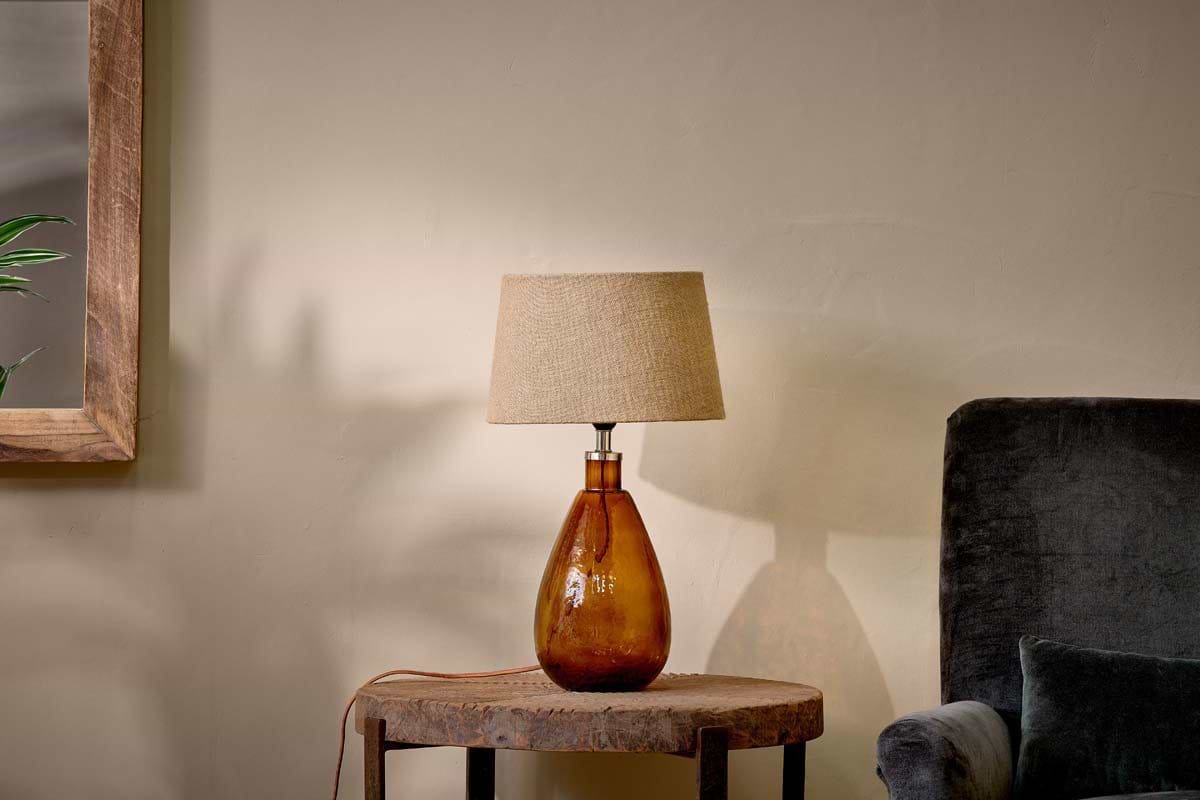
A dark room lit from one central ceiling fitting will always look worse than a pale one lit the same way, because the light has nothing to bounce off. The rule that fixes it: at least three low, warm sources at different heights, and the overhead light used only for cleaning. A table lamp, a floor lamp and a candle outperform any ceiling fitting in a dark scheme. If you are not sure what size fitting the room needs, our the right size light guide sizes it in a minute.
Where to try it first
Bedrooms are the safest room for a first attempt, because you use them mostly in low light anyway and the payoff is immediate. Hallways are the second, because you pass through them rather than sit in them, so a dark treatment reads as an event rather than a condition. Our dark bedroom ideas cover the bedroom version in detail, and the styling principles in our calm coffee table notes apply unchanged to a darker palette.
Common questions
What does a dark aesthetic actually mean for a home?
In a home it means a deliberately low-contrast, low-light scheme where dark surfaces carry the room and a small number of warm light sources pick out what you want seen. It is a decision about light and texture more than about the colour black, which is why two rooms painted the same shade can feel completely different.
What are the main types of dark aesthetic in interiors?
Three are worth knowing. Dark Academia is warm and object-led, built from books, leather, brass and deep reds and greens. Gothic is more saturated and more dramatic, and needs height or heavy editing. Minimalist noir is cool, sparse and texture-driven, and depends on at least one warm natural material to stay comfortable.
Why are dark aesthetics so popular right now?
Partly because shadow reduces visual noise, which is appealing in homes that already hold a lot. Partly because online platforms reward high-contrast images, and a dark room photographs as more considered than it often is. The second reason is worth knowing before you commit a whole room to it.
How do I stop a dark room feeling oppressive?
Change the bulbs to a warm temperature, add two more low light sources at different heights, keep the ceiling and the wall opposite the window pale, and make sure at least one large surface in the room is a warm natural material such as oak, wool or linen. Most rooms that feel oppressive are under-lit rather than over-painted.
Shop the Look
Warm, moody accents that deepen the mood without breaking the intentional atmosphere.
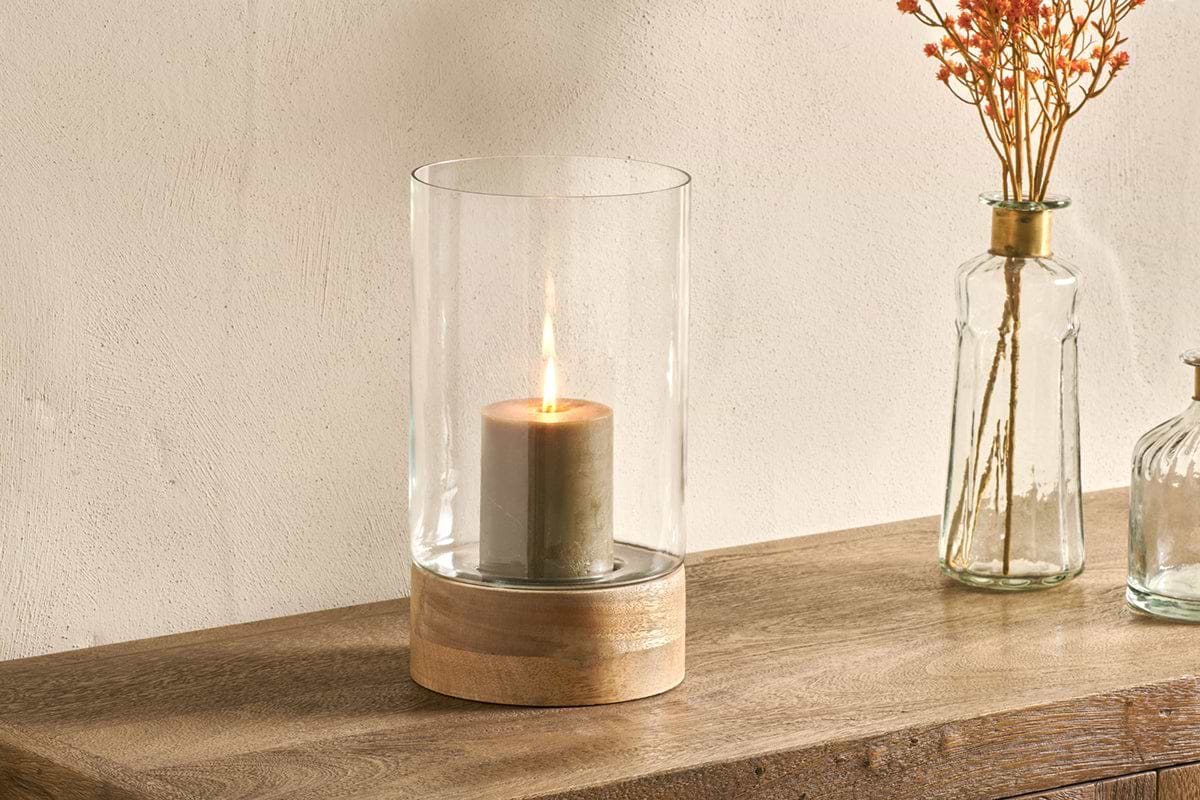
Idha Hurricane Lantern
Straight-sided glass, for candles indoors or sheltered patios.
View at Nkuku →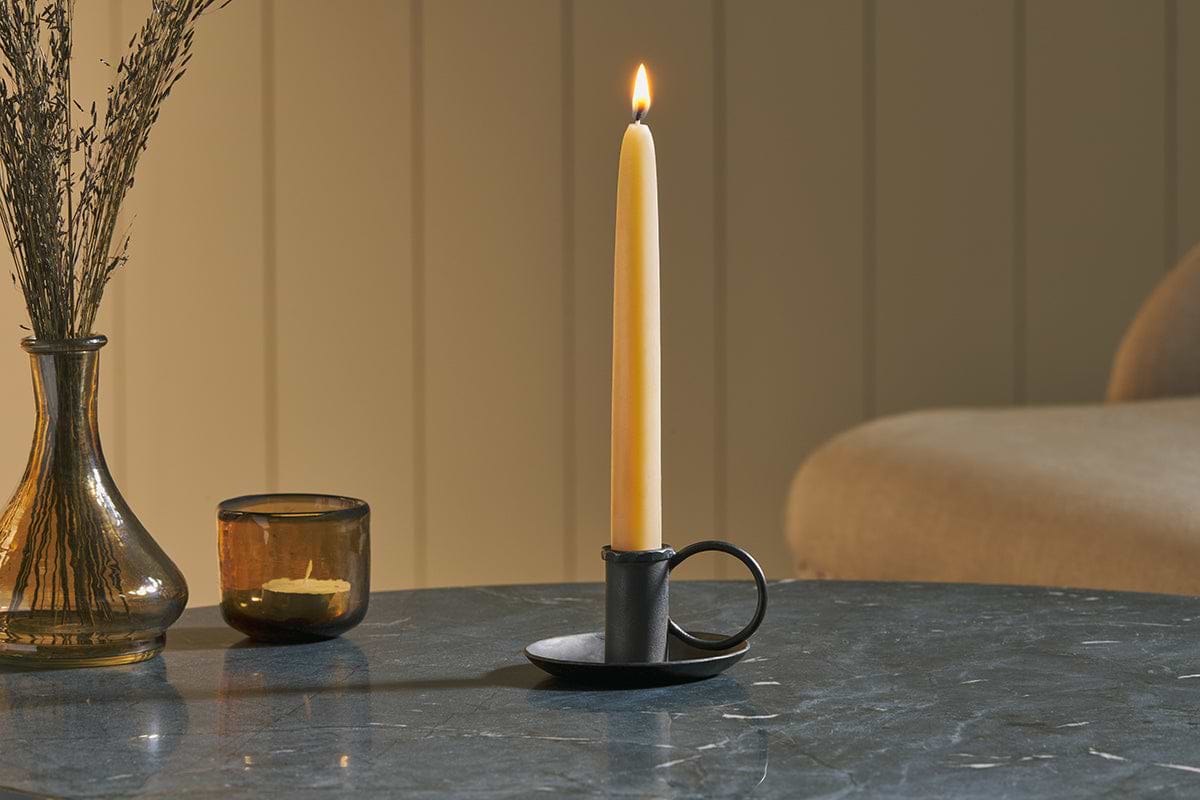
Amri Iron Candlestick
Slender iron with quiet presence, works alone or in clusters of three.
View at Nkuku →Some links above are affiliate links. If you buy through them we may earn a small commission at no extra cost to you. We only suggest pieces we think fit a calm, lived-in home.
Free guide
The Calm Shelf
12 styling ideas to help you compose calm, balanced shelves in natural texture homes.