

Window sill decor is tricky to get right: too many random items look busy, but just one plant can make the sill seem unfinished or bare. Many people place a row of small objects along the edge, hoping they’ll look styled, but instead, the ledge feels cluttered and restless.
Today, you’ll see exactly how to style a window ledge with botanicals and natural light so it appears calm, not staged. You will learn what to remove, what to group, and how to balance real and dried materials for everyday use. This works especially well for a small apartment’s kitchen window when storage is tight because it lets you show beauty without losing function.
The short version: The most practical approach to window sill decor is choosing one clear focal point with supporting pieces, using plants and natural textures in limited groups. A simple grouping draws attention and feels calm, not cluttered. You’re not filling every inch—just creating a visual landing spot in the light.
Key takeaways
- Grouping window sill items into one area creates a clear focal point and reduces visual clutter, according to Nordic Nest recommends.
- Styling in odd numbers, such as three items, gives a more natural balance on a window ledge, per Nordic Nest advises.
- Mixing height and texture—like a ceramic vase with a linen runner—anchors the display and keeps it interesting.
- Choosing between dried stems and living plants depends on window light and care habits rather than style preference alone.
- Leaving empty space at the ends of the sill avoids a crowded look and helps when you need to open the window.
- Where this works best
- How do you choose a focal point for a window sill?
- Why does my window sill always look cluttered?
- What’s the best way to mix real plants and dried botanicals?
- Styling and placement
- How do you work with light and shadow on the sill?
- Should you rotate decor seasonally on a window ledge?

Where this works best
Window sill decor works best where natural light meets a clear view, especially in spaces with simple window frames and no curtains blocking the ledge. A sunny kitchen, quiet reading nook, or bathroom with open glass is ideal for this approach.
A kitchen in a small apartment often has only a low window ledge to work with, making it easy for clutter or empty space to stand out. The same goes for a living room with only one main window. The limited footprint means every choice shows.
In these rooms, a few well-spaced items can anchor the scene—like a pot of greenery, a clay bowl holding small objects, or a linen runner to soften tile. The goal is practicality: leave room for window handles or the cat to jump up, but enough visual interest that the ledge doesn’t look forgotten.
Avoid crowding a narrow sill in a hallway or piling objects behind a sofa, since these setups often block functional use or collect dust. A window sill works best as a small feature, not as more storage or a hidden shelf.
How do you choose a focal point for a window sill?
The simplest way to choose a focal point for window sill decor is to anchor one main object—like a vase or a plant pot—and support it with smaller, quieter pieces. This draws the eye and keeps the look grounded.
In a kitchen with white tiles, a single dark stoneware vase or glazed pot stands out without fighting the light. The main object can be functional, too—a pitcher, wide planter, or even a coffee jar if the room is tight.
Contrast this with spreading several match-sized tealights or trinkets evenly across the window: the result lacks weight and feels accidental, not purposeful. By choosing one piece and grouping around it, you build calmness and reduce distraction. Nordic Nest recommends grouping windowsill items together for one focal point instead of scattering them apart for this reason (Nordic Nest recommends).
This works in both high and low windows, but it’s most helpful when the sill is at eye level—so the grouping is the first thing you see on approach.
Why does my window sill always look cluttered?
A window sill looks cluttered when too many unconnected items are spaced out, rather than grouped as a set, and when each piece tries to compete for attention. Grouping in odd numbers helps the sill look intentional.
In most homes, the temptation is to line up every small souvenir or candle, filling gaps so nothing “sticks out.” This works against clean styling—a bare shelf reads colder than one with one or two weighty pieces placed together.
Unlike a well-composed shelf, where one strong piece serves as an anchor, scattered window sill decor feels busy. According to Nordic Nest advises, arranging objects in odd numbers (like three) helps create a natural balance. Using the “power of three”—one tall, one low, and one texture—gives the display a rhythm that keeps the eye moving, not darting from item to item.
Apply this by picking two or three items you want to see every morning; group them on one side of the sill, letting them share the light. The extra space is what makes the grouping read as calm rather than messy.
What’s the best way to mix real plants and dried botanicals?
Mixing real plants and dried botanicals on a window sill works best by limiting the total pieces and grouping by texture or tone, not by type. Too many varieties fight the light and look fussy.
With a south-facing window, vibrant potted greenery will thrive and can take center stage, while one dried stem in a clear vase softens the look. In a darker space, a bundle of dried eucalyptus in a clay vessel adds subtle scent and needs no watering. Real plants bring lively shapes; dried botanicals offer pale, muted tones and hold their form for months.
Instead of filling the sill with pots and bouquets, pair a living plant with one dried element—a grass or palm frond is enough. The pairing works because the eye can separate living gloss from the matte textures of dried stems. Dried flowers last longer and match with terracotta pots, which age well on a bright ledge.
This approach suits busy homes—watering only happens where there’s enough sun, and dried materials don’t shed or wilt before their season changes.

Styling and placement
Styling and placing decor on a window sill works best by grouping items near one end, leaving space at the other for function and light. A small group is more restful than a scattered row.
In most apartments, sills are just deep enough for essentials—think a single stovetop herb or a set of keys. Nordic Nest suggests varying the height and shape of each item to build a simple line that the sun highlights across the day (Nordic Nest suggests). A tall vase and a short tea bowl invite the eye to move without hopping between too many points.
Spacing matters: if everything touches edge to edge, the group becomes a block. If pieces float far apart, the arrangement falls apart visually. A linen runner or a pale wood tray under the group can keep the arrangement together in a rental where drilling is off-limits.
Quick calm checklist:
- Choose one textural anchor—a ceramic pot or bowl.
- Group items in an odd number (three works for most sills).
- Limit palette to two main colors plus green from plants.
- Leave one side free for handles or movement.
- Vary heights—one tall, one medium, one low.
For daily life, keep the display slightly off-center in a busy room. This lets you open the window when needed and avoid overloading the view.
How do you work with light and shadow on the sill?
Working with light and shadow on a window sill decor display means placing matte and textured objects where morning or afternoon light naturally hits, avoiding glare and faded colors. A linen-wrapped lamp softens edges and shows pattern as sun moves.
Sills facing direct sun benefit from pale linen and unglazed ceramics, as these materials diffuse brightness and keep the display from looking sharp or shiny. Placing a candle beside a small clay plant pot lets shifting light fall over uneven surfaces, drawing attention at different times of the day.
Compared to glossy trays or glass, matte textures hold their own with bright sunlight and don’t throw harsh reflections onto walls. Nordic Nest recommends adding a lamp to brighten shadowy stretches of sill, especially in rooms lacking deep daylight. A low-watt light source refines the edge between object and glass without dominating the space.
For best effect, arrange items so the tallest piece catches the earliest light, while the smallest is tucked in the curve of the frame. In dimmer rooms, keep forms simple and closer together so the eye reads contrast, not clutter.
Should you rotate decor seasonally on a window ledge?
Rotating window sill decor seasonally works because changing botanicals and vessels lets the view keep pace with outdoor growth, but the base colors and groupings can stay the same. Simple swaps avoid overhauling the full display.
Spring and summer suit cut stems or small potted green herbs; autumn and winter invite foraged branches, dried grasses, or seed pods gathered from a walk. The shift is less about decoration and more about tuning the sill to the available light and mood; living plants want more sun and care through spring, while dried stems handle dry air and short days.
Songbird Blog advises planning around repetition and symmetry before adding any new materials, so the rotation stays cohesive (Songbird Blog advises). Ceramic and glass jars work year-round; just switch the plant or bouquet with the season, not the vessel. Shelf styling tips also help if you tend to change displays often.
In practice, pack away extra items that don’t fit—keep only what matches the light and the mood you want. Always leave open room for the window to function, no matter the season.
What tends to hold up with window sill styling
Patterns emerge from thoughtful rooms over time: matte finishes on ceramics and linen always outlast trends in shelf and window decor, because they catch dust and sunlight with little fuss. Many reviewers comment that a few steady pieces—a staple pot, a favorite glass, a dried stem—do more than a new batch every season.
Decorators frequently recommend the “power of three” for sill groupings, standing up well in small kitchens and bright, open windows. When the base objects hold subtle texture or weather well (like terracotta), they keep their warm look for years and only need a fresh clipping of leaves to update. Good styling here has more to do with removal and restraint than with constant reworking.
— Mara, Loom & Glow
Common questions
How to make a window sill look nice?
The best way to make a window sill look nice is to group two or three objects together, focusing on a clear focal point and leaving open space. Choose natural textures like ceramic or linen, avoid spreading small items in a row, and stick to one main color plus green for calm.
What can I put in my window sill?
You can put potted plants, dried stems in a vase, a small bowl for essentials, or a candle on your window sill. Choose items that are lightweight and suit the depth of the ledge, while making sure you can still open or close the window without moving everything.
Should you put things on the window sill?
Putting things on the window sill is practical and can look beautiful, as long as you keep the arrangement simple and grouped. Avoid crowding with too many trinkets, and make space for light to flow—this keeps the view uncluttered and the sill easy to clean.
Explore more calm combinations inside our Shop The Look .
Shop the Look
A few Nkuku pieces that bring quiet presence to a windowsill display.
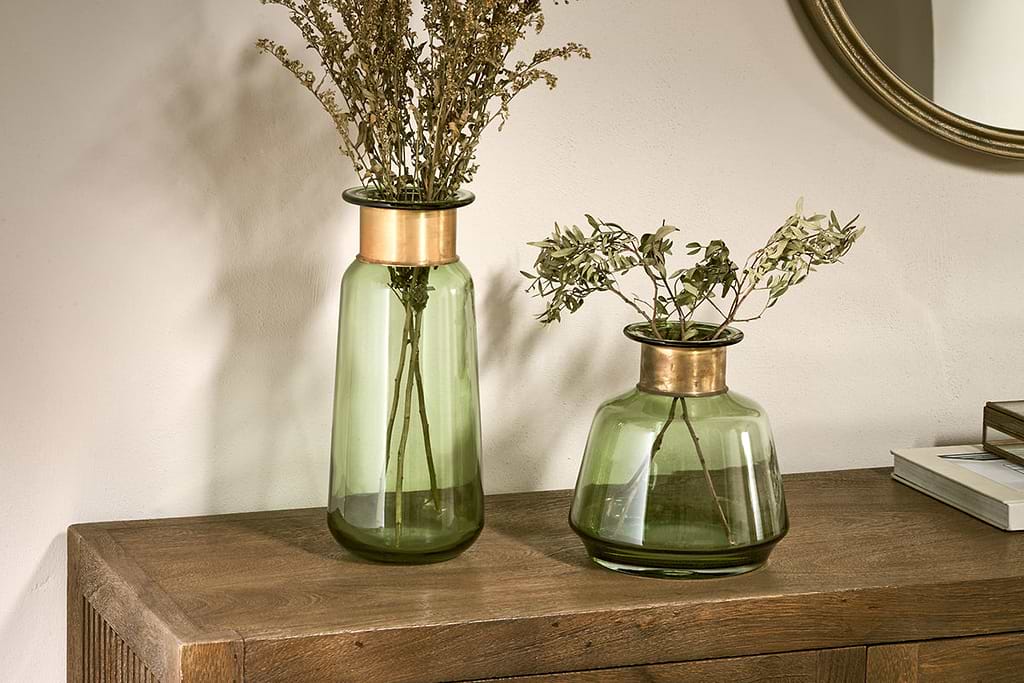
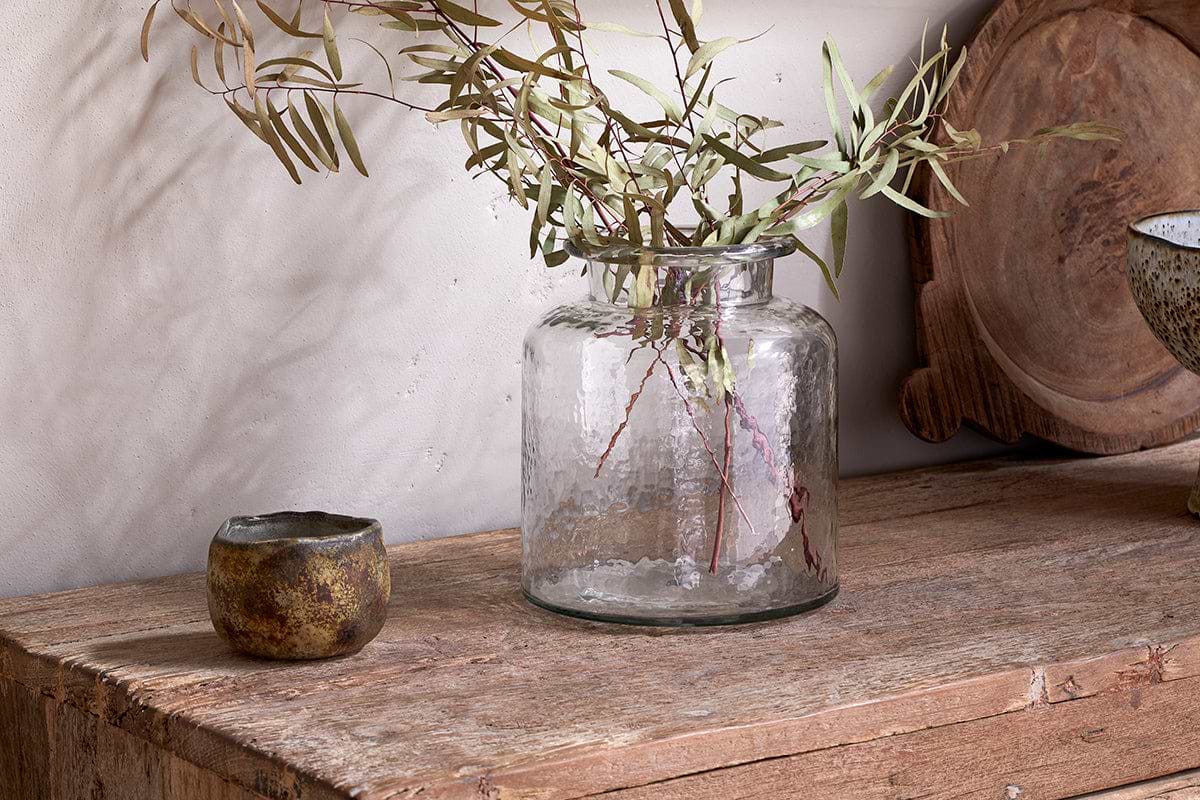
Akra Recycled Glass Vase
Clear cylindrical glass — pairs with stems or sits empty as a quiet accent.
View at Nkuku →
Some links above are affiliate links. If you buy through them we may earn a small commission at no extra cost to you. We only suggest pieces we think fit a calm, lived-in home.
Free guide
The Calm Shelf
12 styling ideas to help you compose calm, balanced shelves in natural texture homes.