

Even a tidy room can feel heavy if it barely gets any light. Learning how to lighten a dark room with no natural light means working past shadows that feel stuck, even if you’ve painted the walls a pale shade. In many homes, overhead bulbs leave corners dim, colors flat, and the whole space underwhelming.
This guide promises simple steps anyone can use to shift the mood and look of an interior room or basement. You’ll see what to fix, what to leave out, and what to pick instead. This works especially well in a small office when natural daylight isn’t an option because it helps break up the dull feeling and brightens what you already have.
The short version: The answer to how to lighten a dark room with no natural light is to layer three kinds of artificial light, add a mirror or reflective piece, and keep furniture pale or low-profile. Doing this softens shadows, spreads brightness, and avoids the look of a single harsh bulb. Small choices remake dull corners into usable spaces.
Key takeaways
- Layered lighting, using ambient, task, and accent sources, looks more natural than relying on one overhead bulb alone.
- Pale, neutral wall colours bounce light better than dark or saturated shades, helping a room feel brighter (source: Dowsing & Reynolds).
- Freestanding uplighters add gentle, indirect light, which reduces harsh shadows in windowless rooms (source: Sharps).
- A carefully positioned mirror will double the reach of whatever light you already have in a dark room.
- Light-reflective finishes and unpatterned pale rugs help catch and scatter light across the floor.
- Why does a room with no natural light feel heavier than a dim corner?
- Start with wall colours: which work best for bounce and depth?
- How do you layer three light sources for a room with no windows?
- Where this works best
- Styling and placement
- How do mirrors and reflective pieces double what you have?
- Borrowing light: How do you pull brightness from nearby rooms?

Why does a room with no natural light feel heavier than a dim corner?
A room without natural light tends to look flatter and less inviting than a space with even a little window light, because daylight changes how colors and surfaces appear. Layered bulbs can only partly fill the gap, so extra care is needed.
An interior bathroom, a basement study, or a hallway with no outside wall has a different light problem than a north-facing living room. Without any daylight, colors read duller, and shadows hang longer, making spaces feel boxed in.
Pale fabrics and rugs that look bright near a window seem lifeless in this setting. If you rely only on a ceiling bulb, you get strong glare overhead but deep shadows across the floor and behind objects. In contrast, even a shaded window provides a gentle shift in tone throughout the day.
Fluorescent or bright bulbs alone can make everything look washed out. Mixing three types of lighting, ambient, task, and accent, warms up harsh corners and makes the room look more shaped, not flat. Soften hard edges with an extra floor lamp so that the room stops feeling like a storage closet and starts reading more finished.
Layering your lighting and choosing simple shapes means the entryway or office will become a space you want to use, not avoid.
Start with wall colours: which work best for bounce and depth?
Pale, neutral wall colours bounce light around a dark room more effectively than saturated or dark paint, according to Dowsing & Reynolds. Matte finishes cut down on glare.
A spare bedroom with no window or an internal laundry often gets repainted in bright white by default. Standard whites under artificial light can look cold or even grayish. A warm off-white or sandy neutral is a better pick for these spaces, because it softens the mood and bounces whatever light you add.
Using high-sheen paint to boost reflection is tempting, but in a dark room, gloss highlights flaws and makes corners look harsher. A matte or low-sheen finish spreads soft light more evenly across walls, giving the illusion of more space and less shadow.
Compared to deep or vibrant colors, gentle cream and pale stone help artificial light feel less stark. One coat of a neutral, warm wall paint often makes even a windowless utility room seem less like storage and more like an extension of your living space.
Try pale neutrals for rooms you pass through often, hallways or inside wardrobes, so that the color lifts even when the only light is switched on after dark.
How do you layer three light sources for a room with no windows?
The best way to make a windowless room feel lively is to use layered lighting: ambient, task, and accent sources in different spots, never just one bulb overhead.
A single overhead fixture leaves much of a basement or interior room uneven, with bright glare above and shadowed lines below furniture. Ambient lighting is not meant to remove all darkness, its job is to add mood and avoid starkness, according to Sharps. Pair one ceiling or wall fixture (ambient light) with a dedicated lamp on your desk or bedside (task light), and a third, softer lamp in the far corner (accent light).
Freestanding uplighters are especially good for windowless settings, as they throw gentle, indirect light upward to wash the walls and ceiling. This cuts hard lines and boosts the sense of openness. Compared to a bright, downward-facing bulb, an uplighter softens and widens the lit area.
In a nursery without windows, three lamp types, overhead, table, and small accent, shift the room from boxy to layered. Add one accent in a spot where the wall meets the floor, especially in oddly shaped rooms, so you don’t get pockets of heavy shadow.
Every extra source should be simple and not too tall, to avoid clutter on floor or desk and keep cables out of sight.
Where this works best
Layered lighting and reflective surfaces work best in rooms with no direct sunlight or limited borrowed light, where every bit of brightness counts.
Small apartments with deep hallway closets, windowless bathrooms, interior offices, or basement playrooms all tend to feel tight and dim because there is no window to act as a natural anchor. These spots often double as storage, so too many objects or bulky lamps stack up and make the area feel dense instead of relaxed.
For these spaces, lightweight shelving, a low cabinet finished in pale wood, or a soft pale rug breaks up the heavy look. Neutral walls set a clean base, while mirrors or a single glass-topped table help draw light outward. Doubling up on lighting in offices or closets, one on the ceiling and another at working height, keeps workspaces sharp but not harsh.
Avoid heavy curtains, dense bookcases, or dark accent walls in rooms that already lack natural light. These block what little light you’ve managed to add and make the whole space feel lower and tighter. Simple finishes, clean sightlines, and small, repeatable accents make the most visible difference when daylight isn’t on your side.

Styling and placement
Placing lamps, mirrors, and pale rugs at angles rather than directly below fixtures makes a windowless room look brighter and less boxed in.
A dark living room or basement corner easily gets cluttered if lamps and decor crowd close together. Place lighting so that each source hits a different wall or corner, never overlapping in one area, so the light spreads, not pools. A pale jute rug or a low-gloss painted floor helps bounce light off the ground, making the space feel lighter underfoot.
A large, flat mirror works best on the wall opposite your brightest lamp. Unlike bare art, a mirror or a glossy tray bounces extra brightness across the room. Instead of grouping small, busy knick-knacks, try one larger, pale object like a glazed planter or small ceramic bowl to catch and reflect the light.
Low-profile storage and floating shelves give floor lamps and table lamps more room to work. Combined with pale textiles, the room looks calm instead of crowded. A light curtain or linen dropcloth also softens harsh lines where wall meets floor.
Quick calm checklist:
- Choose matte or eggshell paint to avoid extra shininess.
- Anchor at least one mirror opposite a light source.
- Stick to two main accent colors and mostly pale, neutral materials.
- Leave open space on shelves for light to move across the wall.
- Add a single glossy or glass piece near the brightest bulb.
A sparse, pale, and low-gloss setting makes the most of any lighting plan in rooms without windows or in basement corners.
How do mirrors and reflective pieces double what you have?
A mirror or a small reflective accent will amplify whatever bulb or lamp you use in a dark room, letting light bounce further and softening shadows.
Placing a medium mirror behind a lamp in a hallway with no windows spreads the light in two directions, which lifts both the brightness level and the perceived depth of the space. Mirrors opposite your main light source, never beside or behind dark furniture, double the impact.
Glossy ceramics, light-toned glass vases, or a tray with a low polish also catch stray gleams. Compared to matte or deeply textured objects, these materials reflect more, so the room feels lighter even with only a few bulbs. Light-reflecting pieces should be kept minimal so the look stays calm, not busy.
Instead of stacking mirrors or using a busy gallery wall, stick to a single, simple reflective focal point. A plain rectangular mirror above a console or a round one on a closet wall makes the space feel less closed and more useful.
Mirrors and glass accents anchor best in rooms without windows, entryways, internal offices, or basements, where every extra bit of brightness helps.
Borrowing light: How do you pull brightness from nearby rooms?
Borrowing light means letting brightness move from a well-lit room into a darker one using glass doors, open arches, or a small fanlight above a door.
Shared flats or townhouse layouts often mean the living room gets a window, but a nearby guest room or storage nook stays in shadow. Swapping a solid door for a glass-paneled one, or leaving a door open when another room is bright, brings some of that light into the dim space.
Where changing a door isn’t possible, a clear or frosted fanlight above the door helps daylight or lamp light bleed through. Compared to thick, solid wood panels, these choices let enough borrowed light through to soften the mood, even if only when the next room is lit.
Open archways aren’t just for show; they also help natural and artificial light travel farther, especially across a hallway or between open-plan spaces. Balance is key: keep shelves or furniture away from the doorway so borrowed light doesn’t get blocked.
Borrowing light works best in dense urban homes, interior offices, and small flats where window access is limited or absent.
Often, the tipping point comes late in the evening, a freshly painted office looks neat, but with just the ceiling bulb on, everything feels dingy. Books and art fade into the shadows, and working there feels like a chore. Something subtle nags that the space isn’t working as it should.
Most rooms that stay dim lack a clear lighting plan. The most common mistake is depending on one overhead bulb and adding dark, heavy furniture or dense shelves. This makes the space feel heavier and more unfinished no matter how much you tidy up.
Once you layer lighting and cut down on visual bulk, the space feels lighter and more open.
Save this idea for later.
What tends to hold up with how to lighten a dark room with no natural light
Small changes, layering two or three lamps, anchoring a corner with a pale rug, or adding a single mirror, make more difference than replacing all the furniture. Reviewers often mention that matte finishes reduce glare and pale, soft textiles keep the look from feeling too cold. Glass lamps and reflective trays get lots of decorator recommendations for windowless rooms, because even one neat accent can double the daylight effect in what used to feel like a closet. Once you build these ideas into a space, the changes last through any season or trend. The simplest plans are usually the ones people stick with.
, Mara, Loom & Glow
Common questions
How do you brighten a room without much natural light?
The most effective way to brighten a room with little to no natural light is to use three separate light sources and add a mirror or reflective object. Pale walls and clean flooring amplify the effect. A layered approach avoids shadows and makes the space feel less cold.
How do you naturally lighten a dark room?
Using pale, low-sheen wall colours, uncluttered layouts, and a mix of artificial lighting creates a lighter and more natural-feeling room. Add a medium mirror or glossy ceramic to spread the light. Choosing a soft, neutral palette and limiting heavy textures keeps the effect subtle.
How can you simulate natural light in a dark room?
To simulate natural light, use daylight LED bulbs, freestanding uplighters, and pale surfaces that reflect and scatter brightness. Mirrors and glossy accents make artificial light feel richer. Placing floor and table lamps at different heights mimics the way daylight fills a space.
How do you brighten up a very dark room?
Three light sources, uncluttered shelves, and neutral wall colour help brighten up a very dark room. Simplify corner storage and anchor a mirror opposite your main lamp. The result looks and feels more open, with fewer harsh or empty patches under artificial light.
Explore more calm combinations inside our Shop The Look .
Shop the Look
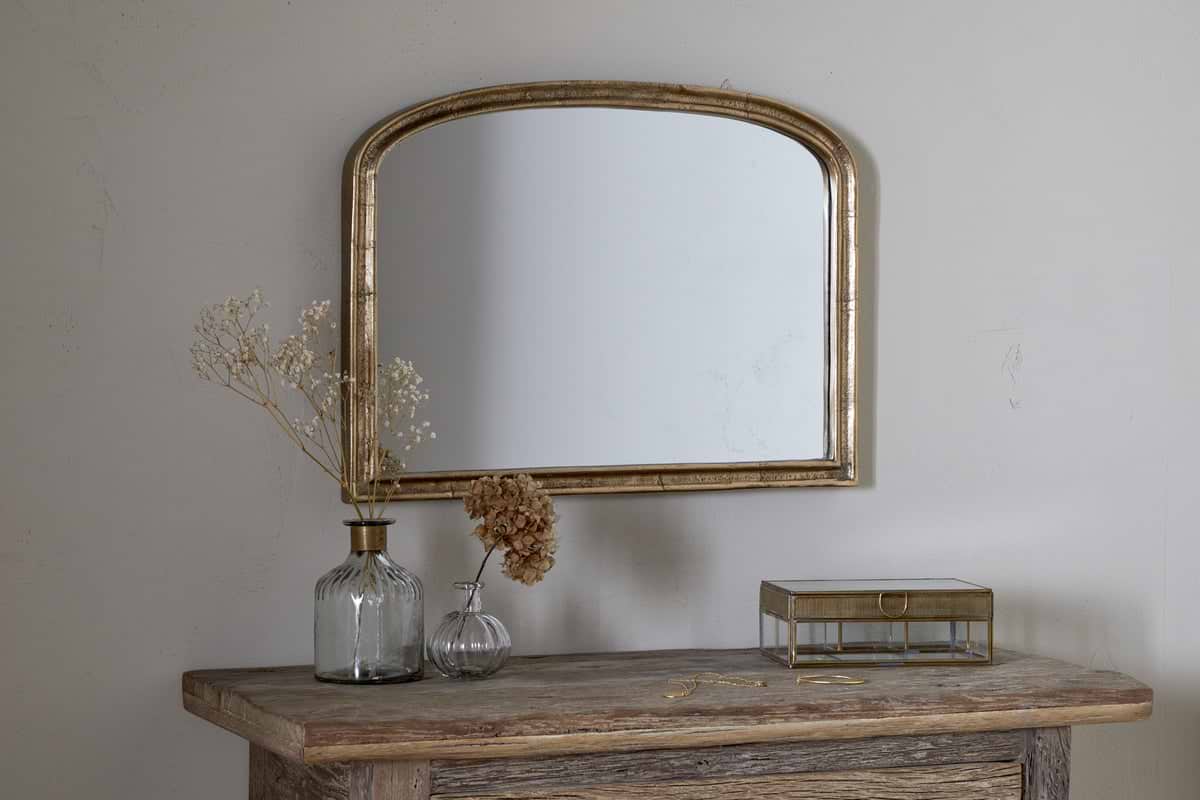
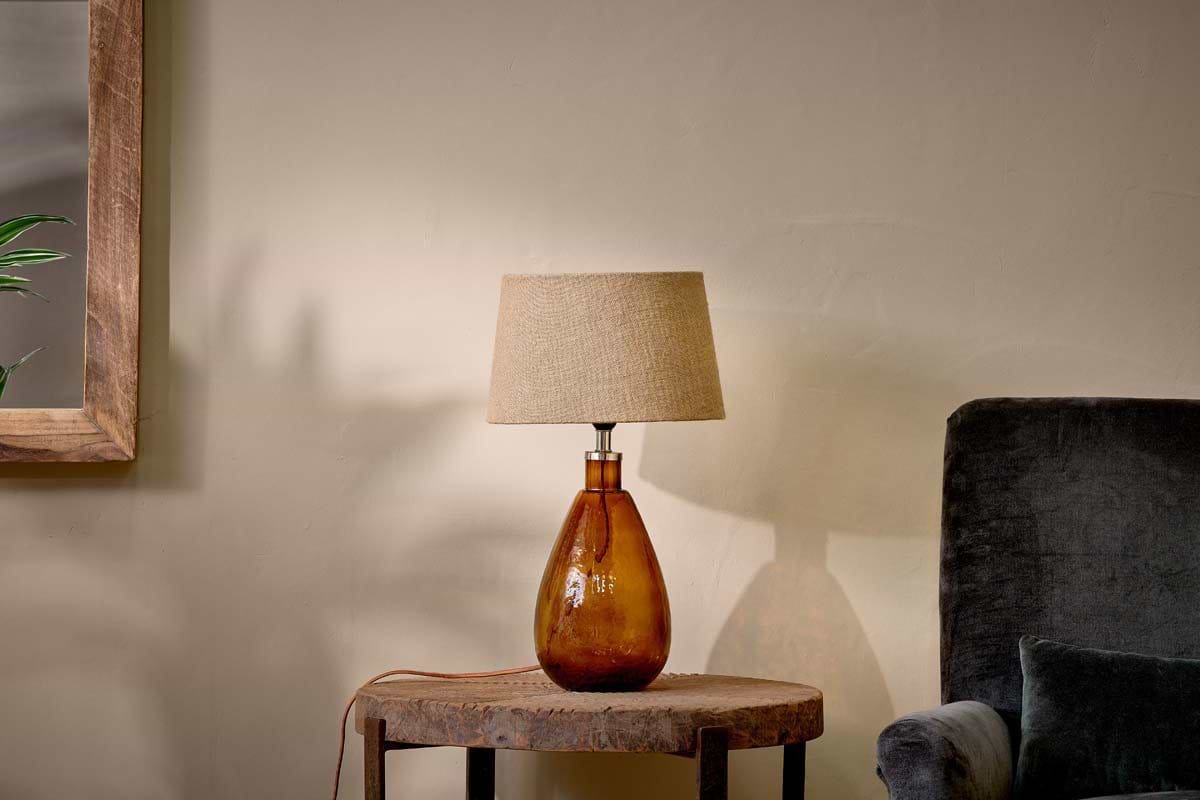
A small mirror and warm amber lamp work quietly together to lift a dark room without strain.
Some links above are affiliate links. If you buy through them we may earn a small commission at no extra cost to you. We only suggest pieces we think fit a calm, lived-in home.
Free guide
The Calm Shelf
12 styling ideas to help you compose calm, balanced shelves in natural texture homes.