

Coffee table styling often starts with good intentions but can quickly break down. Maybe the table feels cluttered, even with just a few objects, or the space struggles with competing shapes, one awkward lamp, a pile of magazines, a coaster from last night. It happens in both rented patios and small living rooms.
Today, you’ll learn how to get clear on what to keep, what to remove, and what to add for a calm setup that feels finished. This works especially well for a balcony or small patio when you only have room for one table and a couple of seats because it keeps things usable and tidy. You’ll see that a few simple choices have more impact than any number of trendy pieces.
The short version: Coffee table styling works best when you use a tray, mix heights, and pick three to five useful items, not just one big bowl or a scattered pile. Small moves like adding a stem in a glass vase or a woven catch-all help the surface feel clear, subtle, and welcoming.

Why does a coffee table look messy with just a few things?
A coffee table often reads as busy, not because of the number of objects, but because they lack a focal point or feel scattered in height and texture. Uniform objects or random placements make surfaces feel unsettled.
On a small patio, a simple table with four mismatched accessories, each different in color and finish, quickly looks more cluttered than inviting. This job gets harder when table tops are clear glass or bright plastic; every object stands out, and nothing grounds the surface.
Grouping items without attention to scale or shape causes the eye to dart. If the tallest object is tiny and lost in the middle, nothing draws you in. A round bowl by itself looks flat; a small, dense group pulls the gaze.
Grouping with intention, one tray, one vase, a stack of two books, balances empty space and anchors the rest. Unlike a row of single coasters or scattered remotes, grouping creates order and keeps the table functional for drinks or a snack.
To apply this: On a coffee table indoors or outdoors, trim groups to odd numbers and use at least two different heights, keeping everything within arm’s reach.
Where this works best
Simple coffee table styling fits well on a balcony, small patio, or in any space where surfaces are limited. Low tables, open seating, and zones visible from across the room benefit from careful object choice.
A balcony table in a rental often does double duty: morning coffee, evening tea, a small snack plate. When table space is tight, every piece must serve a purpose or add texture, or it ends up looking jumbled and getting in the way. Favor calm setups for outdoor spaces viewed from inside, so the look stays restful when passing through glass doors.
Setting up a small, shaded corner works best when objects don’t block views or poke over seat height. In a rental, rules about mounting or hammering often limit what you can do, but a low table with flexible styling makes a big difference. This applies to bookshelf styling too, zones where clutter builds fast need a focused approach.
Avoid adding heavy metal objects or bold patterns on tiny tables. These grab attention and fight with the light hand you want in a small, relaxing spot. Instead, keep shapes soft and materials natural for a space you’ll want to use daily.
Try this on a bench-style table, the end of a modular seat, or a two-person balcony set, where you need every bit of space and repeated patterns get in the way.
How do you choose the right groupings for coffee table styling?
Start with the rule of three, using an odd number of objects and mixing heights. The best groupings stagger heights and textures, forming a triangle that pleases the eye and keeps items from looking flat.
Most stylists agree that three to five items feel balanced but not crowded. According to designers, arranging objects in triangles (where each piece sits at a different height and position) helps everything pull together visually. For an outdoor table, try one low bowl, a book, and a tall stem vase for easy balance.
Unlike lining up a row of small candles, styling items in odd numbers keeps attention focused and creates a sense of completion. Tall items draw the eye up, while squat bowls fill low space and add weight. This is the same principle used in the shelf styling formula, making everything easier to read and reach.
Stacking two books under a bowl sets a foundation, making even basic supplies (like remotes or matches) seem part of the plan. Compare that to scattered single pieces, which feel accidental and messy.
For instant calm, start with a group of three in a triangle, one tall, one low, one in between, and adjust until they feel steady but not crowded.
Styling and placement
Place larger objects near the center or “anchor” corner, and leave visible space between the group and table edge. Every surface needs open room for hands or a cup.
The most practical placement keeps all objects within easy reach but out of the way. On a narrow balcony, bring your largest piece, a tray or low basket, to one side, leaving at least half the surface empty for use. Designers suggest dividing the table into loose zones that let you set down a glass or small snack without feeling overcrowded.
Unlike filling every inch, a quiet surface with just one or two groupings feels lighter and easier to live with. For a rental-friendly approach, choose objects that move easily, nothing glued down or fragile. If your table sits in sun, avoid real candles and pick sturdy pieces that won’t fade or crack.
Quick calm checklist:
- Pick just three to five items, using at least two natural materials.
- Keep about one-third of the table fully clear for daily use.
- Stick to a quiet palette, using one accent color at most.
- Place taller objects toward the back or side, not in the center.
- Anchor light and dark pieces so nothing feels random or too matched.
Apply these steps to any coffee table or outdoor table: layout, then step back to see which side feels most useful, and remove extras until the look settles.

What’s the simplest way to use a tray?
A tray corrals small items in one spot, stops them from drifting, and adds a border that keeps things looking contained. Trays in cane, wood, or powdery stonework especially well outdoors.
On balconies or patios, a decorative tray helps keep keys, coasters, and matches together, making the busiest surface simpler to keep tidy. Unlike letting small objects roam, the edge of a tray means nothing slips off or feels out of place during breezy afternoons or quick cleans.
A catch-all tray in pale wood or rattan blends well with most outdoor decor ideas, complimenting the grain of the table or the softness of nearby cushions. Compare this to trays in clear acrylic or colored plastic, which can clash outdoors and gather fingerprints and dust fast.
If you use a tray, keep it to about a third or less of the total tabletop. This leaves open space for a mug, a book, or a set of sunglasses when you step outside. The result is easy, flexible, and always ready for company or a quiet afternoon alone.
Try a tray on your outdoor table, placing your most-used items inside on a single side, and see how it cuts down on chasing pieces or constant tidying.
How do materials and texture affect the look?
Natural materials, wood, stone, recycled glass, woven cane, soften hard edges and stop a coffee table from feeling sterile or out of place outdoors. Mixed textures give the scene depth.
A table on a shaded balcony looks more inviting when you use quiet grains and subtle color, such as a mango wood tray or a recycled glass vase. Details like a ribbed clay bowl or burlap catch-all reduce shine and feel warm to the touch, compared to glossy or synthetic plastics, which look sharper and can seem out of step with outdoor living ideas.
Swapping all-matching sets for a mix, one smooth stone, one textured weave, one glass accent, changes how the table feels in sunlight and shadow. Hard, all-metal surfaces reflect light and sometimes glare harshly, while matte, tactile pieces feel cooler and break up the surface visually.
Adding a small, recycled glass bud vase or a rough-hewn catch-all bowl makes a fast difference. The light filters differently across each object, and even under cloudy skies, these materials stay easy on the eyes and comfortable in hand.
Choose at least one piece with clear grain or soft edges for any coffee table setting, indoors or out, you’ll see the whole area calm down.
How to tie your coffee table to the whole room
Echoing the colors or textures from nearby furniture, cushions, a shelf, or rug, ties your table into the scene. The result usually feels more settled.
Instead of choosing objects in isolation, repeat soft greys, muted greens, or paler woods that already appear in seat slats or throw pillows. For living room ideas and balcony styling ideas alike, copying just one accent, like linen or matte glass, picks up the quiet style without looking too matched.
Unlike adding a bright pop that only appears once, using “echoes” (repeated materials or shades) makes the table feel like it belongs. For renters, who may have fixed flooring or walls they can’t change, touching base with other soft finishes keeps the area comfortable to use, even if you only get sun for an hour or the door stays open all afternoon.
Look at shelf styling ideas for inspiration on material repeats: a woven basket here, a terracotta bowl there, both reminding the eye that the space connects. The coffee table feels best when it acts as part of the whole, not a totally different style on its own.
For any setup, patio, balcony, or a small sunroom, scan your existing furniture and choose a piece for your table that shares that same background note. It doesn’t have to match exactly, but should speak the same language.
What tends to hold up with coffee table styling
From many reader questions and product reviews, the same truth surfaces: styling works best when you blend at least two textures and keep half the surface open. Matte trays, especially in pale wood or cane, consistently hold up outdoors, they never glare in sunlight and stand up to minor spills or wind.
Reviewers often mention that the rule of three (odd-number groupings) and a mix of shapes keep arrangements looking fresh as seasons change. Trays with sides higher than usual, or bowls with a touch of chalky texture, seem less likely to slide or look heavy on a small table. These choices wear well in day-to-day use and suit both renter balcony decor and more permanent outdoor setups.
, Mara, Loom & Glow
Common questions
What is the 2-3 rule for coffee tables?
The 2-3 rule means using two or three objects, ideally in a triangle, for a tidy, balanced coffee table. This can be a stack of books, a small vase, and a bowl. Designers like this formula because it stops the table from looking busy or bare in both small and large rooms.
What do you put in the middle of a coffee table?
The best thing for the middle of a coffee table is a tray, bowl, or stack of books with an accent on top, like a glass vase or a low candle. These anchor the surface and make small essentials easy to find. Even outdoors, a tray works well on shared tables.
What looks good on a coffee table?
Coffee tables look best with a mix of heights and textures: a small tray, low stack of books, a candle, or a vase with fresh or dried stems. Pair natural materials, like stoneware, cane, and glass, for warmth and depth. This keeps the table tidy but lived-in.
What is the current trend for coffee tables?
The current trend centers on calm palettes, natural finishes, and simple shapes, think pale wood, rough stone, and recycled glass. Clutter is out; a few practical and beautiful pieces are in. Outdoor decor ideas also rely on lots of texture and quiet tones for practical, easy maintenance.
Explore more calm combinations inside our Shop The Look .
Shop the Look
Nkuku pieces that bring quiet focus to a styled coffee table.
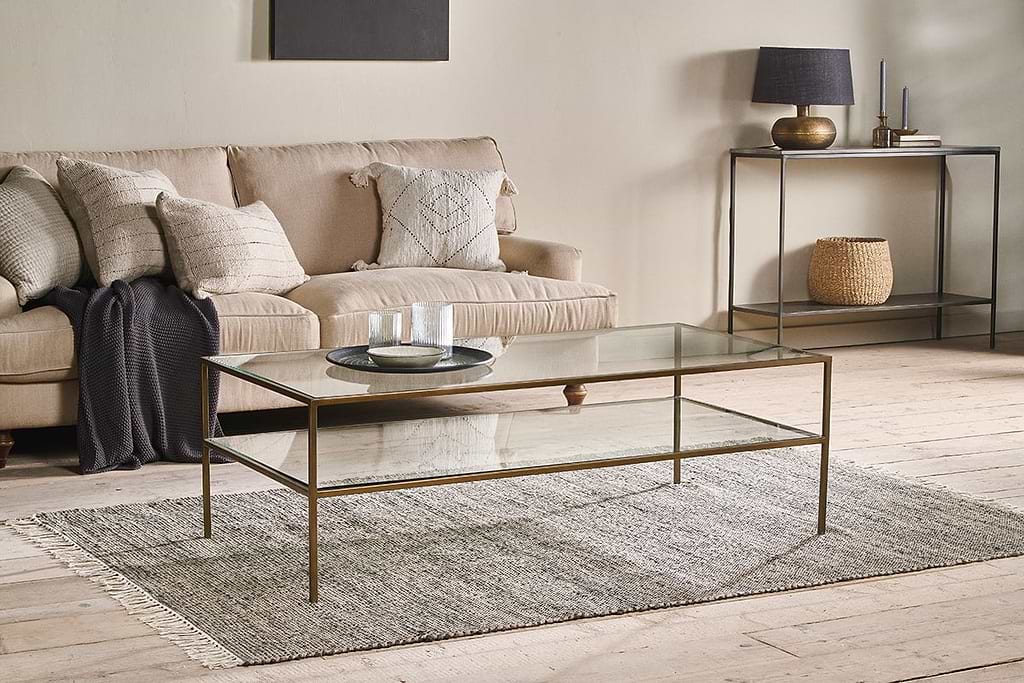
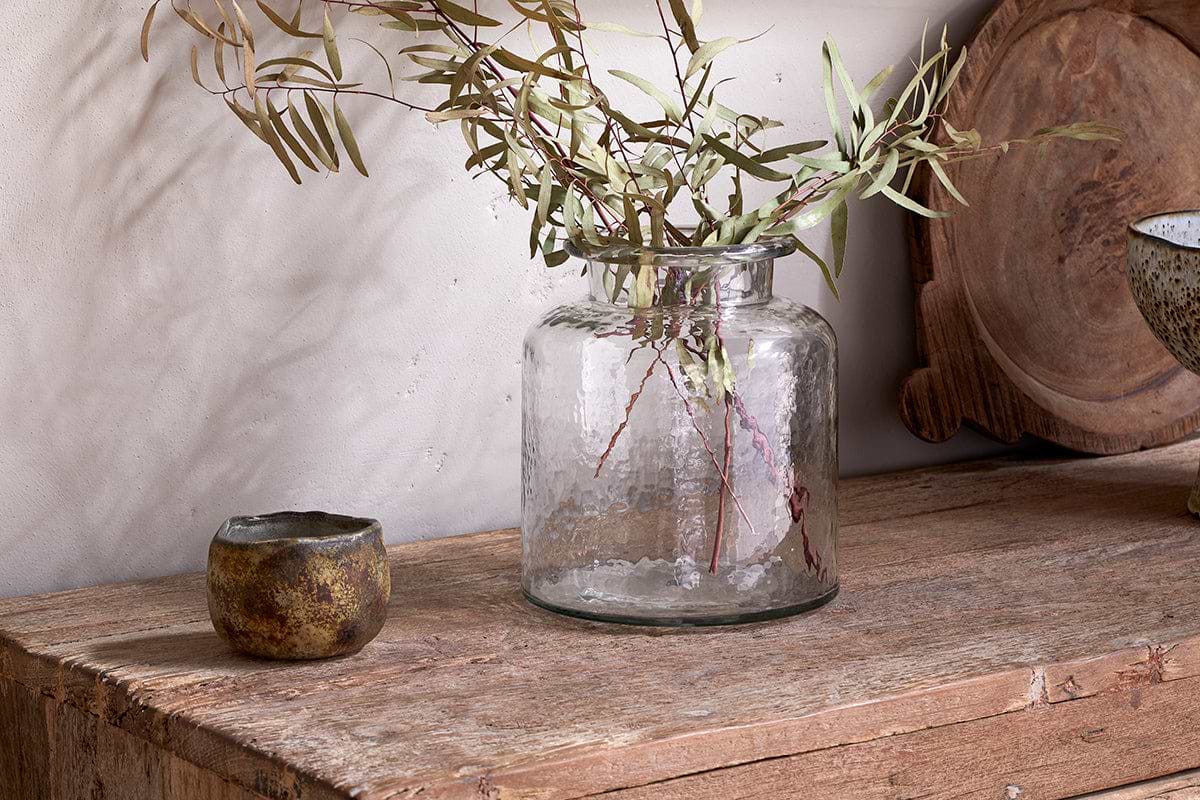
Akra Recycled Glass Vase
Clear cylindrical glass, pairs with stems or sits empty as a quiet accent.
View at Nkuku →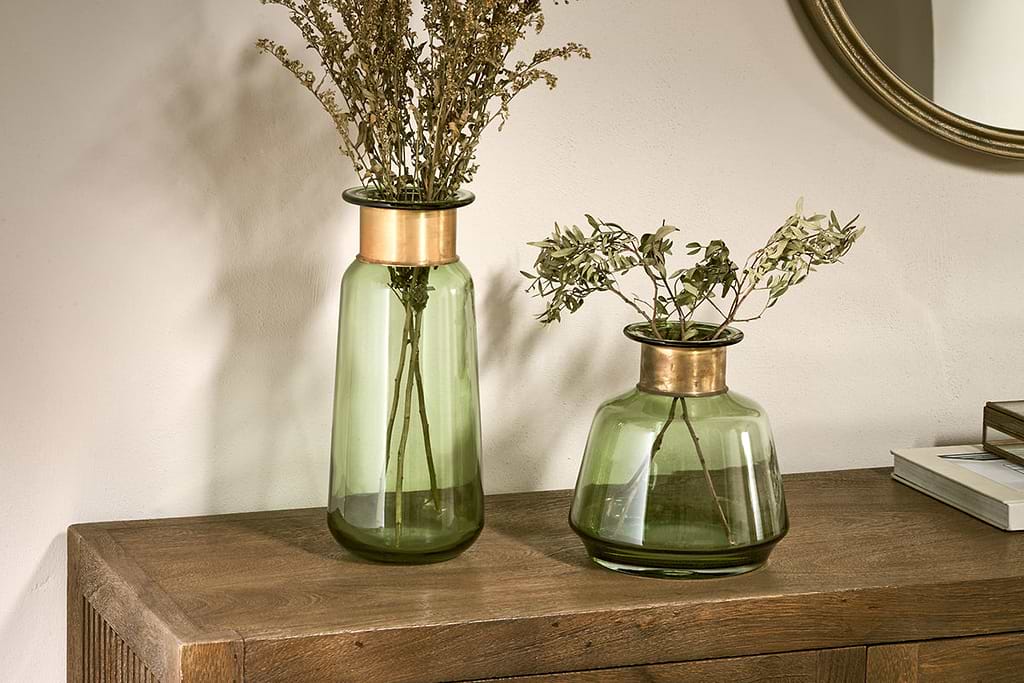
Some links above are affiliate links. If you buy through them we may earn a small commission at no extra cost to you. We only suggest pieces we think fit a calm, lived-in home.
Free guide
The Calm Leaf
12 quiet ways to bring dried botanicals, stems, and natural textures into calm spaces.