

Natural wood shelves look simple, but in a snug flat or shared home, getting them right is harder than it seems. Adding too many shelves in a tight space can break up the walls and stir up the visual clutter everyone tries to avoid.
This guide gets practical about what works and what to leave out, helping you choose, place, and style wooden shelves so they open the room instead of making it feel busier. This works especially well in a small living room when storage needs to float above floor level, because it keeps surfaces clear and the space feeling open.
The short version: Natural wood shelves calm a small room when used with empty space and simple styling. Less is usually enough: one or two shelves, anchored by natural texture, make a real difference.
Key takeaways
- Natural wood shelves suit most compact rooms when spaced with gaps and kept mostly bare.
- A single shelf often works better than layered rows for visual rest in small spaces.
- Solid oak, pine, and reclaimed scaffold boards are practical, durable wood choices for shelving.
- Ben Simpson Furniture plants 10 trees for every tree they use, making their shelves a sustainable pick.
- Pairing wood shelves with soft textiles, pottery, or baskets looks lighter than filling them with books or small objects.

Where this works best
Natural wood shelves fit easily into smaller sitting rooms, slim hallways, and compact kitchens where floor space is tight but wall space is open above eye level.
Homes with narrow lounges or squared-off flats gain storage without blocking walkways by installing one or two floating shelves above a sofa or along a clear wall. Wall shelving brings structure without taking over, especially when you skip crowded objects and stick with a simple mix.
This approach is especially good in a rental where drilling is limited or custom joinery is out of reach. Shelves set at shoulder height can hold one rough-edge serving board, a clay bowl, or a folded linen. Compared to high bookcases or full built-ins, fewer shelves keep things feeling easy to rearrange.
Avoid running shelves from end to end in a short hallway or on every wall of a small room. Too many planks or overcrowding corners pulls attention everywhere and makes the space feel fussy.
A single shelf above the sink in a bright kitchen gives just enough storage for jars, glass, or a plant. Keeping shelf runs spare makes the surface feel like an accent, not a backdrop.
Entryways with awkward alcoves work well with short, wall-mounted wood shelves paired with a woven basket underneath for keys or post. There, a wood surface softens the angles without crowding the area.
If you live in a studio, stick to one shelf per zone, one in the kitchen corner for mugs, another in a calm spot for a framed print or a houseplant.
The problem with shelves in small spaces
Shelves can make a small room feel crowded if lined up too closely or loaded with small items. One shelf positioned with empty wall around it avoids this problem.
Rooms without much wall space but lots of loose items often push people to add multiple shelves, chasing the idea of more storage. It’s tempting to fill the vertical area, but each shelf line divides the wall, leaving the eye nowhere to rest.
Unlike kitchen cabinets or a single ledge, two or three stacked shelves can chop up a space and make it harder to keep tidy. The more shelf edges and objects, the busier the room looks, even with good intentions.
One clean line of wood, especially in oak or pine, brings warmth without fragmenting the wall. According to Ben Simpson Furniture, using sturdy natural materials adds longevity, but spacing is what keeps the look soft in small homes.
If storage is tight, use the rest of your vertical area sparingly: one shelf for keys above a console or a floating ledge for shoes near the door, leaving gaps above and below.
Homes with open-plan living can benefit from a short row of shelves on a single accent wall, instead of scattered throughout the whole area. That way, the room feels calm and nothing pulls the focus in every direction.
A bare shelf feels stark, but filling every shelf with books or decor can quickly tip the look from tidy to restless. Leave gaps or one-third empty space for balance.
How do you avoid visual clutter on open shelves?
Open wood shelves look calm when you keep groupings sparse, limit color variety, and give each object room to breathe.
Start with one or two pieces per shelf, a stoneware jug, a soft plant, or a framed snapshot. Unlike closed cupboards, open shelves show everything, so each item matters more.
Mixing a textured basket with a stack of plain linen napkins creates interest without crowding. If you layer too many objects, the shelf reads messy and the room feels too busy.
Color makes a difference. Two or three related shades, such as sand, cream, and pale green, work better than a rainbow of accents. A shelf filled with glass jars and white pottery will always feel lighter than one covered in printed tins and patterned mugs.
Spacing is the biggest factor, a third of the shelf should be left empty, so the line has visual rest. According to most stylists, grouping objects with air between them helps the shelves feel considered, not overfilled.
Compared to floating cabinets or thick built-ins, thin shelving disappears more easily. If you worry about dust or maintenance, a shelf with a slight lip in reclaimed wood hides marks better than a pale, flat board.
Keep what’s on show simple: a trailing plant, a clay bowl, one bowl of fruit. If every shelf is only half-filled, the result is always calmer than cramming in more.
Where to buy natural wood shelves in the UK
UK shoppers can find natural wood shelves from handmade makers, reclaimed wood specialists, and larger retailers, each with its strengths for budget, lead time, or custom size.
The UK has gained real depth in natural wood shelving, from the solid-oak floating shelf at an online craftsman, to accessible options at larger chains like IKEA, B&Q, and Amazon. For truly solid wood or reclaimed boards, local carpenters and small brands often provide the best touch and weight.
Ben Simpson Furniture is known for solid shelves in oak, pine, and rustic scaffold board, a good choice for strength in smaller spaces. They plant 10 trees for each tree used. On the sustainable side, Project Reclaim offers reclaimed wood floating shelving, with prices ranging from £45.00 to just over £200, and a strong track record for actual reclaimed material.
If you prefer handmade or made-to-order, Off the Grain’s shelves are crafted in Halifax with a 3 to 5 day lead time, while Chill House offers live edge options and different board depths for character and choice.
For quick, budget options, IKEA, B&Q, and Amazon supply lighter pine or oak-veneer floating shelves. These are less heavy than scaffold boards, so ideal for rental walls or where moving is likely.
| Brand | Main Material | Typical Price Band |
|---|---|---|
| Ben Simpson Furniture | Oak, pine, scaffold board | Mid-range, sustainable |
| Project Reclaim | Reclaimed wood | £45, £207 |
| Off the Grain | Handmade solid wood | Mid-range, fast shipping |
| Chill House | Live edge wood | Varies by style |
| IKEA/B&Q/Amazon | Pine, oak-veneer | Low to mid-range |
For a soft, rustic look, rustic oak shelves warm up white walls and look best with a few pale objects placed loosely.

Styling and placement
Wood shelves feel settled when set at natural arm height, used as a single focal point, and styled with the lightest touch, no crowding or doubling up.
Wall placement makes or breaks the effect. In a living room, a shelf above a radiator acts as a perch for a framed artwork and a single vase. In a kitchen, one above counters lets you reach cookbooks or a salt bowl easily. If you go too high, the shelf floats awkwardly; too low, it disrupts sitting or walking space.
Shelves on a short wall, like above a bedhead or in an alcove, work best when you anchor just one shelf and don’t fill every inch. Unlike stacking multiple boards, one strong line holds its own and lets the wood show off its color and grain.
Avoid dotting shelves on every empty wall, as this fractures the look and means none become a true feature. Instead, pause and choose where a shelf helps most.
Oak wall shelves look their best grouped simply, keeping just one or two items on each. Pale oak or pine brings out warm tones that pair nicely with textiles or soft ceramics.
Quick calm checklist:
- Stick to solid wood or real wood veneer, avoid plastic or glossy MDF where possible.
- Place shelves at or just above eye level in sitting areas or kitchens for ease and comfort.
- Limit to one shelf per wall for most rooms, two only if spacing is generous.
- Keep at least a third of each shelf surface empty for visual relief.
- Choose a restrained palette, one wood tone, two at most, mixed with neutral objects.
Shelving works best when anchored by a larger object, a basket, big bowl or a framed print, rather than scattered tiny decor. Finishing with one simple accent keeps the room feeling light.
Floating shelves vs bracket shelves: which to choose?
Floating shelves work well for a sleek, quiet look in rentals or modern homes; bracket shelves add more visible detail and support heavier loads.
Floating shelves, fixed through hidden mounts, look streamlined because you see just the board and wall. These are best where you want storage without extra lines or hardware. In a white or pale-painted room, floating pine shelves almost blend into the wall, especially if you choose a narrow plank.
Bracket shelves use visible supports underneath, often black metal, pewter, or even painted wood. These suit homes with more rustic or cottage style, or where holding weight, like heavy stacks of books or crockery, is necessary.
Compared to floating shelves, bracket shelves draw more attention due to the hardware. This works if your room needs a point of interest, but not if you prefer quiet, open lines. For small flats, floating shelves are easier to remove later, a plus in a rental.
According to Chill House offers a range of live edge floating shelf options if you want a shelf with texture and irregular shape without visible supports.
Brackets break up a long, blank wall nicely if used as a one-off in a hallway or above a bench. In a snug living room, though, floating shelves disappear better, so the shelf reads as light and restrained rather than busy.
If you store only one row of dishes or a couple of pots, floating is fine. For larger, heavier items, like a stack of cookbooks or big planters, bracket shelves are safer and less likely to droop over time.
What’s the best way to mix wood with other materials?
Mix wood shelves with soft textiles, ceramics, or metal objects like a brass frame to keep surfaces from looking monotone or hard.
Pairing wood with linen napkins, a jute storage basket, or hand-thrown clay will always feel softer than a row of identical glass jars. If all you see is plain pine, the shelf feels unfinished, adding a pale bowl or drapey cloth shifts the whole atmosphere.
Mixing in a subtle metal accent, like a single Kiko Brass Frame or a matte black candleholder, breaks up the lines and adds subtle sparkle. Natural textures, such as rattan or crumpled cotton, absorb light, so the surface doesn’t glare.
Unlike piles of plastic or shiny surfaces, pottery and textiles bring weight and quiet. Adding a small green plant or woven mat helps break up the solid wood, so the shelf looks built-in, not stuck-on.
In open kitchens, a stack of plates next to one clay vase works better than a parade of mismatched mugs. Mixing two textures is enough for variety; three gets distracting in a small area.
Try soft, layered groupings: wood, clay, one piece of glass. For a more collected look, a found stone or a seagrass basket softens hard shelf lines.
Curate the shelf without making it precious, balance a mug, a cotton tea towel, and one print, so the eye finds rest between the shapes.
The point where things go wrong is easy to miss: you hang shelves, add a few objects, and after a week, the room just feels restless. The shapes don’t line up, or there’s an odd hum of tension you can’t quite name. One moment it’s fine; the next you realise nothing in the space quite settles.
The improvement usually comes down to a single decision: one strong shelf, left partly empty, becoming the anchor for the wall. Once you pare down, limiting color, leaving space, and sticking to one main piece per shelf, the whole room gains a sense of ease.
Many people make the mistake of adding too many shelves or treating them as catch-all storage. The result is a wall that looks jumpy or lopsided, with odd gaps and restless lines. Shelves loaded with small objects call for constant tidying, and the visual noise never quite goes away.
Cutting back to one or two pieces per shelf opens up the space so the shelves serve as both storage and calm accent.
Save this idea for later.

What tends to hold up with styling natural wood shelves in small spaces
What stands out after seeing hundreds of room photos and reading feedback from designers is this: the best wooden shelves in small rooms almost always have more air than stuff. Reviewers often report that matte or unfinished wood gets recommended repeatedly for shelves near windows, since it doesn’t bounce glare and keeps its soft feel even with natural light shifting during the day.
Decorators also point out that people tend to overestimate how much shelf space they need. One shelf, left partially empty, is usually enough. Letting shelves look just a touch under-filled keeps them interesting and practical for daily life.
, Mara, Loom & Glow
Common questions
What type of wood is best for a natural finish on shelves?
The best wood for natural finished shelves is solid oak or pine. These woods show their grain well and age with character over time. Oak has a warmer hue and resists warping, while pine is lighter and often more affordable.
Is it more cost-effective to build your own shelving or buy it ready-made?
Buying ready-made wood shelving is usually more cost-effective unless you already have tools and spare materials. Ready-made options, especially flat-pack or pre-drilled boards, save time and reduce risk of mistakes. DIY may suit those seeking unique dimensions or a reclaimed look.
Which wood types offer the best combination of strength and appearance for shelves?
Oak, pine, and reclaimed scaffold boards combine strength with visible grain that suits most decor. Oak shelves resist sagging under weight and develop a rich finish, while reclaimed and scaffold boards bring rustic style with solid support.
Where can you find real oak floating shelves in the UK?
Real oak floating shelves are available in the UK through Ben Simpson Furniture, Project Reclaim, and many small artisan workshops. These oak shelves come in a range of finishes and sizes, from pale to rustic, fitting both modern and country interiors.
are floating shelves out of style in 2026?
Floating shelves remain relevant in 2026 when styled thoughtfully with natural wood and minimal display; they work especially well in small spaces when kept sparse with one or two shelves anchored by natural texture, paired with empty wall space and simple styling to keep rooms feeling open rather than cluttered.
Explore more calm combinations inside our Shop The Look .
Shop the Look
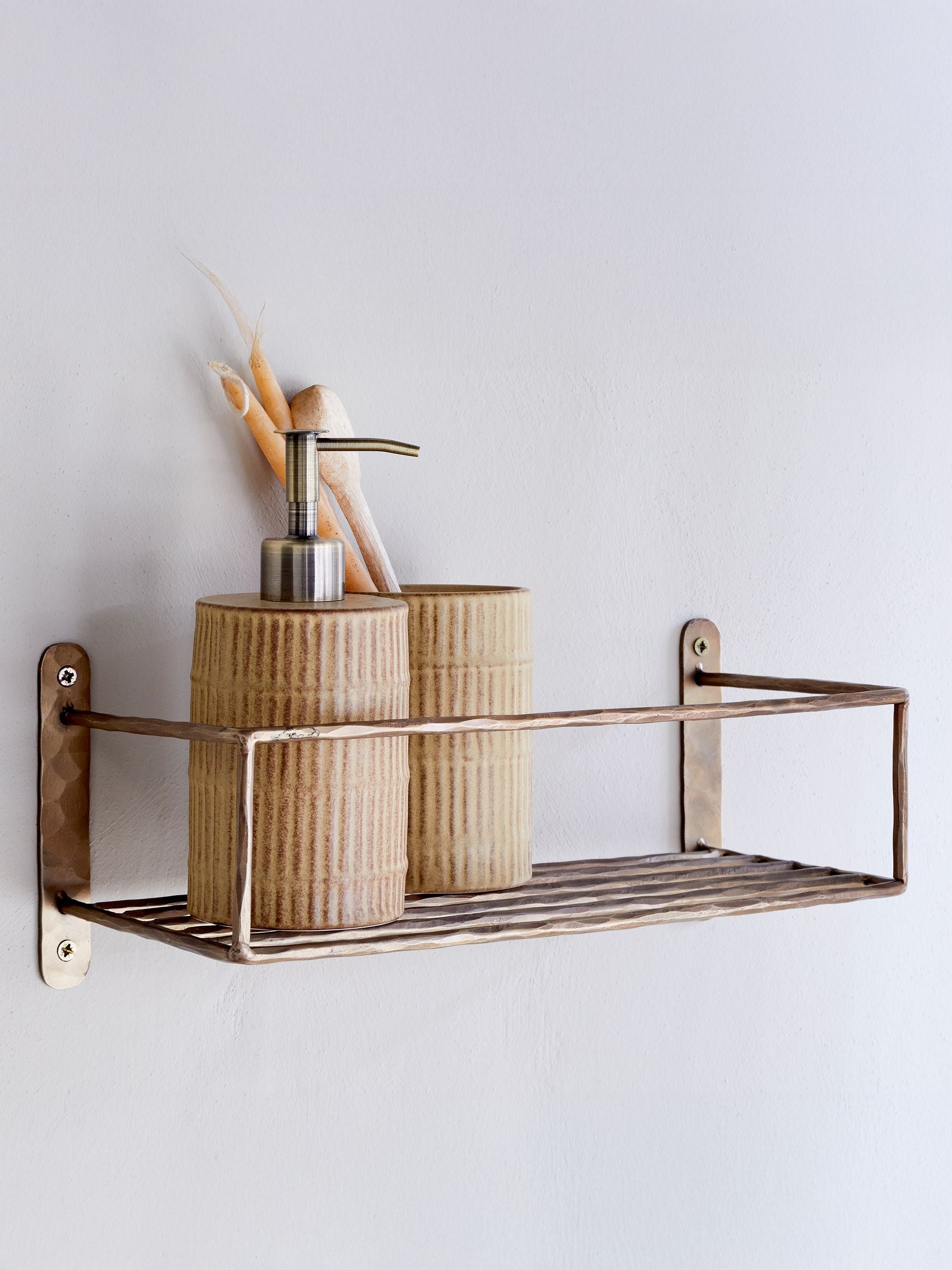
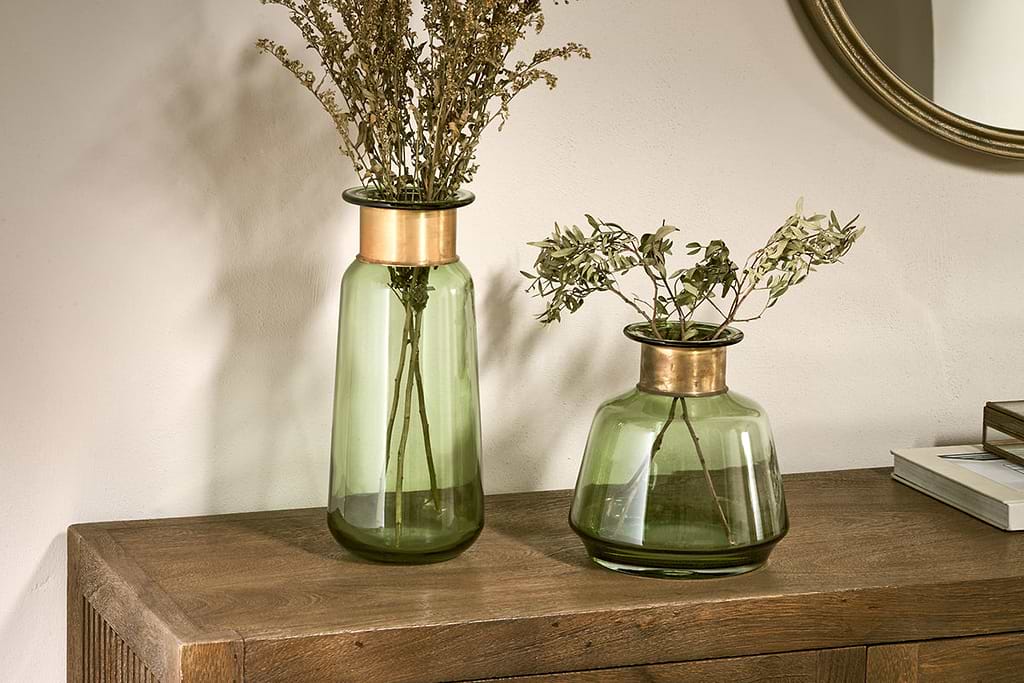
A few Nkuku pieces that pair naturally with open shelving.
Some links above are affiliate links. If you buy through them we may earn a small commission at no extra cost to you. We only suggest pieces we think fit a calm, lived-in home.
Free guide
The Calm Shelf
12 styling ideas to help you compose calm, balanced shelves in natural texture homes.