

Overflowing cupboards and stacked ceramics are familiar sights, especially when rooms lack fitted storage. Rustic oak shelves bring a needed pause to these busy spaces, but many people find it hard to spot the real thing among oak-effect alternatives—and worry about choosing a size or thickness that actually works.
This guide helps you see and feel the difference, so you can pick out genuine pieces and decide what belongs on your wall. This works especially well in a small kitchen when counter space is tight because it lifts clutter up, making everything easier to reach and clean.
The short version: Rustic oak shelves are always made from solid oak boards showing real grain, and work best when sized to leave at least half the length open. Choosing the right shelf keeps storage practical, looks calm, and brings natural warmth without crowding the room.
Key takeaways
- A shelf made from genuine rustic oak always reveals unique knots, checks, and flecks that you won’t find in oak-effect laminates.
- Most floating shelf suppliers stock length increments of 0.9, 1.2, and 1.5 metres, with 2.4 metres as the courier limit according to Chiltern Timber.
- A shelf looks busiest when every surface is filled; leave at least one-third clear to keep the room from feeling heavy.
- Solid oak weighs more and needs sturdy fixings to stay safe for anything heavier than glassware or baskets.
- Some suppliers plant ten trees for every oak used, supporting forest regeneration (Ben Simpson Furniture).

What defines a rustic oak shelf?
A rustic oak shelf is cut from solid hardwood and shows natural knots, checks, and grain that vary from one piece to the next. Unlike oak-effect boards, genuine oak feels heavy, shows texture on every edge, and ages with use.
In a kitchen or hallway, true rustic oak shelves always bear scars from the saw, shallow cracks, or color shifts that mark out real timber. This visible character means that even plain objects—white bowls, a set of glasses—sit differently here than on a smooth, factory-made shelf.
The key difference is that solid oak boards react to light and touch, deepening in tone and sheen over time, while oak-effect finishes stay flat. An aged oak edge might have a rough feel or a waxy finish, which repels small spills and makes wiping easy.
Unlike painted or melamine shelves, a rustic oak shelf hides daily wear well. Dust and water rings tend to blend in, rather than standing out, so shelves read ‘lived in’ instead of messy. Displaying a clay pot or a linen-bound book becomes simple—nothing has to be perfect.
A shelf like this works best in places that take knocks and use, such as above peg rails in an entryway or near the sink. Everyday objects soften into the wood’s surface, rather than bouncing off a cooler, shiny laminate.
Solid oak or oak-effect: how do you spot the difference?
Solid oak always shows real knots, weight, and changing grain, while oak-effect boards use printed surfaces and uniform edges. Rubbing a fresh edge will reveal a fine grain in hardwood, but just MDF under imitation finishes.
Entryways and living room alcoves often get fitted with shelves, but distinguishing solid oak from oak-effect is not obvious from afar. The easiest sign is the edge: a genuine oak shelf will reveal end grain on the short sides, rough and uneven, where an oak-effect board shows a smooth, wrapped layer with no real texture or visible lines.
Another check is weight. Picking up a solid oak shelf feels different—there’s heft, even in a short plank. Oak-effect options are often built from MDF or chipboard and will feel much lighter or slightly hollow if tapped.
The way the finish sits makes a difference, too. Solid oak, finished with wax oil, darkens where handled, especially at the front. Oak-effect lacks this, keeping its shade even across the whole piece. Brushing a hand along the grain shows a ripple in real wood and a flat, printed look in imitation boards.
| Feature | Solid Rustic Oak | Oak-Effect Board |
|---|---|---|
| Material | Solid hardwood, visible grain | MDF/chipboard core, printed surface |
| Weight | Heavy, solid | Lighter, hollow feel |
| Edges | Uneven, real end grain | Smooth, no visible grain |
| Finish aging | Darkens and wears with use | Keeps flat color, surface scratches show easily |
| Price/state | Higher price, unique per shelf | Lower price, consistent look |
Compared to melamine or foil-covered shelves, genuine oak holds up better in spots that see daily stacking and moisture—kitchens, bathrooms, by back doors. If you want shelves that last and feel substantial, look for a solid oak core and ask about the finish.
Where this works best
Rustic oak shelves are most useful in places where storage needs blend with open display, such as kitchens, living rooms, or narrow entryways. Small spaces gain surface without closing in the walls.
Kitchens often run out of cupboard slots for jars, oil bottles, or mugs. A set of solid oak shelves over a backsplash or beside the cooker lifts everyday pieces into view, clearing worktops without boxing things in. For a rental, a single bracketed shelf does this without drilling many holes.
Above radiators in a sitting room or lining a hallway, solid oak shelves work when fitted tightly to the wall, holding baskets, hats, or a single lamp. Entryways with little floor space get a gain from lifting keys and shoes above the traffic line.
Avoid putting rustic oak shelves in damp bathrooms with no fan, or places where water runs off tile. Unlike a tiled or glass shelf, real oak can swell or warp if left soaked for days, and the finish will dull out before long. Instead, reserve oak for side walls, mudrooms, or over ranges where light and air dry the wood between uses.
Choosing the right size and thickness
Pick a shelf length that holds only what you reach for weekly, and a thickness heavy enough for your heaviest item but not so deep it crowds the wall. Most shelves are sold in length increments of about 0.9 to 1.5 metres, with 2.4 metres as the safe delivery limit according to Chiltern Timber.
A kitchen with limited wall space often seems fit for a long shelf, but shelves that run the full wall pull the line low, making the ceiling feel closer. Instead, stopping short by a hand’s width at either end opens up both surfaces for display and empty space.
Most floating rustic oak shelves come in standard blocks: 0.9, 1.2, and 1.5 metre lengths. Anything longer can look too heavy or may need extra fixings for weight. Shorter shelves, spaced at uneven intervals, make room for art or hooks.
Pick a thickness that matches your use—standard oak shelves for plates and baskets run thicker, while those only holding glasses or frames can be thinner. A thick shelf supports weight but starts to feel bulky when stacked with heavy items. Lighter options suit places near windows or above beds, where only light objects sit.

Shelf depth matters too. A narrow profile keeps everyday items close but avoids knocking, while a deeper shelf behind a sofa or as a book ledge fits larger items. A helpful rule of thumb is: shelves work best when about two-thirds their length remains visible after styling.
How do you keep rustic oak shelves looking calm, not cluttered?
Leaving empty space on a rustic oak shelf lets the grain and objects breathe, while grouping similar-colored items limits visual noise. Shelves read softer when displays are short, with gaps between stacks.
A kitchen shelf usually fills up over time—first with cups, then oil, then a jar or two. The end result often feels busy, especially when small things crowd up front. Instead, stagger objects left and right, leaving stretches of bare wood. Stacking two or three similar mugs keeps the load in one corner, giving the eyes a resting place.
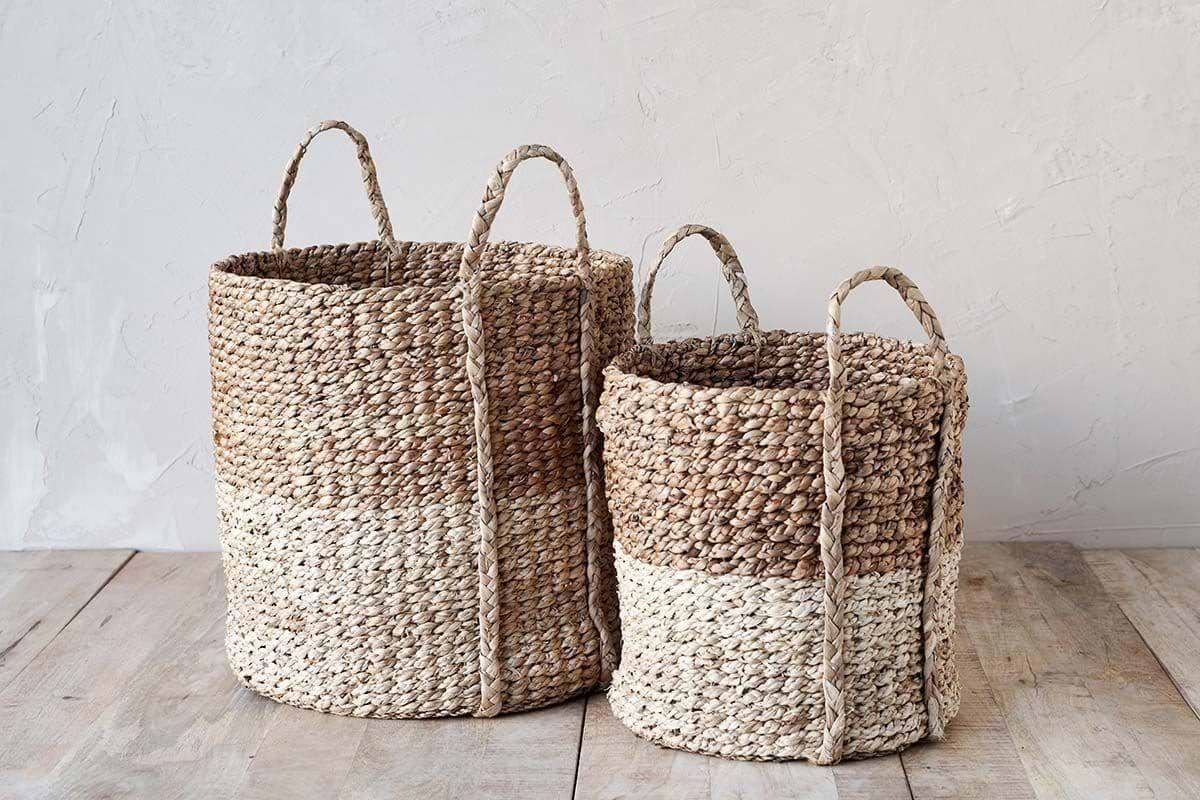
In a sitting room, placing one woven basket, like the Nkomi Basket, at the end of a shelf clears loose keys or chargers without crowding every section. The shelf now holds weight but not mess—nothing jostles for attention.
Compared to plastic or metal ledges, a rustic oak shelf paired with a linen napkin or stone bowl always reads softer. Bright or patterned items, when used in bulk, skew the balance. If too many colors, shapes, or book spines line up, the wall gets noisy—removing half the pieces usually calms the shelf instantly.
Grouping items by tone—like white ceramics or amber bottles—keeps the feeling quiet. Small stacks work better than rows, and repeating one or two shapes gives the shelf a gentle order without looking staged.
Styling and placement
Styling rustic oak shelves works best when materials stay natural, the palette is soft, and objects are spaced in small groups. Baskets, linen, and stone work well with oak’s grain and aged color.
Bare shelves can read cold, so bringing in a woven basket or one clay pot softens the edge. Vessels in muted shades—sand, off-white, or grey—let the shelf’s aged timber show through. Uneven stacks create little shifts that keep the look from feeling rigid.
For entryways or mudrooms, using a single basket per shelf limits mess and catches stray gloves or scarves. In an open kitchen, interleaving glasses, ceramics, and wood works best when tones stay similar and open space remains.
Quick calm checklist:
- Stick to natural items: linen, rattan, or matte-finished ceramics.
- Space groups so bare wood always shows between them.
- Keep at least one-third of the shelf clear; two-thirds for mini shelves.
- Limit palette to 2–3 base tones, plus one highlight.
- Anchor the largest item near the end or off-center for balance.
Unlike shelves packed with stuffed toys or bright storage bins, a simple spread of baskets and clay makes the whole wall feel lighter. Styling works best when nothing touches the shelf’s full length—let gaps shift as seasons or storage needs change.
Sourcing and sustainability: what matters for solid oak?
Genuine rustic oak shelves are made from solid, often UK-sourced hardwood, sometimes offered in bespoke sizes, and often from suppliers who plant trees to offset use. Oak-effect boards do not offer these guarantees.
Shelf buyers concerned about the source should ask about the timber’s place of origin and finish: UK-made shelves are often cut in small workshops, waxed by hand, and available in custom lengths to suit awkward alcoves or small nooks. Some companies give buyers the option to select knot level or choose a lighter or darker wax oil finish.
According to Ben Simpson Furniture, some suppliers plant up to ten trees for each one felled, supporting replanting and local woodland health. Oak-effect boards, often mass-produced outside the UK, cannot offer this kind of traceability or environmental assurance.
Compared with imported effect shelves, handmade solid oak wins for both longevity and repair—minor chips or scratches can be patched or buffed, and the finish can take a refresh years on. If sourcing matters, always request the full story—origin, finish, and aftercare—from the owner or site info tab.
Sometimes, a room changes drastically just by removing one thing and making a single, grounded choice. Picking shelves with a real weight and finish, then limiting what sits on them, changes how the whole wall feels.
There comes a moment when a room feels unsettled—too many edges, a run of similar shapes, a shelf line cutting the eye in the wrong spot. The space feels busy or heavy, especially when storage fights for attention. These are the moments when most homes fall short: shelves run too long, get packed full, or don’t match the wall’s real needs. Even a beautiful wood loses its effect if crammed with mismatched items. It matters now, in homes sharing space for work, life and rest, to know what to store and what to leave open. Once the right shelf is chosen and given breathing room, the room feels less stressed—daily items belong, and the rest fades into the background. Save this idea for later.
What tends to hold up with working with natural textures
Reviewers leave the same note time and again: shelves made from solid, waxed oak boards hold up better to daily living than painted or oak-effect versions. Natural finishes, especially wax oils, get recommended for high-touch shelves near sinks or doorways because they resist water spots while letting wood breathe and deepen over years. Woodworkers and stylists both point out: matte, lightly aged wood does less to catch dust and glare than high-gloss or chunky beams. These are the little decisions—finishes, placements, palette—that settle into the room without asking for extra effort.
— Mara, Loom & Glow
Common questions
How can I tell the difference between genuine rustic oak shelves and oak-effect alternatives?
The easiest sign is the edge: a genuine oak shelf will reveal end grain on the short sides, rough and uneven, where an oak-effect board shows a smooth, wrapped layer with no real texture or visible lines.
What weight difference should I expect when comparing solid oak to oak-effect shelves?
Picking up a solid oak shelf feels different-there’s heft, even in a short plank. Oak-effect options are often built from MDF or chipboard and will feel much lighter or slightly hollow if tapped.
How much of a rustic oak shelf should I leave empty to keep it looking calm?
A shelf looks busiest when every surface is filled; leave at least one-third clear to keep the room from feeling heavy.
Why do rustic oak shelves work well in kitchens specifically?
This works especially well in a small kitchen when counter space is tight because it lifts clutter up, making everything easier to reach and clean.
Explore more calm combinations inside our Shop The Look .
Shop the Look
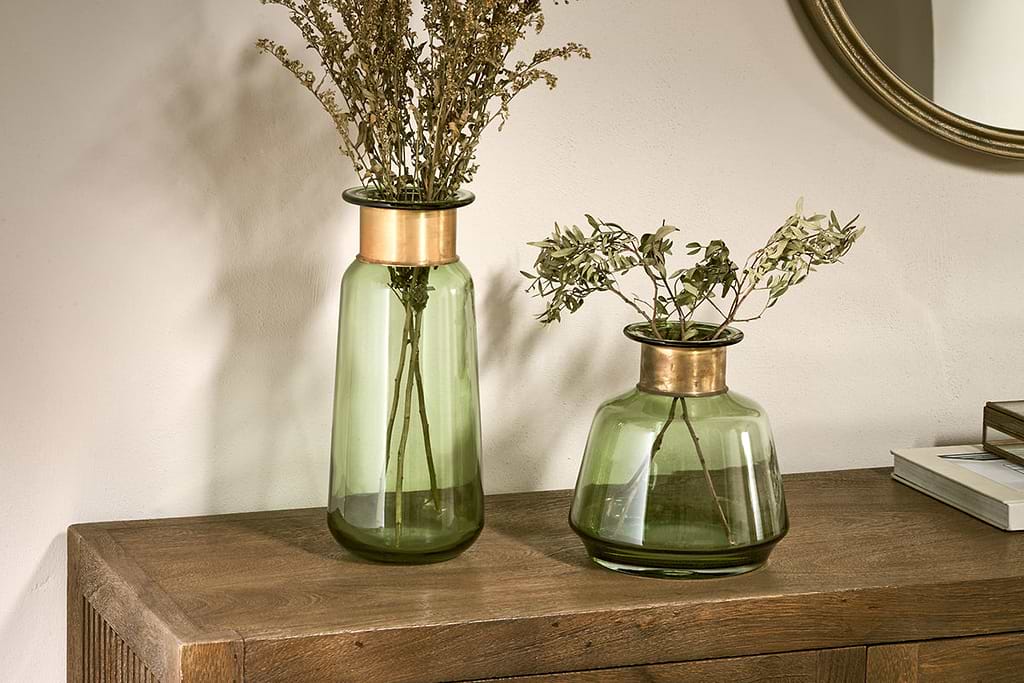
Pieces that sit naturally on oak shelving and let the wood grain remain the quiet focal point.
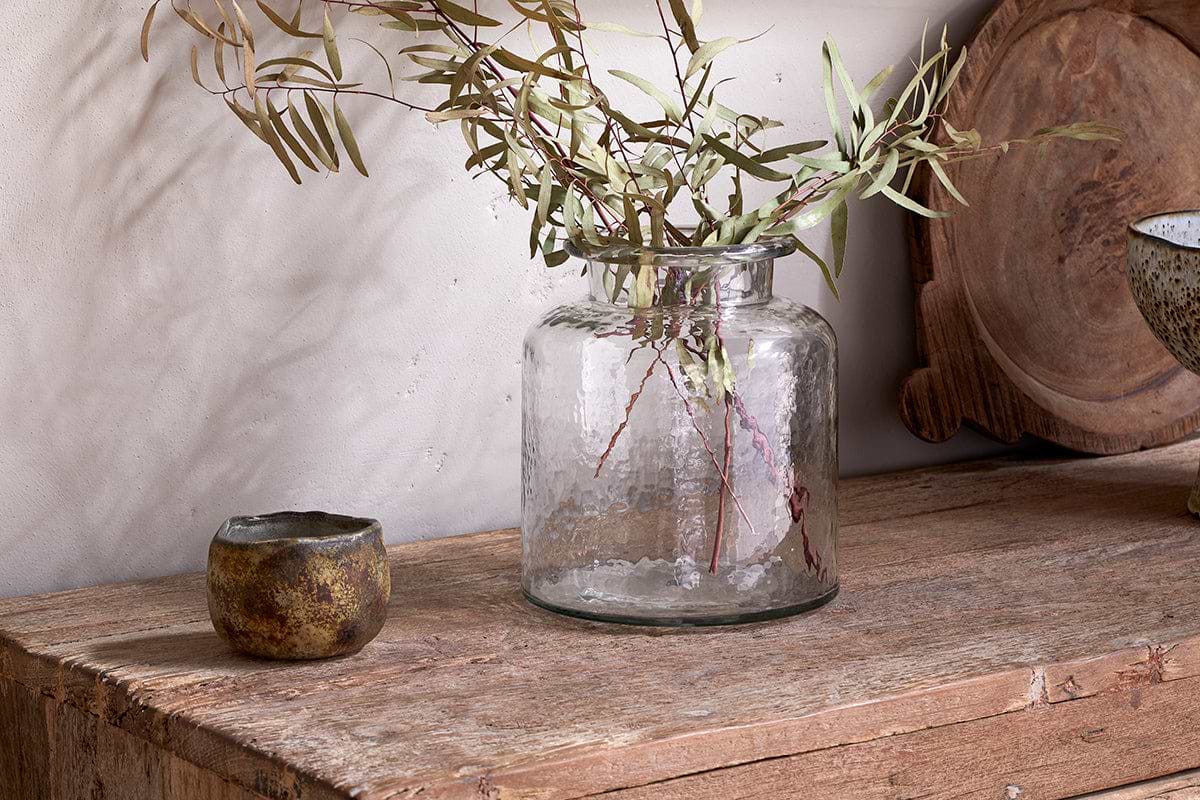
Akra Recycled Glass Vase
Clear cylindrical glass — pairs with stems or sits empty as a quiet accent.
View at Nkuku →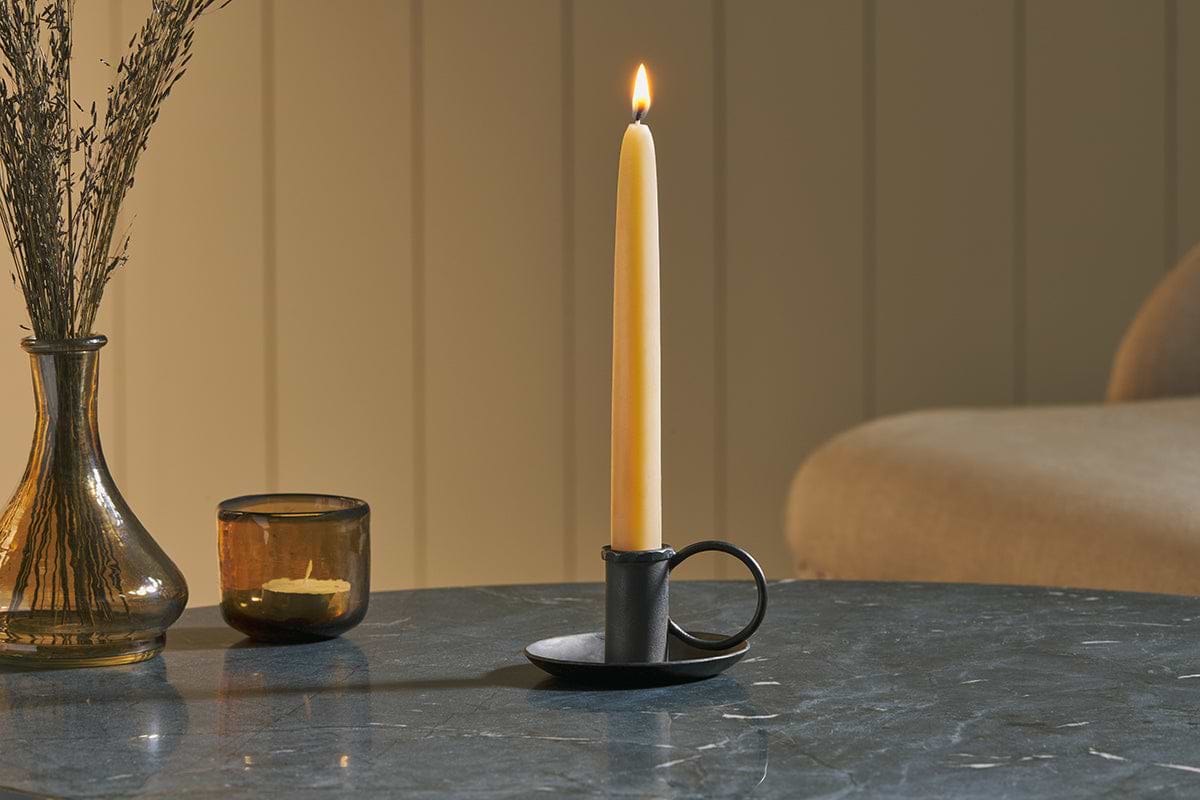
Amri Iron Candlestick
Slender iron with quiet presence — works alone or in clusters of three.
View at Nkuku →Some links above are affiliate links. If you buy through them we may earn a small commission at no extra cost to you. We only suggest pieces we think fit a calm, lived-in home.
Free guide
The Calm Leaf
12 quiet ways to bring dried botanicals, stems, and natural textures into calm spaces.