

Finding the right balance in a small flat can be tough. A single big mirror, the usual “room of mirrors” fix, often makes light glare, doubles the clutter, or leaves the space feeling colder than before.
Today, we’ll swap that one large reflective slab for a set of smaller, thoughtfully arranged mirrors. You’ll see how quietly grouping them builds calm, gentle depth, and soft light. This works especially well in a small living room when glare and harsh edges make the room feel restless, because each piece adds only what is needed.
The short version: A room of mirrors built with several small, well-placed mirrors softens both the light and the feel of a compact space. Using many subtle surfaces instead of a single large one lowers glare, reduces visual noise, and helps the room feel calm and welcoming.
Key takeaways
- A gallery of small mirrors gives a compact room gentle depth and softer reflections compared to a single oversized mirror.
- Placing mirrors to face natural light expands brightness without adding glare or doubling clutter.
- Vintage and thrifted frames, varied in shape and finish, add visual interest while keeping a balanced look.
- Most professional designers avoid heavy grouping on just one wall; a mixed composition works better in most homes.
- The Hall of Mirrors at Versailles uses opposing mirrors and windows to layer light and create a poetic effect (source).
- What does a room of mirrors mean in home decor?
- Why doesn’t one large mirror feel calm in a small space?
- Where this works best
- How do you arrange smaller mirrors for soft light?
- Styling and placement
- How can you avoid visual noise and the ‘disco ball’ effect?
- Where do you find vintage and thrifted mirrors for this look?

What does a room of mirrors mean in home decor?
In home decor, a room of mirrors can mean using several reflective surfaces to shape how light and space feel. This approach gives compact rooms a softer, layered look, not a blinding wall of glass.
In music and culture, the phrase “room of mirrors” often means self-reflection or confronting details about yourself, as Metallica’s song “Room of Mirrors” suggests (source). In home decor, the meaning is practical: arranging mirrors to change how a room looks and feels. That could mean one mirror or many, but more often it draws on centuries-old techniques.
The Hall of Mirrors at Versailles is the classic source for the idea, seventeen arches of glass set opposite windows, layering daylight with shadow. This historical template still shapes how mirrors function in small, lived-in flats today.
Unlike its grand reference, most homes today are short on both wall and window space. Instead of aiming for drama, modern spaces do better with quiet arrangements, mirrors that break up wall weight, catch light in small doses, and don’t double the clutter. A gallery wall of mirrors, if kept light in frame and palette, opens a room more than a single big sheet does.
A gentle mix of reflective surfaces works especially well for renters or anyone with unchangeable layouts. One mirror fits most spaces, but several smaller ones in a calm group can feel like a custom fit.
Why doesn’t one large mirror feel calm in a small space?
A single large mirror in a small room can make the space brighter, but it often creates harsh glare or doubles any clutter in the reflection. Grouping smaller mirrors diffuses light and keeps the room grounded.
A living room or bedroom with one oversized mirror quickly feels hard-edged. The surface magnifies every object and shape opposite, so stacks of books and stray shoes all get copied. This effect looks busy and feels restless, even if the room is clean.
Spreading smaller mirrors on different walls changes this. Instead of reflecting the whole room at once, each surface picks up only a sliver, framing a plant, catching part of a window, sending subtle light across a sofa arm. Unlike a solid glass slab, this arrangement softens the look and lessens the reminder of clutter.
A bare expanse of glass, unbroken by frame or shape, adds weight rather than lightness. By contrast, mixing mirrors into a wall’s composition breaks up the effect, lets textures show, and helps the eye rest.
A grouped approach also lets you control what is reflected and what isn’t. You can face a small mirror toward a leafy corner or soft curtain, merging gentle color with the light. This small shift limits visual noise and keeps the room calm each day.
Where this works best
Multiple small mirrors work best in narrow, low-light rooms, awkward corners, and walls broken up by doors or shelves. The effect is strongest in homes with soft daylight and limited wall space.
Small flats with odd wall cuts, dark corners, or low ceilings gain the most from this arrangement. Entryways without windows, living rooms that take only morning sun, or bedrooms hemmed in by wardrobe doors, these are all spaces that can feel boxy and flattened by one large reflective surface.
Applying a room of mirrors approach in these settings is about gently spreading reflection. A hallway with a set of vintage round mirrors, or a dining nook with two oval mirrors at different heights, brings in slivers of light. These focused surfaces give just enough depth without making the room feel like a funhouse.
Avoid flooding a single wall with clustered mirrors if the room already carries a lot of decoration, dark colors, or bold artwork. Too many reflective surfaces in a vivid space will bounce both pattern and color, making the area feel overactive. For these rooms, limit mirrors to two or three, and use soft, pale frames.
A flat with heavy woodwork, patterned rugs, and little natural light can benefit from this approach when the mirrors are spread out, each lifting its own corner or surface. This keeps the home from feeling closed-in.
How do you arrange smaller mirrors for soft light?
Arranging small mirrors across from windows, softly angled, brings light into the room’s deeper corners without doubling the whole space’s contents. Gallery walls, gentle diagonals, and pairing mirrors with leafy plants are strong options.
In practice, this means placing a mirror or two not directly beside each other, but spreading them along a wall or in strategic pairs. One near the window, one above a sideboard, another near the room’s darkest edge. The surface area stays small, but the room feels less boxed in.
Unlike hanging a mirror directly opposite a window, which can create a harsh beam or bounce the outside view inside, better results come from slight angles. A mirror tilted a bit sideways, or a round mirror paired with a curtain, gathers only what is wanted.
Paired with natural shapes, a hanging plant, a linen drape, a clay vase, a small mirror can become almost invisible, only spotted when catching the light. Comparing a square wall of glass to a round or oval mirror shows why: hard edges catch the eye, but softer shapes slip into the background.
In a room with limited south-facing light, setting two mirrors just inside each window casing can multiply daylight. Each mirror only doubles a little: the effect builds but never shouts. This helps throughout the cloudy seasons.

Styling and placement
Styling a group of mirrors means keeping them similar in scale, spacing them well apart, and repeating a material or finish for calm. Avoid bright contrast or stacked, edge-to-edge placement.
Quick calm checklist:
- Choose frames in a single palette (wood, rattan, or soft-gold metal) to limit visual clutter.
- Keep mirrors spread farther than normal art, at least a hand’s width in between, so each reads as its own piece.
- Limit the group to three or four mirrors per wall in the smallest rooms, to avoid jumbling the composition.
- Balance shapes (mix round with oval or small square; skip oversized rectangles).
- Pair at least one mirror with a soft surface, hanging fabric, a plant, or rough pottery nearby.
A common living room scenario: a wall above the sofa broken up with a set of three round and oval mirrors, each set loosely apart and framed in pale wood. The grouping pulls the eye along gently, not in a straight line, and keeps the mirrors understated.
Mirrors look heaviest when they are boxed close together or use thick, glossy frames. Instead, a slim wood or old brass finish settles best. A mirror over a low cabinet also works better than one at head-height, keeping glare away from eyes when seated.
Spacing matters. Professional decorators often recommend leaving more room than you think between mirrors, this stops the gallery from blending into a single jumbled reflection. In a rental, sticky strips or slim hooks do less wall damage than big anchors.
Try anchoring the group with a single shape or repeated finish. For example, pick only oval mirrors, or stick to rattan frames. The room will feel more organized and softer in daily use.
How can you avoid visual noise and the ‘disco ball’ effect?
You can avoid visual noise by mixing no more than three finishes, skipping mirrors with sharp corners or heavy pattern, and never placing mirrors directly across from each other.
A hall of mirrors can turn into a ‘disco ball’ if surfaces multiply light too much. Stagger frames in different sizes and keep to natural matte finishes. Glossy or high-shine frames bounce more light than wood or woven rattan.
Avoid putting mirrors where they reflect each other. That’s the most common culprit behind dizzying, endless tunnel effects. Instead, angle each so it catches only what matters, window light, a plant, or a soft rug.
A mirror wall set directly across from a cluttered shelf multiplies every item. Compared to a placement beside, instead, a side wall mirror shows less visual repeat and feels steadier.
Most designers warn against using stick-on mirrored tiles, as their seams catch the eye and rarely stay flush with the wall. Instead, choose few, well-framed panels.
A good rule: A mirror looks calmest when nothing on it stands out from across the room. That means no bright mosaic frames or high-contrast shapes for the main grouping.
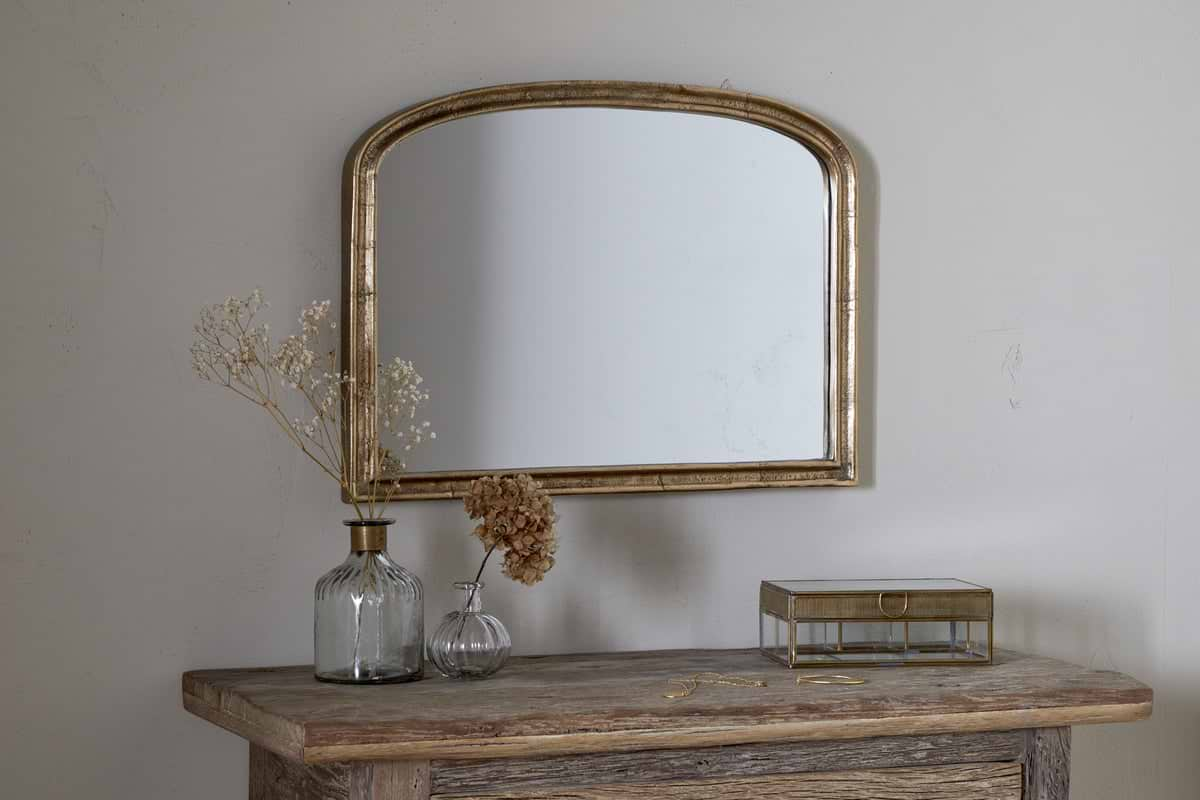
Grouping a small gold-framed oval with two pale-wood rounds and spacing them a forearm apart helps create calm. The room feels settled at a glance, even as the light moves.
Where do you find vintage and thrifted mirrors for this look?
Vintage and thrifted mirrors give the most character, often found in local charity shops, online marketplaces, or salvage yards. These mirrors almost always come in non-standard shapes and worn finishes that soften modern interiors.
Small antique stores, monthly flea markets, and online classified lists regularly show up with oval and round mirrors framed in old wood or brass. These pieces often have foxing or slight warping in the glass, which softens both the reflection and the vibe, without sacrificing usability.
Mirrors from thrift shops tend to be smaller and lighter, making them easier to hang in rentals or flats with old plaster walls. Compared to new, big-box mirrors, used finds offer more options in scale, an easy way to keep a gallery wall feeling lively but not busy.
Online, popular marketplaces feature local sellers moving pieces from house clear-outs. Search for “gallery set”, “vintage oval mirror”, or “art deco wall mirror” for better results. Look for patina, gently chipped edges, or even slightly smoked glass if you want a softer reflection.
A set of three or four unique thrifted mirrors used on a bedroom wall adds both softness and history. The grouping works especially well with understated bedding, linen quilts or undyed cotton, pulling the room’s materials together each morning.
What tends to hold up with mirror grouping in small living rooms
Looking across rooms over time, a few steady patterns stand out with grouped mirrors. Matte finishes get recommended again and again for walls with strong side light, because they don’t catch harsh glare the way a glossy surface does. Most reviewers say that frames with a bit of texture, rattan, worn metal, unfinished wood, are easier to work into lived-in spaces and show less dust or streaks.
Arrangements that use mismatched shapes but similar frame tones last longer in both style and function. When mirrors mix with textiles, linen curtains, a wool pouf, or a loosely woven rug, the whole wall feels less like décor and more like a working part of the room. Consistent feedback is that a mirror set should never be the only thing on a wall; a single print or soft object will ground the collection.
, Mara, Loom & Glow
Common questions
What is a room of mirrors called in interior design?
A room of mirrors is typically referred to as a mirrored room, inspired by historic spaces like the Hall of Mirrors at Versailles. In modern design, it means a space shaped by multiple reflective surfaces to subtly spread light and open up the space. It’s a concept used to add softness and depth.
What are the best places to put mirrors in a small living room?
The best places to put mirrors in a small living room are across from windows, beside doorways, or above a sideboard, where they can catch natural light without doubling clutter. Avoid placing mirrors directly across from each other to keep reflections calm. Soft frames and gentle spacing help the look.
What is a room of mirrors called?
A room of mirrors is called a mirrored room or, in history, the Hall of Mirrors. This term became well-known through Versailles, where mirrored arcades face windows for dramatic lighting effects. In everyday home design, a room of mirrors means careful placement of smaller mirrors for practical light and calm.
What is room of mirrors about?
The phrase “room of mirrors” relates both to spaces that use many mirrors for light and depth, and to self-reflection, as in the song ‘Room of Mirrors’ by Metallica from 72 Seasons. In home design, the term means shaping a room to feel brighter and more open.
Explore more calm combinations inside our Shop The Look .
Shop the Look
A few understated Nkuku pieces for a small room where light and reflection do the work.

Nkomi Basket
Woven storage with a calm silhouette, works open or tucked under a console.
View at Nkuku →Some links above are affiliate links. If you buy through them we may earn a small commission at no extra cost to you. We only suggest pieces we think fit a calm, lived-in home.
Free guide
The Calm Shelf
12 styling ideas to help you compose calm, balanced shelves in natural texture homes.