

Most small living room layout ideas fail when there is too much furniture, awkward walkways, or cluttered shelving. It’s common to see a sofa pushed against the wall, a coffee table blocking the path, or open storage filled with things that don’t belong. This often leaves the room busy and hard to relax in.
This guide shows you how to edit, place, and choose only what works. Swap out anything that blocks movement or clutters sightlines. This works especially well in a small apartment when you have limited storage because fewer, better-chosen items make a calm room feel larger and easier to live in.
The short version: The best small living room layout ideas focus on editing down, using one key anchor piece, and keeping sightlines open—fewer objects feel better than more. A single soft chair, a small table, and repeat textures help, while open shelving needs to be partly empty. The result is calmer, easier movement.

Where this works best
These layout ideas fit homes with shared spaces, limited floor area, and awkward corners. Using fewer, practical pieces helps the room feel open instead of cramped.
A small living room in an apartment, converted rental, or shared flat will usually have low light, narrow pathways, or odd doorways. Many of these spaces double as entry, workspace, or dining zone, so zones blend. Items with more than one use—a compact armchair, a bench with storage, a floating shelf—fit better than sets or bulky sofas.
For everyday life, having just one armchair or a loveseat leaves more floor to see and walk on. An off-white teddy chair in a small corner reads as functional and relaxing, not heavy. Soft rugs and small tables move easily if needs change, unlike large fixed shelving.
Avoid packing multiple chairs and big bookcases into the main walkway. This blocks natural traffic flow and can make a room too hard to cross, especially in a busy household. Keep large pieces away from the middle of the floor to allow circulation, not just seating.
How do I plan a layout that feels open?
Keep walkways clear and furniture low or light. Arrange seats so you can see the edges of the room and any windows—space feels bigger when you can see through to the walls.
Start by removing anything that blocks the middle of the room or sits higher than the seat of the main sofa. Unlike dense arrangements, keeping the main path from door to window empty pulls the eye outward and lets daylight move through the space. This is why low coffee tables and wall-hugging benches are recommended for small room decor.
When placing an anchor piece like the Otas Teddy Cotton Armchair, let it face into the room but leave open space behind it. This lets you shift seating for guests or daily tasks, while still having a spot to relax. Soft, movable chairs are easier to reposition than a big sectional and can work under different lighting conditions.
Compared to living rooms crowded with side tables or baskets, one small table and a floor lamp usually serve all typical needs such as putting down a drink or book. Keeping surfaces mostly clear allows a sense of ease, letting you settle in without needing to shuffle things out of the way.
What is the most effective way to edit a small living room?
Edit out duplicates and anything without an obvious purpose. Each object should be easy to use, reach, or put away, freeing up room to breathe.
In a calm small room, every piece needs a reason to stay. Assess the items that live on surfaces or shelves—multiple throw pillows, baskets of old remotes, stacks of unread books—and keep only what you use each week. Clearing out these objects makes dusting easier and gives your main materials room to show. Here, clear coffee tables tend to look and feel better than layered trays or magazines.
Unlike maximalist rooms, a pared-down set of three to five objects per shelf or surface prevents the area from looking busy. If items are stored in a lidded basket or a slim cabinet, the eye reads a clean line. A clay bowl for keys, a small woven basket for chargers—both store what’s needed, nothing extra.
Leaving breathing room between objects is a main principle in small-space decorating. Overcrowded rooms feel heavy; a pared-back palette and objects spaced out by sight calm the room quickly. Place an armchair near a side wall, not in the middle, to give the appearance of more space.
Styling and placement
Group things by material (like wood), repeat no more than three colors, and keep surfaces partly clear. Place main seating at an angle or slightly off-center to avoid boxy layouts.
The most effective layouts in small room decor keep large pieces close to the wall, with soft shapes leading toward windows or sources of natural light. Grouping a side table (in solid oak or soft-textured finish) with a floor lamp and a single chair gently tucks the corner, making the main zone open for movement. Unlike placing sofas square to each other, angling the chair draws attention away from the small scale of the room.
Repeating a single material (like a pale natural rug echoing the soft armchair) makes the space feel bigger. When you keep hard things like trays or planters low and light, they don’t compete with the main seating. Moderation in color—especially sticking to natural shades or off-whites—means nothing jumps out. Compared to a room full of wild patterns, a quiet palette relaxes the line of sight. More on this at minimal entryway surfaces styling.
Leave shelf ends or table edges empty—the room looks open and the eye rests. Avoid hard, shiny finishes above eye level; matte surfaces on walls, shelves, and storage let light diffuse without glare. Use a floor lamp for height, not another heavy chest or shelf.
Quick calm checklist:
- Choose main fabrics in soft cotton or linen; avoid synthetic shine.
- Group by two to three colors max, always including an off-white or muted neutral.
- Leave at least one side of each shelf, table, or seating area clear at all times.
- Keep furniture legs visible for easier cleaning and lighter look.
- Use one large anchor (like a chair or rug), not a cluster of small objects.

Why are soft materials and shapes important?
Soft textures like cotton, linen, and wool feel relaxing and blunt hard edges. Round arms or curved backs on chairs make the room gentler on the eyes and safer to move around in.
Adding soft items—like the Teddy Armchair or a small cushioned bench—makes it safer to walk around even when space is tight. Compared to glass tables or metal chairs, cotton and wool absorb sound and help draw less attention to corners or odd angles. This helps in rooms that echo or feel hollow with too many hard surfaces. More on natural fibers at linen.
Round or curved shapes guide the eye along a gentle line, especially when paired with pale colors. A square table with sharp corners reads harder and stops the flow, while a round table or bowl softens the effect. With fewer hard lines, the living room feels safer and more comfortable for bare feet and children.
Repetition matters: a rounded edge on a storage basket, a soft throw, and curved lamp arms tie the small space ideas together. This is why designers often recommend one-to-two strong shapes repeated, rather than many different silhouettes. Placing a curved chair under a window makes the whole spot easier to approach and use daily.
How do I use color to open up a tight space?
Stick to two main colors plus an accent, and avoid sharp contrasts. Pale walls and light furnishings reflect daylight better, making rooms look bigger and less boxed in.
Color works best when limited to a small, calm palette—off-whites, pale greys, and a hint of wood or clay. Unlike a deep, moody color and a pale trim competing, two soft tones help the walls and main seating read as one large surface. The effect is a room that feels less broken up and more open. Britannica outlines how color works with light and perception.
For those who crave an accent, add only one—such as a muted rust pillow or sage throw. The color must appear in more than one spot, like a small bowl or framed print, to look planned instead of accidental. Compared to lots of small, bright items dotting the room, a repeating accent reads as a real choice and avoids clutter.
If light is a problem, use mirrors sparingly: a single medium mirror on an open wall usually works best. Too many mirrors cause bounce and make a small room feel busier instead of more open. Keep the main wall color consistent for the same sense of width as “small space ideas” suggest.
How to add personality without clutter?
Show what matters with one or two larger items: framed art, a clay vase, or a woven basket. Keep personal objects to a small group and store extras out of sight.
A cosy small room idea is to select one large print or a single plant (snake plant or rubber tree) and pair it with an everyday object in a natural material. Unlike displaying every memento or family photo, this style lets a single story stand out. Extra books live in a closed basket or wooden box, keeping the display calm when not in use.
Personal things should make daily life easier, not interrupt flow. A cork bowl for headphones, a large mug for keys, or a folded linen throw at arm’s reach keeps the personality but avoids crowding. Storing small sentimental pieces in a drawer or on one short shelf is enough. Soft entries often set the tone with a tiny collection on one surface, not throughout the room.
Compared to a packed bookcase or a gallery wall full of small frames, fewer, bigger items keep the room from closing in on itself. Just one piece of apartment decor ideas—like a tall lamp with a linen shade—carries presence without mess. Place the main personal item within arm’s reach from the most-used chair to keep it practical and visible.
Standing in the center of a small living room, it’s often clear that something feels unsettled—maybe too many objects on all sides or a chair stuck right in the path. Some rooms feel unhelpfully busy no matter how you tidy them or swap out baskets for boxes. Instead of warmth, there is a low-level daily frustration. Choosing and placing one focal piece—like a textured armchair in a quiet color—removes this sense of friction almost immediately. The change matters because the room is easier to settle into and move across, minute by minute, day to day.
It’s easy to let shelves and flat surfaces fill with odds and ends, especially in rental apartments or family spaces. Adding too many storage baskets, decorative trays, or stacked pillows leaves nowhere comfortable to sit or set things down. Often this means the room looks smaller, heavier, and anything but calm. Editing to just one anchor piece and reducing clutter clears both the space and the mind. Save this idea for later.
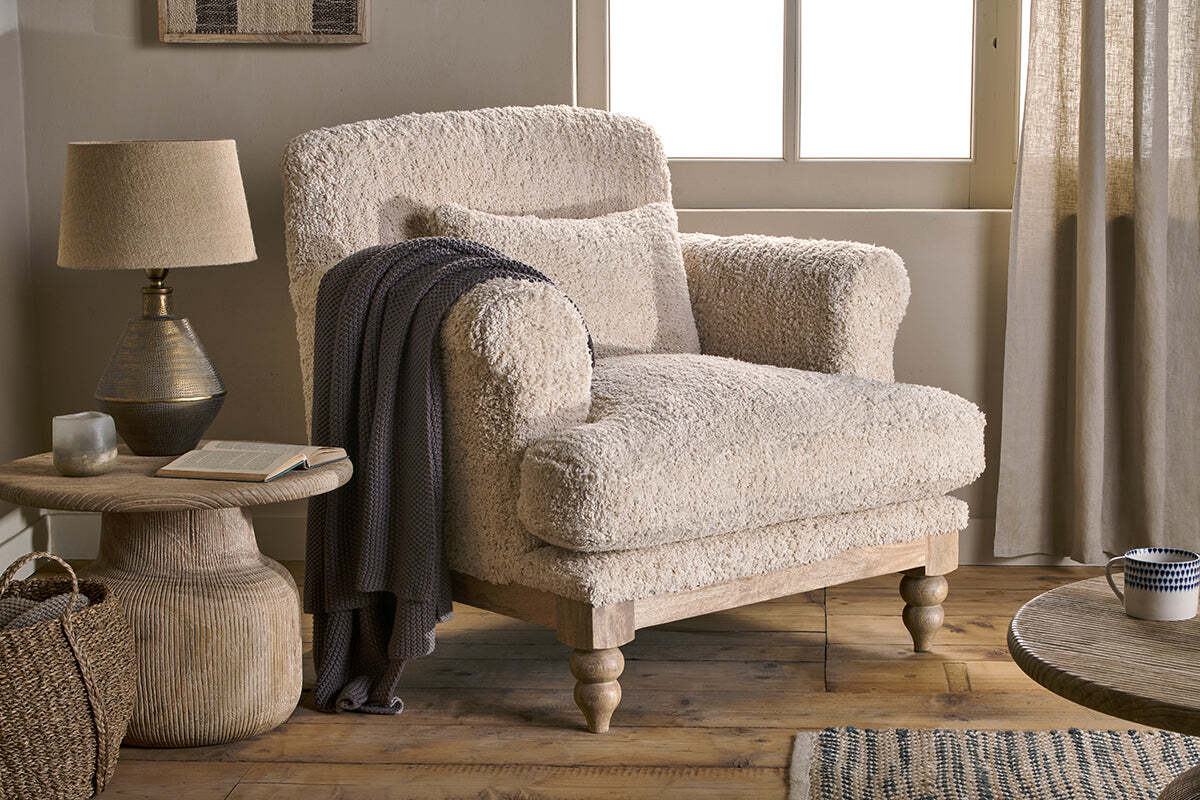
Otas Teddy Cotton Armchair – Off White
adds quiet structure and warmth while keeping the room balanced.
What tends to hold up with small living room layout ideas
Rooms that feel good rarely have more than one clear anchor—a heavy sofa, a wide chair, or a bright window—with the rest edited down. Pattern reviews show that a matte, pale finish on walls and shelving avoids glare and gives a soft, diffuse light, making the space less flat. Many designers repeat this: group by material, not by number or strict color rules.
Natural materials, like cotton and linen, resist looking worn and are easy to refresh with a simple wash. They don’t trap as much dust and usually stay cool, which explains their popularity for both comfort and practicality. The main principle: more empty space equals more comfort, even in the smallest apartment.
— Mara, Loom & Glow
Common questions
How do I plan a small living room layout that feels open?
Keep walkways clear and furniture low or light. Arrange seats so you can see the edges of the room and any windows-space feels bigger when you can see through to the walls.
What should I edit out of a small living room?
Edit out duplicates and anything without an obvious purpose. Each object should be easy to use, reach, or put away, freeing up room to breathe.
How should I arrange furniture for small room styling?
Group things by material (like wood), repeat no more than three colors, and keep surfaces partly clear. Place main seating at an angle or slightly off-center to avoid boxy layouts.
What is the most effective way to reduce visual clutter in a small living room?
Unlike placing sofas square to each other, angling the chair draws attention away from the small scale of the room. Repeating a single material (like a pale natural rug echoing the soft armchair) makes the space feel bigger.
what is the best layout for a small living room?
The best small living room layout prioritises editing down to fewer, better-chosen items and keeping sightlines open rather than packing in multiple pieces of furniture. Effective layouts use one key anchor piece such as a compact armchair, keep walkways clear by positioning large pieces away from the middle of the floor, and maintain surfaces mostly clear with just three to five objects per shelf to create a calm, spacious feel.
Explore more calm combinations inside our
Shop The Look
.
Free guide
The Calm Shelf
12 styling ideas to help you compose calm, balanced shelves in natural texture homes.