

Many of us want to style our home to feel peaceful, but often end up with a busy space that feels unsettled instead of calming. When new furniture and accessories arrive, rooms can quickly fill with competing shapes, colors, and textures, leaving no spot for the eye to rest.
You can change the atmosphere in one afternoon by editing your placement, removing extras, and choosing fewer, better materials. This works especially well in a living room with open shelves when there’s not much built-in storage available, because too many objects crowd the surface and make it hard to relax.
The short version: To style our home for calm, choose one clear focal point per room, limit surfaces to a few natural pieces, and pull back on color. Editing what stays out leaves every item room to breathe. The result is quieter, easier to live with, and easier to tidy each day.
Key takeaways
- A styled home looks calm when there’s only one clear focal point per room.
- Natural materials like jute, linen, and clay add warmth without visual clutter.
- Leaving two-thirds of a shelf empty keeps a display from feeling cramped or busy.
- Soft lighting from one lamp at a low height calms a space more than overhead light alone.
- Style Our Home offers furniture and home accessories that fit minimalist rooms, according to Style Our Home.
- Why is styling a home more than buying furniture?
- How do you pick a single focal point for a calm space?
- Where this works best
- Styling and placement
- How do natural materials change the mood of a room?
- What are the most common styling mistakes and how can you avoid them?
- How do you keep a styled home looking calm over time?

Why is styling a home more than buying furniture?
Styling a home is not about collecting objects; it’s about editing choices and arranging pieces so each serves a real purpose and feels good in daily use.
Many people fill a room with the right sofa, armchair, and sideboard but still end up with a space that feels unfinished or busy. The reason is that furniture sets a framework, but how those pieces work together, plus what fills the surfaces, means just as much for the mood you actually feel in the room.
For example, a well-made table can disappear into clutter if it’s surrounded by many small decorations and excess stools, while a single stone bowl or a clay vase draws attention and makes the table easier to use. Arranging furniture and accessories with empty space around them gives each piece weight and clarity.
Compared to shelves packed edge to edge with trinkets, a simple setup, one lamp on a bookshelf, a folded linen throw on the sofa, lets light and color read softly, which helps people feel at ease instead of overwhelmed in their own home.
How do you pick a single focal point for a calm space?
Choosing one clear focal point in each room lets the eye settle instead of flitting between objects, which creates a relaxed mood.
Many living rooms have a sofa, a rug, a large window, and shelves; each could be the visual center. Instead of spreading attention across many spots, pick one anchor (like the fireplace or the couch) and choose shapes, textures, and light to support it, not distract from it. A bowl of green apples on the coffee table draws focus, while too many small frames or cushions scatter the eye.
The same principle can work in a bedroom. One oversized headboard or a stack of wool blankets becomes the center, while smaller objects stay out of sight or are kept to a single nightstand. If every corner competes for attention, the room feels restless.
A display works best when supporting objects point toward the main piece, like books stacked low beneath an art print. If you highlight only one element, the rest of the room fades into the background and feels calmer instantly.
Where this works best
Calm styling is especially effective in rooms with limited storage, open shelves, or competing window views.
Small apartments, rental flats, or homes with large living spaces that double as work or play areas benefit most from these choices. Without much built-in cabinetry, open shelves and tabletops quickly fill up, making rooms busy and hard to clean. Limiting how many items stay in view means less daily effort and less visual noise.
In a home office or living room with both display storage and TV, editing accessories down to one or two natural pieces lets the largest shape (sofa, console, sideboard) set the tone. If a hallway has a narrow console table, a single woven tray or round mirror does more than a line of small frames or a crowded bowl of keys.
Avoid using this approach in rooms meant for storage or high-traffic zones where kids or projects need open bins and surfaces. A too-minimal look in a utility room, for example, makes it less functional for everyday living.
Styling and placement
Careful placement of objects, space between pieces, and sticking to a short color palette all help a room feel settled and lived-in, not sparse or cold.
Start with every surface. Empty the shelf or sideboard completely, then add back just one anchor item, a thick glass lamp, a clay bowl, or a stack of two calm books. Place large pieces off-center, then balance with one contrasting texture, like a small woven mat. A bare shelf reads colder than one with a single woven basket and a bowl for keys.
Color does more work than most people realize. Choose one dominant shade, often drawn from flooring or upholstery, and add two quiet accent tones if you need them. This limits visual noise and helps your room feel tied together even if furniture comes from different stores or decades.
Spacing is just as important. Most shelves look calmer if about two-thirds is left clear. If the gap between objects matches the largest item in the grouping, the result feels deliberate, not randomly spaced. Soft forms and textured items, jute baskets, clay mugs, thick linen napkins, make even plain white shelving look lived in.
Quick calm checklist:
- Limit each surface to one anchor and one support piece, both with real function.
- Stick to three color families per room maximum, drawn from existing furniture or flooring.
- Choose natural textures, linen, jute, clay, that feel good to touch and look calm from a distance.
- Leave two-thirds of shelves or tabletops clear for real visual relief.
- Group accessories in odd numbers when you must group, three is easier on the eye than four.

How do natural materials change the mood of a room?
Natural materials like jute, linen, and wood soften hard edges and reflect gentle, warm light, making a space feel more relaxed and less busy.
Hard surfaces, glossy tabletops, metal frames, or glass decor, can bounce too much light and feel clinical when used in excess. By swapping just one glass vase for a woven basket or a clay bowl, the space absorbs some light and creates a more welcoming look. Soft textures signal rest and comfort, especially in a living room where most time is spent.
Upholstery in a wool or linen blend, rather than polyester, feels different against the skin and keeps its appearance through daily use. A single throw blanket made of washed cotton on a sofa both softens the look and feels warmer on cool nights. Woven jute baskets age well and can hide toys or remotes, reducing surface clutter in shared spaces.
Compared to synthetic accents, a wood side table or cane-backed chair wears gently over time, showing real use. Even a small switch, like a natural-fiber rug replacing a shiny option, lays a softer, quieter foundation underfoot.
| Material | Effect on Mood | Best Used For |
|---|---|---|
| Natural linen | Softens color, absorbs light | Upholstery, curtains |
| Jute | Adds warmth, masks wear | Baskets, rugs |
| Clay/stoneware | Earthy, heavy visual weight | Bowls, planters |
| Glass/metal | Reflects light, reads colder | One statement item, never a cluster |
What are the most common styling mistakes and how can you avoid them?
The most common mistake is putting out every favorite object and creating too many points of interest; avoid this by choosing what stays and editing out what crowds the view.
Many people try to fill every blank spot: extra pillows on the sofa, stacks of books on a coffee table, vases or framed prints in every corner. These choices pull the eye in too many directions and make the room harder to use. Clearing one whole surface before adding back only the essentials changes the space right away.
Another frequent error is mixing too many finishes, shiny gold, matte black, high-gloss lacquer, on a single sideboard or shelf. Instead, pick two finishes and stick with them throughout the room. Furniture and home accessories with natural texture, like those found on Ora Designs, featured on Style Our Home, handle everyday wear better and blend easily with simple palettes.
Lighting is often missed. Overhead fixtures, especially built-in ones, tend to scatter light sharply and show every object on a surface. Adding just one table or floor lamp with a fabric shade creates soft, diffuse light that flattens shadows and makes a space gentler, according to the way designers plan living room furniture groupings for a spring refresh.
How do you keep a styled home looking calm over time?
Maintaining a calm look in your home is easier when every object out on display has a purpose, and spare items rotate into use or storage seasonally.
Most of the visual clutter in a room builds up over time: unopened mail, shopping bags, random chargers, or pet accessories left out. A good rule of thumb is: if something hasn’t been used in a week, it probably belongs hidden away. Many families use shallow woven trays or deep drawers to sweep away loose items at the end of each day.
Edit shelves and tabletops seasonally. Each spring or autumn, remove everything, wipe surfaces, and return just the favorites. Store the rest in a basket behind a sofa or in a wardrobe, swapping them out every few months to keep the room fresh but not crowded.
The maintenance gets simpler when every new purchase, furniture, lighting, or decor, has a clear spot and supports another piece already in the room. Big-ticket purchases like a new sofa from the Marpole Collection last longer in both quality and appeal when they aren’t visually crowded by extras, as noted by reviewers of the Roehampton Textured Slub Swivel Chair during peak renovation cycles and housing transactions (source).
What tends to hold up with styling for calm, not clutter
Most reader photos and decorator reviews point to one pattern: fewer, better pieces with space between them almost always look calmer, especially with natural textures and warm lighting. Matte finishes get recommended again and again for shelves near windows, because they don’t catch glare the way a glossy tray does. Pieces like the Ora Designs line, with over 50 years of design heritage, are noted for lasting looks and feel under daily use.
It is easy to think adding one more accessory will complete a space, but the rooms that still feel good after months are the ones where restraint was the guiding principle. Soft edges, clear sightlines, and empty space have a calming effect that doesn’t wear out.
, Mara, Loom & Glow
Common questions
How do I pick a single focal point to make my room feel calm?
Choosing one clear focal point in each room lets the eye settle instead of flitting between objects, which creates a relaxed mood. Instead of spreading attention across many spots, pick one anchor (like the fireplace or the couch) and choose shapes, textures, and light to support it, not distract from it.
What materials should I use to add warmth without creating visual clutter?
Natural materials like jute, linen, and clay add warmth without visual clutter.
How much of my shelf should I leave empty when styling for calm?
Most shelves look calmer if about two-thirds is left clear.
Why is styling a home about more than just buying the right furniture?
Styling a home is not about collecting objects; it’s about editing choices and arranging pieces so each serves a real purpose and feels good in daily use. Furniture sets a framework, but how those pieces work together, plus what fills the surfaces, means just as much for the mood you actually feel in the room.
Explore more calm combinations inside our Shop The Look .
Shop the Look
Nkuku pieces that layer warmth and calm into any room you're styling.
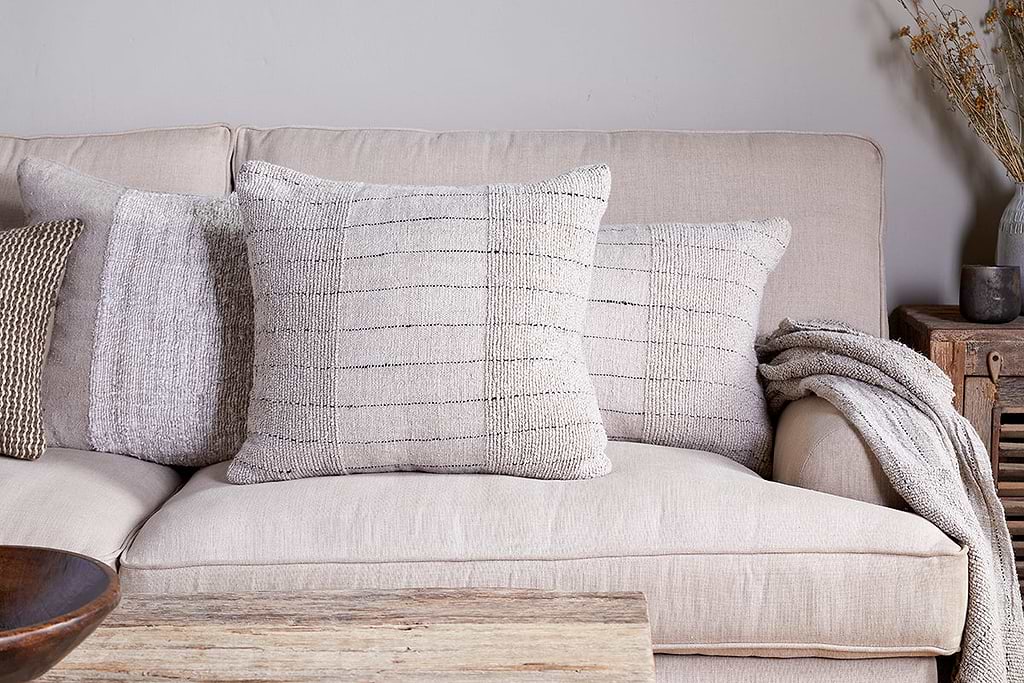
Mayla Cushion Cover
Soft hand-textured cover, instant warmth on linen sofas or chairs.
View at Nkuku →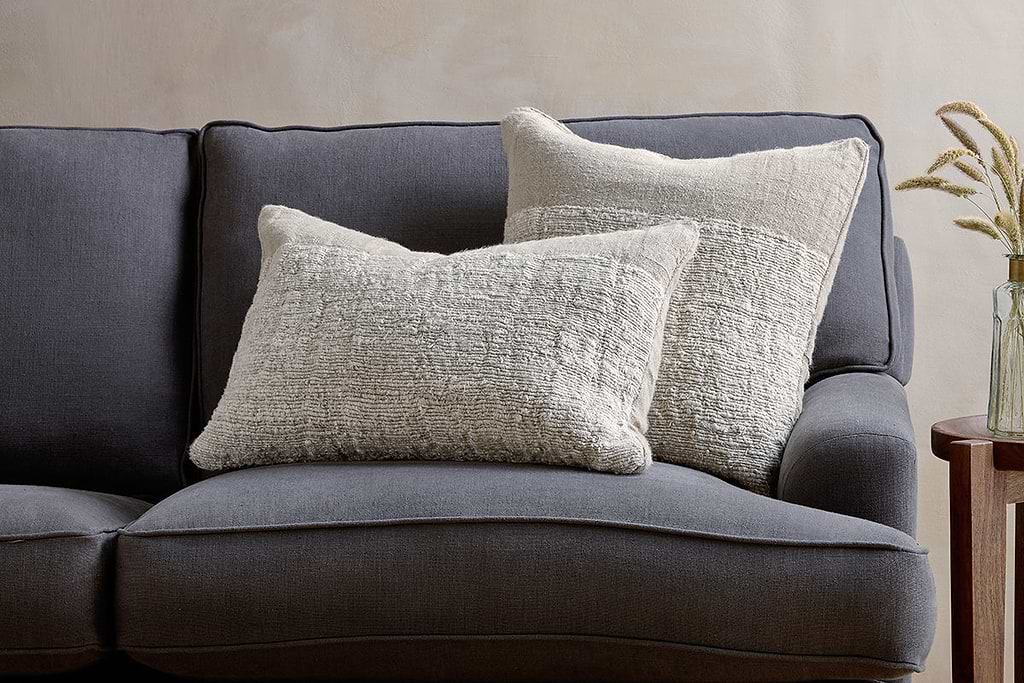
Puli Linen Cushion
Recycled linen in natural, pairs with woven textures and aged wood.
View at Nkuku →
Some links above are affiliate links. If you buy through them we may earn a small commission at no extra cost to you. We only suggest pieces we think fit a calm, lived-in home.
Free guide
The Calm Shelf
12 styling ideas to help you compose calm, balanced shelves in natural texture homes.