

Low light in hallways often leaves many homeowners searching for dark hallway ideas, struggling to make the space feel more than just a pass-through. Rooms with limited sunlight can seem flat, cold, or even smaller than they are, especially when filled with hard edges, bright bulbs, or busy prints.
With the right approach, a dim hallway can feel grounded and welcoming without forcing extra light or clutter. This works especially well in a narrow hallway when natural light is blocked by rental constraints or closed doors because it lets you design with the existing mood rather than push against it.
The short version: The most practical dark hallway ideas treat low light as a style tool, using deep colour, texture, and warm details to create a calm transition zone. Embracing shadow and contrast gives a hallway privacy and quiet, turning a once-problem space into a feature with less effort.
Key takeaways
- A dark hallway feels more cohesive when painted in deep shades like Off-Black or deep blue from Farrow & Ball’s range.
- Mirrors work best when angled to catch side light, not just reflect another wall.
- A runner rug should leave a wood margin of at least three inches on either side, according to Laurel Bern Interiors.
- Texture brings warmth without adding clutter—try seagrass or rough linen instead of gloss paint.
- One floor lamp or wall sconce at eye level often works better than several ceiling lights in a dim hallway.
- Why a dark hallway is a mood, not a problem
- Where this works best
- How do you pick paint colours for a low light hallway?
- How to add texture in a dark hallway without making it busy
- What is the best way to use mirrors and glass for more light?
- Styling and placement
- Which runner rug rule stops a hallway looking like a corridor?

Why a dark hallway is a mood, not a problem
A dark hallway becomes more inviting when treated as a quiet transition, not something broken. Using deeper colours and soft lighting turns shadow into a soft boundary between home zones.
Living with a hallway that never quite brightens, even at noon, makes many owners reach for more bulbs or paler paint. Flooding the space with white, though, can flatten the surfaces and highlight every shadow, making the passage feel stark rather than calm. Colour and mood often do more than extra light.
Instead of chasing brightness, start by describing how you use the hallway. If you step through quickly, a darker wall or trim can slow the transition and make the rest of your home feel brighter by contrast. A pale hallway next to a shaded living room can make both appear washed out.
Unlike kitchens or workspaces, hallways do not need strong overhead light. Repeating pale walls from room to room can erase the sense of arrival. Choosing a deep shade makes each entry purposeful, which softens the sense of “passing through.”
Painting a passageway in a deep blue or soft black helps a small apartment feel more anchored and private.
Where this works best
A dark hallway idea suits small entries, north-facing corridors, and rental homes where natural light is blocked. Working with shadow stabilizes the mood of these spaces.
Hallways that face away from windows or sit behind a closed staircase often look dull under standard light bulbs. These rooms are perfect candidates for deeper colour, stronger textures, and warm details. They don’t compete for attention, allowing you to try bold choices without overwhelming everyday living areas.
In a narrow hallway that links a front door with the kitchen, focus on anchoring the view using a deep wall shade or a contrasting rug. Since the area is used for passing through, details can be simple and robust—hard-wearing paint, a heavy runner, and a matte-finished light fitting all stand up to brushes and bumps.
Avoid mirror placements directly across from a closed door, which can make the space feel more boxed in, or going fully dark in a side hall that lacks any window, unless you plan to add soft light at eye level. A single mistake, like layering too many small accessories, quickly turns a calm hallway into a busy pathway.
Choose these ideas for spaces that won’t benefit from added windows, and focus on those with hard flooring or visible wood trim for best effect.
How do you pick paint colours for a low light hallway?
Paint & Paper Library recommends colour-drenching a hallway in deep blue or dark brown so the lack of sunlight feels purposeful, not accidental.
Choosing paint for a dim corridor is about setting an even mood, not chasing brightness. According to Paint & Paper Library, dark brown and deep blue tricks the eye into reading shadows as intentional. Walls, trim, or doors can be finished in one tone for a calming, borderless look.
Off-Black and Black Blue from Farrow & Ball offer a soft yet strong backdrop, deep enough to hide scuffs yet gentle under indirect light. Colour-drenching means painting baseboards, radiators, and doors in the same shade, so light spills softly rather than creating sharp contrast at every edge.
Unlike stark white, which can look cold and chipped in shadow, deep green or navy makes the space grounded. When a pale trim is left, it risks drawing attention to the lack of window, while matching paint smooths out the stop-and-start seen in most rental hallways.
Finish a low-traffic hallway with eggshell paint for a touch more light bounce, keeping cleaning simple and surfaces durable.
How to add texture in a dark hallway without making it busy
Adding texture like a seagrass runner or rough linen curtain gives a dark hallway life, as long as the palette stays simple and clear.
Texture brings gentle movement to plain walls and floors that otherwise look hard under dim light. According to House & Garden, designer Beata Heuman used seagrass wall covering at a front door, giving depth without loud pattern. Seagrass holds up against scrapes and softens hard paint. You can also add a jute runner or even a clay bowl on a slim shelf for subtle changes in surface.
In narrow hallways with smooth floors, layering a single natural-fibre rug breaks up the echo and adds grip, while raw wood hooks or a linen curtain over the coat rack keep the look quiet. Unlike synthetic runners, natural textures absorb light, adding shadow in a gentle way.
Compared to glossy paint, matte and tactile surfaces avoid that glare that appears in many landlord-finished spaces. The effect settles the hallway, reducing harshness without adding more items to dust or move.

What is the best way to use mirrors and glass for more light?
The best mirror placement in a dark hallway catches side light from a nearby doorway or lamp; glass doors can borrow brightness from other rooms.
Mirrors offer more than reflection; placed thoughtfully, they bounce what little light exists deeper into the passage. According to Sharps, a medium mirror angled across from a side window multiplies the glow, while a tall mirror beside the door draws daylight into the space. Avoid hanging mirrors opposite a blank or dark wall, which only doubles the shade and can feel flat.
Glass internal doors, even a small one with a frosted panel, let light drift between rooms without needing to cut a new window. The trick is to place either piece where it shares light with a stairwell or living room—never in a spot where it only reflects another closed door.
Unlike corner lighting, which can feel stark and artificial, using mirrors and glass works with what’s already present. For a dark hallway, this means brighter faces in the morning and an easier trip at night without resorting to ceiling fixtures.
Try a slim framed mirror at the end of the hall so light bounces along the floor, combined with smoked glass on closet doors for a softened edge.
Styling and placement
Calm styling for a dark hallway depends on limiting pieces—one runner, one art print, and no more than two textures in view—is often enough.
Placement matters more than how much you put in. Clustered hooks or baskets can drag a narrow hallway into disorder, while too many framed prints risk making the walls feel heavy. Instead, select one large piece—a rug, a mirror, or a low bench—to anchor the eye. Leave bare space around it for clearer sight lines.
Too many colour changes can break the view, pulling attention to sharp transitions instead of the room itself. Using just one or two shades on walls and trim helps show off natural materials like wood, jute, or linen, which do not demand as much cleaning or dusting. Compared to a series of smaller mats, a single continuous runner visually stretches the hall.
Unlike kitchens, a hallway gains from minimal styling—coat hooks on a single rail, a bench with open space beneath, and a basket for stray scarves management. Placement closer to the entry, not scattered along the length, reads more calm and practical, easing the first steps inside the home. For those working with narrow hallway decor, keeping the styling simple prevents clutter and helps the low light flatter textured materials.
Quick calm checklist:
- Pick solid, natural materials such as jute, wood, seagrass, or clay for main pieces.
- Leave open space between each placed object (avoid stacking hooks or prints vertically).
- Stick to one runner rug and a single, framed art piece instead of a gallery wall.
- Limit your hallway palette to two main shades, both drawn from walls or flooring.
- Balance one focal point at entry; bench or mirror, not both crowded together.
Which runner rug rule stops a hallway looking like a corridor?
A runner rug works best when it fits the hallway but leaves a clear wood margin along each edge, making the passage look wider.
When flooring runs from the entry to the rest of the home, a runner defines the hallway but shouldn’t stretch wall-to-wall. Laurel Bern Interiors recommends keeping a margin of at least three inches but not more than six inches of wood floor visible along both sides, so the rug “floats” and visually widens the hallway.
If a hallway is too narrow and the runner covers edge-to-edge, the floor reads busy and choppy. Leaving a small margin shows intention and draws focus to the length of the space, instead of its pinch points. Paired with a natural material, the effect feels sturdy without fussiness.
Compared to wall-to-wall carpet, which collects dust and wears down in high-traffic spots, a single runner allows for easy cleaning and replacement. If selecting a runner for a narrow hallway, focus on those short enough to reveal the floor at both entry and exit—for calm, not excess.
| Runner Style | Margin Exposed | Best Use |
|---|---|---|
| Narrow jute runner | 3–6 inches per side | Classic wood or tile floors |
| Wool flatweave | Slim margin | Heavily used entry |
| Patterned cotton | Small margin | Rental-friendly; easy to lift |
A runner with natural, easy-to-clean fibre stays tidy, making the hallway look cared for, not busy.
There’s always a point in adjusting a dark hallway where something feels stubborn—maybe it’s clutter on the floor, too much contrast on walls, or a rug that’s crowded in. The light doesn’t change, but the mood does. That moment signals it’s time to pick a single design move and remove what distracts.
Many homes try to patch over darkness with overhead bulbs, mirrors facing the wrong way, or pale paints that read grey. Often, the hallway ends up looking busier or more unfinished. If the effect is frantic or cold, the change you need is usually about reducing items and anchoring your main colour or material.
Once you set the style—one strong runner, a single long shade, or a quiet texture—the hallway reads grounded. The passage slows down, shoes line up, and coats land in the right spot. Small decisions here make everything after the front door calmer.
If rugs curl at the edges, too many hooks crowd the walls, or a hallway mirror simply bounces shadows, the space will feel more like storage than a welcome. It matters because most traffic happens here; a busy look at the entry sets the whole mood back. Save this idea for later.
What tends to hold up with styling dark hallways
Over time, patterns across hundreds of homes show the best dark hallway ideas are grounded in restraint and texture. Utility pieces—runners or small benches—stand the test of repeated use, while natural tones outlast trend colours. Reviewers and decorators often point out that matte paint and natural walls, like seagrass, keep marks and dust less visible longer than smooth white surfaces.
A small number of mirrors or soft lights, set just above eye level, almost always suit these spaces. Texture and margin often matter more than expensive materials. Matching tones on woodwork help with maintenance, too. Across all these approaches, less is more—a principle that has held up as rooms and styles shift from year to year.
— Mara, Loom & Glow
Common questions
What colour is best for a dark hallway?
The best colours for a dark hallway are deep shades like Off-Black No. 57 or Black Blue No. 95 from Farrow & Ball, or rich greens and browns. These colours absorb shadows, avoiding a washed-out look. Consistent use of one shade across walls and trim helps make low light feel intentional.
What to do with a dark hallway with no light?
A hallway with no natural light works best with a single, warm sconce or low floor lamp, textured finishes, and fewer accessories. Using colour-drenched paint and natural materials adds depth without chasing brightness. Soft mirrors angled toward nearby light sources can also stretch what little light exists.
What can I do with a dark hallway?
You can calm a dark hallway with a narrow jute runner, a slim bench, single art print, and uniform wall colour. Avoid overfilling the space; instead, introduce small touches of matte black, natural wood, or textured baskets. Limit visible items and let the palette do the work.
What are the trends for decorating hallways in 2026?
Decorating trends for hallways in 2026 include deep, muted wall colours, texture from materials like seagrass or rough linen, and fewer visible hooks or accessory pieces. Focus is on functional storage and organic finishes that show wear softly rather than hiding it. A quiet, practical setup continues to be preferred.
Explore more calm combinations inside our Shop The Look .
Shop the Look
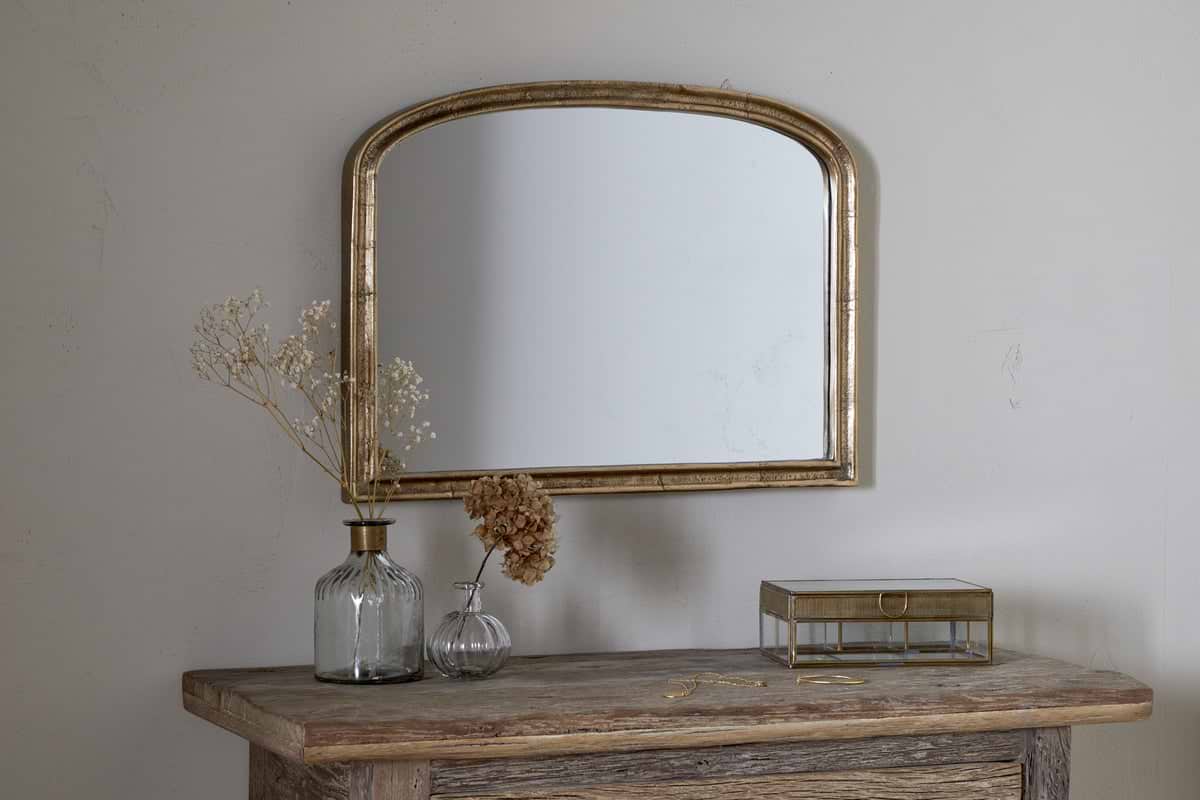
The Almora mirror catches what little light reaches a dim hallway, while the Aasha console anchors the space with quiet presence.
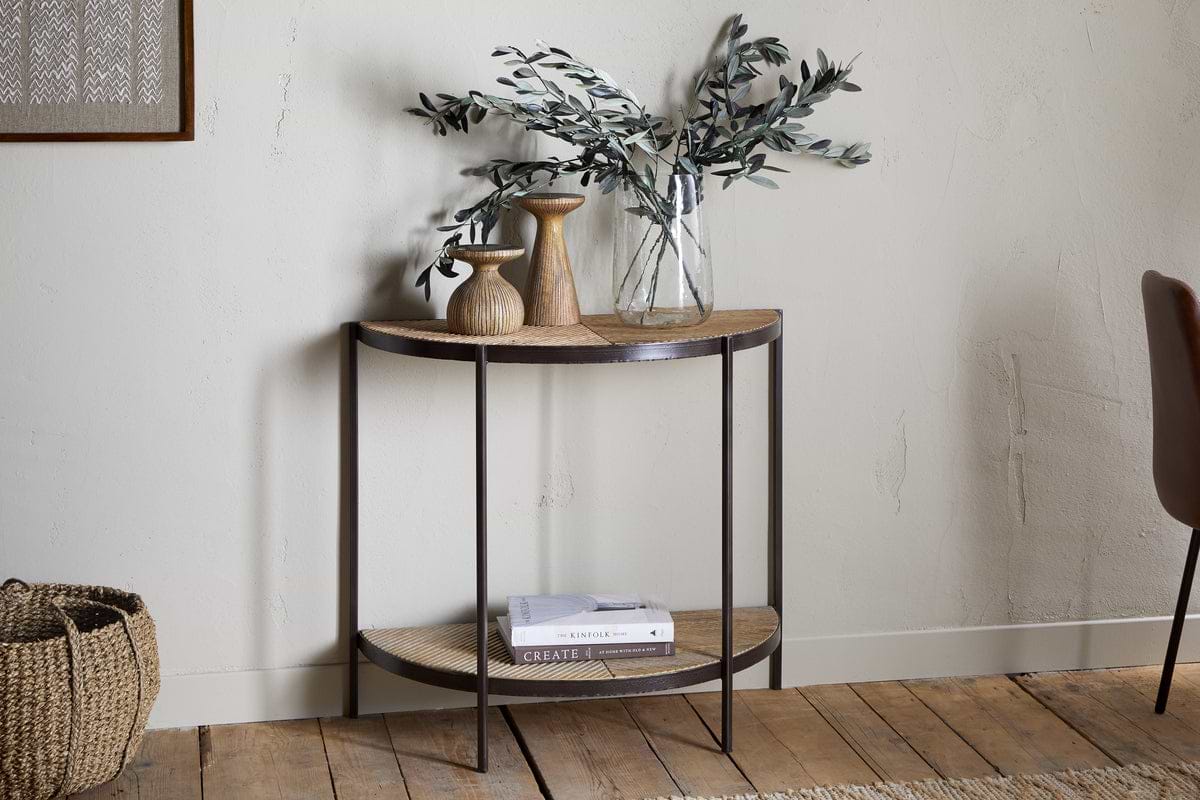
Aasha Console Table
Half-moon silhouette in mango wood; anchors entryways and narrow walls.
View at Nkuku →Some links above are affiliate links. If you buy through them we may earn a small commission at no extra cost to you. We only suggest pieces we think fit a calm, lived-in home.
Free guide
The Calm Shelf
12 styling ideas to help you compose calm, balanced shelves in natural texture homes.