

Hallway furniture can quickly turn an entryway into a source of stress. Clutter gathers near the door, shoes pile up, and narrow walkways make it awkward to move around or greet guests. The wrong piece—too big, the wrong shape, or too busy—just blocks the flow and makes the problem worse.
Today, we’ll look at calm, functional hallway furniture that fits real constraints and doesn’t cost more than 50 GBP. The focus is on what to swap, smart ways to pare back, and which quiet pieces actually work. This works especially well in a flat with a narrow entrance when coats and shoes have nowhere to go because it frees up floor space and helps you breathe easier.
The short version: Hallway furniture for small spaces works best when each piece tucks away clutter and lets enough floor show to keep the walkway open. Picking slim, calm designs makes the room feel less cramped, and choosing covered storage will help daily life flow better.
Key takeaways
- A storage bench with a lift-up lid keeps coats or shoes hidden and doubles as seating.
- A console table with open space underneath avoids blocking the walkway in a narrow hallway.
- Mirrors placed opposite a window or lamp bounce light and open up a small entry.
- Shoe cabinets work best when most pairs are hidden behind closed doors, not lined up in the open.
- Dunelm lists 183 different hallway furniture pieces in key categories for all space sizes.

What counts as hallway furniture in a small entryway?
Hallway furniture in a small entryway means compact, storage-focused pieces like slim benches, shoe cabinets, wall hooks, or narrow console tables. The main point is to clear the floor while keeping essentials within arm’s reach.
A small entryway fills up fast. Adding even one bulky piece can block the door or leave little space for shoes and bags. Hallway furniture here is anything that earns its spot—places to sit while pulling on boots, a slim shelf to land keys, a cupboard that hides the mess.
IKEA groups its hallway range into shoe, coat and hat racks, racks and stands, cabinets, mirrors, and console tables, which gives a sense of the main types that fit small areas. Each of these is designed to avoid crowding the entry while still storing daily gear.
Unlike full-size sideboards or bulky armchairs, lightweight options like a shoe bench or vertical coat hook take up less space and visually don’t weigh down the room. Picking the right type has a practical effect on how open the entry feels.
A compact row of wall hooks works especially well in a block of flats with a tiny shared entrance where damp coats need to dry out of the way.
Console tables that don’t block a narrow walkway
A console table for a narrow walkway needs to be slim enough to leave free walking space, with open legs or a light frame to avoid feeling bulky. Closed styles, or tables with thick solid sides, easily make an entry feel blocked.
Narrow hallways rule out anything too wide or heavy-looking. Many console tables are simply too deep, making it awkward to get by with bags or shopping. A model with open space underneath keeps the passage clear and doesn’t invite piles of bags or shoes underfoot.
Dunelm lists 67 console tables for hallways, with both wood and metal options. Those with simple legs, thin tops, and maybe a small single drawer hit the sweet spot for space-limited entries and don’t box in a walkway.
Compared to a deep sideboard, a slimline table made in a light oak or matte black metal won’t crowd the view as you step in the door. A heavy, enclosed sideboard sits like a wall, while a narrow table disappears as you pass.
A floating console or one with simple, open legs works for small modern flats where space beside a radiator is limited but you still need a spot to drop mail.
How do you hide shoe clutter instead of lining it up?
The best way to hide shoe clutter is with a closed shoe cabinet, under-seat box bench, or woven basket with a lid. Open racks leave shoes on show, adding busy lines and more visual noise.
Piles of shoes tend to spread out inside the door. Open racks seem simple but often end up untidy, especially after a muddy walk or a busy morning. A closed cabinet, even a slim one, keeps shoes out of sight and stops dust from gathering.
Most shoe cabinets hold about four to six pairs—enough for regular use without making the hallway feel overstuffed. Cotswold Co features a blue-painted storage bench with shoe space underneath, showing how hidden compartments and calm colours tidy up the floor, and a topped cushion adds somewhere to sit for lacing boots (source).
Unlike open metal racks or trays, a wood cabinet with doors looks calmer in communal spaces and doesn’t draw attention to worn or mismatched footwear. People with dogs or young children lean toward closed designs to control dirt and keep tripping to a minimum.
A closed shoe bench is ideal in homes with a front door that opens right onto the living area, where open racks would break up the line and feel untidy.
Coat hooks, stands, and racks: how much is enough?
A small hallway usually needs only a few well-placed coat hooks or one slim rack to avoid crowding the wall, while a coat stand suits an entrance with extra corners. More than this fills the space and starts to look busy.
Walls by the door can quickly turn into a mess of coats and bags. Staggering a few strong wooden hooks along one side works better than a whole row, because the eye lands on fewer things. Metal hooks blend into white or light walls, fading into the background instead of jumping out visually.
According to Furniture in Fashion’s hallway range, coat stands, coat racks, and wall hooks are staples in UK hallways. Standing racks fit best in homes with a wide spot near the entry. Small flats with a single wall to use need hooks spaced far enough apart that coats hang flat, not bulging out into the room.
Unlike bulky wardrobes or multi-level racks, spaced hooks make the wall feel lighter. Instead of squeezing a freestanding coat stand into a tight angle, simple pegs prevent people bumping into the ends and work for those in rental flats where fixing racks is not an option.
A short wood rack with two or three strong hooks is perfect in cottages or period houses where thick walls make fixing hardware trickier, but you still want a spot for a guest’s jacket.

Mirrors: where do they actually earn their space?
A well-placed mirror in a hallway bounces natural or lamp light back into the room, makes the entry look bigger, and gives a last check before heading out. The best spot is opposite a window or near the door.
Hallways are often low on daylight, especially in terraced houses or flats. A mirror next to or across from the front door catches and reflects any available light, brightening a shadowy corner. In tight spaces, an upright or oval mirror fits more naturally than a wide version.
The one-object entryway styling principle applies here—a single round or arched mirror reads as a focal point without crowding the wall. It’s a practical move for those living in a rental, where drilling more hooks or shelves isn’t allowed.
Compared to filling the wall with small decor or art, one larger mirror looks quieter and stretches the visible space. Some frames, like matte brass or painted wood, feel soft and don’t show dust as quickly as glass or high-shine metal.
A simple mirror works best close to a coat hook or table in narrow halls, offering a visual break right at head height without blocking any storage.
Where this works best
Slim hallway furniture works best in entryways that are narrow, shared by several people, or part of a rental flat with low light and not much wall space. Matching storage to these real limits keeps the space useful and calm.
Row houses, new-build flats, and older homes with a boot room all bring different constraints. A modern flat often has a narrow entry, maybe partly blocked by a radiator or bulkhead. Older houses may have generous high ceilings but doorways and alcoves that don’t fit shop-bought sideboards or shelves.
A simple bench with lift-up storage underneath the seat suits the boot room, where coats, scarves, or shopping bags need tucking away fast. In a studio flat, a floating shelf paired with wall hooks replaces the need for freestanding pieces altogether.
Avoid trying to force bulky cupboards into shallow hallways, which only makes the room feel tighter. Instead, let hallway furniture “float” visually by picking lighter tones like oak, white, or pale blue, as seen in Cotswold Co’s painted bench examples. This keeps the space feeling open.
A slender white console, placed between a door and a radiator, instantly organizes small items without narrowing the walkway in a typical urban apartment.
Styling and placement
Styling hallway furniture relies on keeping shapes simple, lines open, and colour choices soft. Placement matters as much as the piece itself—putting it in the wrong spot makes the entry feel crowded again.
It’s tempting to group baskets, shoes, and picture frames together. But the cleanest look comes from picking just one main piece per wall and adding a single soft accent—a woven bowl for keys, a tall vase with a few dried branches, or a stack of books on a console.
A calm interior often limits the palette to three colours: one base (like pale oak), one soft accent (sage or muted blue), and one touch of contrast (white or black). This keeps the eye from jumping between too many surfaces and corners, especially with wood and natural textures.
Compared to arranging a group of small objects along a console—such as several photo frames or mixed decor—leaving most of the surface empty looks quieter. A linen runner, a simple framed photo, or a single mango wood piece is enough.
A sideboard right inside the entry looks heavy; a floating shelf or shallow bench lets light pass and shoes slip underneath in a flat or terrace.
Quick calm checklist:
- Choose one main piece per wall (console or bench) and one small accent.
- Keep colour range to three tones: pale wood, soft accent, neutral.
- Leave clear floor space below and around each piece.
- Mix wood with one natural material (rattan, linen, jute).
- Hide loose items in lidded boxes or baskets.
There tends to be a turning point after a few months: the hallway starts to feel busier with each new season. Shoes overflow, the table piles up, guests pause and don’t know where to put their coat. The feeling is almost physical—like the entry is squeezing in, making every trip out the door slightly more stressful.
Most homes make the same mistake: adding too many small storage pieces or crowding the wall, until function and calm are both lost. This matters because clutter at the threshold seeps into the rest of the house, making it harder to settle in from the very start.
The real shift comes from choosing one focal piece—a closed bench, a slim table, or a wall-mounted rack—and letting it set the tone for the hallway. Floor opens up, lines stay clean, and daily routines stop bumping into things.
Too often, people hang five hooks when two would do, or set out three small boxes instead of one sturdy bench. Even colour can break the mood; a bright storage box jumps out, while a neutral or wood finish blends in.
A simple swap—fewer pieces, better placed—makes every step in and out of the home feel easier and less crowded.
A room feels instantly lighter with the right piece. Guests relax, shoes disappear, and the hallway finally matches the mood you want for the rest of the home.
Save this idea for later.
What tends to hold up with small entryway furniture
Looking at hundreds of entryway setups, one pattern stands out: the best results come from using storage benches and narrow tables with open space underneath. Reviewers on shop sites consistently mention how shoes and bags find a home off the floor, but the open legs or lift-up lids keep the area from feeling forced or busy.
Another common decorator tip is to use matte or satin finishes on hallway pieces. Glossy materials reflect too much light and show every fingerprint, especially in high-traffic spots. A matte wood or fabric finish looks clean for longer, requires less constant wiping, and doesn’t catch harsh glare from outside.
— Mara, Loom & Glow
Common questions
What furniture can you put in a hallway?
Hallway furniture can include slim benches, shoe cabinets, wall-mounted hooks, console tables, and small storage units. Each option helps organise shoes, coats, keys, or mail without blocking the walkway. Picking covered or floating pieces helps tiny entryways feel larger and less crowded.
What is hallway furniture called?
Hallway furniture covers a range of names, including console table, shoe cabinet, coat rack, storage bench, umbrella stand, and sideboard. Stores and decorators use these terms to describe pieces designed to fit tight entry areas and provide quick-access storage.
How do you maximise hallway space?
The best way to maximise hallway space is to use slim, wall-mounted or multi-use furniture with clear floor underneath. Closed storage and simple wall hooks control clutter. Limiting furniture and editing down to the essentials keeps a narrow hallway useful and easy to cross.
What do you put on a hallway table?
A hallway table usually holds just one or two useful objects, such as a bowl for keys, a small mirror, or a tray for mail. Too many items look messy. Choose objects with soft finishes, like a linen runner or a mango wood dish, to keep the view calm.
Explore more calm combinations inside our Shop The Look .
Shop the Look
The Aasha console and Olani shelf anchor narrow hallways with calm, functional presence.
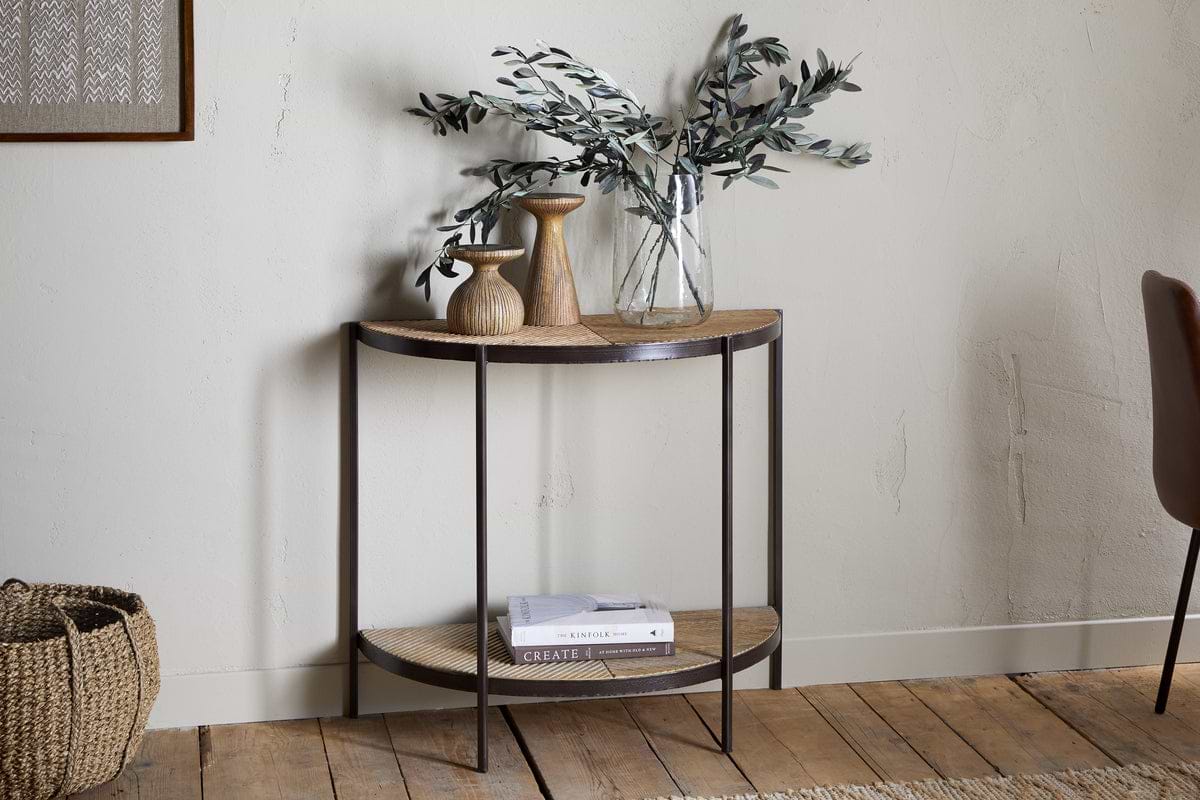
Aasha Console Table
Half-moon silhouette in mango wood; anchors entryways and narrow walls.
View at Nkuku →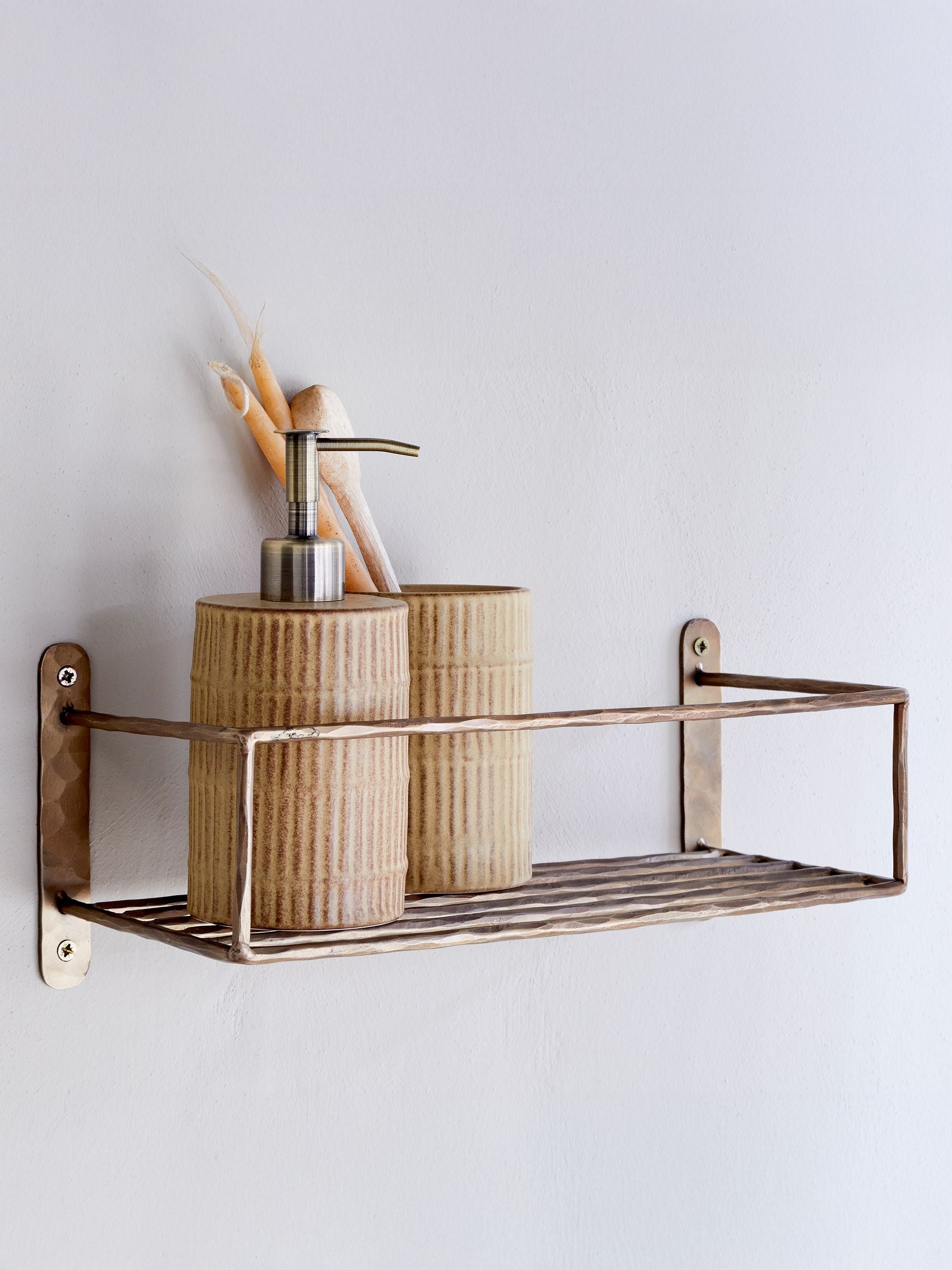
Some links above are affiliate links. If you buy through them we may earn a small commission at no extra cost to you. We only suggest pieces we think fit a calm, lived-in home.
Free guide
The Calm Shelf
12 styling ideas to help you compose calm, balanced shelves in natural texture homes.