

Clutter builds up quickly in a narrow hallway. Shoes, coats, and stray bags collect along the edges, making even carefully-styled spaces feel cramped. Most narrow hallway ideas found online show light-filled corridors, yet real homes often have low light, uneven floors, or rental constraints that add to the challenge.
Today, small changes can open up your hallway: remove bulky storage, repeat one natural material, and use visual anchors to calm the look. This works especially well in a small apartment entryway when storage is tight because every piece needs to fit its purpose and leave breathing room.
The short version: The best narrow hallway ideas involve wall-mounted storage, mirrors, and a long runner rug to maximize light and free up floor space. Simplifying your palette and repeating natural textures results in a hallway that feels calm and useful, not cluttered.
Key takeaways
- A mirror reflects light and helps a narrow hallway appear larger, according to DIY.com.
- Wall-mounted hooks keep the floor clear and simplify hallway storage.
- A runner rug draws the eye down the corridor and adds warmth.
- Repeating one natural material calms visual noise in a busy entryway.
- A storage bench can offer seating and hidden storage in the width of a hallway.
- Why does a narrow hallway feel crowded?
- Where this works best
- How do you layer storage without making the hall look busy?
- One mirror, one focal point: how to use reflections without chaos
- Styling and placement
- What kind of rug actually works in a slim hallway?
- What’s the role of soft light in a narrow corridor?

Why does a narrow hallway feel crowded?
A narrow hallway feels crowded because too many bulky storage pieces, mixed materials, or high-contrast colors make the space close in on itself. Choosing fewer materials and lighter hues opens up both sightlines and mood.
Many hallways are the landing spot for baskets, bags, and overflow shoes. Too many different textures, like rattan next to shiny plastic, grab attention and break up the view. Even minimalist rooms slip into busy patterns when every wall hosts hooks or artwork.
Switching to a calmer mix, such as woven home decor in one repeatable finish, keeps the eye moving down the space, not bouncing from object to object. A row of jute baskets on a slim shelf works better than a patchwork of sizes and finishes.
A metal shoe rack wedged against the wall often looks heavier than a wood or rattan bench. Using a single material for key pieces, like oak hooks and a matching slim bench, keeps the space grounded but not flat. This small shift matters more than adding extra storage.
Orienting storage along the wall, not out into the path, makes walking through feel natural and keeps the space open right to the door.
Where this works best
Repeating natural material home decor works best in hallways that are narrow, lack windows, or serve as busy drop-zones for families. Simplifying both materials and layout helps these constraints fade into the background.
Low-light corridors between main rooms, small entryways in apartments, and shared home hallways all benefit from pared-back storage and a clear flow. These are places where shoes kick off, shopping bags land, and outdoor coats need quick access, yet the walkway must stay clear enough for everyone moving through.
Using a matching row of wall hooks and a storage bench along one side contains clutter, while a runner rug in a soft color softens hard lines underfoot. Keeping storage along one wall, rather than both, improves day-to-day movement.
Avoid adding deep furniture, gallery walls packed with frames, or dark, high-contrast shelving in these settings. These choices often backfire, shrinking the space and making it feel heavier than it is.
Consistent pieces, like a row of brass hooks and a natural rattan bench, create order where the hallway is used most.
How do you layer storage without making the hall look busy?
Using wall-mounted rails and a slim shelf layers storage in a narrow hallway without mess, because the floor stays open and the eye can rest. Picking one primary texture, like light wood or woven seagrass, keeps things calm.
An overstuffed hallway feels narrow because clutter pulls attention in too many directions. Unlike deep cupboards, wall-mounted rails and hooks can hold daily coats and bags without blocking light or crowding floor space (as confirmed by IKEA’s guide on wall-mounted rails and hooks). Adding a narrow shelf above, with two or three matching baskets, contains hats and gloves yet leaves the path clear.
Compared to coat stands or cubbies, open wall storage feels lighter. The effect changes when surfaces hold too many different containers, so stick to one basket style, round jute for soft texture or a light oak tray, not both in the same row.
Repeating natural textures is the foundation of narrow hallway decor that never feels hectic. A good rule: one rail, one style of basket, and only as many items as you use daily. Adding restraint gives even small entryways a sense of breathing space.
An airy look lands best in rental-friendly halls with limited floor area and no space for cupboards.
One mirror, one focal point: how to use reflections without chaos
A single mirror at the end of the hallway stretches the view, according to DIY.com, and using just one avoids broken reflections that look scattered. Placement is the difference between calming and cluttered.
Mirrors work best in narrow spaces when they act as a purposeful focal point. A round or arch-top mirror above a console or simple bench brightens shadowy corridors by doubling any available light, in line with the advice that a mirror reflects light and helps a narrow hallway appear larger. If the mirror is small, grouping more than one quickly starts to fragment the space and confuse the eye.
Compared to wall art scattered along the length, one well-placed mirror gives depth. For tight or windowless corridors, an antique-style mirror placed at the end pulls sightlines deeper and extends daylight from adjoining rooms. Fake plants or small branches in a clay vase flatter the reflection rather than compete with it.
The trick is choosing one focal piece and placing it where it multiplies what little natural light the hall has, never facing another mirror or too many shiny objects. This keeps the mood soft.
Using a mirror above a storage bench balances utility with an easy sense of entry.

Styling and placement
Styling a narrow hallway works when each piece is chosen for a clear role, placed for line of sight, and matched by tone or texture. Arrangement shapes the feel as much as the objects themselves.
Visual calm needs more than a simple furniture swap. Layout matters: a storage bench should tuck alongside the wall, not across the end, so it helps the eye travel down the hallway. Texture works gently when repeated, a rattan pendant paired with a single jute basket softens the look, whereas mixed materials in one spot can feel noisy.
Pale colors with a low-contrast palette keep the mood easy. Earthy home decor, think natural oak, flax linen, seagrass baskets, settles into the background, especially when floor and walls are tonal rather than high-contrast. Cotton or wool runners stay soft and don’t overpower other surfaces.
Artwork belongs grouped in one gallery cluster rather than scattered. A picture ledge, which is thinner than a regular shelf, lets you swap pieces without extra holes (a picture ledge works especially well in small, rental-friendly halls). Keep it close to eye level for best effect.
Quick calm checklist:
- Stick to a 3-tone palette: wall, floor, and one primary accent.
- Repeat one main material, jute, light oak, or linen, across functional pieces.
- Group wall art or hooks together, not scattered along the length.
- Choose storage that is shallower than a shoe box, to leave walking space.
- Add soft lighting (wall sconce or flush mount) above key spots.
This approach works especially well in narrow halls with sharp corners or doorways, where visual clutter makes moving through uncomfortable.
What kind of rug actually works in a slim hallway?
A long runner rug in a light, natural fiber stretches a narrow hallway and feels soft underfoot, according to DIY.com. Keeping to a subtle stripe or single shade prevents the floor from looking choppy.
Most builders leave the floor bare or use dark mats that break up the line of the corridor. Instead of a standard doormat, a runner rug (often between two and three body-lengths) visually pulls the space together from doorway to end. Stripe patterns that run lengthwise also add the quiet suggestion of movement.
Compared to thick-pile or multicolor rugs, a flatweave runner in jute, undyed wool, or soft cotton works easiest. Lighter, organic shades avoid creating heavy visual stops at floor level, aligning with plenty of neutral home decor ideas. These natural materials take wear well and warm up floors that absorb noise.
Vertical stripes or elongated geometric patterns help the space read as longer, a trick recommended in the DIY.com guide to small hallway ideas.
A runner rug works best in rental-friendly entryways and connecting passages where the width is short, but you still want a sense of welcome when entering.
| Rug Material | Comfort | Visual Effect |
|---|---|---|
| Jute | Firm, non-slip | Earthy, textured warmth |
| Cotton flatweave | Soft, washable | Light, clean lines |
| Wool blend | Padded, gentle to bare feet | Subtle color, low pile |
Try a rug with a neutral hue to let storage pieces and greenery stand out without crowding the look.
What’s the role of soft light in a narrow corridor?
Soft, layered lighting in a narrow hallway stops harsh shadows and keeps the space from feeling tight, according to Bless’er House. Flush mounts or small wall sconces spread gentle, even light without crowding ceiling height.
Most narrow halls start with one overhead bulb, but one point of harsh light creates sharp floor shadows and makes walls look closer. A flush mount ceiling light keeps the height clear while spreading light softly sideways, as explained in the Bless’er House guide to flush mount lighting. LED strips under wall-mounted shelves can fill in any dark corners without taking up room.
Compared to bulky pendant lights, soft wall sconces or a line of smaller flush mounts blend in and don’t reduce walkable space. Linen or paper shades add a gentle glow and pair well with the earthy home decor theme.
Lighting at more than one level, a sconce near a gallery wall, a small light by a mirror, prevents the usual cave effect. This approach works best for anyone who wants a calm, slow living decor style that actually helps in early mornings or late returns.
A hallway brightened by soft, layered light feels more open and helps natural materials shine.
What tends to hold up with narrow hallway styling
The most consistent patterns seen in hallway styling are restraint in color and care with placement. Most reviewers point out that pale walls and a single long runner rug do more to improve a space than any collection of decorations. Matte finishes on storage or benches sidestep glare and fingerprints, both are common hazards in busy entryways with a lot of passing feet.
Decorators regularly choose a single material, like jute or oak, and repeat it for storage, hooks, or a small bench. The effect is a softer, more grounded feel, even in the busiest hall. Where mistakes crop up, it is usually from overfilling surfaces: too many baskets, or hooks at every level. When in doubt, leave space empty.
, Mara, Loom & Glow
Common questions
How to make a narrow hallway look nice?
The most direct way to make a narrow hallway look nice is to use wall-mounted hooks, a long runner rug, and one large mirror to open the space. Repeat subtle, natural textures and avoid crowding surfaces. This swaps chaos for a quieter first impression that stays welcoming day to day.
What colour is good for a narrow hallway?
The best colours for a narrow hallway are pale neutrals, creamy white, soft sand, or light stone, because they reflect light and blur harsh edges. Muted tones act as a background for earthy materials and keep hallways feeling gentler and less cramped. Avoid sharp contrast between walls and floor.
How to make a skinny hallway look wider?
Using a long runner rug and a single, large mirror at the end can make a skinny hallway look wider. Place wall-mounted storage on one side only, and keep colours light. Vertical stripes or artwork hung higher help draw the eye upward and expand the sense of height.
What is the trend for hallways in 2026?
The key trend for hallways in 2026 is simplified storage with organic home decor elements: think wall rails, woven baskets, pale wood, and natural fibre runners. Hallways will focus on tactile materials, jute, linen, clay, and subtle, layered light rather than overwhelming statement pieces. Calm, neutral palettes set the tone.
what looks good in a narrow hallway?
Wall-mounted storage, mirrors and a long runner rug maximise light and free up floor space in a narrow hallway. Repeating one natural material such as light wood or woven seagrass keeps the space calm, whilst a storage bench offers both seating and hidden storage within the hallway width. Avoid bulky pieces, mixed materials and high-contrast colours, which make the space feel cramped; instead, keep storage along one wall to improve movement and let the eye rest.
how do i add storage to my narrow hallway?
Wall-mounted hooks and rails keep the floor clear whilst holding coats and bags, and a narrow shelf above with matching baskets contains clutter without blocking light or crowding floor space. Repeating one natural material, such as light wood or woven seagrass, and orienting storage along one wall rather than both creates order whilst maintaining a clear walkway through the hallway.
Explore more calm combinations inside our Shop The Look .
Shop the Look
A console, small mirror and wall shelf that anchor a narrow hallway without stealing depth.
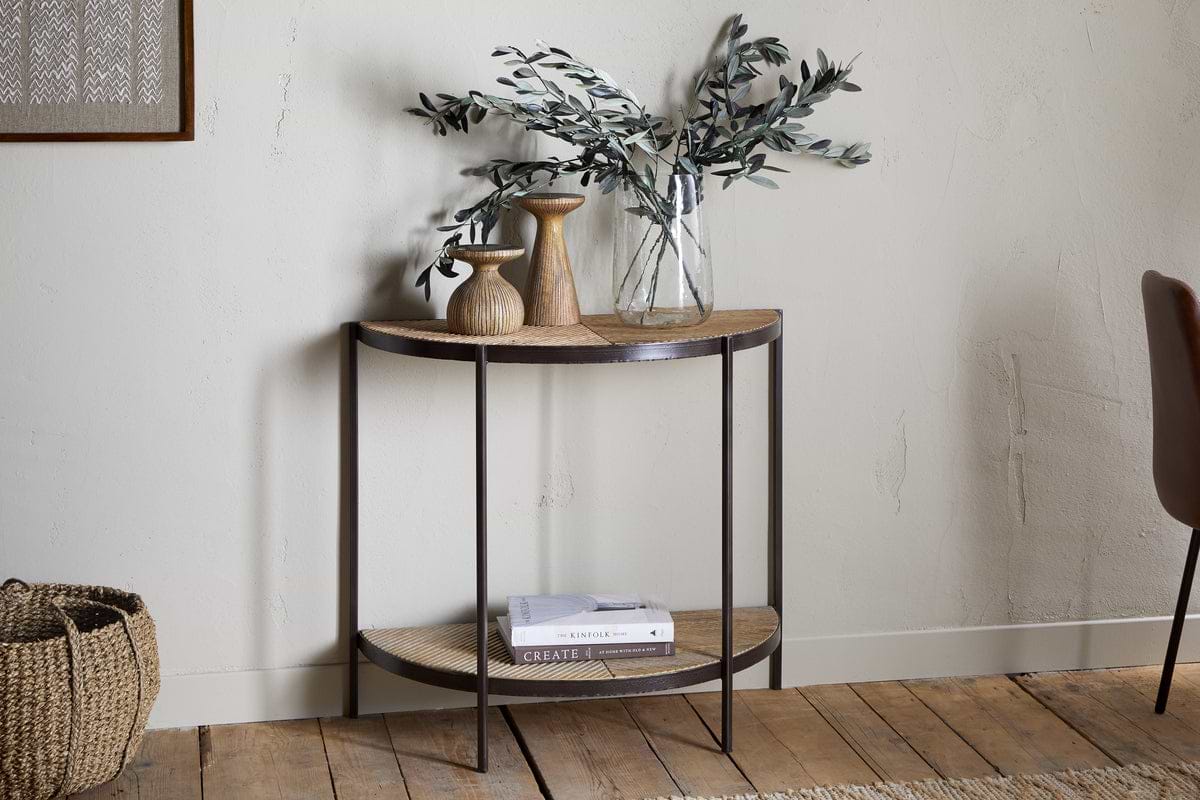
Aasha Console Table
Half-moon silhouette in mango wood; anchors entryways and narrow walls.
View at Nkuku →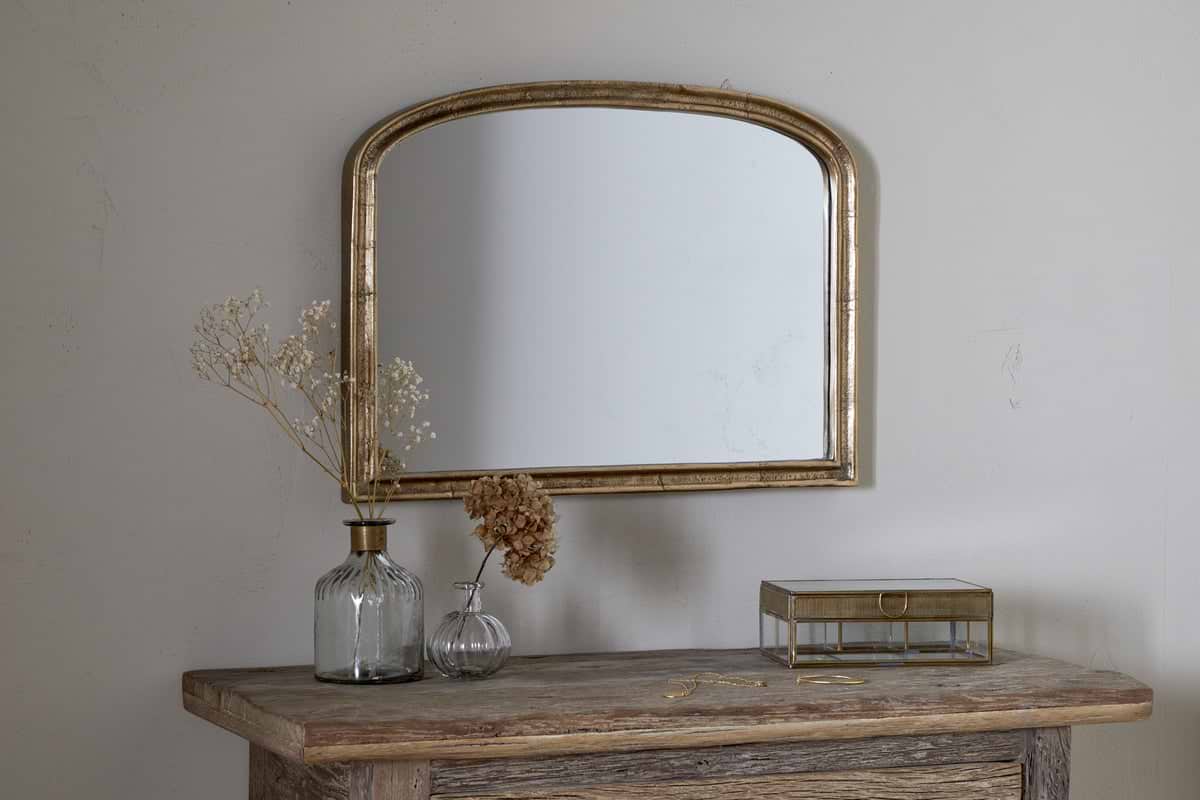
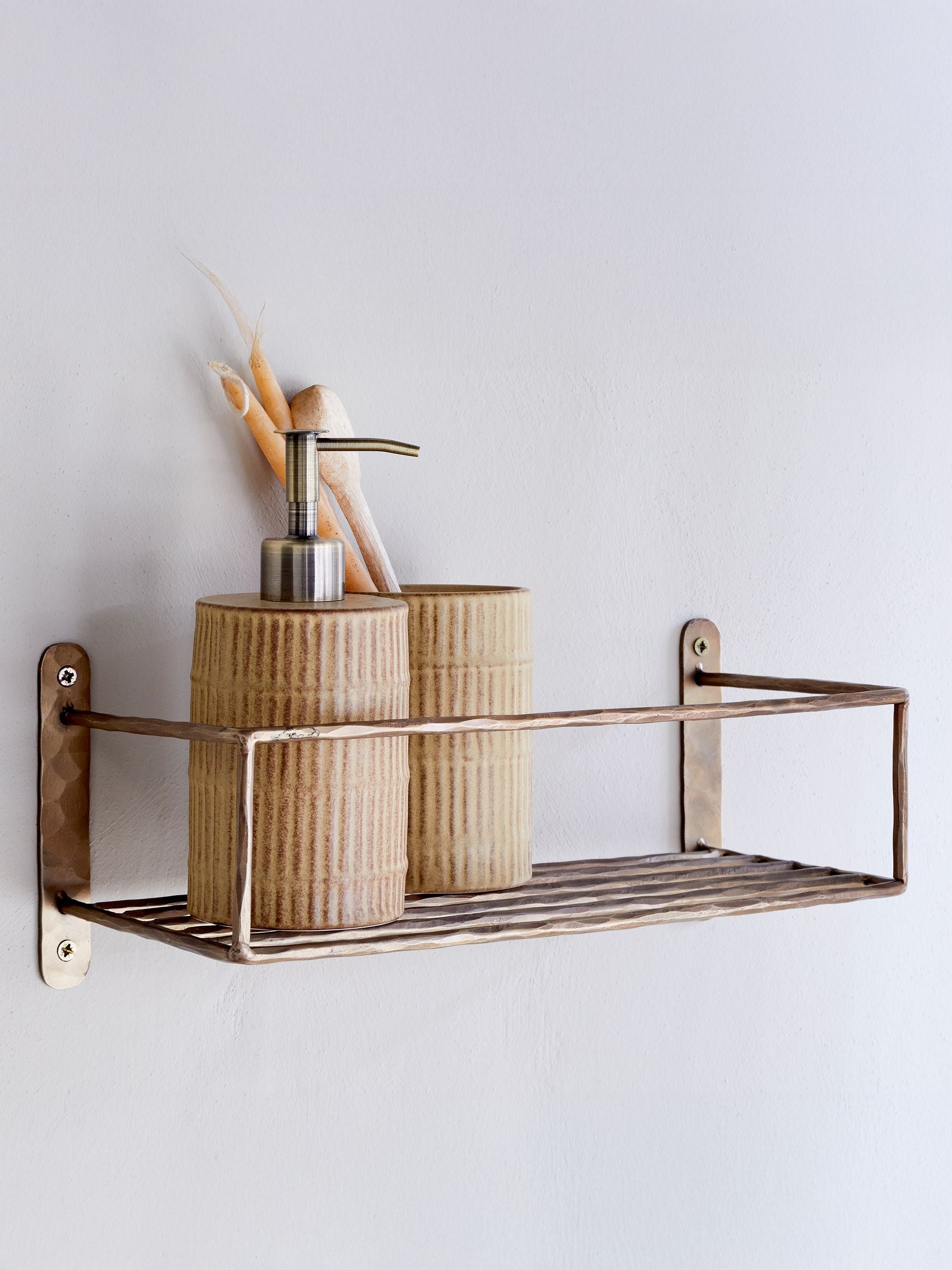
Some links above are affiliate links. If you buy through them we may earn a small commission at no extra cost to you. We only suggest pieces we think fit a calm, lived-in home.
Free guide
The Calm Leaf
12 quiet ways to bring dried botanicals, stems, and natural textures into calm spaces.