

Woven basket storage works by gathering loose items into soft, natural containers that blend into a room instead of drawing attention to the mess inside. Choose one basket material like seagrass or rattan, match basket size to what you store, and repeat the texture across the space so the room feels cohesive and calm rather than crowded with competing finishes.
It’s easy for daily clutter to build up on surfaces and floors, especially in small spaces or rental homes without much built-in storage. Many people reach for woven basket storage ideas, but too many textures and shapes can quickly make a room feel messy instead of calm.
Today, you’ll find out how to layer baskets, bins, trays, and natural containers in a way that looks relaxed and put-together. You’ll learn which baskets work best together, what to leave out, and how to arrange them so the room feels soft, uncluttered, and easy to use. This works especially well in a busy living room when there’s no closet because it keeps the floor clear and keeps items at hand.
The short version: Woven basket storage ideas work best when you limit the number of different materials and let one style take the lead in each space. Choose baskets for what you actually store, pick one or two natural textures, and repeat them to keep the room quiet.

Why do woven baskets keep chaos away?
A single woven basket on a shelf or floor gathers loose items and adds texture, so the area feels less scattered and more finished. Letting the container itself blend in keeps attention on what matters in the room.
Open storage piles up quickly, remote controls, shoes, or toys spread out over every surface. Unlike hard bins and plastic tubs, using woven baskets lets you round up clutter without making it obvious or harsh. The weave dulls the sharp lines that often make a space feel tense.
Woven baskets work because they give every object a clear home and their soft, earthy look doesn’t command too much attention. Compared to wire or see-through bins, a natural material home decor basket covers up the mess without looking too heavy. The surface looks calmer, even if the basket is full inside.
You might notice that a bare shelf reads colder than one with a single woven basket. This difference comes from how the basket’s texture breaks up hard edges and invitation for tidy storage. Setting a low seagrass basket on a hallway table instantly softens the corner and keeps keys or mail from spreading out. In homes with plenty of open shelves or exposed spaces, even one basket calms down a patch of visual noise.
Choose the material first: which basket fits best?
Pick one woven texture, like seagrass for softness or rattan for structure, so the room doesn’t mix too many looks at once. Fewer materials lets each one show up quietly without competing for attention.
The heart of earthy home decor is restraint. Too many raw textures or colors can fight for the spotlight, especially when baskets sit close together. Seagrass baskets have a loose, dry feel and tend to sit softly in a space; water hyacinth baskets feel spongier and scatter light differently. Rattan is hard and smoother, such as those seen in classic rattan furniture ideas pieces or round trays.
A basket with a lid hides mess better and feels tidier in a bedroom or bathroom. Lined baskets work for clothing, since they prevent snags and keep textiles soft. People often skip natural fibres in entryways, worried about mud or moisture, but a hard-wearing wicker basket works if wiped regularly. Each basket material looks best when not upstaged by too many others, pair one earthy weave with a plain linen or wood tray nearby.
When choosing the first basket for a room, start with the bigger job, like laundry, bedding, or blankets. Add a smaller matching basket only if the space is still tidy. A lined water hyacinth laundry bin feels softer than a plastic one and blends into slow living decor settings, especially in a neutral home.
Where this works best
Woven baskets work wherever things tend to pile up and you want the storage to blend in, not stand out. Pick low-foot-traffic spots so baskets don’t get kicked or tipped.
Living rooms often collect toys, throws, and magazines. Bedroom baskets work well for under-bed storage or on open shelves for accessories, especially in small apartments. Entryways and narrow hallways benefit from long, flat baskets that don’t block walking routes. In bathrooms, a lidded seagrass bin can keep toiletries out of sight and off the sink edge. Each of these spaces brings out the best in woven home decor storage, especially where built-in cabinets are missing.
It’s usually easiest to swap out open bins or stacks of shoes for one or two baskets by the front door, or to trade piles of mail for a shallow tray basket in the entry. Swapping a plastic laundry bin for a rattan one instantly softens a laundry corner. In a bedroom, matching two under-bed baskets keeps sheets tucked away but easy to grab.
Avoid putting stiff, glossy baskets next to matte or slouchy ones, this contrast highlights the difference and pulls attention where you don’t want it. The same applies to mixed whitewashed and dark baskets crowded on open shelving. Pick one finish per zone for a quiet look. Woven baskets also don’t suit tight corners with lots of water splashes unless lined or sealed, since moisture can cause mould or odours because wicker and rattan are natural materials.
How do you match basket size and shape to what you store?
Hold the item where you plan to store it, then check which basket shape will make it easiest to slide in and out. Keep the basket barely bigger than the cargo for less wasted space and less clutter.
Baskets that are too large swallow what’s inside, making kids’ toys or magazines hard to find. Deep square baskets work for bulky things: spare bedding, shoes, or off-season clothing. Narrow, shallow baskets fit open shelving and keep daily objects in easy reach. Using a round basket for throws or tall items lets soft things settle while preventing sprawl.
When filling a basket, taller or larger items should go to the back, with smaller objects set up front. This keeps everything visible and easy to grab, so the basket stays tidy longer when filling a basket. Baskets for small items, such as remote controls, look cleaner if they just fit the objects, not so loose that things slump and scramble.
Compared to big storage bins, choosing the smallest container that fits forces you to store less and sort more often, so nothing piles up unnoticed. A mishmash of sizes breaks up the line on a shelf. To avoid this, choose two baskets for an open bookcase, one for books, one for wires or chargers. Use under-bed baskets with lids to keep dust off off-season duvets or extra pillowcases in a bedroom.

Styling and placement
Group similar baskets together, and give them breathing space so they don’t look crowded. Repeat the texture elsewhere to tie everything together.
Start by deciding what should be stored out of sight and what can stay in view. Leave gaps between baskets, especially on a shelf or under a bench, so the shape of the storage is obvious and not squeezed. Use baskets of the same material but slightly different sizes to keep things interesting, but limit variations to avoid a jumble.
Place baskets where hands naturally reach: bedside for books, under a console for shoes, or beside a sofa for throw blankets. In entryways, a tray or open basket on a table creates a catch-all for mail or keys without mess. Grouping two or three baskets side by side under a coat rack works as an anchor, but spacing them out works better than a tight cluster for calm. Layer a basket with the grain of a jute rug or a wood stool for warmth.
Compared to stacking baskets in corners, lining them up along one wall draws the eye in a straight line and calms the view. Be aware of mixing glossy baskets with matte stone or wood; too many competing finishes look busy. In open shelving, placing baskets on the bottom shelves keeps heavy items lower and hides mess, letting the upper shelves act as display.
Quick calm checklist:
- Pick two or fewer basket materials for each room.
- Keep at least as much open space as filled space on shelves.
- Repeat one texture (jute, rattan, or linen) in more than one spot.
- Keep baskets a similar color to the wall or furniture nearby.
- Leave room between baskets so edges show clearly.
How do you keep woven baskets in good shape?
Store empty baskets inside each other so their shape stays neat, but avoid crushing them under heavy loads. Let them air out every once in a while to prevent musty smells.
If a basket gets wet or sits in a damp room, dry it out right away. Too much moisture can cause mould or weaken the weave, especially with natural wicker or seagrass. When not using baskets, store them nested but not stacked too tightly; this keeps the corners sharp and the body round woven baskets lose their shape if crushed.
Baskets in bathrooms or laundry rooms face extra steam, so keep them away from sources of water. For baskets used as planters, keep plants in their pots or use liners so excess water doesn’t seep into the weave when using a woven basket as a planter. Ventilating the room stops smells and mildew.
Compared to synthetic bins, natural fibres need a little more care, a quick dusting or gentle vacuum keeps wicker or rattan clean. Lidded baskets stay neater longer but open baskets air out faster. Letting baskets rest out of sun stops fading, especially for open storage in a sunny spot like a window seat.
Pairing woven storage with jute, linen, and wood
Limit natural textures to just a few, repeating one in more than one area so the room feels pulled together and not patchy. Keep saturated colors and strong patterns to a minimum alongside baskets.
The right mix of organic home decor comes from holding back. Too many different textures, like pairing a rough jute rug, wire baskets, and glossy wood, makes a room read as unsettled. Instead, let one or two surfaces take the lead: a seagrass basket on a muted mango wood bench, with a single linen runner, builds a rhythm without looking decorated.
Placing a large basket next to a smooth wood armchair, especially something with softer corners like the Otas Teddy Cotton Armchair – Off White, settles the transition from hard to soft. Compared to metal bins, rattan or jute storage disappears into a jute rug living room or neutral palette, keeping the space gentle and light. Keep most other colors nearby neutral, creams, taupes, or pale grey, to let the basket’s texture do the work.
Matching accessories, a clay bowl, an unframed artwork, a woven basket, builds slow living decor without adding clutter. Other natural decor (like a linen curtain or a small wooden stool) repeats the look, so weaving shows up more than once and holds the room together. Placing baskets near light sources makes their surface patterns deeper, especially in morning sun or near a reading lamp. Use a basket on open shelving to temper colder lines or break up a stack of books.
Sometimes, a room just feels restless, shoes pile out of a basket, cushions look like they belong somewhere else, or the surfaces seem busy even when things are put away. This uneasy feeling is usually a sign that too many materials or containers are competing with each other, or that storage has been added without thinking about size, color, or placement. Many homes default to grabbing extra baskets or bins as clutter grows, layering in new shapes and textures over time until there’s no obvious anchor. If you’ve ever stood back and wondered why the room isn’t working, this is often the tipping point.
To fix this, pick one basket material as the lead in each main area of the room. Let other containers echo that surface or color, and drop anything that doesn’t clearly blend in. Anchor one focal piece, a wide, low tray on a shelf or a single big basket for throws, and repeat that texture once elsewhere. Calm comes through reducing, not adding more. The space starts to feel grounded and easier to keep neat when these choices are made on purpose, not by accident.
Most people notice their baskets or storage when something feels off but can’t always put a finger on why. Usually, it’s because open containers don’t match or too many textures compete, pulling attention in too many directions and making it tiring to keep things straightened. Letting this go on too long just adds to the sense of mess, even in a tidy home.
Once you pare down, let one material set the look, and keep baskets where they truly fit, the rest of the room feels lighter and simpler every day.
Save this idea for later.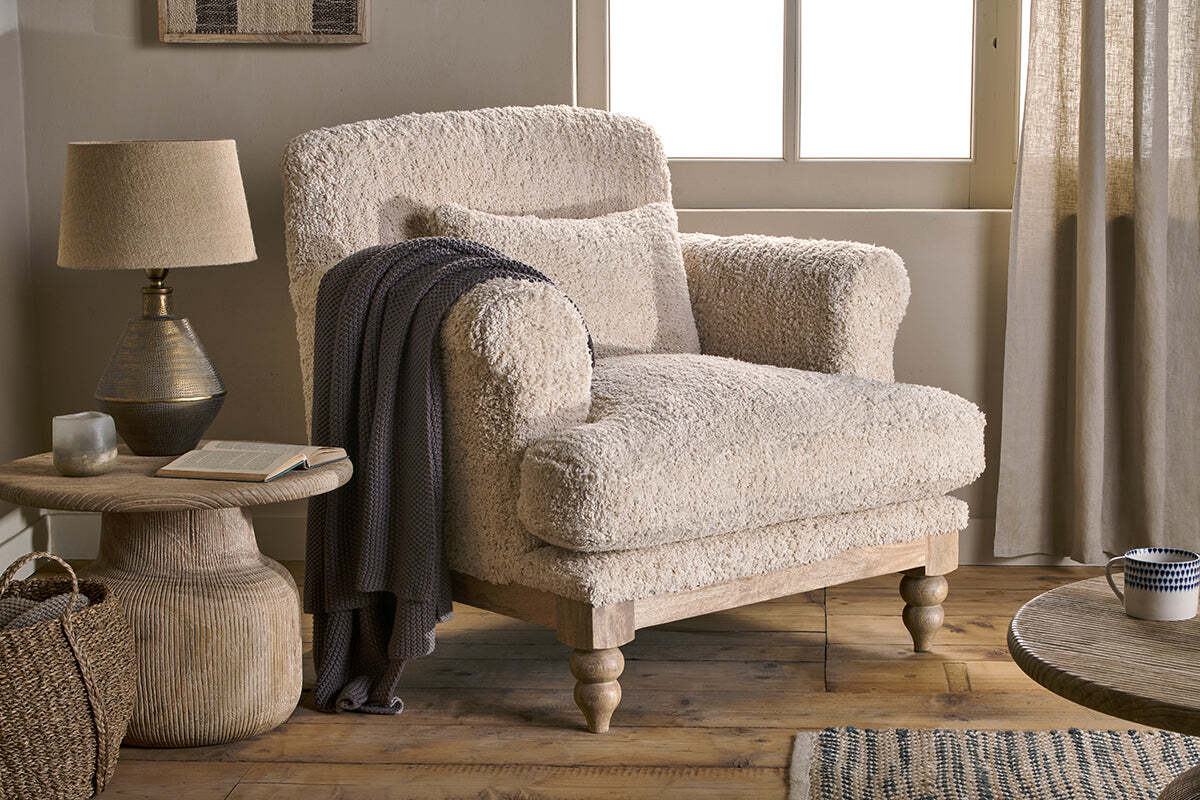
Otas Teddy Cotton Armchair – Off White
keeps seasonal styling contained and visually light.
What tends to hold up with working with natural textures
Over time, simple, well-made storage holds up better than mixing whatever is on hand. Reviewers and stylists point out that dark, tightly woven baskets can look heavy in small rooms, while softer, lighter weaves almost disappear. Matte finishes get recommended again and again for shelving and entryways since they don’t catch glare like glossy bins. Natural fibre baskets keep their shape best when spaced apart, not crowded or stacked too deep. It’s the quieter details, like a subtle clasp or slim handle, that rarely go out of place.
, Mara, Loom & Glow
Why do wicker and rattan baskets work better than plastic bins?
Unlike hard bins and plastic tubs, woven baskets round up clutter without making it obvious or harsh. The weave dulls the sharp lines that often make a space feel tense, and the natural material blends in so attention stays on the room itself rather than the storage. Compared to wire or see-through bins, a basket covers up the mess without looking too heavy, so the surface looks calmer even when full inside.
What basket materials hold up best in damp rooms?
Seagrass and rattan are natural materials that absorb moisture, so they need careful placement away from water splashes and steam. If a basket gets wet or sits in a damp room, dry it out right away, as too much moisture can cause mould and weaken the weave. For bathrooms and laundry rooms, choose a lidded basket and position it away from direct water sources, or opt for a hard-wearing wicker basket wiped regularly if used in an entryway.
Common questions
What should you store in woven baskets?
Woven baskets are best for storing loose items like throws, shoes, toys, laundry, small accessories, and magazines. Choose lined baskets for clothing or textiles to prevent snags. Use baskets with lids or liners for clutter that needs to stay out of sight or free from dust.
How do you store woven baskets when they are not in use?
Store empty woven baskets by nesting smaller ones inside larger ones, supporting the shape so they don’t warp. Avoid squashing or stacking heavy things on top, as this can deform the weave. Let them stay dry and ventilated to deter any mustiness or mould.
What can you do with a wicker basket besides storage?
Wicker baskets work for more than just storage: they can be used as planters (with a waterproof liner), soft toy boxes, or even as decorative pieces to soften a hard corner. They also make casual trays for mail or as easy, moveable homes for everyday items.
Can woven or wicker baskets be kept outside?
You can keep natural wicker baskets outside in dry weather, but rain or winter damp will damage the fibres and cause mould or warping. Synthetic baskets stand up better outdoors but lose the soft look of real natural fibre. Wipe baskets clean and store indoors in winter months to prolong life.
Explore more calm combinations inside our Shop The Look .
Shop the Look
A few Nkuku baskets that anchor a calm storage approach.
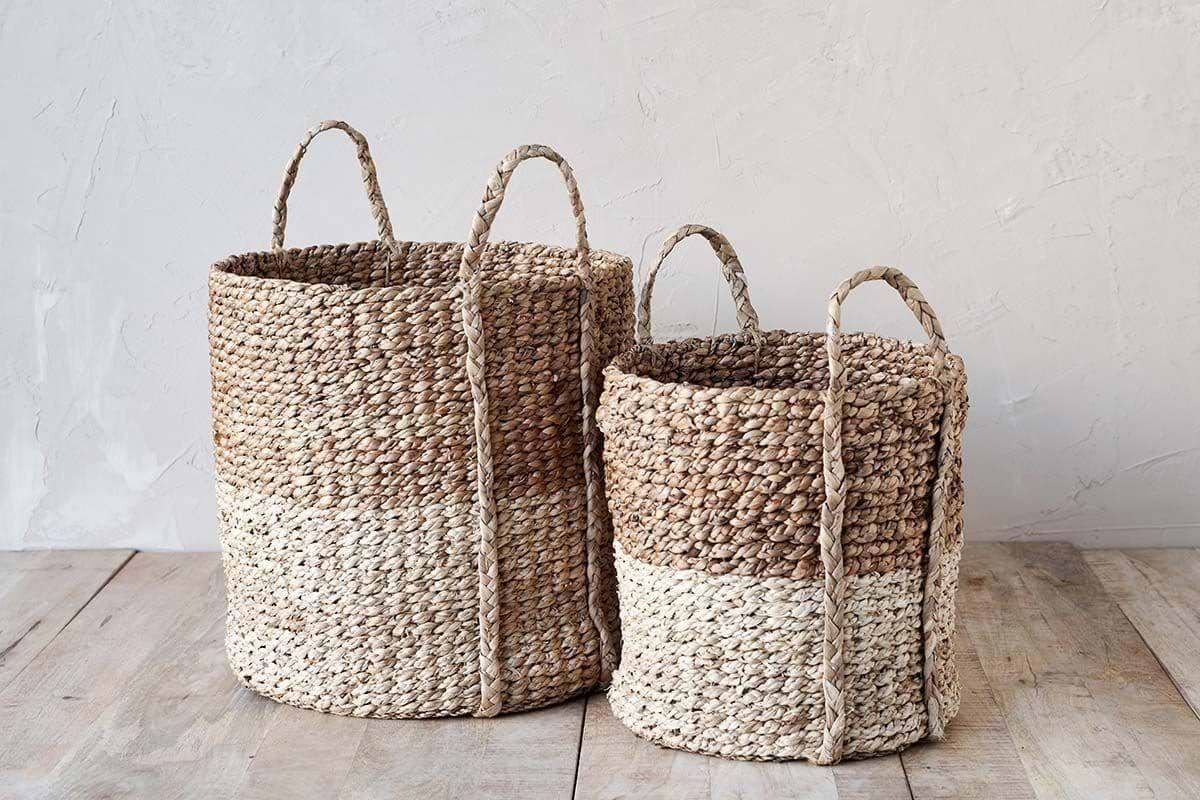
Nkomi Basket
Woven storage with a calm silhouette, works open or tucked under a console.
View at Nkuku →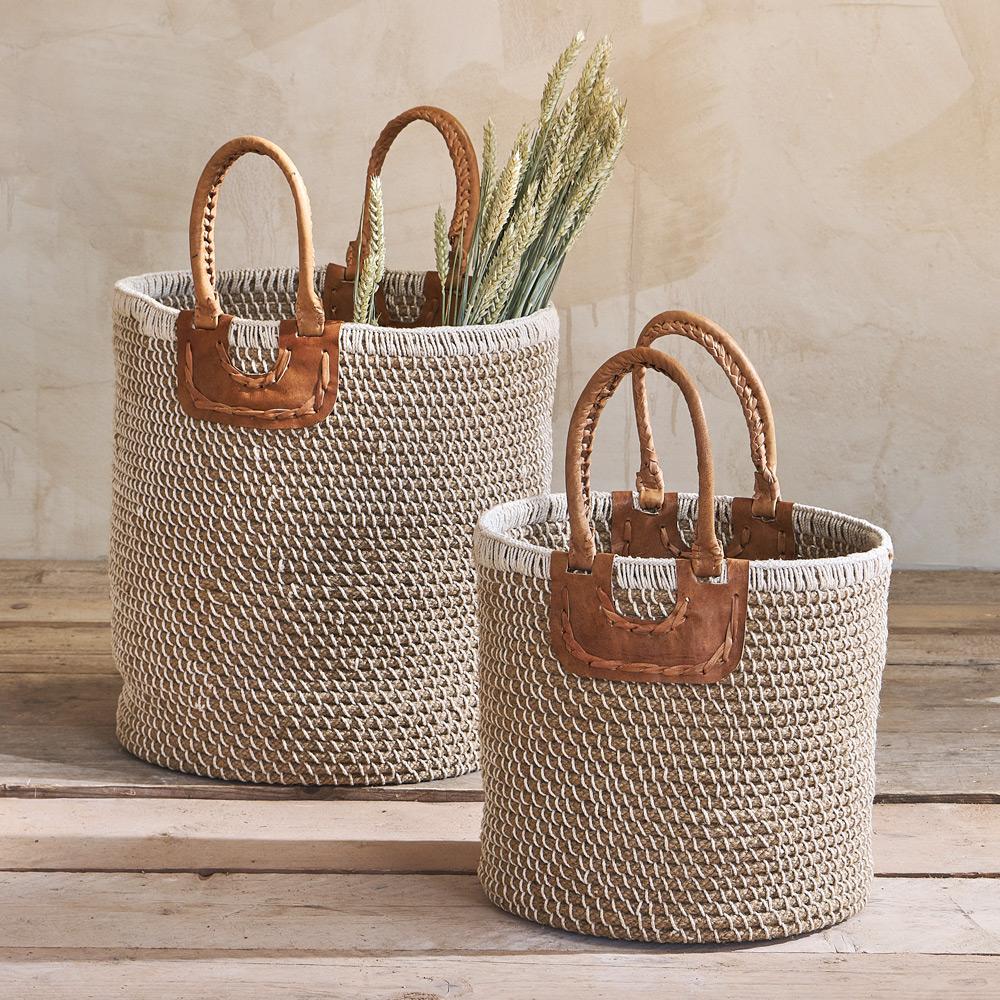
Indra Coil Basket
Natural coil weave, neat enough to leave out, large enough to hide clutter.
View at Nkuku →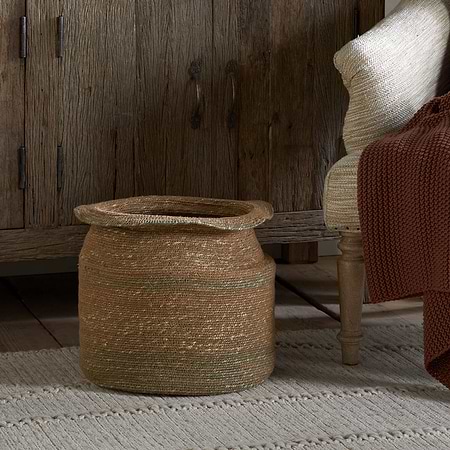
Some links above are affiliate links. If you buy through them we may earn a small commission at no extra cost to you. We only suggest pieces we think fit a calm, lived-in home.
Free guide
The Calm Leaf
12 quiet ways to bring dried botanicals, stems, and natural textures into calm spaces.