

Many people want a calm home using natural materials, but when it comes to how to layer textures in a room, things quickly get messy. Too many woven items or wood tones in a small living room can make the space feel cluttered instead of easy.
The goal today is to learn which textures go where, and in what amount. You will see what to add and what to move out, so the room feels less crowded the moment you walk in. This works especially well in a small apartment living room when storage is limited because fewer, larger pieces often calm the space more than several small ones.
The short version: The best way for how to layer textures in a room without visual noise is to choose one main natural material as your anchor, and repeat it in larger elements while keeping other textures limited to accents. This quickly helps a cluttered space feel quieter and more inviting.
- Where this works best
- How do you mix rattan, jute, and wood without too much pattern?
- Choosing your anchor: What should go big, and what should stay small?
- How to use color with natural material home decor?
- Styling and placement
- What is the easiest way to add woven home decor?
- Does slow living decor mean less texture, or just better texture?

Where this works best
Layering textures with care works best in rooms that see daily use, like living rooms, bedrooms, and calm entryways. Fewer, larger natural pieces settle the space.
Open-plan living rooms, compact bedrooms, and relaxed dining spaces benefit most when you choose one feature material and keep other surfaces simple. In rooms where storage is tight, too many textured objects often pile up and catch dust, so it is better to go for one large rug or a woven lampshade than to scatter baskets and stools everywhere.
Softer throws on a firm sofa, a jute rug on a hard floor, and linen curtains where bare glass felt cold all help quiet the sense of visual noise. If the hallway feels like a passage instead of a dumping ground, a single wood bench or a rattan mirror frame can guide the eye without overwhelming it.
Avoid filling every empty corner with something textured. If every shelf, hook, and tabletop holds baskets or wooden bowls, the room will look busy and never feel settled. One bigger, woven item, like a basket for throws, works better than several smaller catch-alls spread around.
How do you mix rattan, jute, and wood without too much pattern?
Group similar textures close together, but limit bold patterns to a single spot. Natural materials work best as quiet backdrops, not the main focus in every zone.
Most living rooms start out with multiple wood finishes, a pine table, oak shelves, maybe a beech lamp. Add in jute baskets and a rattan chair, and soon the room can feel patchy unless you stick to calm shapes and repeat one material more than the others. A tight weave in a rug grounds a seating area, while a looser rattan frame adds shape without too much line.
Keep larger surfaces in one texture, such as a jute rug, then pick a second material for accents, like a rattan tray or side table. Avoid mixing several woven items with clashing patterns. For example, a striped basket next to a heavy-grained wood box competes for attention more than it adds interest.
Woven home decor often shines when its shape is simple, a round basket, a straight-sided tray. A plain oak shelf with a single low rattan bowl sits quietly. Compared to many small items in competing textures, this brings in warmth without the visual noise.
Choosing your anchor: What should go big, and what should stay small?
Pick one natural texture as your anchor and let it cover more surface area, like a rug or curtain. Use other textures only in smaller, supporting roles.
A bedroom with a large linen duvet and plain wood nightstand lets lighter accents, maybe a single jute basket or clay dish, feel settled. If you try to balance jute, rattan, linen, and wood all at equal scale, the result is busier than relaxing. One anchor material pulls the space together.
The most common fix for messy texture is to choose one piece to go bigger, like upgrading a small rug to a full area rug in jute, then dialing back small-textured accents. A room with several medium baskets on every shelf often feels heavier than one tall, substantial basket tucked into a corner.
Anchoring with the strongest texture calms the backdrop, allowing smaller details to drift into the background, rather than each item competing for the eye. This is the same principle decorators rely on for layered neutrals building depth in a minimal living room 3, a single base material keeps things steady.
How to use color with natural material home decor?
Neutral colors let natural textures show. Anchor larger items with soft tones, and keep accents close to one or two shades.
Most organic home decor relies on neutrals, think beige linen, sandy jute, pale oak, or calm clay. Strong color with bold pattern often pulls attention and makes natural textures feel lost. If the room already has wood floors, pale white walls, and woven shades, stick to muted greens or off-whites for extras.
A practical principle: colors beside each other on the color wheel feel more settled together. For more detail on how color works with materials, see how color works. Keeping lamp shades, baskets, and rugs within the same tone reads calmer than mixing dark and light versions in one view.
Compared to bright florals or complex prints, earthy home decor in neutral shades always makes it easier to add or take away a piece without breaking the whole look. Rooms with too many contrasting colors can quickly feel scattered.

Styling and placement
Limit each texture to one or two places per room, and avoid lining up similar items side by side. Negative space softens the look.
Several baskets touching each other on a shelf make the spot look crowded. Instead, keep space between textured pieces, letting each surface breathe. For example, one low rattan tray on a table, spaced from a jute floor basket, reads lighter than a cluster of similar objects side by side.
Keep a woven lamp on a surface with no other strong textures nearby, the Dia Jute Lampshade – Natural stands out best on a plain wood sideboard or by a sofa with no throw blanket in close reach. This lets light play through the jute without visual clutter from other patterns.
If a wall shelf is needed, keep two-thirds clear and show only a single natural piece, as most floating shelves look best with open space. Heavy-textured objects tend to feel lighter when they are placed alone instead of in groups.
Quick calm checklist:
- Choose one anchor item in jute, rattan, wood, or linen.
- Limit groupings to no more than two textured accents together.
- Leave plenty of room between baskets, trays, and bowls.
- Stick to two or three colors from an earthy palette.
- Let at least half the shelf or tabletop stay plain.
What is the easiest way to add woven home decor?
Start with a woven item in a place you use most, like a lamp, bag basket, or mat. Keep it simple and avoid competing pieces nearby.
An entryway often benefits from a woven rug or a seagrass basket. Trying to fit woven decor into a kitchen, where already many textures and shapes compete, usually looks busy unless you keep it to one sturdy tray or bowl for fruit.
If a bedroom lacks warmth, a jute accent mat near the bed, placed far from larger textures, adds interest without feeling fussy. Unlike layering many small baskets together, a single strong woven item stands out as a feature without adding clutter.
Most people find that a jute lampshade on a reading table or bedside brings both a tactile look and a gentle light, offering a subtle touch, especially at night when natural light is low. When placed by itself, woven home decor gains focus and does not fight with other details.
Does slow living decor mean less texture, or just better texture?
Slow living decor is about pausing to choose which textures matter. It values fewer, larger points of interest instead of filling shelves and seats with extras.
In a kitchen or open-plan living space, too many baskets, bowls, and utility objects can crowd surfaces quickly. By picking one or two natural materials and repeating them in only the places you use and look at most, the room keeps a sense of steadiness.
Natural textures interior design the calm contrast method smooth tactile explores how slow living often involves leaving certain spaces empty on purpose. These “resting” surfaces let eye and hand move from one area to another without feeling pulled in many directions.
Compared to trying to have a little of everything in every corner, slow living decor rewards editing. Fewer, better-placed textures let you notice the gentle difference between linen, jute, and wood each time you enter the room.
What tends to hold up with working with natural textures
Across many rooms and reviews, natural materials quietly stand out when they are repeated in large, single pieces instead of scattered around. Reviewers often mention that a big jute or wool rug makes the most difference on hard floors, both in sound and in feel. Large baskets help by adding storage without looking busy, but only if they are not doubled up or paired with other textured bins nearby.
Decorators commonly recommend using open space as a tool, matte finishes or plain linens give the eye a natural break, while shiny or patterned items quickly draw focus and fragment the look. The daylight passing through a woven lampshade or curtain is often softer than from a plastic or metal one, making it a preferred choice for main living areas. Good materials age well and clean up quietly.
, Mara, Loom & Glow
Common questions
How do I stop natural textures like rattan, jute, and wood from overwhelming a room?
The best way for how to layer textures in a room without visual noise is to choose one main natural material as your anchor, and repeat it in larger elements while keeping other textures limited to accents.
Should I use multiple basket sizes or fewer larger pieces?
In rooms where storage is tight, too many textured objects often pile up and catch dust, so it is better to go for one large rug or a woven lampshade than to scatter baskets and stools everywhere.
What is the main principle for avoiding a busy look with natural materials?
Limit each texture to one or two places per room, and avoid lining up similar items side by side.
Explore more calm combinations inside our Shop The Look .
Shop the Look
Pieces with natural texture and hand that layer without overwhelming a space.
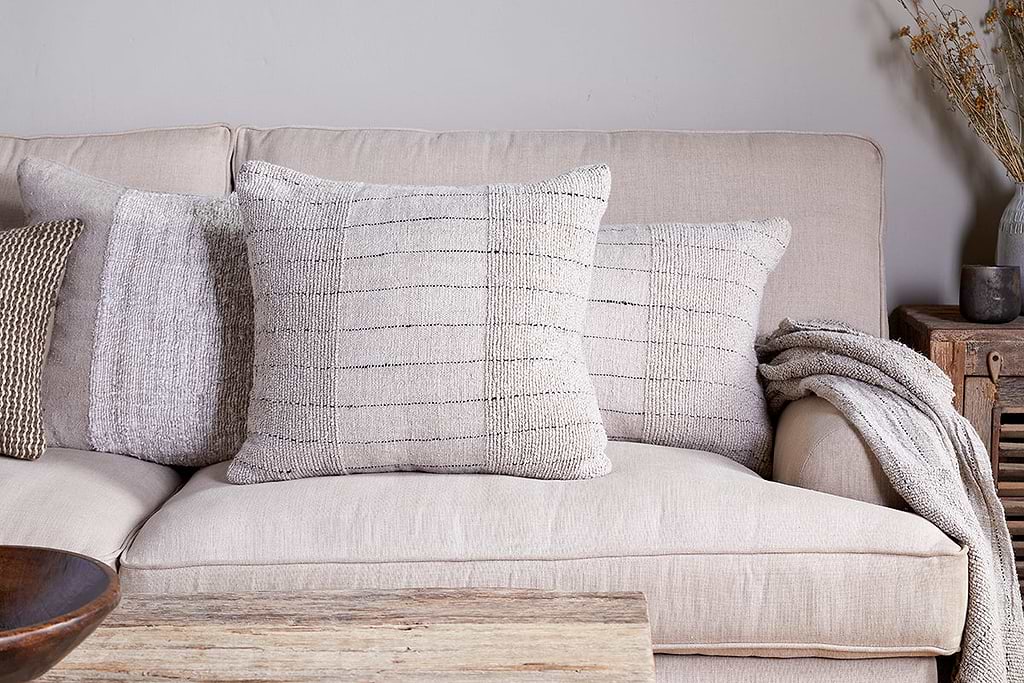
Mayla Cushion Cover
Soft hand-textured cover, instant warmth on linen sofas or chairs.
View at Nkuku →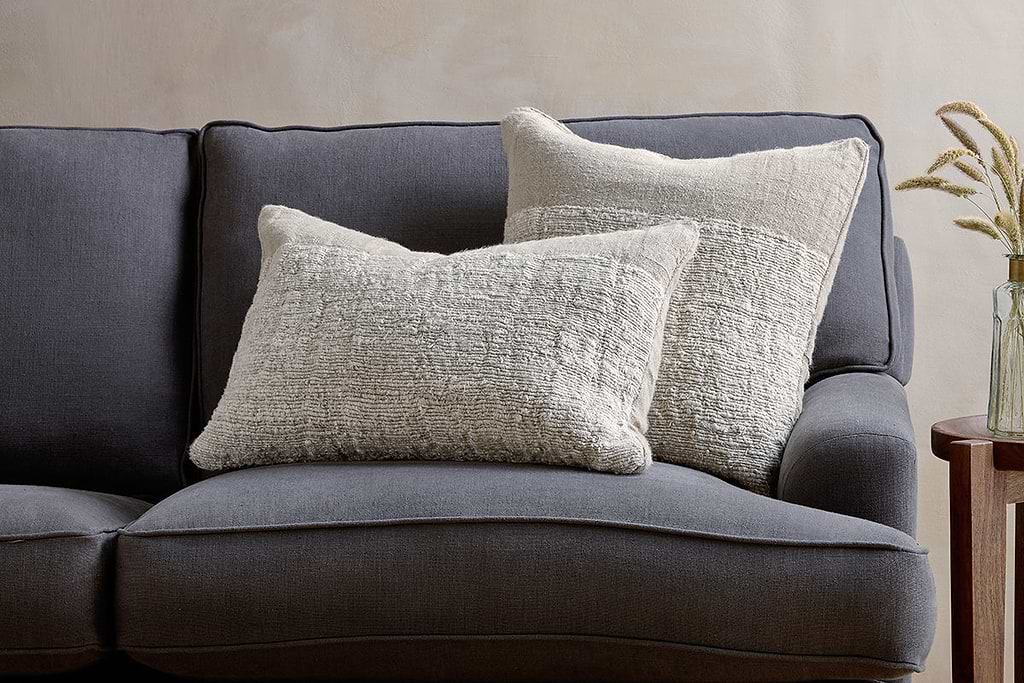
Puli Linen Cushion
Recycled linen in natural, pairs with woven textures and aged wood.
View at Nkuku →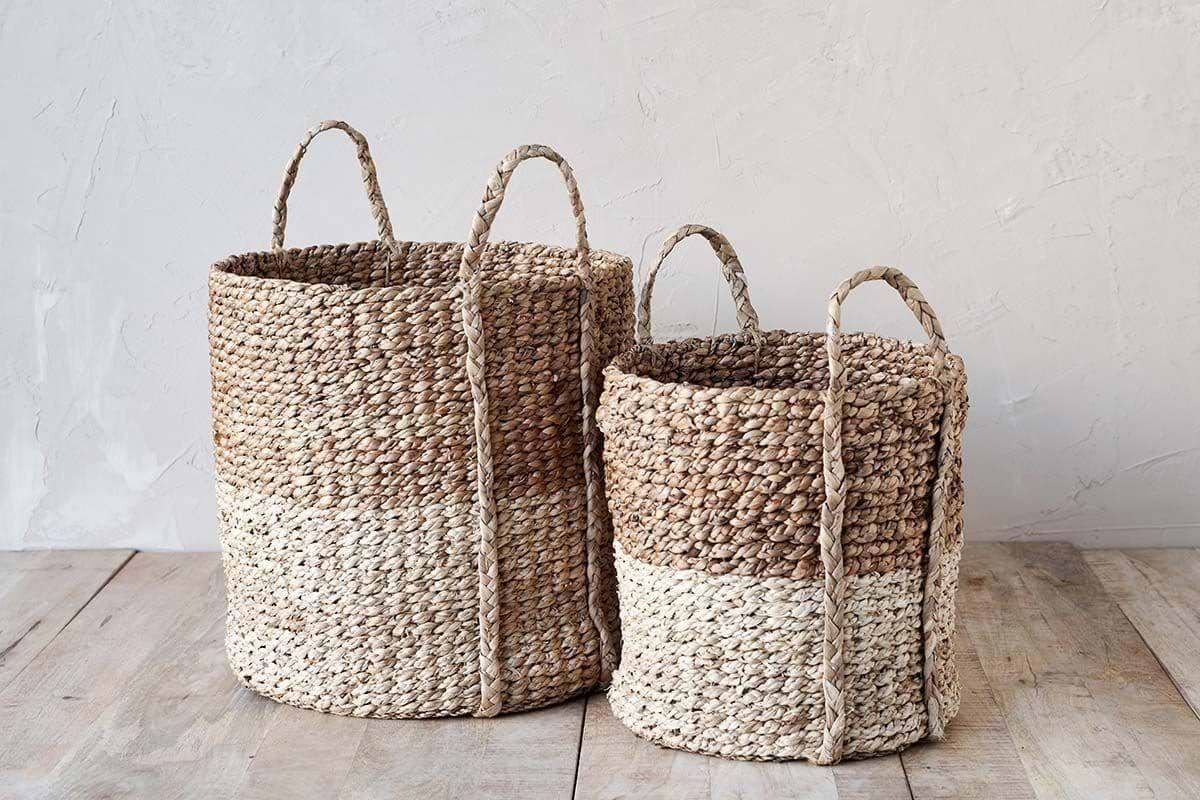
Nkomi Basket
Woven storage with a calm silhouette, works open or tucked under a console.
View at Nkuku →Some links above are affiliate links. If you buy through them we may earn a small commission at no extra cost to you. We only suggest pieces we think fit a calm, lived-in home.
Free guide
The Calm Leaf
12 quiet ways to bring dried botanicals, stems, and natural textures into calm spaces.