

Overflowing shoe racks in the hallway, stacks of loose mail on the kitchen bench, most homes face the same problem: finding storage that actually helps, looks good, and holds up to daily demands. Many people ask are wicker baskets good for storage as a real solution, especially when other bins crack or feel cheap.
Today, you’ll learn what matters in picking and placing these baskets, what to swap, where to avoid them, and how to use natural materials on their own terms. This works especially well in a busy kitchen pantry when shelf space is tight because baskets cut clutter without adding weight or glare.
The short version: Are wicker baskets good for storage? Wicker baskets work well for dry, low-moisture storage in kitchens, bedrooms, and hallways, but can struggle in damp rooms. They offer breathability and style when used in the right setting and properly cared for, making them a dependable choice for daily clutter.
Key takeaways
- Wicker baskets store most dry household items and blend easily into living spaces.
- Natural fibre baskets like rattan or seagrass fare better in dry rooms than bathrooms or laundry areas.
- Specialist retailers market handwoven wicker baskets as both practical and decorative solutions for shelves and pantries.
- Small wicker baskets offer an affordable entry point for organised storage, starting from £2.75 according to The Basket Company.
- Long life depends on keeping baskets away from moisture and cleaning gently as needed.

Are wicker baskets good for storage? The practical answer
A handwoven wicker basket provides open storage for most dry household items and brings a softer look than plastic or metal bins. Wicker is best for spaces that need breathability and a natural feel without hiding away clutter completely.
In homes with small entryways or narrow hallways, closed bins can seem bulky and create more mess by being hard to dig into. Open-weave wicker baskets offer easy access and help shoes, scarves, or reusable bags land in one clear spot. A bare metal rack, on the other hand, looks colder and can leave floors scattered.
Unlike plastic or fabric bins, using wicker storage baskets lets air move through, which helps keep items from getting musty, especially on open shelving. This works in main living areas where controlling odour and airflow matters for comfort and maintenance.
Natural materials like rattan and seagrass feel warm to the touch and soften storage lines, which makes rooms feel less harsh and more relaxed. This difference stands out in spaces with a hard floor or exposed brick, where a basket rounds off corners and absorbs some of the visual noise.
For a small mudroom or shoe bench, a single handwoven basket slides under the bench and keeps what you drop on the way in at bay. A room gets quieter in look and routine when the same shape repeats across cubby holes or shelves.
Where this works best
Wicker storage baskets suit dry rooms like kitchens, bedrooms, and hallways, where the risk of moisture and ongoing spills stays low. These spaces see light daily traffic and need storage that blends in as well as it contains.
Shared spaces, such as a hallway with limited space or a kitchen with open shelves, benefit most from natural baskets. The open weave and light visual weight make them feel airy, allowing items like hats, mittens, and mail to disappear from sight without blocking light or breaking up the room’s style.
In a bedroom, baskets on shelves or under-bed drawers hold linens, toys, or throw blankets. Storage looks less forced when the material matches a wood bed frame or a neutral palette. Lining a basket with cotton helps protect delicate clothes or scarves, maintaining softness against textured fibre.
Avoid using wicker baskets in bathrooms, wet laundry rooms, or anywhere steamy air lingers. Humidity softens and weakens natural fibres, increasing the odds of mould, fraying, or sagging sides over time. Shelves in sunrooms or heated entryways help baskets dry out if any moisture appears.
A row of baskets in a bright hallway collects school gear and umbrellas without looking stuffed or blocking a line of sight. A simple rule is: A basket works best when it is easy to empty and refill in everyday life.
What happens when wicker meets moisture?
Wicker baskets absorb moisture easily, and that makes them risky for damp or steamy rooms. Over time, constant humidity softens the weave, leading to sagging, stain marks, or even mould.
A kitchen pantry with good ventilation sees baskets keep dry goods, onions, snacks, empty tote bags, clean and aired out. By contrast, putting the same basket on a bathroom shelf risks collecting condensation from the shower, which can leave watermarks on both basket and stored items.
Unlike synthetic bins, most wicker storage baskets are woven from natural rattan, seagrass, or kubu, and these fibres act like a sponge, soaking up the air’s moisture and holding onto it, especially near sinks or washing machines.
If a basket sits wet, the surface can darken and the smell becomes sour or earthy. A white mark around the rim or along the base often shows the start of mould or mildew. Cleaning gets much harder once this sets in, sometimes forcing you to throw the basket away.
A light, dry spot with steady airflow helps baskets “breathe,” meaning they lose minor dampness before it can cause trouble. Hanging baskets on hooks in a windowed area, or sliding them into an open cubby, keeps them above wet floors and out of splash zones.
How long does a wicker basket actually last?
A well-cared-for natural wicker basket will last several years in a dry room but may break down within months if exposed to daily moisture. Light use and careful cleaning help maximise its lifespan.
Normal wear for a basket holding shoes or pantry items looks like occasional snagging or slight darkening of the weave, especially in sunlit spots. According to specialist retailers, these baskets are built for daily use, but over-stuffing the basket or dragging it on rough floors can cause the bottom to bow or corners to wear through.
Compared to plastic, which can warp or crack in a cold hallway, a handwoven basket simply softens and blurs at the corners as fibres break in. Most reviewers point out that baskets retain their shape for years when not left outdoors or exposed to spills.
Baskets with a thick, tight weave made from rattan or kubu tend to survive best under frequent use. Thin, loosely-woven seagrass styles may show signs of sagging sooner when overloaded. A small, wicker storage basket bought for under £3 can last several seasons if used gently for light items.
A simple care pattern, emptying baskets out to dust occasionally, airing them outside for an hour if they smell musty, keeps them supple and ready for another season of collecting clutter.

Wicker vs plastic vs fabric bins: what to use where
Natural wicker storage baskets suit entryways, bedroom shelves, and pantries, while plastic or fabric bins hold up better in wet, high-impact areas. Each material has a best-fit room and use case.
Plastic bins win out for storing sports gear in a muddy back porch or under a leaky sink, since they wipe clean and don’t pick up stains. In contrast, a basket made from rattan or seagrass stays lighter and keeps airflow moving, ideal for kitchen shelves or hallway cubbies that hold dry items like hats, books, or letters.
Fabric bins suit toy storage in bedrooms, or closets where you want soft sides for clothing. Unlike a wicker or rattan basket, a soft-sided bin won’t scratch floors or snag delicate knits, but it can collapse or bruise under heavier objects.
| Material | Best Locations | Typical Weakness |
|---|---|---|
| Wicker (rattan, seagrass, kubu) | Kitchens, open shelves, hallways, bedrooms | Moisture damage, fraying in humid rooms |
| Plastic | Bathrooms, laundry rooms, garages | Looks hard, prone to warping, not as attractive |
| Fabric | Closets, kids’ rooms, linen shelves | Sags with weight, collects dust, can stain |
Unlike glossy bins, baskets in a woven basket storage style blend with wood shelves and tone down visual clutter. If you swap out one plastic tub for a single natural basket in a shared hallway, the mood changes at once, a softer look, quieter sound, easier access. A common rule: Baskets work best where you can see and reach into them daily, not hidden at the back of a deep cupboard.
Some rattan baskets are even sold as dedicated stair storage, highlighting how natural fibre baskets serve specific needs that plastic rarely fills as beautifully.
Styling and placement
A row of woven baskets makes a shelf look organised and grounded, while mixing shapes or colours too freely pulls the focus and adds visual clutter. Keep groupings simple and spaced for a calm effect.
Start by placing one or two baskets on each shelf, using the same colour tone as the rest of the room. Avoid lining up more than two basket styles in a row, too much variation draws the eye and looks busy, especially if the baskets are different sizes or finishes.
Compared to a bare shelf or a line of plastic tubs, natural fibre baskets, especially seagrass basket storage options, subtly soften corners and add a lived-in feeling. Natural fibre blends work best in neutral or earth-toned rooms, where the texture can stand out without feeling forced.
Pull a single basket forward, filling it partly with throw blankets or a stack of books to anchor the corner of a room. Repeating the same type and size on other shelves ties sections together, avoiding the scattered look of mix-and-match containers. Placing a larger basket under a console breaks up open floor space and tucks away rainy-day essentials or yoga mats where you can reach them.
Quick calm checklist:
- Choose natural materials, rattan, seagrass, kubu, for dry areas.
- Keep colours and shapes as uniform as possible per wall or shelf.
- Give each basket a little breathing space instead of packing shelves edge to edge.
- Limit contents by purpose, one for shoes, one for papers, one for textiles.
- Use neutral or muted tones to avoid pulling the eye away from the whole room.
A single handwoven basket on a low shelf cleans up visual noise in a small bedroom or entryway. A hallway console with three matched baskets underneath feels more relaxed and works for everyday traffic.
How to keep your wicker basket in everyday use
Clean a wicker basket with a dry brush or vacuum nozzle, and keep it off damp floors to prevent fibre rot. Baskets last longest when left open and aired out between uses or after any spills.
Place baskets on raised shelves or inside open cabinets to avoid water drips, especially near sinks and windows. If you use baskets in a kitchen, empty dry food crumbs every week and give the basket a light wipe with a barely damp cloth for dirt, but never soak it.
Unlike solid bins, baskets woven from natural fibre need to dry quickly if something spills inside. A quick hour in a sunlit spot with good airflow refreshes most baskets and helps prevent mould. If a musty smell sets in, use a baking soda sprinkle overnight before vacuuming.
Storing baskets in a damp garage or basement leaves them at risk for mildew, especially when stacked tight without space for air. Instead of hiding them away, use baskets on shelves or hooks where you can see if fibres change colour or feel sticky, which is an early sign of moisture damage.
For seasonal swaps, a winter glove basket changing to summer sunhats, give baskets a day in the shade to air out before storing in a closed cupboard. This keeps the weave from softening or warping in storage.
Many people notice the shelf or entryway still looks scattered, even after swapping in baskets. The problem usually comes from mixing too many colours or filling baskets so full that the space feels crowded and heavy instead of calm.
The shift comes with choosing one style or texture, keeping spaces partly empty, and repeating the same basket where possible. A single, open natural piece placed with care cuts the noise and helps the whole room fall into line.
It’s easy to make the mistake of lining up every basket you own just because they fit, but this leaves shelves looking busy and hard to clear. Odd sizes and mismatched finishes pull the eye in too many directions. Baskets packed full go unnoticed and just create a new hiding spot for clutter.
Once the right combination of material, colour, and breathing room is in place, shelves feel lighter and are quicker to tidy at the end of the day.
Save this idea for later.
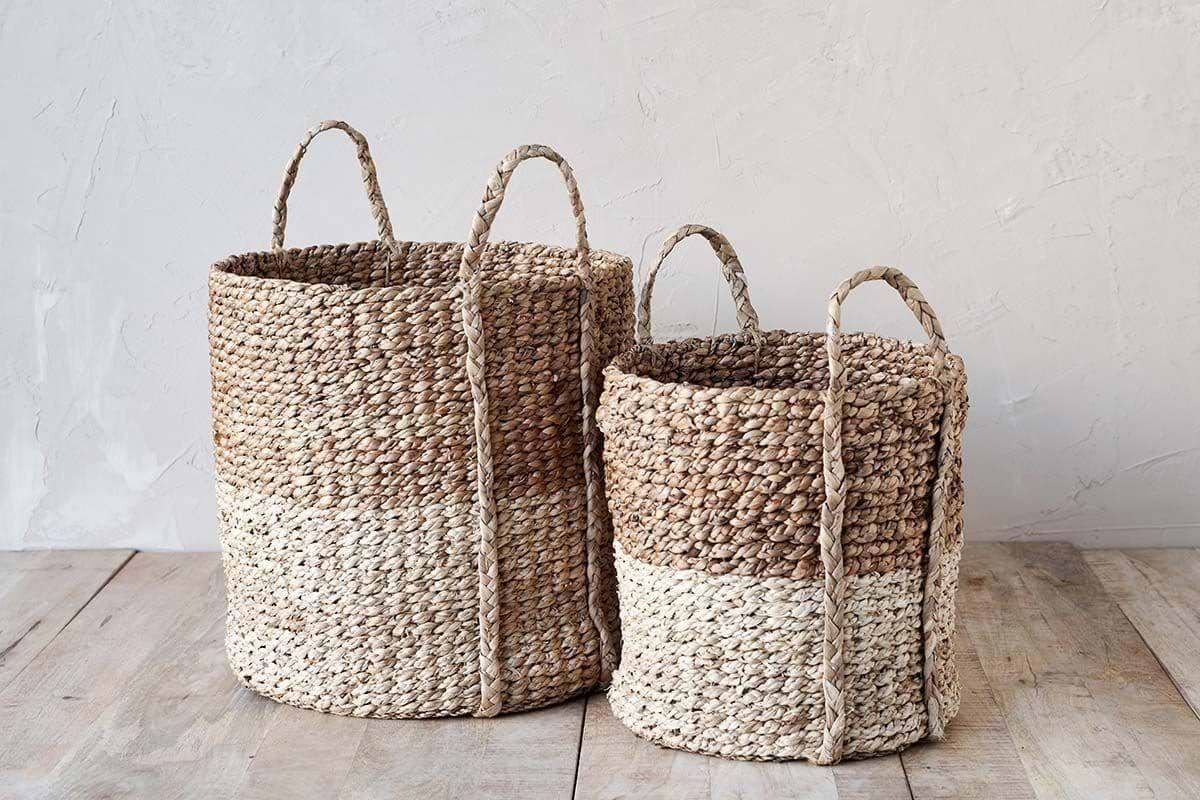
What tends to hold up with styling and practical storage
From following many rooms and basket types over time, a pattern stands out: a basket that’s easy to carry and see into remains useful long after heavy bins or closed boxes are forgotten. Reviewers consistently point to the benefits of choosing fewer baskets and keeping contents limited, spaces look calmer, and it’s easier to find what you need.
Matte baskets don’t pick up scuff marks the way glossy bins or metal frames can, especially on open shelves or next to textured walls. A broad, stable base stops wobbling or tipping, which helps baskets stay neat. Keeping natural fibre baskets out of sunlit or damp spots keeps them in shape for years, according to retailer listings and user reviews.
, Mara, Loom & Glow
Common questions
Do wicker baskets go mouldy?
Wicker baskets can go mouldy if left in damp or poorly-ventilated areas because the natural fibres hold moisture. Keeping baskets away from constant humidity, spills, or unheated storage stops mould developing. Regular airing and quick cleaning after contact with water help protect them.
How long will a wicker basket last?
A well-made wicker basket can last for several years in a dry setting with gentle use. Everyday bumps or overfilling may lead to sagging or surface fray, but baskets kept out of wet rooms are reliably long-lived. Exposure to regular spills or steam usually cuts a basket’s life short.
What is the best way to store wicker baskets?
The best way to store wicker baskets is on open shelves or in dry, aired spaces, not stacked tightly or left on damp floors. They store best when kept empty or lightly filled, away from direct sunlight and moisture sources. Air movement around the basket helps the fibres last longer.
Can you store potatoes in a wicker basket?
Potatoes can be stored in a wicker basket if the area is cool, dry, and well-ventilated, as this keeps the potatoes from rotting. Make sure the basket remains clean and does not get damp, and avoid crowding it with other produce. Never use a wicker basket in a steamy kitchen corner for food storage.
Explore more calm combinations inside our Shop The Look .
Shop the Look
A few Nkuku woven baskets that bring both calm storage and natural texture to any room.
Nkomi Basket
Woven storage with a calm silhouette, works open or tucked under a console.
View at Nkuku →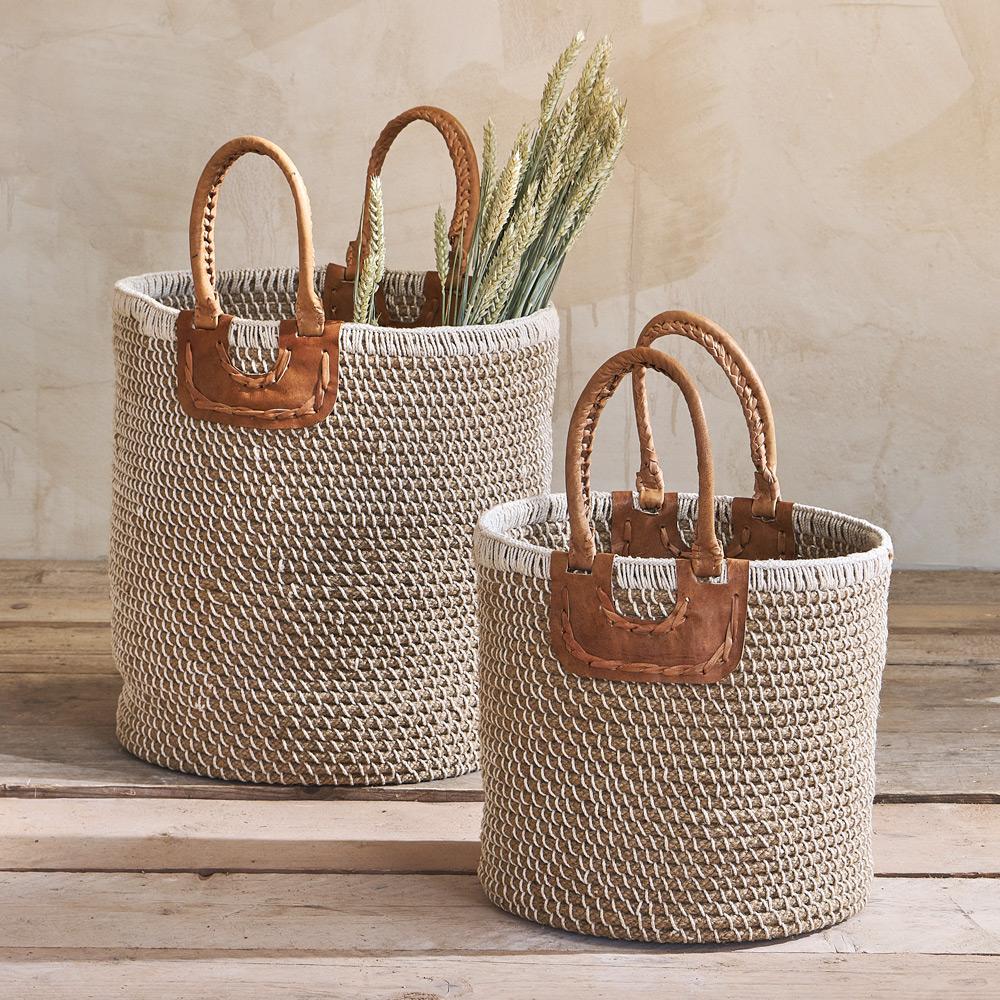
Indra Coil Basket
Natural coil weave, neat enough to leave out, large enough to hide clutter.
View at Nkuku →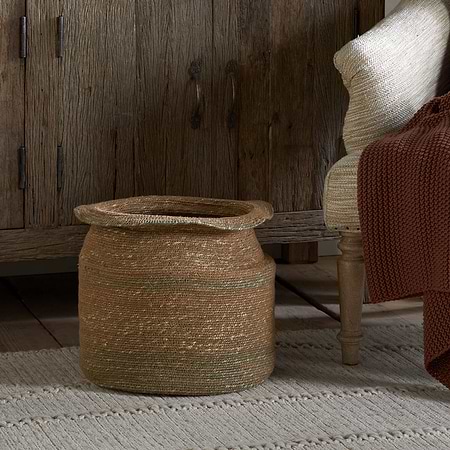
Some links above are affiliate links. If you buy through them we may earn a small commission at no extra cost to you. We only suggest pieces we think fit a calm, lived-in home.
Free guide
The Calm Shelf
12 styling ideas to help you compose calm, balanced shelves in natural texture homes.