

Many UK homes trying a japandi living room end up with visual mess: too many different natural textures, competing woods, and shelves dotted with random woven pots. Most rooms are short on space, light, or both, and it quickly looks crowded instead of quiet. A small space with an awkward sofa or basic floors feels even busier, not calmer.
This guide shows how to pick and place natural materials so the room feels calm but not empty. You’ll see what to keep, what to store, and how to use jute, linen, rattan, and timber as a quiet foundation. This works especially well in a UK-sized lounge when natural daylight is limited because softer textures and controlled wood tones reduce glare and visual clutter.
The short version: A japandi living room works by setting one main material, like pale wood or linen, and using others as subtle accents, not equals. By keeping a quiet palette and sticking to soft, low furniture, the room feels settled, not choppy.
Key takeaways
- A japandi living room keeps clutter down with closed storage and single-material statements.
- Mixing natural materials works best when each surface has a clear purpose and space to breathe.
- Light wood furniture with rounded edges looks softer than sharp-lined dark timber in small UK lounges.
- Most floating shelves are best when two-thirds of the surface stays clear, according to The Spruce’s japandi guide.
- Layered lighting, overhead and low, gives depth without glare in window-poor rooms.

What does japandi actually mean for a UK living room?
Japandi design joins Scandinavian simplicity with Japanese minimalism, focusing on good materials and low-clutter rooms. For UK homes, this means softer shapes, muted colours, and natural surfaces that warm up grey light.
In many UK lounges, low ceilings and heavy radiators break up a wall, and window size is limited. Japandi style, described by IKEA as a blend of simplicity and natural comfort, cuts down on extra items and sets one wood tone as the anchor.
A pale rattan lamp or a low timber coffee table makes the floor look wider, especially next to a boxy grey sofa. By sticking to shapes with soft edges and avoiding tall or dark-built shelves, rooms feel lighter even when daylight slips in from just one window.
Unlike full-on minimalism, which can look cold in the UK’s blue-grey daylight, japandi relies on tactile textures to add quiet detail. Choosing a muted wool rug or a single linen cushion cover softens the look where everything else is hard.
The colour palette that reads calm, not cold
A japandi living room uses mostly muted, nature-inspired colours, think off-white, sand, pale timber and warm grey, so the room feels soft and even in low light.
The common mistake in UK homes is picking either all pale grey, which flattens out warmth, or overdoing dark accents that weigh down corners. Instead, earthy home decor in this style leans on gentle contrasts: put soft mushroom paint on walls, then add wheat-coloured throws and taupe jute baskets for texture.
Textiles matter. The Spruce’s japandi guide notes that most rooms rely on linen or cotton in shades of bone or oatmeal, colours that work in apartments with little daylight. A clay planter is warmer than glass, making even plain shelving look less chilly.
Compared to some neutral home decor ideas that rely on pure white, a japandi palette always skews beige or greyed-down. This stops the room from feeling clinical, even on overcast afternoons. Use an oversized cushion cover in natural linen to break up a deep neutral sofa.
How do you mix wood tones without clashing?
Mixing wood tones in a japandi living room works best by anchoring one main shade, like pale ash or light oak, and letting one or two others appear only in smaller accents.
Most UK homes have existing flooring that doesn’t match every new piece. Instead of forcing everything to be the same, pick a light timber (like pine or oak) for the main furniture, think media unit or coffee table. Use walnut, black-stained wood, or bamboo only as detail, never for the big surfaces.
According to The Spruce, a living room feels less restless when wood grain is subtle and shapes are simple. Rounded-edge legs or smooth-top tables look less busy than sharp-lined or patchwork designs. A pale wood, like ash or beech, settles the room and makes more space for textural details.
Avoid laying too many types of timber side-by-side, which pulls the eye all over. One pale wood across most of the room, with darker or warmer pieces in one focal spot, like a walnut accent chair, prevents the jumping contrast that feels noisy.
Where this works best
A japandi living room fits best in flats or terraces with limited space, awkward radiators, or east-facing windows, where strong light is rare and corners can feel crowded.
UK living rooms are often small, with low ceilings or deep window ledges. Pushing sofas against the wall can emphasise dead space and break the flow. Japandi softens this by using low, open furniture, like a compact travertine coffee table or a rattan bench near the window, to keep everything beneath sightlines and out of the corners.
In spaces where storage is tight, closed cabinets in pale timber hide clutter but don’t look heavy. Rattan or woven home decor baskets slide beneath benches, keeping the floor clear. A boucle or linen footstool works as a soft landing spot beside a low profile sofa and doubles for storage beneath throws.
Avoid putting too many different natural materials right next to each other (like a rattan chair up against a wood bookcase and a jute rug). Leave air between each, and repeat the same material twice for subtle rhythm. A jute rug works below a pale oak table, while a travertine tray sits atop.

How do you layer natural materials in a small space?
Layering natural materials in japandi style starts with one soft foundation, like a wool rug or linen curtain, then adds two to three surfaces in other natural fibres for gentle variety.
In a small apartment, layering too many textures makes the room feel choppy. Start with a wool or jute rug for warmth underfoot, then limit other materials to accents: a slub-weave linen throw, a matte ceramic bowl, and a bamboo tray on the coffee table. This keeps organic home decor from slipping into chaos.
Too many rough surfaces, sycamore table plus split-rattan plus jute, all at once feels prickly not peaceful. Instead, one smooth surface (like glass or polished wood) tied to several soft ones is easier on the eyes and hands. Natural material home decor shines when each texture has space and doesn’t crowd the rest.
Compared to maximal or eclectic rooms, where basket on basket fills every gap, japandi leaves negative space and highlights just a few pieces. A boucle chair is set apart from the sofa by a clear patch of floor, not hemmed in by another woven stool.
Styling and placement
Japandi styling works when each surface or shelf holds just a few items: repeat one wood, one woven, and leave space between for the eye to rest.
On open shelving, a single stone vase plus a small jute basket and a stack of neutral books are enough. Most floating shelves are best kept at least two-thirds clear, letting light bounce and making the room look calmer, according to The Spruce. Closed cabinets stay for hidden storage, freeing up surfaces for just the essentials.
Low, soft-edged furniture pulls the view across the room rather than blocking light. A linen curtain hung as high as possible makes windows look taller and catches the glow, while a floor lamp with a rice paper shade gives diffuse warmth instead of sharp spots.
Unlike tightly packed eclectic styles, japandi leaves at least a hand’s width between big pieces. Breaking up the palette, oatmeal, wheat, pale sand, prevents everything blurring into the same tone. A boucle or linen cushion grounds a timber bench or low sofa without shouting for attention.
Quick calm checklist:
- Stick to one dominant wood finish for big pieces; add small contrast in details only.
- Limit open surfaces to three objects at most, spaced apart.
- Use linen, boucle, or jute for tactile variety, never all at once.
- Leave floor corners and shelf ends empty, not filled.
- Pick a muted, three-colour palette and repeat it across room.
What mistakes make rooms feel busy rather than calm?
Crowding too many textures, overfilling shelves, or mixing random wood tones are the top mistakes that make japandi living rooms feel unsettled and noisy.
The biggest misstep is trying to display every beautiful natural object at once. Shelves stuffed with baskets, vases, and loose branches start to blend into background clutter. A japandi space actually feels quieter with emptier shelves and floors. Work on taking things away, not adding.
Tall, dark shelving units, especially in small, boxy rooms, break up the line of sight and catch the room’s little light, making the space feel smaller and less soft. Low, pale timber furniture and pieces with legs let the room breathe.
Compared to Scandi or wabi-sabi rooms that tolerate rough or worn finishes, japandi is best when each material is clean-lined and in good repair. Scruffy rattan baskets or chipped ceramics add distraction, not warmth. A linen cushion cover in muted taupe or wheat instantly looks neater on the sofa.
It’s common for a UK home to look at their lounge after a new rug or lamp and still wonder why it just feels off. Even with nice textures, the room can seem busy, and there’s no one thing that leads the eye.
The turning point is always this: pick one main material, like light wood or natural linen, for the largest surface and repeat it as the anchor. Limit other materials to two simple accents, and keep at least one-third of every shelf clear. The improvement is instant: clutter drops away, and the room feels steady instead of scattered.
The most common mistake is scattering natural material home decor everywhere: a jute rug, rattan baskets, wood tray, boucle chair, and linen throws all competing for attention. Most UK living rooms then feel busy, not calm, and the corners get crowded fast. It’s easy to keep adding, thinking more texture means more comfort, but the result is heaviness instead of softness.
Once the right palette and anchor material are set, every view reads quieter and surfaces stay easier to tidy.
Save this idea for later.
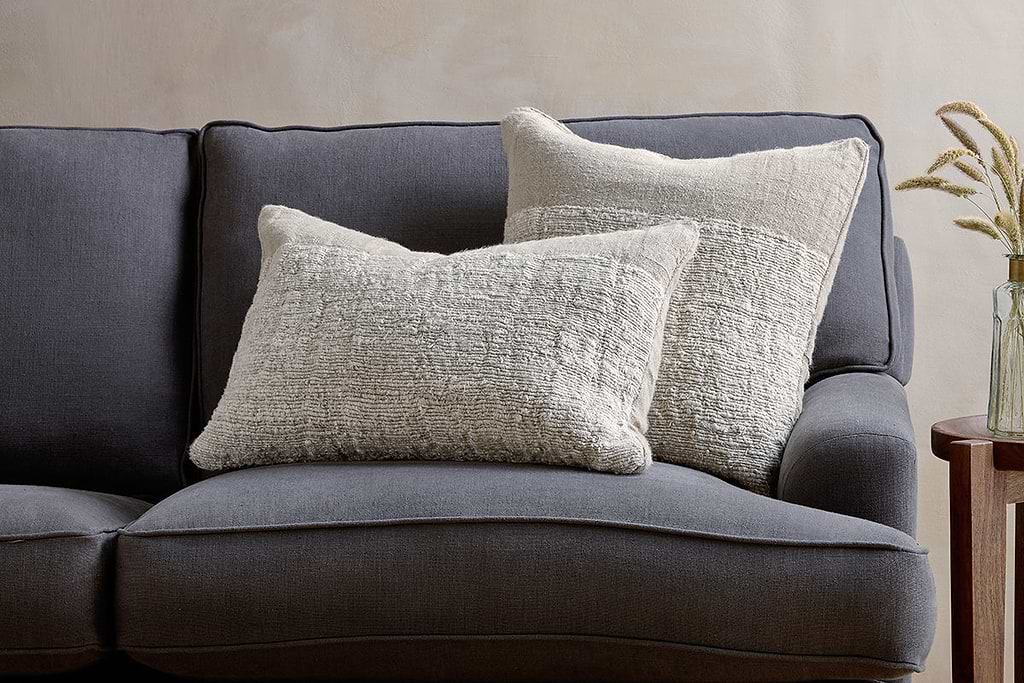
Puli Recycled Linen Cushion Cover – Natural
adds quiet structure and warmth while keeping the room balanced.
What tends to hold up with mixing natural textures
Over many rooms and product reviews, patterns come up again and again. Spaces that last, where people don’t feel the urge to keep changing things, almost always pick one leading wood tone and keep shelves simple. Matte finishes get recommended for window-adjacent tables, since they don’t reflect UK midday glare the way glossy ones do. Woven home decor and boucle soften a hard-edge sofa but need room to breathe, not constant overlap.
Decorators rarely regret adding closed storage or swapping a single loud object for three more muted ones. The best result stays easy to live with: less to dust, fewer things to tidy, nothing for the eye to trip over.
, Mara, Loom & Glow
Common questions
What is a japandi style living room?
A japandi style living room blends Japanese and Scandinavian design, using natural materials, low clutter, and simple shapes. Surfaces are left clear, and neutral tones keep spaces calm. Touchable textures like wood, rattan, and linen take the focus instead of busy patterns or lots of decorative items.
What are common japandi decor mistakes?
Common japandi mistakes include too many different wood tones, overfilling shelves, and placing all natural materials together. Another error is using sharp-edged or tall furniture in a low-light room, which makes spaces look busy. The best results always use negative space and repeat materials, not mix everything at once.
How do I make my living room japandi?
To make a living room japandi, clear away extra ornaments and anchor one pale timber, rattan, or linen as your main surface. Stick to three muted colours, add gentle light, and pick low, soft-edged furniture. Limiting your palette and repeating textures works in UK homes with little daylight or awkward layouts.
What are the best colours for japandi?
The best colours for japandi are muted neutrals, think sand, oat, bone, warm grey, and soft taupe. These tones work in rooms lacking strong light because they soften harsh daylight and warm up colder spaces. Pale timber, wool, and jute read calm instead of cold in both large and small spaces.
Explore more calm combinations inside our Shop The Look .
Shop the Look
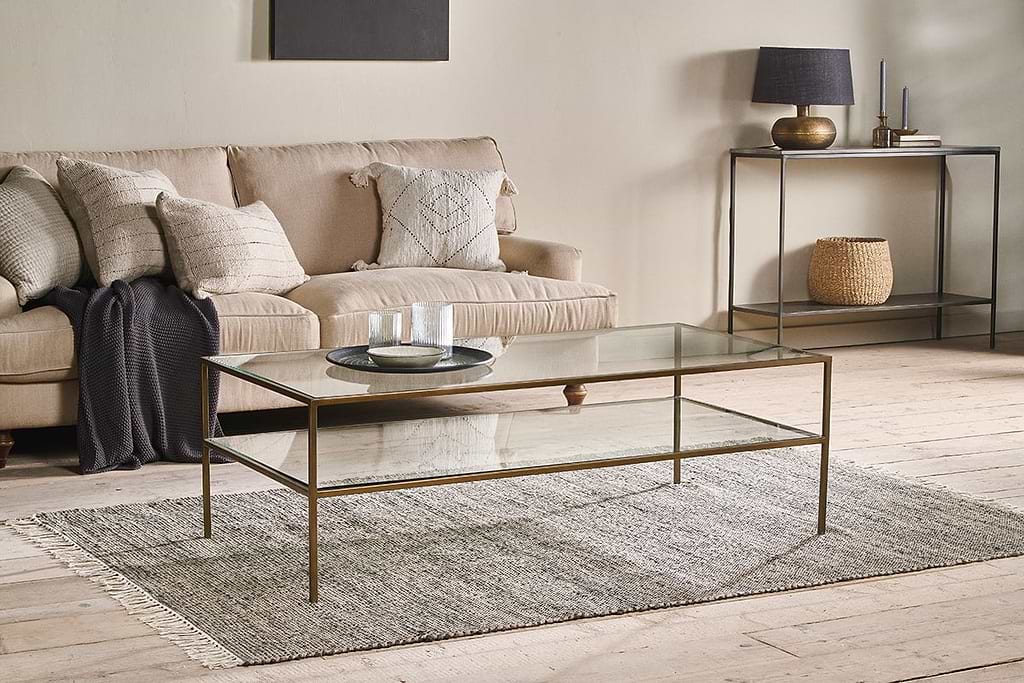
Slim, functional pieces in mango wood and iron that sit naturally within a japandi palette.
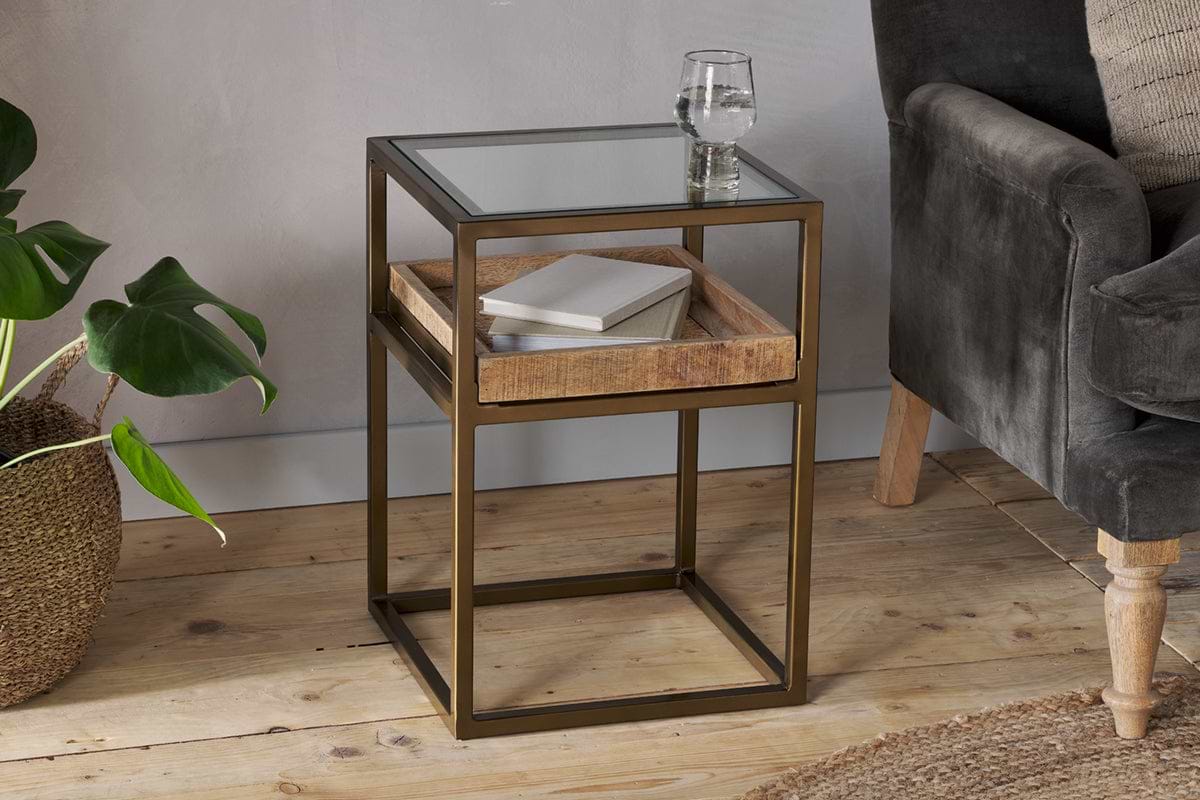
Luzon Side Table
Iron and mango wood with display shelf, small footprint, double function.
View at Nkuku →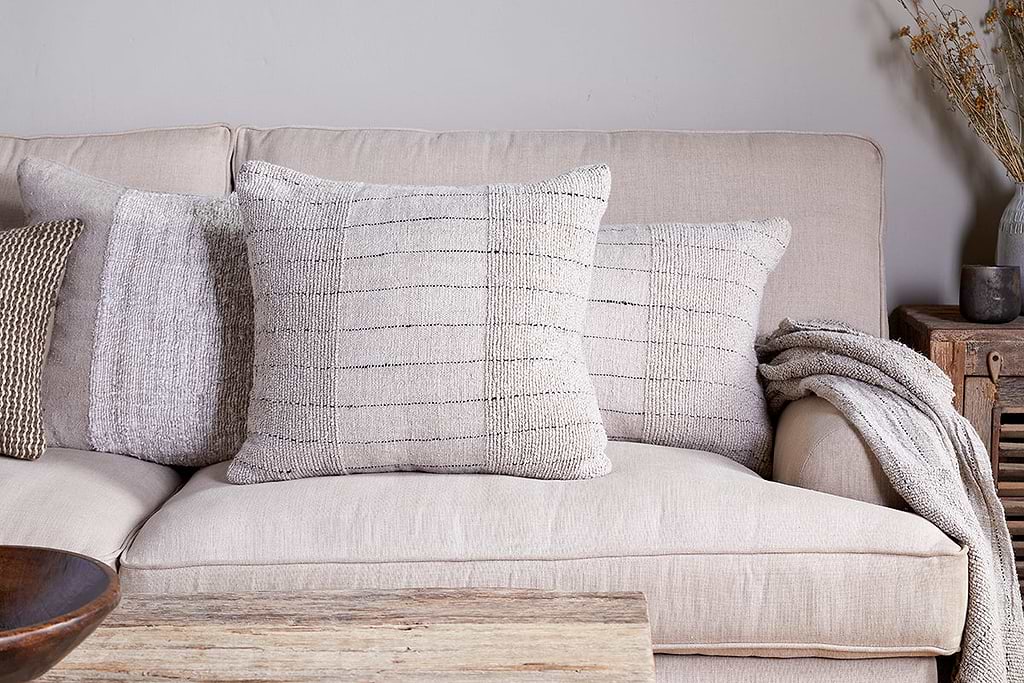
Mayla Cushion Cover
Soft hand-textured cover, instant warmth on linen sofas or chairs.
View at Nkuku →Some links above are affiliate links. If you buy through them we may earn a small commission at no extra cost to you. We only suggest pieces we think fit a calm, lived-in home.
Free guide
The Calm Leaf
12 quiet ways to bring dried botanicals, stems, and natural textures into calm spaces.