

Choosing from popular grey bedroom ideas often sounds easy, but the wrong shade can quickly make a space feel flat or even cold, especially when the room is small or lacks much natural light. The right grey should feel calm, not chilly, but it takes more than picking a paint card from the shop to get there.
The outcome can be much more inviting when you focus on texture, careful layering, and a few warm details. Today you’ll learn which undertones, materials and lighting actually make a difference, what to change or remove, and which combinations always feel comforting, not stark. This works especially well in a small bedroom with little sunlight when clutter is removed because the space feels more open while staying soft and peaceful.
The short version: Grey bedroom ideas look calm, not cold, when you use a warm undertone, add texture, and pair with soft lighting or earthy accents. Bringing in natural materials and a simple palette keeps grey from feeling flat, even in small or low-light rooms.
Key takeaways
- A warm grey or greige paint creates a softer look than cool blue-grey tones.
- Natural textures like linen, rattan, or wool take the edge off a flat grey wall.
- Warm lighting stops a grey bedroom from looking clinical when sunlight is low.
- Wood, clay, and blush pink are the simplest calming colour partners for grey.
- A feature wall of grey works best when balanced with lighter bedding and simple decor.

Where this works best
A grey bedroom works in almost any home, but it shines in small spaces or rooms with low natural light when you bring in warmth and softness. Pairing a gentle grey with the right accents keeps the space comfortable, not stark.
Bedrooms that face north or get less sun can easily look cold with plain grey walls. In a city apartment where every bit of light matters, a heavy or dark shade without warmth will look harsh by night. An ensuite bedroom with little space for extras also benefits from careful choices, as clutter and strong contrasts quickly feel busy or cold.
Soft greige paint or a grey with warm taupe tones is a reliable base for these spaces. When bedding and window fabrics echo that warmth through natural fibres, the room stays inviting. Simple changes, like swapping out a glossy lamp for a matte clay one or adding a wool throw, shift the atmosphere right away.
Avoid flat greys without any yellow, taupe or mushroom in their mix. Those work in modern, sun-filled rooms but tend to look cold when paired with minimal daylight or basic shop lighting. In rooms with less flex for decor, don’t risk a blue-toned grey that can feel hard, especially if the floor is already a pale wood or tile.
For a low-light guest room or a small bedroom in a rented home, start with a warmer base grey and keep accents soft. Choosing textured bedding and a gentle light makes the whole room feel lived-in, not showroom stark.
How do you stop grey from feeling cold in a bedroom?
Grey feels calm, not cold, when it is combined with natural textures, muted warm colours, and lighting that mimics daylight. A colder look happens when everything feels slick or overly uniform.
Most bedrooms with only grey and white, flat sheets, and minimal decor end up looking unwelcoming by late afternoon. If there’s only one neutral and every piece is smooth, your eye never settles. A linen throw, a cream ceramic lamp, or a wooden bedside table changes that instantly.
Mixing materials works better than just adding more of the same. Try layering a soft grey with oatmeal sheets, adding a jute rug near the bed, or bringing in one clay or stone bowl. The rule here is clear: A bedroom that mixes two or more tactile finishes always looks warmer than one with flat painted surfaces alone.
Lighting is often the part that gets missed. Cool LED bulbs or bare white shades can make even a well-planned room feel clinical after sunset. Warmer, low-glare bulbs turn a plain grey wall soft and restful. Unlike high-gloss finishes that reflect every shadow, textured lamps and muted bulbs break up sharpness for a more relaxing space.
Start this shift in any room where the bedding, wall and floor colours are all close in tone. The effect will be immediate. Add one or two elements with natural texture or a contrasting warm colour to bring life back into the space.
Which grey undertone fits your light?
A grey paint works best when its undertone matches the room’s natural light, warm greys for shady rooms, cooler greys for bright, sunlit spaces. Choosing wrong will leave the room feeling off at all times.
South-facing bedrooms with long sunlight can handle blue-based, cooler greys. The natural warmth from the light keeps the shade looking crisp. But in a small, shaded room, that same colour looks unfriendly or even a bit icy. Greige, grey with a hint of beige or brown, adds a welcome softness.
Experts recommend sandy or taupe-leaning shades in rooms where sunlight rarely falls. Farrow & Ball’s Purbeck Stone is a classic example of a greige that doesn’t fall too cold, drawing out mushroom and taupe undertones so the walls never seem stark. Bedrooms with only artificial light do well with these types of greys because they’re forgiving at night.
Light grey looks airier but is prone to turning washed out if the room is dark or north-facing. Dark grey, such as Mole’s Breath (No. 276), gains depth but can shrink a small room if not balanced with lighter decor. A helpful principle: A darker grey can work well in a small bedroom if paired with natural woods and ample soft textiles, but a pure blue-grey will rarely look warm, even with the best accessories.
Start by looking at the window light for most of the day. If it stays cool and soft, lean toward greige or a mushroom grey. Save cool, almost silvery greys for the brightest rooms or accent walls.
What colours make grey feel cosy?
Grey with soft blush pink, warm taupe, brass, or clay keeps the scheme from feeling distant. The simplest way to make grey bedrooms feel inviting is to add one earthy or warm accent.
A bedroom painted in solid grey will need a partner colour to feel welcoming. Blush pink and pale rose tones work quietly alongside greys, softening the look. According to House Beautiful, blush, mushroom, and even a washed terracotta are easy wins for breaking up grey’s coolness. If a space feels flat, a camel or taupe throw on the bed goes further than an extra pillow.
For those who want a sleek but not cold look, brass or brushed gold pulls warm up metal details. One brass bedside lamp creates contrast compared to a chrome or black one, without adding clutter. Pairing these finishes is an easy upgrade that changes the room’s mood as the light shifts through the day.
Harbour Lifestyle suggests soft pink combined with grey for a gentle, feminine feel. Industrial looks suit dark grey paired with brass or black metal, but in a bedroom, the palette works best kept to two or three main colours. Compared to layering many accessories, sticking to a single warm partner shade prevents the space from looking chaotic.
The best place to start is with small accents if you are wary of colour. A single clay bowl, a wooden box on the dresser, or a blush cushion warms up a basic grey quickly.

Styling and placement
How you place grey, and what you pair it with, determines if a room feels calm or unsettled. Balanced placement and clear surfaces prevent the space from feeling busy or lifeless.
A soft grey wall can look cold if all the furniture sits flush to one side, or if every item on a shelf matches too closely. Anchoring the bed with a rug or placing a natural wood stool beside a cool-toned wardrobe breaks up samey edges, making the room gentler on the eyes. In open-plan bedrooms, limiting visible clutter is key to stopping the look from getting restless.
Layering is better than scattering. Instead of small accessories on every surface, put a tall textured lamp or a woven basket in one or two places. On a low shelf, one soft basket beside a stack of pale books creates an organised focal point. A common mistake is filling every gap, making the grey feel lost or overcrowded.
For walls, keep hangings simple. A single print or round mirror works better than several mismatched frames. Bedside tables should have space for the essentials, not a collection of small objects. The effect is a room that feels open and clickable, not busy.
Quick calm checklist:
- Choose natural-finish pieces (matte wood, ceramic, unbleached linen).
- Keep at least half the surfaces clear, avoid over-layering.
- Stick to a tight palette: one grey, one warm accent, one grounding neutral.
- For height, use a lamp or plant on one side instead of both.
- Add one soft rug to mark the bed as a subtle focal point.
Try arranging your space so grey forms a backdrop, not the only colour. Give any key grey wall a friend: wood, jute, or gentle pink.
How does texture change a grey bedroom?
Texture stops grey from feeling flat or lifeless by catching light and adding softness. A grey scheme with at least two distinct textures always feels richer and less cold than paint alone.
Plain paint on all four walls tends to read flat unless you give the eye something else to find. A linen curtain, a chunky knit throw at the bed foot, or one rattan basket changes the whole look. These pieces break up strong edges and add warmth that pure grey lacks.
Hard floors, especially pale laminate or tile, can make a grey bedroom appear icy when left bare. A natural fibre rug or floor runner softens both sound and appearance, giving the feet a break from cold surfaces. Unlike glossy fabrics, which bounce back coolness, matte and woven finishes absorb and disperse light for a gentler feel.
Even a basic wardrobe goes from harsh to homely when styled with a folded wool blanket, a stack of books, or a clay vase. Compared to adding patterned accessories or bold colours, changing up textures offers calm without clutter.
Start small: swap a synthetic pillow for a cotton or linen one, and notice the change. For more ideas, see neutral bedroom decor for how to mix textures with colour.
Is a grey feature wall or wallpaper too much?
A grey feature wall or wallpaper works when it’s not the only focus and is balanced by soft, light bedding and simple accents. The room can feel closed-in if the rest of the palette is also dark or busy.
Feature walls in a deeper grey or with patterned wallpaper are on trend, but in a small bedroom can crowd the space if other elements remain dark or shiny. House Beautiful features ‘grey drenching’, painting all surfaces in varied grey tones, as a current style, but even this method still relies on balancing with wood and light for a softer effect.
Selecting just one wall for a textured or patterned grey backdrop can anchor the bed or dresser, but avoid filling the space with too many competing details. Lighter bedding, simple bedside tables, and clear surfaces keep the look calm. Two tones of grey, one deep, one lighter, avoid a heavy box feel and are supported by Dulux structures its two-grey advice.
Compared to full-wall wallpaper, a half wall or even removable panels are rental-friendly and create just enough focus. Dark, near-black wallpaper or paint can look sophisticated, but is best paired with pale textiles and a bit of exposed wood to avoid it feeling too formal.
A helpful trick: limit darker greys to one or two walls max, and tie them to the floor or window colour with a rug or curtain for balance. For more paint ideas that suit rented or compact spaces, see bedroom paint ideas.
Most people realise something feels off with grey bedrooms the first time the daylight slips away and the room gets that almost blue chill. Maybe there’s nothing wrong with the paint, but the space looks unfinished, or the mood doesn’t match the daytime feel. The problem is often too little contrast or missing warmth in the right places.
The practical shift is to choose a single soft accent, like a blush pink, matte wood, or natural rug, and repeat it with purpose, keeping other surfaces clear.
One of the most common mistakes is thinking that just adding more grey or piling on pillows will fix a room that feels cold. In reality, too many mismatched accessories, or sticking with just two similar greys, will leave the space looking both busy and lifeless. The downside? You stop wanting to linger in the room, and it ends up more staging area than retreat.
Once you commit to one unifying accent and limit surface clutter, the room finally feels restful again.
Save this idea for later.
What tends to hold up with grey bedroom styling
Reviewing a broad mix of reader rooms, two patterns stand out: matte and natural textures make grey work in nearly every context, while overly matched gloss or sharp contrasts rarely last. Decorators often recommend keeping to no more than three main palette shades, one grey, one warm accent, and one grounding neutral. Shades like Purbeck Stone gain praise from homeowners for always reading warm, according to Farrow & Ball. Pale, textured throws, especially linen or wool, consistently win out over synthetic sheen for keeping the space soft midday and into the evening.
Lighting choices also tend to hold up in the longer term: rooms with soft, indirect lighting and a few carefully chosen, natural accessories continue to feel grounded, while bright white bulbs or busy shelves lose appeal quickly. Slow changes and simple elements build the kind of room that stays inviting well beyond passing trends.
, Mara, Loom & Glow
Common questions
What colour goes well with a grey bedroom?
Blush pink, warm white, taupe, clay and brass all pair well with a grey bedroom. Soft, muted colours stop grey from feeling icy and make the space more inviting. Even a small accent, like a clay bowl or brass lamp, can shift the whole mood.
Is grey a good colour for a bedroom?
Grey is a good colour for a bedroom when paired with warm undertones and natural textures. It creates a calm and simple backdrop, especially when the shade is chosen to suit the room’s light. Avoid pure, cold greys in small or shaded rooms for the most restful result.
What is the best grey shade for a bedroom?
The best grey shade for a bedroom is a warm chalky grey or greige, like Farrow & Ball’s Purbeck Stone. These read soft in shady rooms and never feel chilly. Avoid pure blue-grey unless your bedroom gets strong sunlight most of the day.
What is the colour trend for bedrooms in 2026?
Warm greige and mushroom-taupe greys are trending for bedrooms in 2026, according to decorating sources. Grey drenching, layering several soft grey tones with natural accents, is also expected to remain popular. Texture and earthy accent colours will continue to matter more than precise paint shades.
Explore more calm combinations inside our Shop The Look .
Shop the Look
Mayla and Puli cushions add tactile warmth to grey rooms without breaking the calm palette.
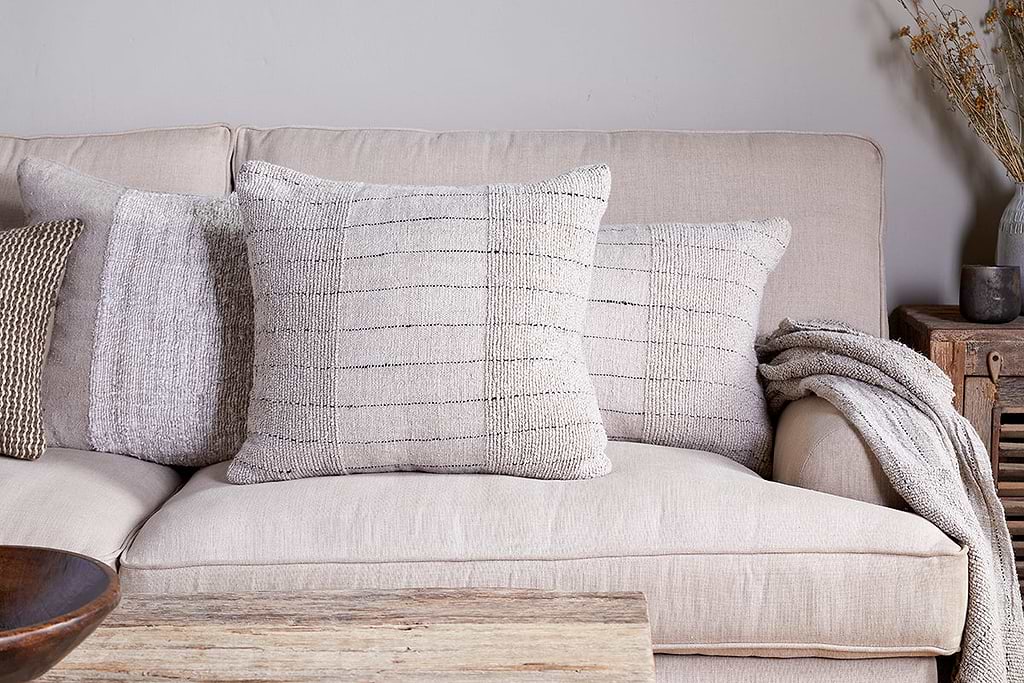
Mayla Cushion Cover
Soft hand-textured cover, instant warmth on linen sofas or chairs.
View at Nkuku →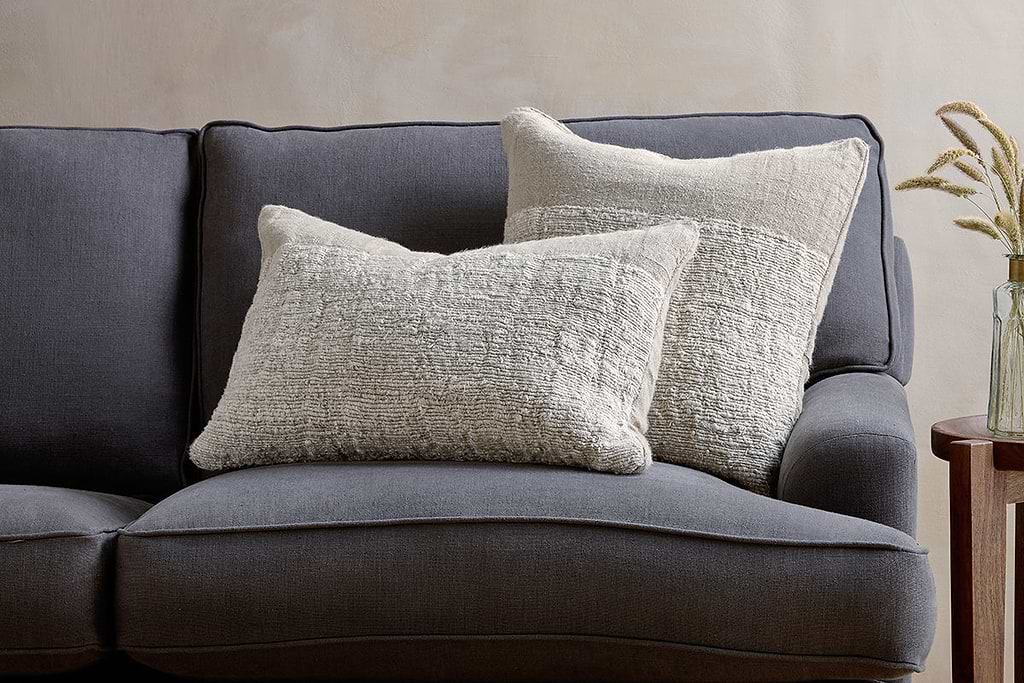
Puli Linen Cushion
Recycled linen in natural, pairs with woven textures and aged wood.
View at Nkuku →Some links above are affiliate links. If you buy through them we may earn a small commission at no extra cost to you. We only suggest pieces we think fit a calm, lived-in home.
Free guide
The Calm Shelf
12 styling ideas to help you compose calm, balanced shelves in natural texture homes.