

Most small rooms struggle with storage that doesn’t crowd the space or fight the mood. A rattan shelf gives gentle structure but can feel wrong—too cottage, too glossy, or too busy—if you don’t know what you’re looking at in the shop or online.
Today you’ll learn how to spot the difference between rattan, wicker, and cane, pick the right depth and finish, and fit a rattan shelf to any room you need. This works especially well in a small apartment bedroom when you want more surface space but less clutter because rattan feels light and keeps the wall open.
The short version: A rattan shelf works best in small, bright corners where you need gentle storage without adding clutter or glare. Choose a size and tone that feels light, and place only a few objects—this makes your space feel calmer without crowding it.
Key takeaways
- A rattan shelf looks lighter than wood or metal and is less likely to weigh down a narrow wall.
- Unlike plastic or lacquered surfaces, natural rattan catches light softly instead of bouncing it back with shine.
- A single-tier rattan shelf suits a bedside table swap, while double-tiers hold more in bathrooms or kitchens.
- Rattan is not the same as cane or wicker—each has its own texture and strength.
- Most open shelves look calmest when kept about two-thirds clear.

What makes a rattan shelf different from wicker or cane?
A rattan shelf uses stems from the rattan palm, while wicker is a weaving technique and cane is the outer skin of rattan. Knowing what you’re buying protects against sagging and mismatched looks long-term.
In shops or search results, rattan, wicker, and cane often get lumped together. Only rattan shelves are built from the solid core of the rattan palm, giving them more strength for their weight. Wicker describes the weave—so you’ll see wicker in plastic, metal, or cane, too, not just plant fiber.
Visually, a rattan shelf has a solid but narrow frame and rounded edges, with visible nodes and a slight natural gloss. Cane feels thinner, smoother, and sometimes stripy. This makes cane shelves lighter but also more likely to flex if loaded up or knocked in a busy hall.
The main difference is how each holds up over time. A bare cane shelf warps faster in a humid bathroom than a rattan one; plastic wicker may never sag, but it looks more synthetic under daylight. For practical calm, rattan is the middle ground—sturdy, soft-edged, and neither rustic nor modernist.
A rattan shelf works best in a space that needs both strength and openness—like a bedroom wall above a low cabinet or a kitchen nook used for tea and cookbooks.
| Material | Texture | Best Rated For |
|---|---|---|
| Rattan | Rounded, soft gloss, visible joints | Wall shelf, light storage, bedroom |
| Wicker | Tight or loose weave, mixed materials | Baskets, table trays |
| Cane | Flat, smooth, stripe pattern | Chair panels, lining drawers |
Where this works best
A rattan shelf works best in rooms where storage is needed but floor space is tight, like bathrooms, bedrooms, and entry halls. Wall-mounting keeps surfaces clear and corners open.
Bedrooms with low or narrow walls are good homes for a single rattan shelf. The material brings warmth against a plaster wall, but it doesn’t pull the space in. In bathrooms, rattan shelves have enough flex to withstand steam, yet don’t look as flat as floating MDF boards.
For kitchens, hanging two matching shelves near a window gives you extra reach for herbs or jars. A rattan shelf in a children’s room, styled with baskets, makes open storage feel neat—especially when toys or books are kept in sight but off the floor. In rental studios, wall shelves avoid drilling new holes for cabinets or freestanding units.
Avoid mounting a rattan shelf too close to a hob or a direct splash zone. The heat or humidity can roughen the fibers or darken patches over time. Instead, try them in drier, well-ventilated spots for a longer-lasting finish.
Most rooms benefit from a gentle, open-sided shelf when the furniture below feels plain or you need a spot to rest keys, towels, or a small lamp.
How to choose the right size for a small wall
A rattan shelf should be just wide enough for a row of books or baskets, but not so deep that it crowds the walkway or bed. Most small rooms work best with a single-tier design and clear edges.
Small walls, such as those between two doors or above a radiator, make you question depth. The MG Co.’s 30cm rattan shelf, styled above a bathroom sink or beside a bed, is a common pick for renters needing flexible storage in narrow rooms.
Sizing up, IKEA’s FRYKSÅS wall shelf is broader and features two open tiers, which cover more vertical space without a heavy look. The double-tier open design matches many kitchen or lounge zones, especially for open storage of things used often.
A bare, long shelf reads colder than a small piece paired with a low storage unit below. Going too wide risks making the shelf the accidental focal point; scaling back lets the wall breathe and makes the piece feel intentional.
The main rule: In a small room, use a shelf that covers less than the full wall span and keep it proportionally slim.
Colour and finish: natural, black and beige rattan
Choose a rattan shelf colour that matches the rest of your palette: natural browns for warmth, beige for softness, or black for contrast. Texture changes with finish—glossy rattan reads sharper than matte.
On eBay’s rattan shelf listings, you’ll find beige, black, and classic honey browns, along with options for finish. Most calm spaces use the raw or lightly-coated rattan; whitewashed or black looks fit modern rooms, but too dark can make a shelf feel like a shadow box.
Natural rattan is slightly uneven in tone, with visible joints and grain. This keeps a shelf from looking too “ordered,” so it fits better in spaces where you want easygoing storage—bedrooms, entries, or kitchens with timber floors. Compared to synthetic rattan, which stays exactly one shade and never softens with age, real rattan develops a patina and sometimes spots.
Many people default to beige because it sits quietly on pale walls. For those who want more definition, a black or deep brown shelf stands out against white or pale blue paint. The effect is more graphic—worth considering in kitchens or kids’ rooms where you have bright accents.
Pick the lightest finish for a room with little daylight; reserve darker shelves for well-lit or high-ceiling spots where the accents need weight.

Styling and placement
A rattan shelf looks best when styled with fewer objects of varying heights, like a clay vase next to a folded linen towel. Placement matters more than filling every inch.
The best styling avoids overloading. In small rooms or anywhere close to eye level—above a bed, sink, or shoe bench—leave space between items so the shelf feels airy. Place one natural-material basket, a couple of books, and something sculptural (a bowl, a shell, or a glass bottle).
If you mix materials—add in a touch of cane or wicker with your rattan for subtle contrast—but stick to one or two accent shades. Unlike a painted MDF shelf, rattan works with rough pottery, matte ceramics, or loosely folded linen; too much gloss next to it makes the finish feel off.
Placement matters. Hang the shelf where it doesn’t fight with a window frame or a tall lamp. The eye catches on gaps and edges, so line up the bottom of the shelf with the top of a doorframe, or float it above a radiator for balance.
Shelf styling tips often repeat one principle for calm rooms: limit how many different materials you use on a single shelf.
Quick calm checklist:
- Pick only natural fibers—rattan, linen, jute, clay—per shelf.
- Keep at least one-third of the shelf empty.
- Stay within two accent colors per shelf.
- Anchor at least one object left or right—don’t center everything.
- Repeat a texture below (a matching basket, a rug corner) for quiet rhythm.
The arrangement looks intentional when each object has breathing space, and the shelf sits close to another rattan accent for subtle repetition.
How do you keep a rattan shelf from looking cluttered?
A rattan shelf stays calm when you use only a few objects of different heights and textures, and keep most of the surface clear. Hide loose items in a small basket or tray.
The biggest mistake is over-storing. Three jars, a stack of folded napkins, a book, and some keys soon turn into visual noise. Most stylists recommend keeping about two-thirds of the shelf clear and using small, tight groups—never a single line or a crowd.
Basket storage helps; something like the Nkomi Basket, sized for shelves, holds smaller things out of sight. The effect feels lighter than an open tray and softer than stacked boxes. A rattan shelf with a lip or a rim also protects against shifting objects—a common concern in a hallway or child’s room.
Unlike glass or metal, rattan won’t show fingerprints or streaks, but dust gathers faster on the curves. Wipe the shelf with a dry cloth each week, not water, to keep the finish clear. A shelf worked with open gaps, not a tight cane weave, collects less lint from towels or clothes.
Consciously taking things off, not just adding more, pulls the overall look back to calm—a rule that also works for every surface in the room.
What should you check first for kids’ rooms?
A rattan shelf for children’s spaces should be mounted out of reach, with rounded corners and baskets that fit snugly. Always check fastenings and choose open, soft-sided baskets for playrooms.
Vertbaudet lists rattan as a top shelf material for kids’ rooms, along with caning and MDF—mostly for open wall storage and small display. Safety is the first priority: use shelves with no sharp edges, fixed securely at the wall studs, and avoid anything freestanding for under-fives.
Rattan’s lightness is a plus. If something pulls free in rough play, it is less likely to hurt than a painted or metal shelf. Opt for soft baskets and keep heavy toys elsewhere. Double-tiers are fine if everything big sits on the lower rung.
Unlike closed cupboards, a rattan shelf means no pinched fingers and easy access to books or plush toys. One thin shelf above the reading corner keeps beds uncluttered, but still lets color into the room. Make sure the finish is smooth and sealed—no sharp splinters, no rough cuts.
Keeping objects visible but contained is easier with rattan than cane, since the structure is thicker and doesn’t warp as quickly under weight.
Most people spot something “off” when the wall feels busy, even after decluttering, or the shelf stands out without adding any warmth. There’s a pause after moving things around when you expect the space to settle, but the shelf either floats alone or looks too heavy for the room.
The practical shift: Limit your shelf to one visible function—like holding bedside reads, or a catch-all for clean towels—and keep the finish close to your wall color or floor. That one decision sets the mood instead of asking your eyes to do too much work.
One of the most common mistakes is filling a new rattan shelf with too many odds and ends, or mounting it at the wrong height so it competes with artwork or other storage. When this happens, the room can feel lopsided or messier than before you started. It matters, especially in small homes, because floor space is limited and busy surfaces make calm hard to reach.
Getting the placement and styling right means the shelf feels part of the room, not an afterthought.
Save this idea for later.
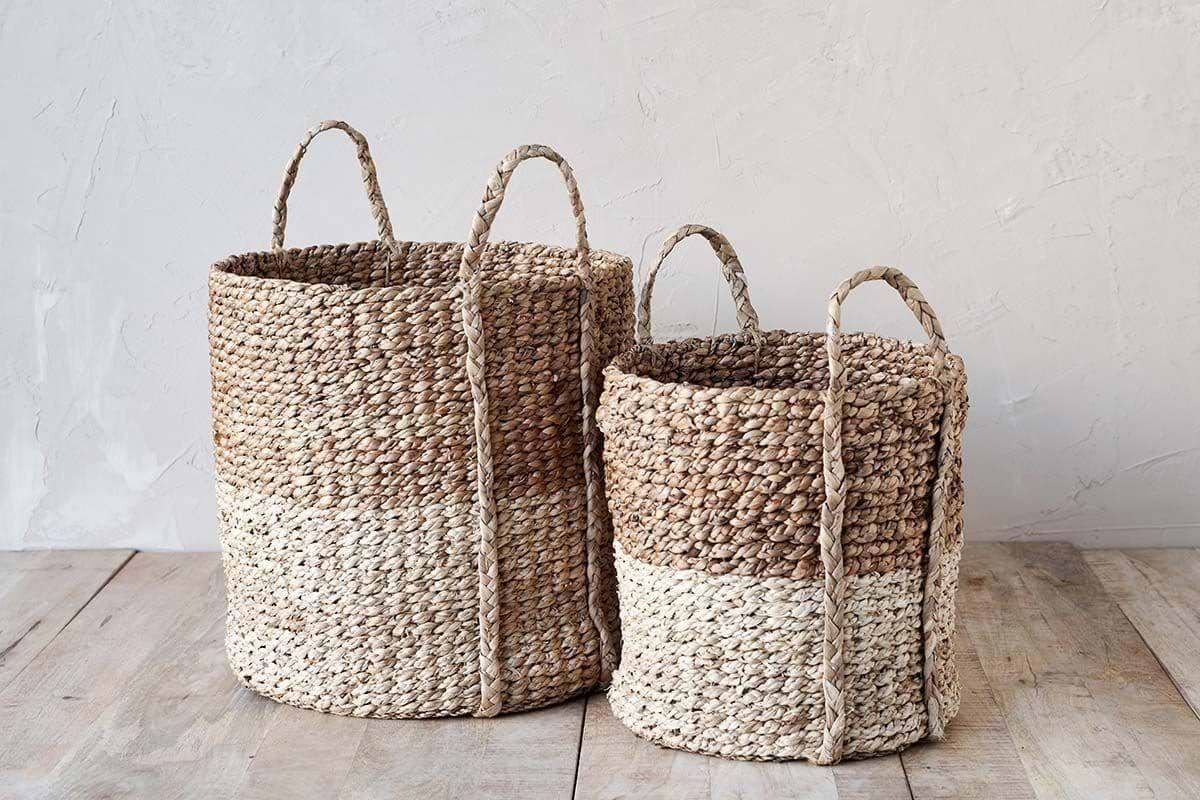
What tends to hold up with working with natural textures
Looking at dozens of real rooms and product reviews, there’s a clear pattern: open storage works longest in homes that stay close to one or two textures per surface. Matte rattan especially stands out in calm rooms, because it hides fingerprints and softens reflected light. Reviewers often call out how rattan’s springiness gives under weight but snaps back, making it more forgiving than brittle wood or glass. Every year, decorators seem to recommend repeating a single material two or three times in a room—for shelves, baskets or small accents—so nothing feels out of place or stark.
Longevity and comfort come down to placement. A wall shelf above head level stays dust-free longer and draws the eye without looking like storage. In kids’ rooms and bathrooms, reviewers mention rattan’s resilience and ability to soften sharp transitions between tile, plaster, and wood again and again.
— Mara, Loom & Glow
Common questions
What is the difference between rattan, wicker, and cane?
A rattan shelf uses stems from the rattan palm, while wicker is a weaving technique and cane is the outer skin of rattan.
What size rattan shelf works best in a small bedroom?
Most small rooms work best with a single-tier design and clear edges.
Where is the best place to hang a rattan shelf?
A rattan shelf works best in rooms where storage is needed but floor space is tight, like bathrooms, bedrooms, and entry halls.
Explore more calm combinations inside our Shop The Look .
Shop the Look
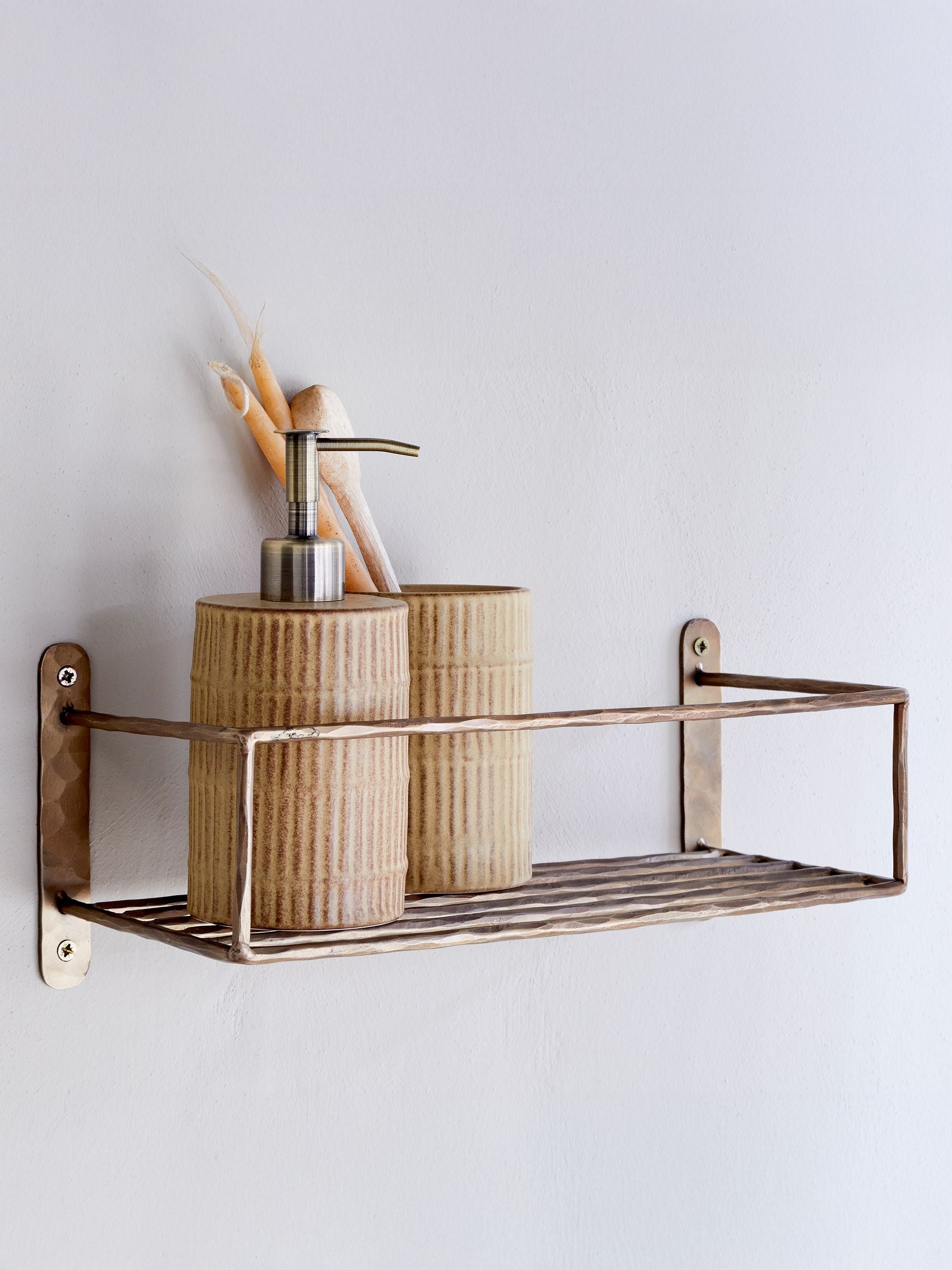
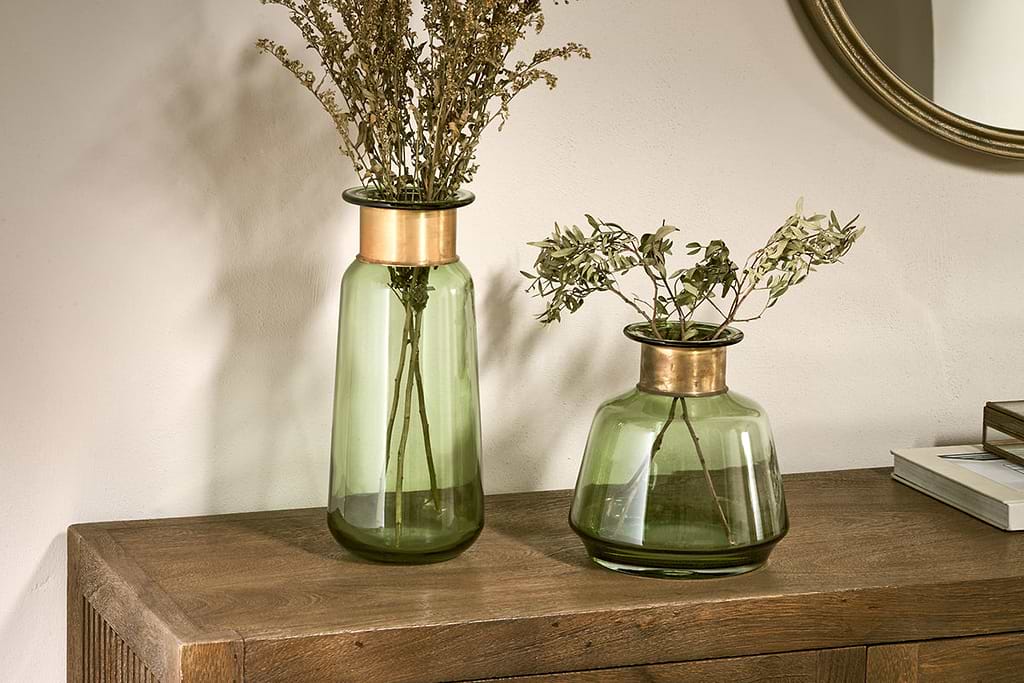
An iron-and-wood ledge and quiet glass vase pair naturally with rattan styling across any room.
Some links above are affiliate links. If you buy through them we may earn a small commission at no extra cost to you. We only suggest pieces we think fit a calm, lived-in home.
Free guide
The Calm Shelf
12 styling ideas to help you compose calm, balanced shelves in natural texture homes.