
A Feng Shui bedroom is not a style you buy, it is a set of placement decisions you make once and then stop thinking about. Most of them cost nothing, and in a small room they matter more, not less.
The ideas below come from a tradition rooted in over 3,000 years of Chinese philosophy, but you do not need to believe in energy to use them. Strip away the language and what is left is a practical argument about sightlines, storage and light, which is exactly what a small bedroom struggles with. Below you will find where the bed goes and why, what to take out of the room before you add anything, and the short list of things worth avoiding.
What Feng Shui means for a calm, small bedroom
Bedroom Feng Shui is a practical approach to arranging a room so energy flows freely and rest comes easier. In a small room, “flows freely” has an unglamorous translation: you can walk the perimeter of the bed without turning sideways, you can open every drawer fully, and nothing is stacked in a corner waiting to be dealt with.
That is the useful part of the tradition. A room that reads as calm is usually a room where your eye has somewhere to rest and nothing unresolved in the background. If you have already worked through our small bedroom ideas, you will recognise the overlap. Feng Shui simply gives the decisions an order: position first, subtraction second, colour third, objects last.
The commanding position: where to place your bed
The commanding position means placing the bed diagonally across from the door, with the headboard against a solid wall. You should be able to see the doorway from where you sleep without being directly in line with it. That is the whole rule.
The reasoning is straightforward once you sit on the bed and test it. Facing the entrance means nothing enters the room behind you, and a solid wall behind the headboard means nothing is happening at your back either. The room stops asking for your attention.
Why the coffin position feels wrong
The coffin position is the arrangement where your feet point directly out through the bedroom door. It is considered inauspicious because it mirrors the way a body is carried out of a house. You do not have to accept the symbolism to notice the effect: lying with your feet aimed down an open corridor puts the brightest, busiest part of the house in your field of view every time you look up.
If your room only allows that layout, the usual fix is a footboard, a bench, or a low chest at the end of the bed. Anything that visually closes the line does the job.
How to adapt the commanding position for small rooms
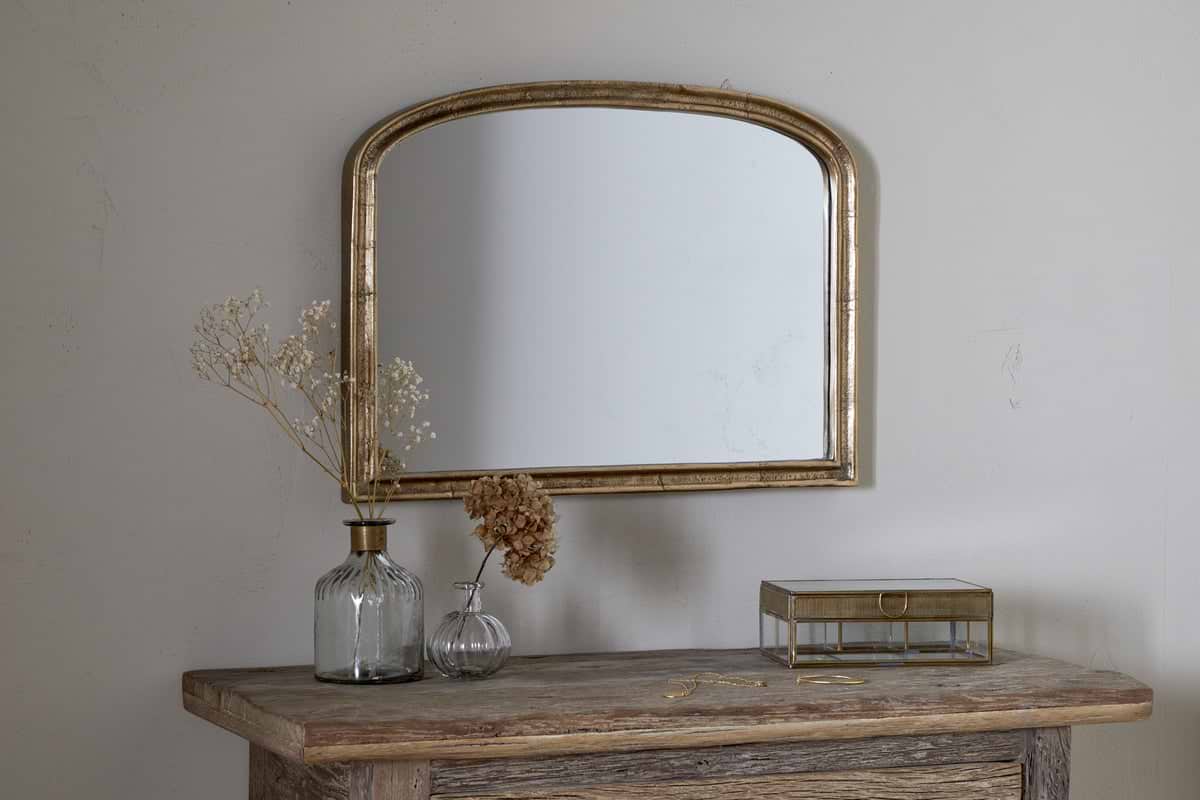
In a room under about nine square metres, the textbook diagonal often does not exist. Two compromises work. The first is to keep the headboard on the solid wall and accept a partial view of the door, gained by shifting the bed a hand’s width off centre. The second is to place a mirror so the doorway is visible from the pillow without the bed being moved at all, which is the one job a bedroom mirror does well.
What matters is the principle rather than the geometry: headboard supported, entrance visible, nothing in the traffic path.
The practical bedroom declutter, including under the bed
Every Feng Shui guide asks you to clear the space under the bed, and it is the instruction people most often skip. The argument is that stored objects sit underneath you all night. The practical argument is better: under-bed storage is where things go when a house has run out of honest storage, and it is never sorted, only added to.
If you cannot empty it, edit it to one category, in one closed container, of things you genuinely use seasonally. Bedding is the reasonable exception. Paperwork, exercise equipment and boxes you have not opened since moving are not.
Do the same with the surfaces. A nightstand holding a lamp, a book and one small object reads as considered. The same nightstand holding nine things reads as a shelf. Our notes on calm bedroom ideas go further on what to keep out on show.
Colours that quiet a room, not decorate it
Feng Shui associates bedrooms with earth tones and skin tones, which in practice means warm neutrals, soft clay, muted terracotta, oatmeal and the quieter greens. The reason they work is contrast, not symbolism: low-contrast schemes give the eye less to do, and a room with less to look at feels larger and settles faster in the evening.
Two cautions. Strong reds and high-saturation blues both raise the visual temperature of a room, in opposite directions, and a bedroom is the one space where you want it flat. And a pure brilliant white, in a north-facing room, turns grey and cold by four o’clock in winter.
If you are not sure which family your room already belongs to, the choosing colours quiz will place you in about a minute, and it is easier than guessing from a paint chart under shop lighting.
Why electronics are visual noise
The objection to electronics in a bedroom is usually framed as energy. The measurable version is light and obligation. A charging cable, a standby light and a screen are three small prompts that the day is not finished, sitting in your eyeline at the moment you are trying to finish it.
You do not need a rule. Move the charger to the hallway or a drawer, and the problem disappears without a single purchase.
Mirrors: when they work and when they disturb
Mirrors are the most misunderstood object in bedroom Feng Shui. A mirror that lets you see the door from the bed is doing useful work. A mirror facing the bed directly is the one arrangement traditionally avoided, and the practical reason is that movement and half-light in a reflection at three in the morning is genuinely unsettling.
The safe placement is on a side wall, angled toward the entrance, or inside a wardrobe door where it is closed most of the time.
Natural materials that age well
Wood, linen, wool, rattan, stone and unglazed ceramic all share one quality: they look better after two years than they did on the first day. That is the entire case for them in a bedroom, where you see the same surfaces every morning.
Layer no more than three textures, and let one dominate. A linen bed, a wool throw and a wooden nightstand is enough. Adding a fourth rarely reads as richer, only busier. There is more on this in our guide to natural bedroom decor.
How to choose one piece of art that belongs
One piece, hung at seated eye level, above the headboard or on the wall you face when you wake. Pick something calm rather than dramatic, and something you chose rather than something that filled a gap.
Feng Shui tradition suggests pairs and avoids solitary imagery in a bedroom shared by a couple. Whether or not that persuades you, the practical filter holds: if a picture makes the room feel busier, it is the wrong picture, however good it is.
What to avoid: the short list
Beams and low shelving directly over the head of the bed. Open storage facing the pillow. Exercise equipment. Work materials of any kind. Sharp corners pointing at the bed from a chest or desk. Dead plants, which are worse than no plants. And more bedding than the bed needs, which is the most common cause of a bedroom that cannot be tidied in two minutes.
None of these are expensive to fix. Most are subtractions, which is why Feng Shui suits a small room and a small budget better than a redesign does. If you want the wider version of that approach, our take on a warm minimalist home applies the same logic to the rest of the house.
Common questions
What are the basic Feng Shui rules for a bedroom?
Place the bed in the commanding position, with the headboard against a solid wall and a view of the door that is not directly in line with it. Keep the space under the bed and the surfaces around it clear. Favour warm, low-contrast colours and natural materials, keep electronics out, and avoid a mirror that faces the bed.
What is the best direction for my bed to face?
In practical terms the important thing is not a compass direction but the relationship to the door: headboard on a solid wall, doorway visible, feet not pointing straight out of the room. If you have a choice of walls, the one that avoids a window directly behind the headboard is usually the better one, because it is quieter and warmer.
What should you avoid having in a Feng Shui bedroom?
Work materials, exercise equipment, clutter stored under the bed, dead plants, open shelving facing the pillow, mirrors pointed at the bed, and screens. Most of the list is about removing prompts and reflections rather than buying anything.
How can I arrange my bedroom to feel more balanced?
Start with the bed position, then clear one surface completely and leave it clear for a week. Match the two sides of the bed roughly in weight, so a tall lamp on one side is answered by something of similar height on the other. Then stop. Balance in a small bedroom comes from fewer decisions, not more.
Shop the Look
A few Nkuku pieces that support calm and balance in a small bedroom.
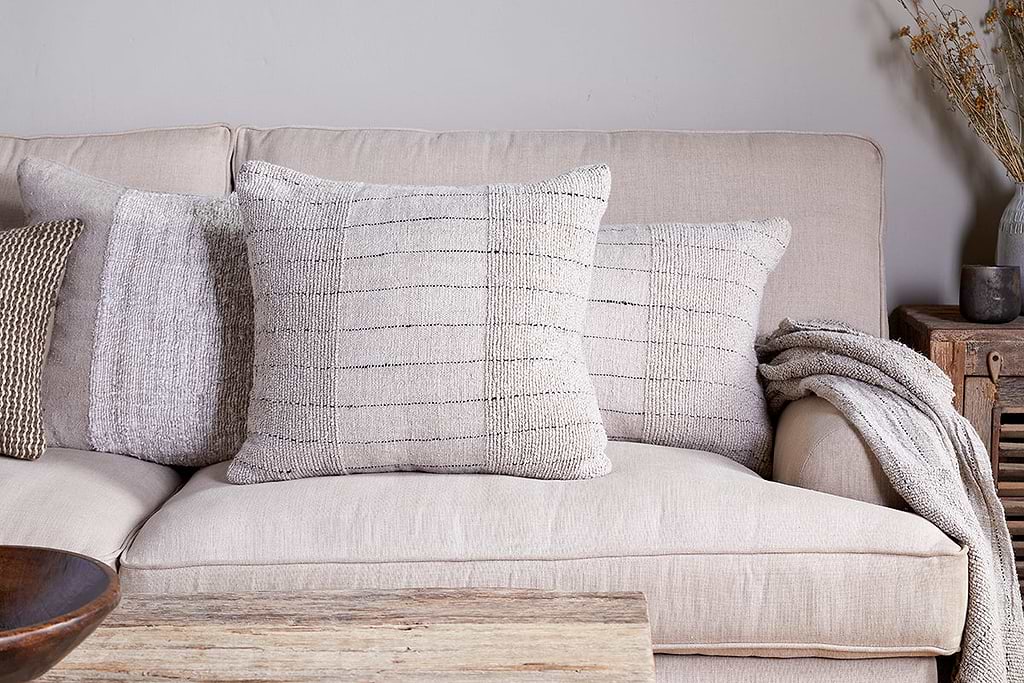
Mayla Cushion Cover
Soft hand-textured cover, instant warmth on linen sofas or chairs.
View at Nkuku →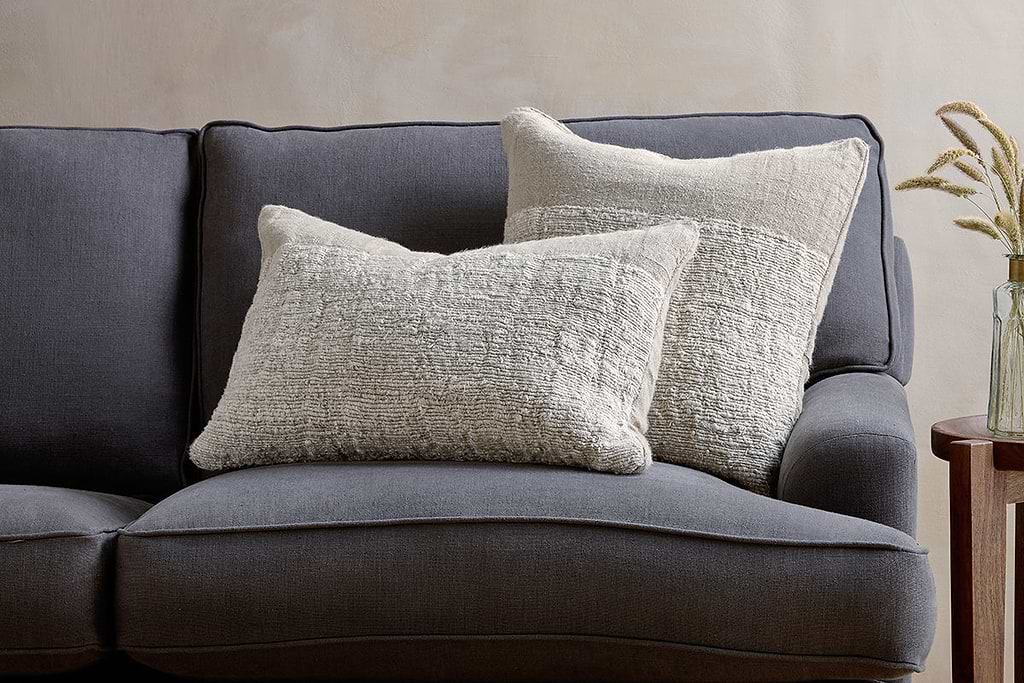
Puli Linen Cushion
Recycled linen in natural, pairs with woven textures and aged wood.
View at Nkuku →Some links above are affiliate links. If you buy through them we may earn a small commission at no extra cost to you. We only suggest pieces we think fit a calm, lived-in home.
Free guide
The Calm Shelf
12 styling ideas to help you compose calm, balanced shelves in natural texture homes.