

Many dark brown couch living room ideas Pinterest offers look light and fresh in photos, yet the same sofa often feels heavy and flat once it’s actually in the room. Floors feel busier, corners look darker, and every throw cushion seems to disappear into the background.
This guide gets you from Pinterest save to real calm, showing clear decisions that let a dark sofa feel grounded, not gloomy. You’ll see what to change, which colours to combine, and the textures and materials that look balanced, not bulky. This works especially well in a small apartment living room when light feels scarce because it keeps the seating area from swallowing up the entire space.
The short version: The key to dark brown couch living room ideas Pinterest often misses is to limit colours, repeat natural textures, and break up large areas of darkness with brighter, matte surfaces. Anchoring one calm focal point and using light textiles around the sofa helps lighten the whole room without feeling busy.
Key takeaways
- A dark brown sofa works best with crisp whites, soft greys, and one warm accent.
- Repeating natural textures like jute or wood keeps the look calm instead of busy.
- Choosing one large rug, not lots of small patterns, prevents a heavy feel.
- Metallic accents, used sparingly, bring needed highlights to moody corners.
- Playing with patterns, using one each on rug and cushion, can lift a brown sofa, according to Decorilla.

The Pinterest problem with dark brown couches
Most Pinterest boards show dark brown couches in big, well-lit rooms, but in narrow UK homes they can seem too solid and dark. A brown sofa can work if the rest of the room breaks up the deep colour.
Living rooms found on Pinterest often feature tall ceilings, large windows, and a wide shot that hides details like everyday clutter, lamp cords, and radiator covers. Real homes rarely give that much space or light, so a dark brown leather couch in a typical semi or flat can dominate the room, and not in a good way.
When you use the same combination, big couch, dark floor, deep wall colour, the space can feel lower and more boxed in. Throws, gallery walls, and side chairs blend together instead of popping out. One brown piece repeats so much it blurs into everything else.
Unlike the bright, open living rooms pinned again and again, most UK setups layer in more dark objects and less daylight, making the sofa or armchair eat up all the visual energy. Instead of using only what looked good online, focus on breaking up those solid blocks with light or colour differences nearby.
Where this works best
Dark brown couches work best in rooms that get some natural light, even when space is tight. A brown sofa anchors the look when you keep other elements simple and bright.
Living rooms in small apartments, terraced houses, or any area with low-ceilinged profiles all face similar problems. The furniture goes up close to the wall, and there’s rarely a surplus of windows. A brown sofa can feel oversized fast, especially if the rug and walls are dark or if shelving is filled to the top.
One solution is to use the couch as the main focal point against a lighter backdrop. Simple white or pale wall colours, a rug with a subtle woven texture, and open space around the arms give the sofa room to stand out without swallowing the floor. A calm plant, like a trailing pothos, softens corners on a shelf or table beside.
Avoid putting a dark brown sofa up against another block of darkness, such as a near-black wall or heavy shelving unit, this stacks deep colours and can make the whole zone feel sunken. Placing it opposite a source of daylight, even a mid-sized window, helps give relief and shape.
How do you avoid a heavy look with a dark sofa?
Combining one large pale rug and a single light throw breaks up the heaviness of a dark sofa. Light-coloured accessories let the couch feel purposeful, not overpowering.
In everyday use, too many dark or patterned pieces grouped together pull the eye and make a brown sofa look bigger and heavier than it is. Even scatter cushions with busy prints can add to the bulk, especially when picked to “match” the brown instead of standing out from it.
A single rug in cream, jute, or palest grey, large enough to reach under the sofa legs, draws a soft border and prevents the couch from visually sliding into the floor. Using a woven basket or neutral linen curtain in light oat or off-white continues the effect above and beside the couch, each item separating dark from dark.
Compared to the usual Pinterest approach, lots of layering, many small details, a limited set of light textiles and open floor feels calmer by making each object clearer. Reducing the number of competing patterns and shades cuts out visual noise right at the eye-level you spend most of your day.
Colour schemes that work (and the ones that don’t)
Crisp whites and soft greys work best with dark brown sofas, while overpowering reds or saturated greens give a dated or heavy effect. Limit main accent colours to one or two.
A brown leather couch needs a surrounding palette that keeps the look light, not stuffy. According to Decorilla, crisp whites and soft greys are best for balancing out large, dark seating.
Whites on wall, trim, and shelving let the sofa’s colour show without overwhelming; they soften the transition between brown upholstery and curtain, lamp, or side table. Grey accents, especially light, matte shades, make the setup feel newer and less fussy. One rule of thumb: a dark brown couch works best when the total wall and rug colour are two shades lighter than the fabric.
Unlike the bold reds or deep bottle greens that appear in some mood boards, those colours make rooms feel closed in. Instead of warmth, they can add to the room’s heaviness. Soft blues or very gentle earth tones, like clay or sand, bring calm instead and work in most lighting.

How to add texture without visual noise
Repeating two or three quiet textures, like a jute rug and a clay vase, keeps the room calm and prevents clutter around a dark sofa. Too many textures crowd the look.
A dark brown sofa often sits on top of, or next to, several other large and visually heavy objects, think bookshelves, TV stands, and fireplace mantels. Adding texture can balance all of that, but only when it’s controlled. Two or three types, such as woven jute, smooth glazed clay, and pale unfinished wood, are enough.
The trick is to repeat each texture more than once in small, spaced out ways. A jute rug underfoot can pair with a jute basket under a side table. A clay bowl on an ash-wood shelf echoes another ceramic planter by the window. Unlike using faux furs, leather throws, and heavy knits all at once, keeping to just three types lets texture break up flatness without making the room feel chaotic.
If every object has a different finish, from shiny metals to distressed woods, the eye bounces from one to another. A single large element, like a jute rug, makes more impact and balances out the brown’s weight over the whole floor.
Styling and placement
Careful placement and open spacing around a dark brown sofa set the tone for the whole room. Using fewer, but larger, items grounds the look and makes cleaning easier.
The couch sets the main line for the space, so its placement changes how everything else feels. In rental living rooms, pushing a dark brown sofa flush against the wall can create extra floor area, but it can also cause the room to look like a waiting area. Placing it with a slim side table and a single open lamp, then floating a basket or footstool off one end, carves out a proper sitting zone.
A small gallery wall works best on the adjacent wall, not directly above the sofa, this keeps the lines clean and avoids turning the seating spot into a cluttered display. According to Decorilla, curating complementary furniture pieces in scale with the sofa is a foundational move. A low, pale-wood coffee table or white metal-framed shelf keeps everything feeling breathable.
Unlike side tables in matching brown or black, pale surfaces lift weight up and reflect more daylight. Instead of stacking baskets, go for one or two and leave gaps between large pieces. With open space under the side table or coffee table, the floor stands clear and the room feels easier to walk through.
Quick calm checklist:
- Natural rug (jute or flatweave) under sofa legs
- Keep three or fewer main accent colours
- White or soft wood on shelving, not dark wood
- Leave open space beside sofa arms, no crowding
- Group artwork to one side, not stacked overhead
Lighting that warms a dark sofa
Warm, diffused lighting makes a dark brown couch feel calm instead of cold. A table lamp with a pale fabric shade prevents the sofa from looking flat at night.
In rooms with limited windows, or when evening falls early, a deep brown sofa soaks up available light and can look even more blocky. The trick is to use layered lighting, one overhead light, plus a floor lamp or large table lamp with a pale shade, so light bounces off the soft surfaces and spreads around the room.
A warm bulb (labelled “warm white” or “soft white”, commonly found in LED lamps) puts a mellow tone on the upholstery. If the shade is clear glass or metal, swap it for fabric or paper to diffuse brightness without harsh spots on the brown. According to mirror placement experts, putting a large mirror opposite the sofa makes even small windows double the light in the zone.
Compared to bare ceiling fittings or cold spotlights, low and layered lamps give dimension to the brown, letting it look soft at every time of day. One large light source usually works better than stacking lots of little fairy lights or candles.
| Lighting type | Effect on brown sofa | Best use |
|---|---|---|
| Warm table lamp | Softens texture, adds highlight | Side table or shelf |
| Large mirror nearby | Increases daylight, opens up space | Across from window or sofa |
| Overhead pendant | Needs warm bulb to avoid cold look | Room centre, not above sofa |
| Multiple tiny lights | Can look cluttered, creates glare | Limit to one small accent |
Sometimes a room feels “off” just after you finish arranging all the pieces. The isle between the couch and coffee table feels narrow, or the only accent in the room is another dark wood. Light bounces oddly, and the sofa stays as the dominant block no matter how many pastel throws you add.
The main shift is picking one focal material, jute on the rug or pale unfinished wood on the coffee table, and making it big enough to set the mood. Cut out the extra layers, repeat just one highlight, and space out any art or shelving. A single, clear style reads calmer, especially when daylight skims across it.
Many homes miss this because they try to copy every detail in a pin, a plant here, a stack of baskets there, extra gallery wall, without checking the room’s size, proportion, or window placement. The result: too much in one colour range, making dark feel darker and the floor busier.
A better approach is to let the brown do its job, break up darkness with a light rug or mirror, and avoid cramming surfaces. Once you clear away extra clutter and pick a real accent, the space looks finished, not crowded.
Most people realise something feels cluttered or too heavy only when they step back and look at the room as a whole. You see polished Pinterest boards but your own window sits off-centre or there’s just enough space for one slim side table. The weight lands in the wrong spot, and it nags at you every day.
A frequent mistake is packing in too many dark or bulky pieces around the sofa, multiple brown tables, thick curtains, busy gallery walls. The result is a room that feels dense and unsettled, with the sofa taking up more visual space than it should. Once the main accent is switched to a lighter, larger piece and space is opened up, the entire atmosphere calms down.
Save this idea for later.
What tends to hold up with brown sofa colour and texture choices
Reviewing many rooms, one pattern comes up again and again: the most successful brown sofa setups use restraint. They repeat natural textures, limit accent colours, and allow space between main pieces. Reviewers point out that matte finishes on shelving or tables are less demanding on the eye than shiny or dark gloss, especially in low light.
Most decorators recommend one bold move, a large rug, a big mirror, or one strong focal wall, rather than filling every gap. On the material front, pale oiled woods and woven jute keep their appeal season after season, surviving muddy shoes and shifting design trends far better than high-shine finishes.
, Mara, Loom & Glow
Common questions
How to style a living room with a dark brown couch?
The best way to style a living room with a dark brown couch is to keep walls and rugs on the pale side, add one or two soft textures, and use open space around the sofa. This prevents the couch from looking too dominant and helps every other detail stand out calmly in daylight or evening light.
What colour compliments a brown sofa?
Crisp whites and soft greys best compliment a brown sofa, according to Decorilla. Warm, muted earth tones, like pale oat, sand, or soft blue, also pair well, while bold reds or heavy greens tend to compete with the brown’s weight and can look dated.
What sofa colours will look outdated in 2026?
Highly saturated reds, bottle greens, and dark purples on large sofas are expected to look outdated by 2026. Softer, chalkier tones and relaxed blues are being recommended longer-term, while classic neutral fabrics like pale greys, oat, or sand continue to stay relevant in calm and minimal spaces.
What Dulux colour scheme would look good in a living room with a dark brown sofa?
A Dulux colour scheme of Crisp White, Soft Truffle, and Calm Cloud pairs beautifully with a dark brown sofa. These colours reflect natural daylight and lighten the mood, providing the best foundation for both dark and pale accessories, rugs, and natural wood textures in a modern UK living room.
Explore more calm combinations inside our Shop The Look .
Shop the Look
A few Nkuku pieces that bring warmth and texture to a dark brown sofa.
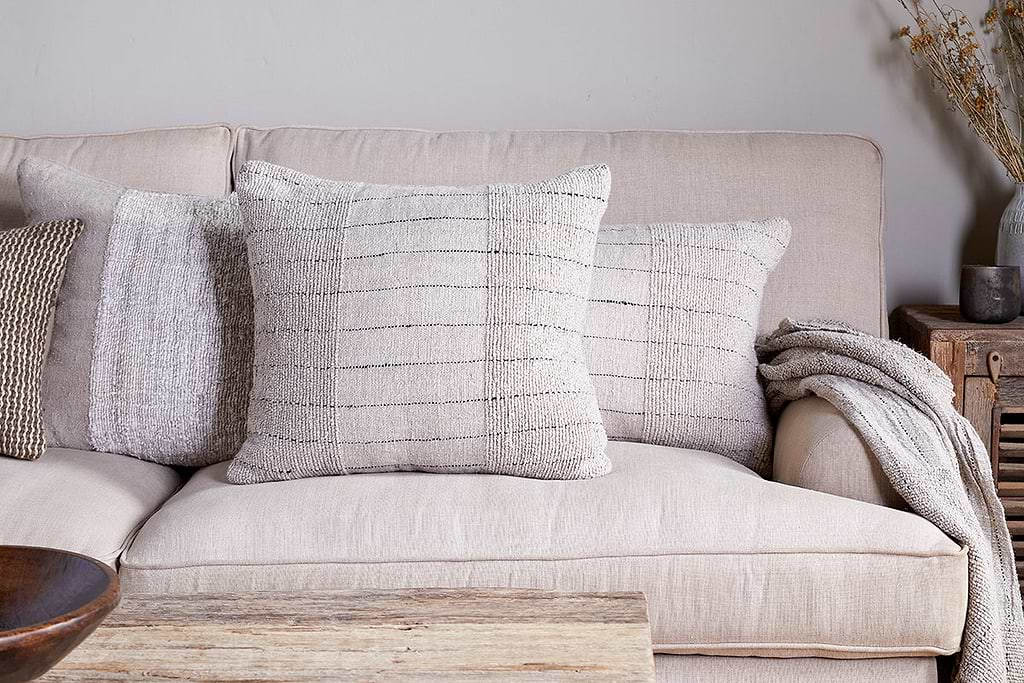
Mayla Cushion Cover
Soft hand-textured cover, instant warmth on linen sofas or chairs.
View at Nkuku →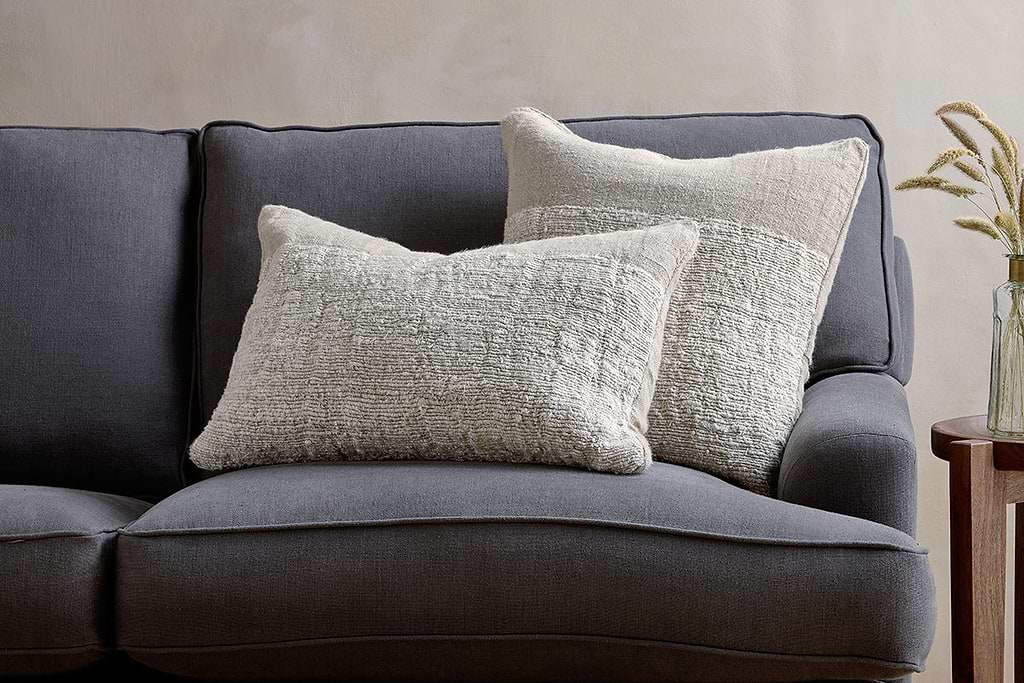
Puli Linen Cushion
Recycled linen in natural, pairs with woven textures and aged wood.
View at Nkuku →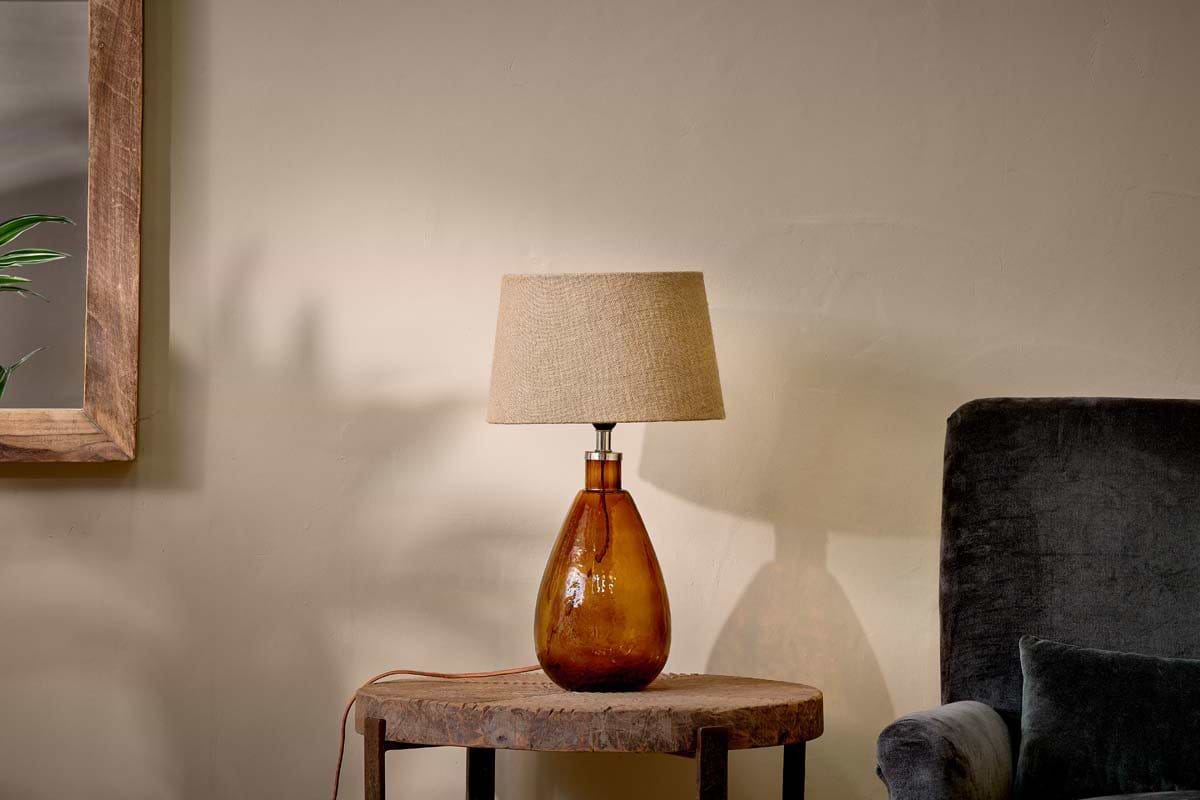
Some links above are affiliate links. If you buy through them we may earn a small commission at no extra cost to you. We only suggest pieces we think fit a calm, lived-in home.
Free guide
The Calm Shelf
12 styling ideas to help you compose calm, balanced shelves in natural texture homes.