

The best couple bedroom ideas use a single colour base, simple textiles, and balanced layouts to keep a shared space calm and intentional without erasing personality. Start by choosing one main neutral for walls and bedding, then add just one or two shared accent colours for depth. Anchor the room with a natural wood or fabric headboard and keep nightstands clear with a single vignette per side. Limit personal displays to one or two agreed areas, like a shelf or chest top, to avoid visual clutter and make the bedroom feel restful for both partners.
Too many bedrooms for couples end up as a patchwork of mismatched tastes, too many little objects, or constant reminders of what each partner “had to give up.” Even small things, like clashing bedding or overstuffed nightstands, break up the space and make it hard to fully relax. Many people go searching for couple bedroom ideas hoping for a fix, but find only vague inspiration or solutions that don’t work in a real, shared bedroom.
Today, you’ll see straightforward ways to make a calm, shared bedroom that doesn’t sacrifice the details each person values. This works especially well in a small flat when two people have different styles because a clear plan avoids visual clutter and tired compromises.
The short version: The best couple bedroom ideas use a single colour base, simple textiles, and balanced layouts to keep the space calm without erasing personality. One clear palette and focused placement let shared bedrooms feel intentional, even with mixed personal items or limited space.
Key takeaways
- A shared bedroom looks calmer when both partners agree on a main colour and limit accent shades.
- One well-chosen headboard anchors the space, going without makes the room feel unfinished.
- Nightstands work best with a single vignette, not cluttered with mismatched objects.
- Layered bedding and textured materials help blend different tastes without buying matching sets.
- Most built-in wardrobes hold enough for two if the rest of the room stays clear, according to Sonno.
- Why do some couple bedrooms always feel overfilled?
- Where this works best
- How should you start building a shared colour story?
- Blending warm neutrals with bold colour: what really works?
- Styling and placement
- What is the simplest way to anchor a couple’s bedroom?
- How do you fit two wardrobes in a small bedroom?

Why do some couple bedrooms always feel overfilled?
A bedroom shared by two often looks crowded when partners each display their own collections or colours, without setting boundaries for what stays out. Calmer rooms happen when you set clear “no pile zones” and stick to one or two shared surfaces for display.
A shared bedroom in a small flat or a rental often collects too many things: different lamps, stacks of books, mismatched throws, or artwork on every wall. The result feels unsettled, not because either partner has bad taste, but because there’s no single plan tying it together.
One design truth is that every object asks for visual attention. When both people want their favourite things out, plants, trophies, family photos, every surface can fill quickly. The true problem is not “too much personality,” but too little agreement on where personality gets to show.
A bare shelf can read colder than one styled with purpose, but a full row of ornaments will break up the calm even more. Choosing just one or two areas for personal items, like the top of a chest or the wall above the headboard, keeps the rest of the space restful.
For daily life, this means partners notice less visual noise and sleep better, since there’s less to process before bed. Try limiting each person’s display to a single shelf or corner for a cleaner effect.
Where this works best
Couple bedroom ideas work best in rooms with limited storage, rentals with built-ins, or anywhere the footprint is small enough that every item shows. Even homes with large bedrooms benefit from defined shared areas.
Shared bedrooms in small apartments and city flats rarely offer much extra space. Built-in wardrobes dominate one wall, while the bed and two nightstands fill most of the rest. Bringing in old pieces or extra chairs often makes these rooms look squeezed and awkward. Minimalism alone doesn’t solve it, unless the storage and layout match the room’s real habits.
The best approach uses what you have: focus on making clear decisions about which wall holds display items, which textiles show, and where clutter shuts the space down. Checkatrade organises its couple bedroom advice by size, storage and style priorities, and shows that function first still leaves room for design.
Avoid treating every flat surface as a chance to display personal objects. Floating shelves across too many walls, or added boxes at the end of the bed, end up looking both busier and less useful than one good trunk or a single clear surface. Instead, let some zones remain blank.
Apply this in a small shared bedroom: pick a single chest or the main shelf for styled objects, and let the rest focus on utility or remain clear for breathing room.
How should you start building a shared colour story?
Start a couple’s colour scheme by choosing one main neutral, like off-white or warm grey, then adding just one accent each for depth. Let soft bedding set the mood instead of competing wall art or bold curtains.
Colour is one of the first sticking points for couples who both enjoy decorating. According to Sonno, many couples split into two paths: one prefers a soft, neutral colour story, the other wants deeper or punchier accents. Both can work, but only if they’re balanced.
Picking a single neutral for walls, bedding, and the largest furniture keeps the foundation calm. This makes it easy to layer in one strong accent (navy, olive, soft peach) from one partner and a smaller accent (like tan or pale blue) from the other without noise. The result is satisfying: it welcomes variety but always feels tied together.
Unlike rooms that build from the rug or drapery print up, a neutral-led scheme is more forgiving and lets future swaps (like a new duvet cover or lampshade) work year-round. If curtains are already a statement, keep bedding quieter; if the headboard is bold, keep paint pale.
Use this approach in any shared bedroom, but it’s crucial for rooms that already have an awkward carpet or statement wall. Let one element, walls, bed linen, or floor, carry the accent and repeat the main tone everywhere else.
Blending warm neutrals with bold colour: what really works?
Warm neutrals like beige or sand soften bolder choices by giving them space, while low-contrast layering prevents jarring splits. Repeat the bold accent in only one or two spots for calm.
One person may love blush or forest green, while the other feels at home with oatmeal or ivory. Mixing both can clash unless you separate them: let walls and larger soft furnishings stay in pale, warm-toned shades; keep bold colours for a single part like the headboard, blanket, or throw pillow.
Checkatrade lists “harness the power of neutrals” as a top strategy for budget-friendliness. Pale, natural fibres, linen throws, jute rugs, simple cotton sheets, help catch light softly and take the edge off any strong hue. This matters more in small bedrooms, where every new colour is obvious from the door.
Compared to pairing competing bolds, mixing a single accent with a neutral background is easier on the eye and hides minor mismatches between furniture and textiles.
Use the bold element only where the eye naturally lands or where both people agree to give it a shot. For instance, drapes in burnt orange, but the rest of the room in pale taupe and off-white, pulls the look together without shouting.

Styling and placement
A shared bedroom feels finished when each surface or wall holds just one mood or purpose, grouping several accents together beats spreading them thinly across every corner.
Styling for a couple’s room never means hiding each person’s tastes, but it does mean editing for clarity. Two nightstands crowded with plant pots, headphones, books and chargers look busier than one with a single lamp, a small stack of hardcovers, and a clay bowl.
One rule of thumb: a nightstand looks complete with two items and a spot to set down a glass. Too much layering, crocheted doily, scented candle, tray, mug, photo, draws the eye in too many directions and makes the room feel tighter.
Rather than putting one partner’s picks on the left and the other’s on the right, work together to make one vignette per side, setting boundaries for what stays visible and what fits in a drawer.
Quick calm checklist:
- Choose solid timber, woven baskets, or ceramic trays for nightstand surfaces.
- Leave at least half the top free for catching light and breathing space.
- Keep the main palette to three shades: base, accent, and one metallic or black for hardware.
- Repeat a single shape (circular, square, or oval) across nightstands, baskets, and frames.
Keep this discipline wherever you style a surface, including dresser tops and shelves, even a soft linen catchall or small mirror tray can work as the anchor in a shared bedroom with tight storage.
What is the simplest way to anchor a couple’s bedroom?
A headboard that’s natural wood, fabric, or simple cane fixes the bed as the room’s anchor, while going without one often leaves the whole room feeling unfinished.
Headboards do more than hold pillows up: they give the wall a purpose and make space for both partners to lean or read. According to Sonno, picking a headboard is a point of negotiation for most couples, but a neutral material, oak, rattan, or padded linen, settles nearly any style difference quietly.
Compared to bold artwork or patterned wallpaper behind the bed, a headboard grounds the space without introducing extra visual chaos. Choose one with simple lines if the rest of the room has smaller details or pick a lightly textured fabric for extra cosiness if the space feels hard.
If you’re setting up in a rental, select a freestanding or wall-mounted headboard with soft upholstery. Most are wide enough that even with different bedside lamps, the bed still reads as the centre of the room.
| Headboard Type | Main Material | Feeling It Brings |
|---|---|---|
| Solid Wood | Oak, walnut | Grounded, classic |
| Padded Fabric | Linen, bouclé | Soft, calm |
| Cane/Rattan | Natural cane, bamboo | Light, relaxed |
Try this first before deciding on bold bedding or painted walls. A settled headboard makes any other detail, lamps, art, plant or no plant, feel less like patchwork and more like a finished choice.
How do you fit two wardrobes in a small bedroom?
Built-in wardrobes are usually enough for two when the rest of the room stays clear, but adding extra freestanding pieces without planning crowds the space and causes stress.
Small bedrooms often face one big debate: can both people keep a full set of clothes within their side of the room? Most built-in wardrobes are sized for two, as Sonno notes, and adding another storage unit, like plastic drawers or open rails, quickly breaks up the flow.
The real fix is treating all visible storage as design. Opaque doors, natural woven baskets above or below, and only open shelves styled with restraint keep the look calm. Overflow should head under the bed or inside covered boxes.
Compared to leaving hampers or laundry racks in view, a closed wardrobe front, even with a slightly worn handle, gives more breathing room and keeps colours from clashing. Rental-friendly wallpaper inside wardrobe doors adds personality for those who want it hidden until the doors open.
Apply this in any shared space by splitting the hanging and shelf sections, or dividing left and right. Use woven bins for socks and smalls, and keep floors clear of baskets.
What tends to hold up with couple bedroom editing and styling
Most design reviews agree that a calm couple’s bedroom comes more from making a few shared choices than from compromises or doubling up on everything. Repeated patterns from readers and designers say this: the more both partners agree on a single colour base or material, the less fighting over smaller details there is day-to-day. Wood, natural linen, and soft-woven rugs are among the few choices that nearly always satisfy both sides while wearing well over time.
Matte finishes, not glossy, come up in recommendations for any surface that faces a window, since they bounce less glare onto bedding or faces early in the morning. The projects that age best keep at least half the surfaces free of small objects, using baskets and drawers to hide the mix of receipts, power cords and keepsakes that tend to drift out otherwise.
, Mara, Loom & Glow
Common questions
How to decorate a bedroom for a couple?
The best way to decorate a bedroom for a couple is to set a main colour base, agree on a mix of textures, and limit display areas. Each partner’s favourite object or photo can stay, but best on just one surface or wall. Layer textiles, keep clutter off the floor, and use closed storage.
How to create a cosy couple’s room?
To make a shared bedroom cosy, layer soft throws and natural-fibre rugs, pick a muted palette, and use warm lighting. Add subtle personal touches on each nightstand, but keep at least half of each surface clear. Use linen or cotton bedding and one anchoring piece, like an upholstered headboard.
What is the best colour for a couple’s bedroom?
The best colour for a couple’s bedroom is a soft, warm neutral, like off-white, beige, or gentle grey. Layer accents, olive, navy, or dusty pink, sparingly for depth. Agreeing on a base lets both partners bring in small, satisfying touches while keeping the space restful and easy to update.
What are the 2026 bedroom trends?
2026 bedroom trends favour soft organic textures, closed storage, and natural materials like raw wood, stone, and woven fibre. Warm palettes and layered bedding lead, with fewer bold prints. Curved headboards and rounded lighting fixtures appear in both modern and traditional rooms, aiming for comfort without clutter.
Explore more calm combinations inside our Shop The Look .
Shop the Look
Pieces that add softness and intention to a shared bedroom without clutter.
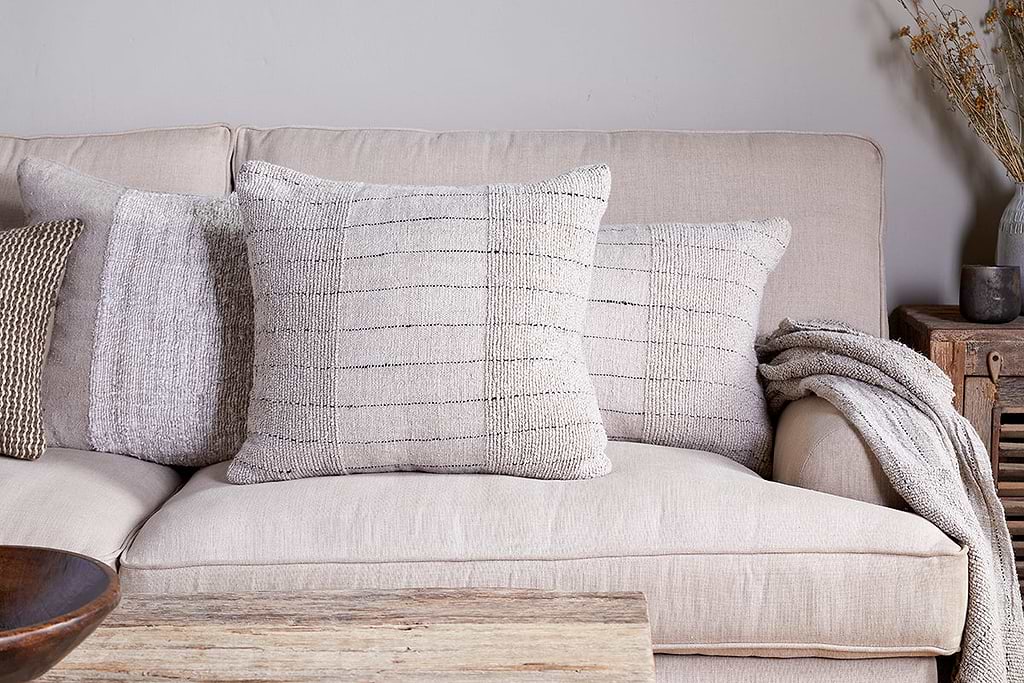
Mayla Cushion Cover
Soft hand-textured cover, instant warmth on linen sofas or chairs.
View at Nkuku →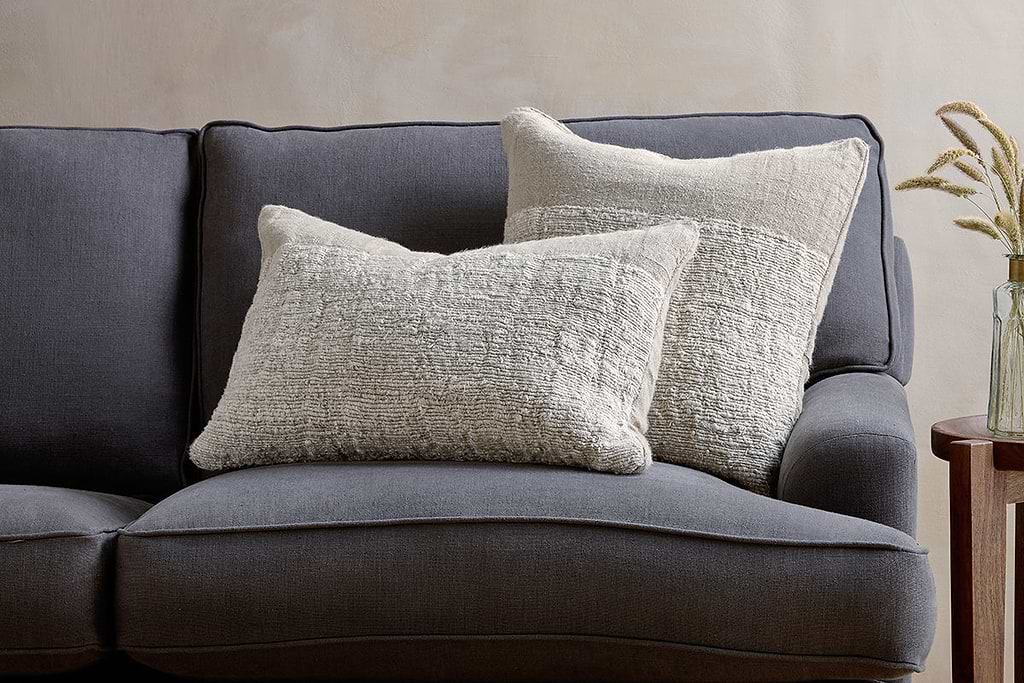
Puli Linen Cushion
Recycled linen in natural, pairs with woven textures and aged wood.
View at Nkuku →
Some links above are affiliate links. If you buy through them we may earn a small commission at no extra cost to you. We only suggest pieces we think fit a calm, lived-in home.
Free guide
The Calm Shelf
12 styling ideas to help you compose calm, balanced shelves in natural texture homes.