

Many UK homes gather decorative shelf accessories over time, but things start to look cluttered quickly. Rows of vases, ornaments, and travel finds fill surfaces, and shelves shift from feeling composed to unsteady in a matter of days. The real trouble comes when every piece calls for attention and nothing quite settles the eye.
This article helps you edit, group, and place each object until the arrangement feels finished. You will see which accessories work together, which to put aside, and how negative space can be your best design tool. This works especially well in a small lounge when shelf space is tight because focusing on a few grounded objects keeps the room calm and easy to live with.
The short version: Decorative shelf accessories complete a vignette when you choose sturdy shapes, limit the palette, and give each piece enough space to breathe. Clearing extras and grouping by texture creates a shelf that looks welcoming, not cluttered.
Key takeaways
- Most shelves look calm with only a handful of decorative accessories placed in odd numbers.
- Natural materials like wood, clay, and linen make a shelf feel grounded and less busy.
- Small lighting objects, like candles or clip-on lamps, soften shadows and help shelves read as one piece.
- According to La Redoute, mixing books, vases, and ornaments makes shelves both functional and decorative.
- Negative space between objects is as important as the objects themselves for a finished look.

The problem with most shelf accessories
Most shelf accessories in homes are too small, too fussy, or grouped without any space, so they fight for attention and the shelf feels restless.
In a living room or hallway, people often gather lots of small things: scented candles, trinket boxes, a stack of post, or holiday souvenirs. Over time, these crowd the shelf so each object blends into the next, making it hard for the eye to rest anywhere.
Unlike open shelves in shops, which use strong repeats and clear gaps, home displays often forget about leaving space. Patterns and colors pile up until nothing stands out. This can make the room look haphazard and make it harder to keep dust-free.
Adding too many delicate or glossy pieces, instead of one sturdy object like a clay vase or a stack of books, pulls attention in too many directions. A single, heavy-bottomed vase settles the whole display and acts as an anchor.
Used in a corner or by the entryway, a purposeful arrangement of a few strong decorative objects feels finished even in a busy space.
How do you choose shelf accessories that do not add visual noise?
Shelf accessories stay calm when you use natural textures, simple shapes, and edit out anything overly bright or fussy from the group.
A simple way to keep visual noise down on a shelf is by selecting just a few types of objects, mostly in similar tones, and grouping by material. Clay, soft wood, and matte ceramic read as quiet because their surfaces absorb light instead of bouncing it around.
If you fill a shelf with shiny or patterned ornaments, the eye moves quickly from one spot to another, creating nervous energy. Placing one or two rougher objects, like a woven basket or a sanded stone bowl, gives the shelf a steady, grounded look.
According to La Redoute, shelving units now act as staging grounds for both decorative and useful items. Removing items with loud graphics or unrelated shapes keeps the lines simple. The room reads as tidy, even before you’ve cleaned up.
A pared-back mix works best near a TV or in a kitchen where clutter gathers easily; the shelf then becomes the calmest spot in the whole area.
9 decorative shelf accessories for a complete vignette
The best 9 decorative shelf accessories for a finished vignette balance smooth, matte pieces with a few rough, natural materials in simple groupings.
This list covers nine accessory types often used by decorators and in UK homeware ranges. Each one behaves differently on the shelf and serves a visual purpose. Most are easy to source from places like John Lewis, Next, or even high street supermarkets.
- Textured ceramic vases: Heavy-bottomed, matte or ribbed forms settle the shelf. Choose muted shades or sandy whites to keep things calm.
- Small sculptural ornaments: Abstract shapes in wood or stone give hands something to pick up and lend focus to the group.
- Stacked books as risers: According to La Redoute, using small stacks, usually two or three books, adds dimension without looking like storage.
- Faux or tiny real plants: A single trailing ivy or a sculpted kalanchoe adds living softness. Go for pots in unglazed clay or worn cement.
- Woven baskets or soft fabric pieces: Small lidded baskets or a folded linen give shelves a flexible storage pocket and a subtle pattern.
- Candles and small lighting: A thick pillar or a battery lamp offers practical light as well as a warm focal point at night.
- Small framed art or prints: Choose one small frame with a neutral border. Prop it, don’t hang, for a relaxed look.
- Decorative storage boxes: Compact, stackable boxes in closed natural fiber hold odd bits out of sight, keeping the visual field clear.
- Natural material bookends: Marble, brass, or carved wood bookends add shape and contain loose books without dominating the shelf.
Unlike glass or mirrored objects, these accessories soften glare and draw the shelf into the rest of the room’s palette. Each type suits a different room need, so try a mix until the space feels both useful and restful.
For more specific ideas with bookends, try decorative bookends for practical and stylish ways to finish a shelf edge.
These nine can be swapped or combined in any room: next to a bed, in a rental hallway, or by the kitchen clock.
How to arrange these 9 accessories on a shelf
Arrange shelf accessories by grouping in odd numbers, varying texture and height, and always leaving space between each cluster for the eye to rest.
The simplest way to begin is to remove every item from the shelf, then start again one piece at a time. Begin with the tallest or heaviest object on one side. Next, add a medium piece, such as a book stack or a short plant, angled beside the anchor, not pressed against it.
Spacing is the hidden hero. A shelf crowded end-to-end feels tight and unfinished. Leaving a gap roughly the width of your hand between clusters makes a huge difference. If all objects line up front-to-back, the shelf reads flat. Stagger a few forward and back, allowing some to rest near the wall and others to sit forward. This adds depth.
Unlike a mantel where everything faces forward, open shelving does best with overlapping heights and a bit of asymmetry. Pairing a vertical vase with a round basket or a square box keeps the energy grounded, not scattered. A single candle or lamp at one end closes the composition off so it doesn’t spill into the rest of the room.
Use the tips found in shelf styling tips to help arrange clusters that look collected but settled, rather than random.
A small kitchen ledge or bookshelf works especially well with this approach, since the shallow depth forces you to pick only what really fits.

Where this works best
A limited set of accessories works best in narrow spaces or small UK homes where shelves can become quickly overloaded with everyday things.
Open shelving in a small bedroom, a compact lounge, or a rental hallway is the first spot to collect post, keys, and stray cups. Choosing fewer, more solid accessories suits spaces where clutter builds up in a day, not a week. This helps each item work harder and stops surfaces from attracting more stuff.
Entryway ledges, above-sofa shelves, and wall-mounted units in galley kitchens all benefit from grounded accessories. The fewer objects you have to dust or move, the more likely you are to keep the display fresh.
Avoid loading shallow shelves with deep, bulky objects that overhang the edge. Heavy frames or wide baskets can block light and make the shelf feel cramped. Instead, match the size of accessories to the shelf depth and leave space toward the front.
A simple grouping like a matte vase, a square basket, and one book stack always works on the narrowest shelf.
For more details about neutral styling, neutral shelf styling can help clarify color and spacing choices for UK interiors.
Styling and placement
Shelf styling is smoother when you set a clear limit: pick a focus object, build around it, and avoid crowding the edges with too many accents.
Many small items scattered across a shelf muddle the look. Instead, decide which object draws the most focus, a ribbed vase, a tall candle, a framed miniature, and arrange smaller items around it. This keeps the grouping from losing shape as new things get added or removed during the week.
Grouping by texture is just as useful as grouping by color. Pairing a rough basket with a glossy ornament brings balance with contrast. Try not to line everything up by height. Vary high and low to prevent a flat, stair-step pattern emerging along the shelf length.
Leave the front third of each shelf clear for easy cleaning and to make smaller places feel bigger. The rest of the arrangement should be tight but not touching, with shadows between objects so each sits in its own space.
Quick calm checklist:
- Pick one sturdy object (bowl, vase, or large candle) as your anchor point.
- Keep the color palette to three main shades or less.
- Use only natural or matte materials, ceramic, clay, wood, linen, or rattan.
- Avoid pressing everything to the edge; stagger the depth for extra dimension.
- Group objects by texture for a softer, less formal look.
Everyday shelf styling usually benefits from fewer, bolder choices instead of a dozen small keepsakes. The calm effect is instant in a busy lounge or hallway.
For more placement ideas, read how to decorate for everyday practical inspiration.
What is the rule of three and visual weight?
The rule of three guides you to group accessories in odd numbers, while tracking visual weight stops the shelf from feeling uneven or unfinished.
Grouping accessories in threes, or sometimes fives, is common because odd numbers catch attention without forming boring pairs. A stack of two bowls beside a tall vase and a small plant is visually steadier than spacing four tiny ornaments in a row.
Visual weight, how heavy or noticeable something looks, matters more than the real size. One squat marble bookend can ground a busy shelf much better than two tiny glass jars, which might get lost. Bookending a shelf with something bold, then fading out to lighter, smaller shapes takes advantage of this effect.
In small bedrooms or kitchen nooks, a single heavy piece in the centre helps the rest of the display fall into place. Compared to pairing only lightweight items, mixing in a dense anchor object makes everything else look less scattered.
| Grouping | Effect on Shelf | Best For |
|---|---|---|
| Odd numbers (3 or 5) | Draws the eye, keeps display moving | Living rooms, entry shelves |
| Mostly natural materials | Softens light, adds warmth | Bedrooms, bathrooms |
| One anchor plus accents | Gives focus, looks finished | Narrow ledges, rental halls |
Rely on visual weight for shelves where you want a confident but unfussy look, especially in spots where too many small pieces make the area look unsettled.
There comes a point in every room where a shelf display feels “off”: the eye skips restlessly across too many similar objects, small pieces collect at the edge, or all the colors muddle. Most people try adding or swapping another accessory, but the problem is usually too many thin or fussy items and not enough solid, grounding ones. The solution is almost always to edit back, anchor with one substantial piece, and space things out until the shelf reads clean and composed.
The shift is clear when you stop, look, and realise nothing feels calm, no matter how you rearrange, until a focal point is chosen and the rest support it, not fight it.
It’s common to line up decorative objects without thinking about how the shelf reads in the room. Most homes end up with a busy, tired surface, one that collects dust and pulls focus away from everything else. This leaves the space feeling heavy or incomplete, especially at the end of a long week or after an impulsive shopping trip.
Once the anchor object is clear and the palette is trimmed, the shelf suddenly feels stable. Even a narrow hallway benefits. Save this idea for later.
What tends to hold up with styling small shelves
After reviewing many rooms and reader setups, one point comes up again and again: matte finishes and simple, sturdy materials are easiest to live with day-to-day. Hard gloss or mirrored objects look stylish in spreads but quickly smudge or glare in natural light. Professional decorators almost always repeat the advice to cut back to one strong object per shelf and fill the rest with support pieces, a stack of books, a linen basket, or a small framed print.
Reviewers also note that smaller accessories tend to look lonely or busy unless they echo the main color way of the room. Relying on texture, not just color or pattern, gives shelves a softness that lasts even as trends change. Accessories from John Lewis and Next, for instance, often use grainy ceramics or unpolished metals, which stand up better in everyday handling than glass or lacquered plastic.
, Mara, Loom & Glow
Common questions
What are some good decorative things to put on shelves?
Good decorative things for shelves include vases, small framed art, candles, woven baskets, plants (real or faux), sculptural ornaments, and decorative storage boxes. Mixing textures like ceramic, glass, and wood keeps the shelf fresh. Adjustable objects that can be moved for daily chores work best in family rooms or kitchens.
How can I decorate a shelf in a stylish way without it looking cluttered?
Decorate a shelf stylishly yet uncluttered by using only a few carefully chosen objects grouped with plenty of space between. Stick to a matching palette, vary object heights, and keep some gaps open. Shelves using this approach tend to feel calm and easy to maintain, especially in small flats or shared spaces.
What are some small, cute things to put on my shelves?
Small, cute shelf additions are tiny potted plants, mini sculptures, small painted bowls, and lidded baskets. Items with soft, textured finishes feel friendlier than hard plastics. It helps to group them so each can be seen, even from across the room.
What are the latest trends for shelving decor?
The latest shelving decor trends focus on natural materials, matte finishes, and mixing functional pieces like books or baskets with decorative items. Layering objects of varied heights and highlighting texture over pattern is now popular. Try a grounded focal object, then let the rest shift seasonally.
Explore more calm combinations inside our Shop The Look .
Shop the Look
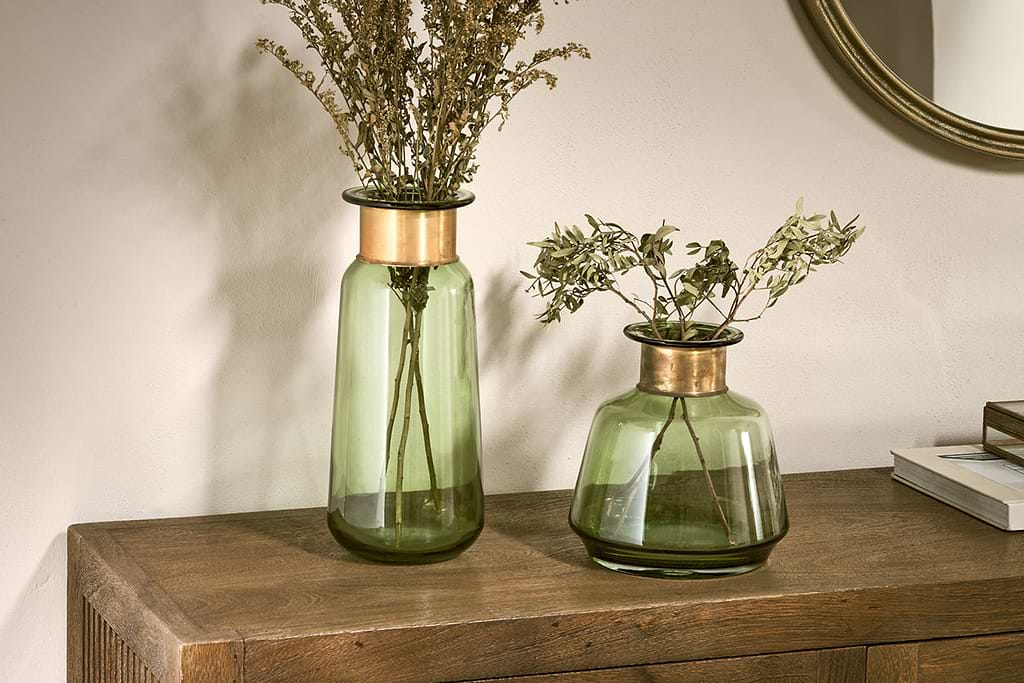
A few Nkuku pieces that sit quietly on a styled shelf.
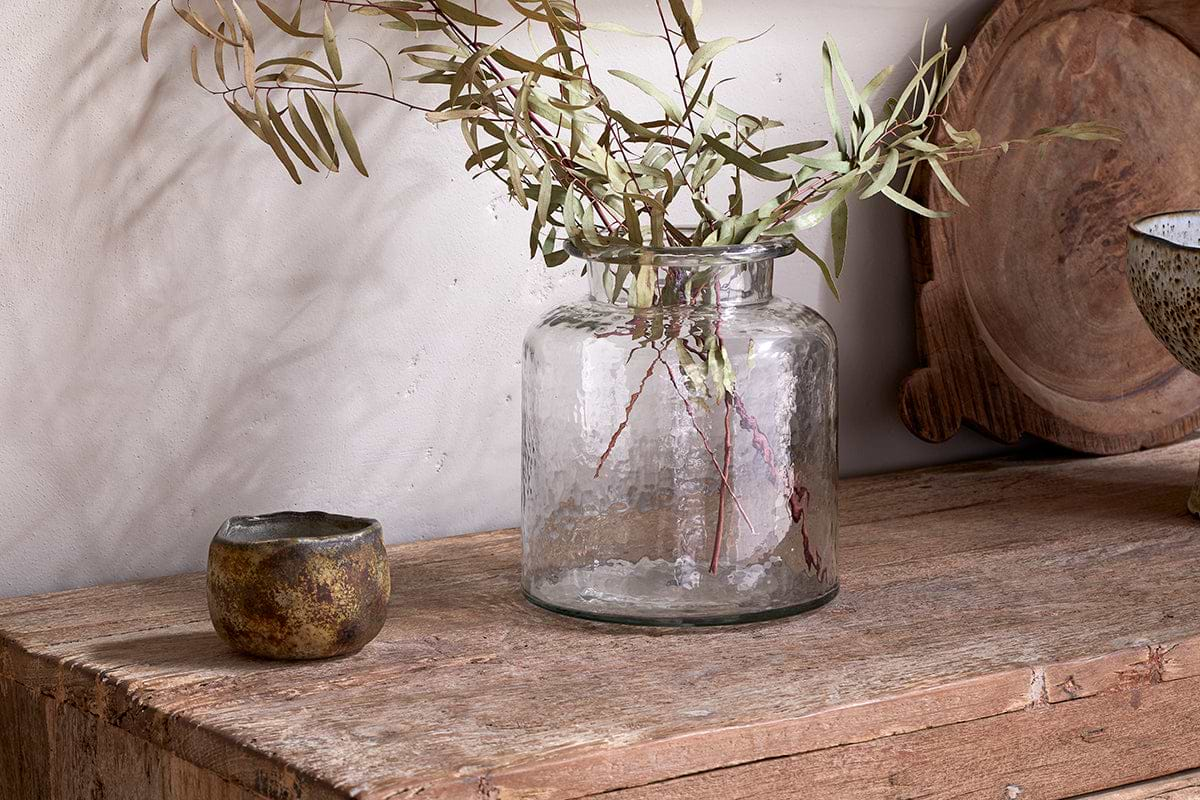
Akra Recycled Glass Vase
Clear cylindrical glass, pairs with stems or sits empty as a quiet accent.
View at Nkuku →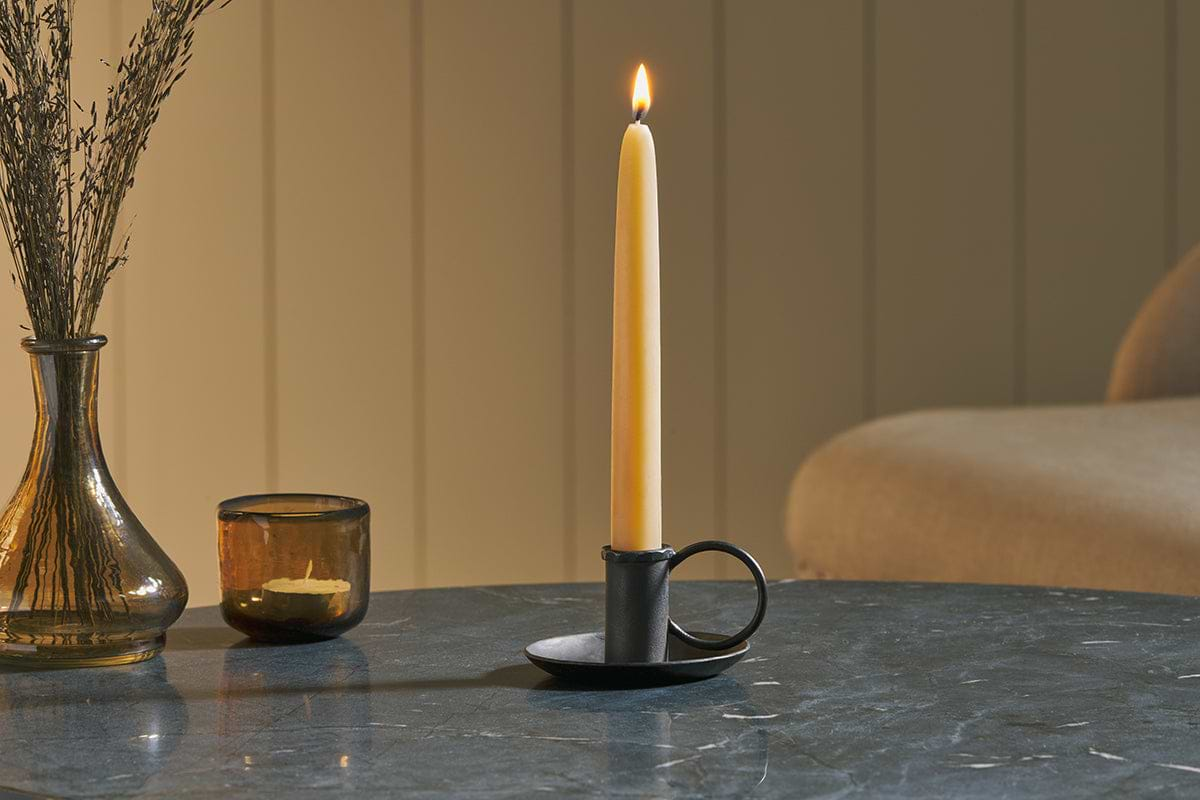
Amri Iron Candlestick
Slender iron with quiet presence, works alone or in clusters of three.
View at Nkuku →Some links above are affiliate links. If you buy through them we may earn a small commission at no extra cost to you. We only suggest pieces we think fit a calm, lived-in home.
Free guide
The Calm Shelf
12 styling ideas to help you compose calm, balanced shelves in natural texture homes.