

Cluttered shelves are a quiet stress for many. The advice on how to decorate shelves often leads to confusion—Instagram encourages more, but daily life demands less. Too many small objects can turn even a new bookcase into background noise. Picking between empty gaps and crowded ends up feeling like a losing game.
This guide strips out the extra steps and tall stories. You’ll leave with a simple plan for what to remove, what to keep, and how to choose a few pieces that actually look calm, not cold. This works especially well for a small apartment living room when you have open shelving because busy rooms need a space to rest the eye.
The short version: The best way for how to decorate shelves without the visual noise is to start with a blank shelf, add one textured storage piece, then limit display objects to three per shelf. With fewer items and more space, shelves look finished and calm without feeling empty.
Key takeaways
- A shelf looks cleaner when at least half of the surface is left open.
- The rule of three for groupings helps shelves feel balanced, according to interior designers.
- Natural textures like jute or wood break up hard lines and reduce a cluttered look.
- Using the same light, neutral palette across shelves keeps a room from feeling busy.
- Plants that need only indirect light thrive on shelves and soften the whole view.

Start by clearing your shelves completely
Starting with a completely empty shelf gives you a clean slate and makes it easier to see what deserves a place back. Resetting each shelf this way highlights what belongs, rather than hiding new choices behind what’s already there.
A crowded shelf usually happens when objects are added one by one over time. In a family room or a kitchen, things pile up: mugs picked up on trips, extra books, or gifted candles. There’s little chance to see what actually matters if nothing leaves.
Pulling everything off—even if only for a few minutes—makes a big visual difference. Each item that goes back on must earn its spot. This is the first step interior designers use when making any set of shelves look “done.”
Unlike simply moving things around, starting empty is faster and feels more final. It’s especially effective in a small kitchen with open shelving, since constant use means extra odds and ends find their way in. A clear shelf lets you decide what helps the room and what just adds mess. Try setting a bare wood shelf against a white wall to see how much lighter the space instantly feels.
Why does an empty shelf feel good?
An empty shelf is restful because it breaks up the constant pattern of objects and gives your eyes a place to pause. In a busy home, blank space stops rooms from looking unfinished or stuffed.
Some shelves get filled just because they exist. In rentals, people stack up everything—remotes, keys, bowls of coins. But leaving a shelf plain works like a breath between sentences: it’s the pause that calms the room. A bare shelf reads colder than one with a single woven basket, but even just a plain board lets the wall color show and resets the mood.
Many stylists stress that “negative space” matters as much as decoration. With nothing blocking the view, the brain can relax. According to The Living House, beautifully styled shelves can look like a work of art when styled correctly, and emptier sections play a part in that. This is especially true for floating shelves against a pale wall or bracket shelves in a narrow hallway
If your shelves already feel packed, try leaving just one shelf empty for a week. Compare the feeling every time you walk by. In a low-light bedroom, an empty shelf pulls the focus instead of adding shadow and visual weight.
The 3-5-7 rule: when less really is more
The 3-5-7 rule uses odd numbers for groupings, which interior designers say helps shelves feel balanced and natural rather than staged or off-balance. Fewer but stronger groupings are almost always easier to live with.
The principle is simple. Instead of lining up a row of random objects, group things in sets of three, five, or seven. The aim is never to hit a fixed number—but to use odd groupings for every cluster of objects. Three vases work better than two, just as five books look more finished than four spread out. According to The Living House, the rule of three helps accessories look collected and finished.
On a typical shelf, too many little decorations or pairs create a stiff look. Natural numbers, like three or five, are easy on the eyes. They keep things from feeling regimented, while avoiding the sprawl that happens with even sets. In a shared workspace, five notebooks next to a pencil jar look set with care; two or four float awkwardly.
Unlike the old advice to fill every gap with “personality,” the 3-5-7 rule tames the urge to add extras. It’s especially handy for families who want a shelf to look organized without scrubbing away all personality. Try grouping mugs, planters or books this way on the kitchen shelf—suddenly, the line feels planned without being rigid.
How can you add texture without adding clutter?
Adding a basket or a wooden bowl makes a shelf feel more finished and breaks up hard edges, but too many textures just cause confusion. One main texture per shelf is enough for a softer, lighter look.
In many homes, shelves look flat because everything is smooth, shiny, or plastic. Glass frames, metallic vases, paperbacks. Introducing a jute basket or a seagrass tray adds depth without fuss. The handwoven look pulls the eye, breaks up long rows, and can hide stray keys or cords.
A linen box, cotton basket, or ceramic bowl can do the same in any room.
The key is keeping to one standout material per shelf. If you use too many—say, leather, porcelain, woven grass, and glass together—the shelf looks busy instead of soft. Compared to multiple small decorations, one simple clay pot on a shelf makes a stronger, calmer impact. This minimizes visual noise, keeping the room from feeling scattered.
A shelf in an entryway with just one basket for mittens or scarves ends up looking neater than a lineup of storage bins. Even in a bathroom, a single wooden tray works better than overlapping boxes or wire baskets.
Try placing a woven basket on a low shelf—watch how the room immediately feels less chaotic, and finding things takes less effort.

Where this works best
This pared-back shelf style works for small living rooms, open-plan kitchens, rented spaces with built-ins, and anywhere you see a “problem” shelf when you walk in. Making these spaces look calm creates a better first impression and streamlines daily routines.
A limited-shelf approach is especially helpful in small apartments, narrow entryways, or open kitchens. With fewer walls, every bit of shelving stands out. In rentals, shelves come built-in over radiators or in corners, and these can easily catch clutter if left on autopilot.
Daily life brings in more than just design choices. Entryway shelves see keys, chargers, shopping bags. Kitchen shelves hold mixing bowls, clipped bags, tea canisters. Applying a simple, repeating structure here stops mess before it starts. One simple bowl or tall plant on the end does the job without overfilling.
Avoid loading narrow shelves with heavy or toppling items. A muddled shelf, with jars next to plastic organizers and a scattering of keepsakes, looks unfinished and is harder to clean. In windowless corners, restraint matters even more—stuffing shelves here drags the whole room down. Using one tall plant or a neat row of books works here, since light is in short supply and clutter adds gloom.
This principle fits workspaces, too. Perched above a desk, use two framed prints and nothing else. Let the rest breathe for efficiency—with less on show, dusting is easier and distractions fade away.
Styling and placement
Placing larger, simpler objects near the ends instantly helps a shelf feel tidy, while clustering smaller items in the center lets them read as a group instead of as clutter. Space around each group acts as a frame.
Where you put things matters more than what you pick. A single clay bowl anchors the far end of a shelf, focusing the eye and breaking up an empty run. Clustered pottery in the middle feels casual yet stable. Free space at both ends immediately makes a cramped room feel wider.
Color is just as effective a filter as size. Sticking with the same tones—like whites, light wood, soft greens—makes each grouping melt together visually. Shelves in kitchens do best with this approach, especially if the walls already show bold tiles or artwork elsewhere.
Quick calm checklist:
- Pick one material for each shelf—jute, wood, or ceramic.
- Leave about half the length empty, even on a deep shelf.
- Use groups of three for display objects.
- Match colors to other calm surfaces in the room—walls, curtains, or floors.
- Anchor larger objects close to the shelf ends.
Try stacking just three decorative books with the spines out and one short plant in a ceramic pot on top. The rest of the shelf can stay bare, making it easier to dust and restyle later. If the shelf sits above eye level, add a tall branch or sculpture—the vertical shape draws the gaze upward, adding interest without chaos. For more detail on this, see decorating floating shelves for focused ideas.
How do you know when your shelf looks right?
A shelf looks right when your eyes land on one or two main objects, with nothing begging for attention or sitting awkwardly alone. The 10-second glance test is a simple way to check this.
Stand back and look at the shelf for just a moment. If your gaze settles and doesn’t bounce from one thing to another, the setup is working. If you keep scanning for “what’s off,” you likely have too many colors, mismatched heights, or objects that don’t belong together. The 10-second glance test helps especially when you keep adding things out of habit, not need.
Room light plays a part, too. Floating shelves under a window may glare with too many glossy objects. Matte finishes—like rough-finish jugs or stoneware—handle natural light better, as matte textures limit flash and shadow. This keeps the room restful. According to John Lewis, high shelving looks best with focused lighting to show off your favorite objects.
Compared to shelves that overflow with keepsakes and souvenirs, a shelf with one main bowl and a soft, trailing plant brings attention to shape and color. Try swapping out two small items for one larger piece and check the shelf once after dark—if it feels consistent, you’re done. For more strategies, see style open shelves for calm living room shelf guides.
Most people notice something feels “off” the moment they arrive home and scan a shelf that’s overloaded, mismatched, or crowded to its edges. It sneaks up—rooms just feel stuffy or busy, even if everything is neatly aligned. It’s easy for anyone to slip up here, especially with how often new finds or gifts creep in now.
Choosing just one focus per shelf and grouping the rest changes that entire corner, giving rooms a clear spot to rest the eye.
Save this idea for later.
What tends to hold up with shelf styling and visual quiet
Over years of looking through reader photos, decorator advice, and product launches, one thing stands out: most rooms feel calmer when shelves show restraint. Matte finishes get recommended again and again for shelves near windows because they don’t catch glare as gloss does. Reviewers often mention that one textured basket or a single artwork brings more warmth than a sea of tiny objects.
Natural storage, like woven trays, also gets high marks for making everyday clutter disappear. Designers often repeat that a calm shelf isn’t about lack or plainness—it’s about trusting a few objects, not the easiest trend. Holding back is the hardest step, but nearly always the most rewarding.
— Mara, Loom & Glow
Common questions
How do I make my shelves look nice?
The best way to make shelves look nice is to group items in odd numbers, limit the palette, and use empty space as much as filled. Adding a natural-texture basket or bowl, plus a trailing plant, helps the shelf feel finished without looking cluttered. Shelves with consistent colors and easy spacing look calm in every daily use.
What is the 3-5-7 rule of decorating?
The 3-5-7 rule of decorating means grouping objects in sets of three, five, or seven for a more settled, natural look. Designers often use this as an easy formula for balance, especially on shelves. Odd-numbered clusters prevent a stiff, lined-up appearance.
What are the basic rules for decorating shelves?
Basic shelf decorating rules include starting with an empty flat surface, grouping in odd numbers, varying texture, limiting palette, and using negative space. Pick one material per shelf, leave space between objects, and add height with a plant or bowl. Simpler shelves are always easier to keep tidy.
How do I decorate my built-in shelves?
The best way to decorate built-in shelves is to treat each like a floating shelf: remove everything, add objects in odd-numbered groupings, and use one focal color or texture. Avoid weighing down high or shallow built-ins with heavy pieces. Combine storage with display by choosing a single lidded basket, framed art, or short stack of books per shelf.
Explore more calm combinations inside our Shop The Look .
Shop the Look
Three calm focal points that follow the rule of three and settle shelves without clutter.
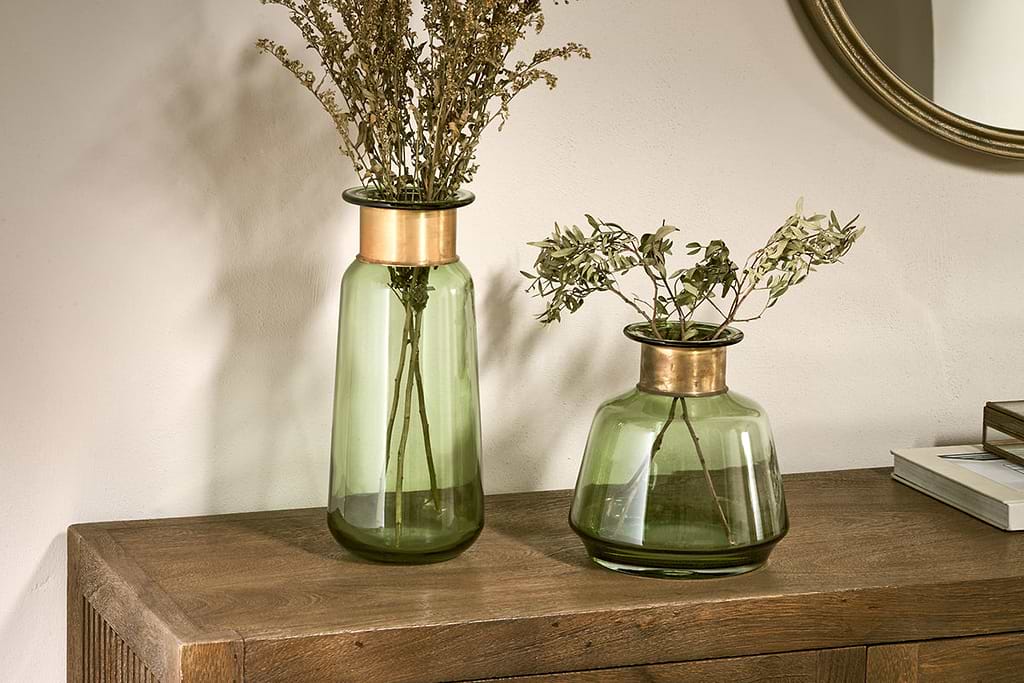
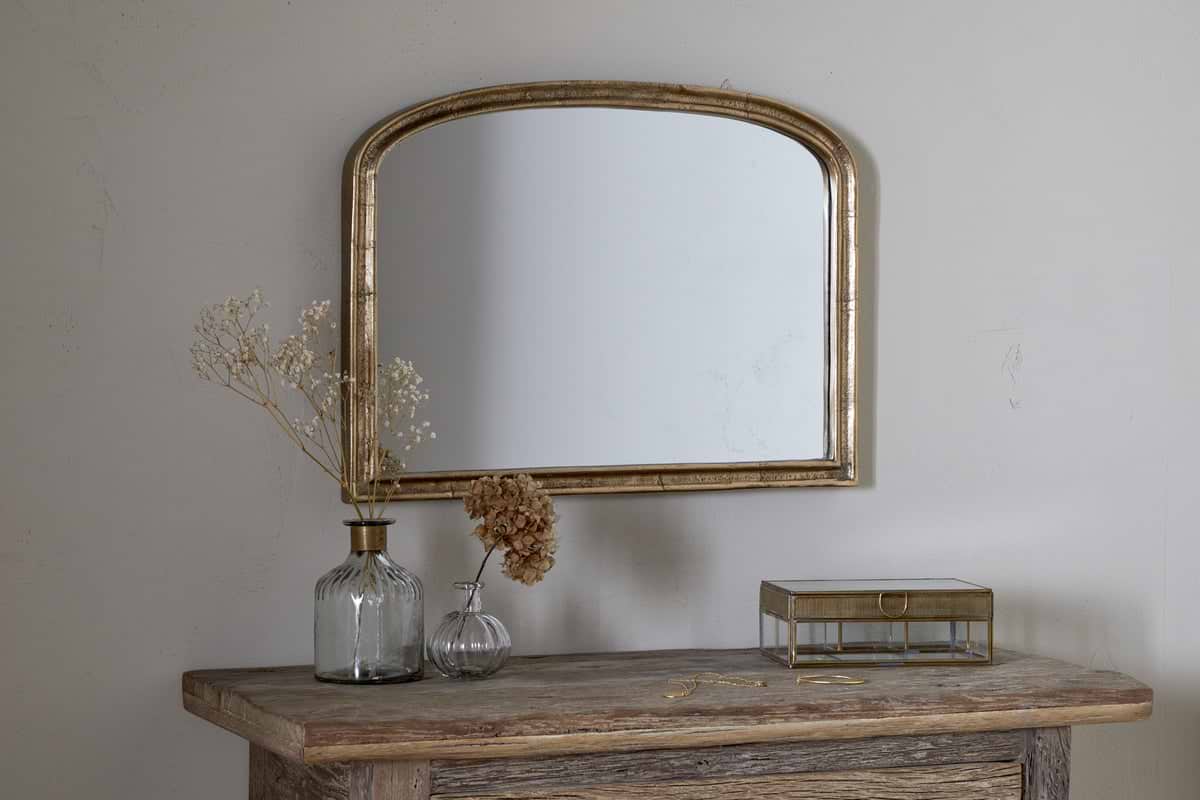
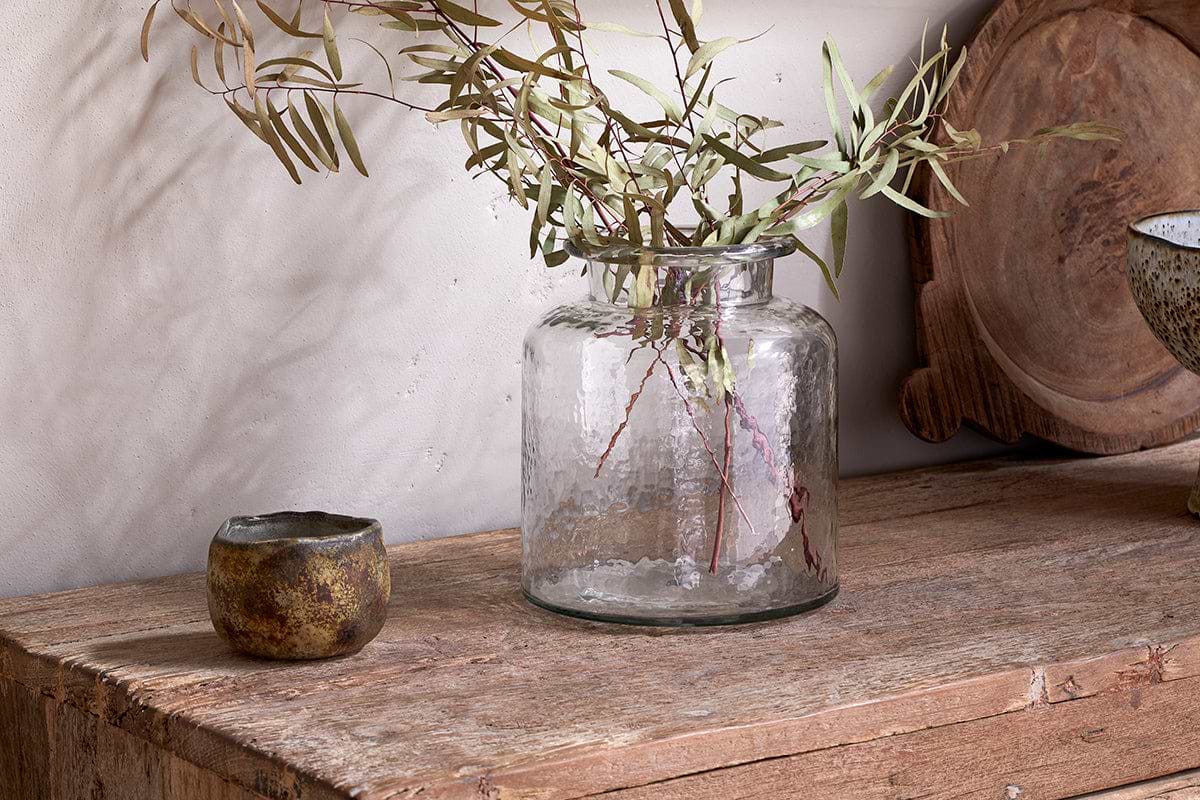
Akra Recycled Glass Vase
Clear cylindrical glass — pairs with stems or sits empty as a quiet accent.
View at Nkuku →Some links above are affiliate links. If you buy through them we may earn a small commission at no extra cost to you. We only suggest pieces we think fit a calm, lived-in home.
Free guide
The Calm Shelf
12 styling ideas to help you compose calm, balanced shelves in natural texture homes.