

Open wall space often becomes a problem in smaller homes. With little storage, the first instinct is to follow glossy wall shelves design ideas, but these usually leave the room feeling busier than before. Shelves meant to help end up adding more visual noise when the “Pinterest look” is the only guide.
If you rethink why you need shelves in the first place, you can end clutter by using wall shelves as a tool, not as wall art. Today, see how removing what you don’t need and choosing one solution for one job will simplify both the design and the daily function of your room. This works especially well in a small apartment entryway when shoes and keys pile up because it gives every item a clear home.
The short version: The best wall shelves design starts by fixing a real storage or display problem, not by copying a styled look. A shelf should help the room work better first. This guide shows how to find the shelf layout that actually solves your needs, then keep it simple.
Key takeaways
- A wall shelf that solves a clear problem feels tidy and intentional instead of busy.
- Scandinavian wall shelves combine form and function for calm storage and display.
- Floating shelves are good for a minimal look, while bracket shelves add classic detail.
- Open-shelf layouts work best when roughly two-thirds of the surface is kept clear.
- Materials like solid wood age well and suit both rental and permanent homes.

The problem with most wall shelf design advice
Most wall shelf advice starts with styling tips that ignore why anyone needs shelves, making the result feel chaotic or unfinished. A better approach fixes the room’s real problem first.
Many small apartments and rental homes have awkward corners or bare walls. Wall shelf ideas that focus on “prettifying” quickly fill those gaps with trinkets and staged objects, overwhelming the space instead of helping. Too often, shelves end up as a catchall for decorations that fight for attention every time you glance across the room.
Shelves work best when they give each item a reason to be there. Wall shelves design should answer, ‘What needs storing or displaying in this exact spot?’ If the shelf is only there for visual interest, it can look disconnected from daily life. A clay bowl for keys or a slim picture ledge for a personal photo keeps the intent clear.
Unlike a crowded display, a shelf with a single clear use—mail, mugs, or favorite books—looks simple and helps the room flow. Adding just one woven basket with a soft texture, for example, tames the hard edge of the shelf and signals purpose over decoration. When shelf design is practical, clutter goes down and cleaning gets easier.
What your wall shelves are actually for
A calm wall shelf exists to hold what you use or care about most, not to fill empty space. The right shelf meets a specific storage or display need.
One of the biggest design shifts comes from asking what your home actually lacks. In a small entryway, it might be a single spot for everyday shoes. Above a workspace, a floating shelf clears the surface for pens and one small plant. If your living room wall feels blank, a pair of shelves can balance storage and display without overfilling the visual field.
Shelving that works is never there “just because.” Modern wall shelf collections, including brands like e15 and String, focus on solving a function—whether that’s display, extra storage, or dividing space according to the latest European designs. A good rule: keep shelves at a height and depth that matches both the wall constraint and what you plan to use daily.
A plain bare shelf feels colder than one with a single useful object, like a jute basket for keys or a row of books you read. You’re not aiming for a home-staging look, but for a shelf that holds just what you need and nothing extra. This keeps the shelf—and the room—clear.
How do you choose a wall shelf design that solves a real friction?
The best shelf for your space depends on whether you need display, storage, or both in a tight corner, awkward hallway, or empty stretch of wall.
Start by spotting what bothers you each day. Is the mail always messy on the counter? Does the desk lose all its surface to paperwork? Sometimes an entryway shelf with hooks stops bags from piling on the floor. For a bare bedroom wall, a low-profile floating shelf holds bedside essentials but keeps sightlines open.
Materials change the feeling. Floating shelves are usually recommended for a minimal aesthetic, while fixed bracket wall shelves are a more classic look as design experts note. A shelf with a lip works for displaying art or photos, since it anchors frames securely. For kitchens, open wood shelving handles daily reach for cups or bowls and breaks up heavier cabinet runs.
Choosing the shelf type is about matching a problem, not just filling the void. Unlike a mismatch between large industrial shelving and a narrow nook, a small built-in or a corner shelf will get used every day for something specific. For a shared home office, a modular shelving system keeps materials at hand while leaving space for personal objects. A shelf that anchors daily routines helps the whole room feel settled.
The four most reliable shelf layouts for calm
Simple layouts work every time: a single statement shelf, a pair arranged off-center, a neat grid, or a vertical ladder for storage and display.
The cleanest setup uses just one shelf as a statement piece. Placed above a desk or next to a bed, it fits rooms that need one storage zone, not more clutter. The asymmetrical pair—two shelves set at different heights or spaced apart—breaks up a long wall and keeps the area open. Compared to rigid symmetry, staggered shelves feel more relaxed.
Another proven idea is the three-shelf grid, spaced evenly to create a block for books and display. It’s best for walls with more width or as a focal area instead of art. Floor-to-ceiling ladder shelving covers a whole wall with open rungs, which works well as a room divider or in an open-plan kitchen.
Negative space is key. Too many shelves stacked high or close together quickly drag the eye and fill the view. A good rule is to keep about two-thirds of each shelf clear for best effect. A minimal floating shelf makes more impact in a rental kitchen when filled with only three favorite mugs and a single clay pot.
| Layout | Best for | Structure |
|---|---|---|
| Single Statement | Small desk, entry, bedside | One floating or bracket shelf |
| Asymmetrical Pair | Narrow halls, living room walls | Two shelves, offset or different heights |
| Grid of Three | Wide blank walls, display zones | Three shelves, evenly spaced |
| Ladder | Room dividers, floor-to-ceiling | Multiple rungs or shelves, open backs |

Where this works best
Practical shelf design fits small apartments, entryways, workspaces, and kitchens where storage is tight and every solution has to count.
Studio flats or small urban homes benefit from wall shelving most when floor space is limited. Entryways with no closet use a bracket shelf and a basket to keep shoes and mail off the ground. Kitchens with little counter feel less crowded by floating oak shelves instead of another bulk cabinet. Desks—especially in shared spaces—gain open area when the shelf above is limited to only what you reach for daily.
In practice, these setups save time each morning. Hooks fixed under a wall shelf in the hallway mean coats and keys are within easy reach but don’t crowd the door. A living room with a modular system along one wall can replace closed storage, leaving the rest of the space tidy for working or relaxing.
Avoid putting deep, heavy shelves on thin drywall or in narrow corridors. Not every wall takes weight well, and overlarge shelving in a tiny home reads as forced. Instead of trying to squeeze an industrial-style metal shelf into a small rental, choose one minimal wood bracket or a picture ledge for display. The goal is to fit the shelf to the room’s flow, not squeeze the room around the shelf.
How do you keep an open shelf from looking cluttered?
An open shelf looks clean when you limit it to a few useful or loved objects and repeat natural materials for a relaxed feel.
Clutter grows when shelves are filled edge-to-edge with small items. In a small apartment, even a handful of decorations spread over a floating shelf can make the room look chaotic. Two or three objects—a glass vase, a stack of books, a rough ceramic bowl—bring focus and let everything “breathe.”
The secret is repetition and restraint. Pick one or two textures: solid oak, matte ceramic, or a woven tray. Natural materials catch light and soften the visual line of the shelf. According to experts at Regalraum, wall shelves in wood or metal now cover nearly every need from kitchen to bedroom, and pale woods in particular keep small spaces light.
Compared to shelves packed with souvenirs and decor, a shelf that repeats shapes—a pair of glass jars, matching baskets—looks tidy and feels finished. Floating shelves are an easy way to keep storage minimal, especially for renters who want to avoid drilling brackets into every wall. Pair this with one piece of wood wall decor for a softer finish.
Styling and placement
Good wall shelf styling starts by limiting both the color palette and the number of objects, then repeating just one material or shape.
Placement depends on what you actually need within reach. In kitchens, keep open shelves above the counter at hand height. For living rooms or bedrooms, placing a shelf beside a favorite chair or above a side table anchors the layout. Picture ledges fit well below eye level for art, while hooks fit under shelves for keys and bags by the entry.
Small apartments often use light-colored woods or painted brackets to blend with existing walls. A shelf set too high might gather dust and look unused, while too low disrupts the flow of tables and movement. Painted or matte finishes are best near windows so that daylight won’t glare off the surface.
Quick calm checklist:
- Choose solid wood, powder-coated metal, or hand-glazed ceramic for durability and texture.
- Keep shelf contents under five objects for small walls, repeating one texture or color type where possible.
- Balance shelf position so it is neither in direct sunlight nor blocking walkways or switches.
- Limit color palette to two main tones plus one accent—repeat in baskets or art on the shelf.
- Anchor one object at the left or right for visual weight; leave space beside it empty.
Unlike deep cabinets, wall shelves can be installed easily with just a stud finder and basic hardware. A shelf in pale oak or beech, for example, matches almost all interior palettes and wears gently, aging better over time than many painted finishes. Try positioning a simple oak wall shelf above a console table to keep surfaces clear without adding bulk.
There comes a point—looking at the wall after trying out yet another decor idea—where the room starts to feel heavier, not lighter. The shelf isn’t helping; the objects gather dust, and nothing feels settled. That’s when it’s time to rethink both what the shelf is for, and what it holds.
Often, the single biggest improvement comes from setting one clear rule: pick the main job for this shelf, and bring in only what supports that use. Take everything else away.
Too many people follow “top shelf styling tips” and end up with surfaces that make the room feel busy or even a bit unwelcoming. Open shelves crowded with decor or catchall clutter often make the room feel incomplete and harder to care for—and with so many things to look at, it’s easy to never really see or use any of them. Fixing this lets the wall support the way you live, not just the way you style.
Introducing the right shelf, used for one clear purpose, makes daily life feel calmer and cleaning easier. The room gets lighter—and you actually use the shelf.
Save this idea for later.
What tends to hold up with small-shelf layouts and natural materials
Over time, the simplest layouts tend to work best on shelves. Reviewers and decorators almost always note how a single statement shelf or an asymmetrical pair do more for a small room than any stacked grid. Matte surfaces—whether clay, chalk paint, or lightly oiled wood—are recommended for shelves catching direct sun, since they don’t glare the way gloss finishes do.
One thing comes up often: shelves last longer and feel safer when the wall fixings match what you store. Heavier loads work with larger brackets or studs, while small display zones can rest securely on minimal wall anchors. The objects you actually reach for most—bowls, baskets, or books—belong at the spot you use them, not scattered across different shelves. Resetting the shelf every few months keeps it working as the seasons and your needs change.
— Mara, Loom & Glow
Common questions
What are the latest trends in wall shelf design?
The latest trends in wall shelf design focus on minimal floating shelves, natural wood, and clever modular systems that work in both new and old homes. There is greater demand for brackets, live edge woods, and simple shapes that combine display and storage. Flexible layouts remain popular for both permanent and rental spaces.
How can I style a wall shelf in a way that looks intentional, not cluttered?
The best way to style a wall shelf for intention is to limit the number of objects and repeat one material or color. For extra calm, pick two useful things—a woven basket and a ceramic vase, for example—and leave open space between. This lets the shelf breathe and avoids a busy look.
How should I layout multiple shelves on a wall?
Multiple shelves work best spaced apart or grouped in odd numbers, keeping most surfaces clear for storage or display. Asymmetrical pairs and grids of three are tried-and-true layouts that help calm the wall. Ladders or modular systems fit well where extra storage doubles as an aesthetic focal point.
Is it more cost-effective to build or buy wall shelving?
Buying ready-made wall shelves is usually more cost-effective unless you have custom needs or specific room constraints. Modular shelving options from brands like IKEA make quality affordable. Building makes more sense for irregular walls or when you want specific materials and finishes not available off the shelf.
Explore more calm combinations inside our Shop The Look .
Shop the Look
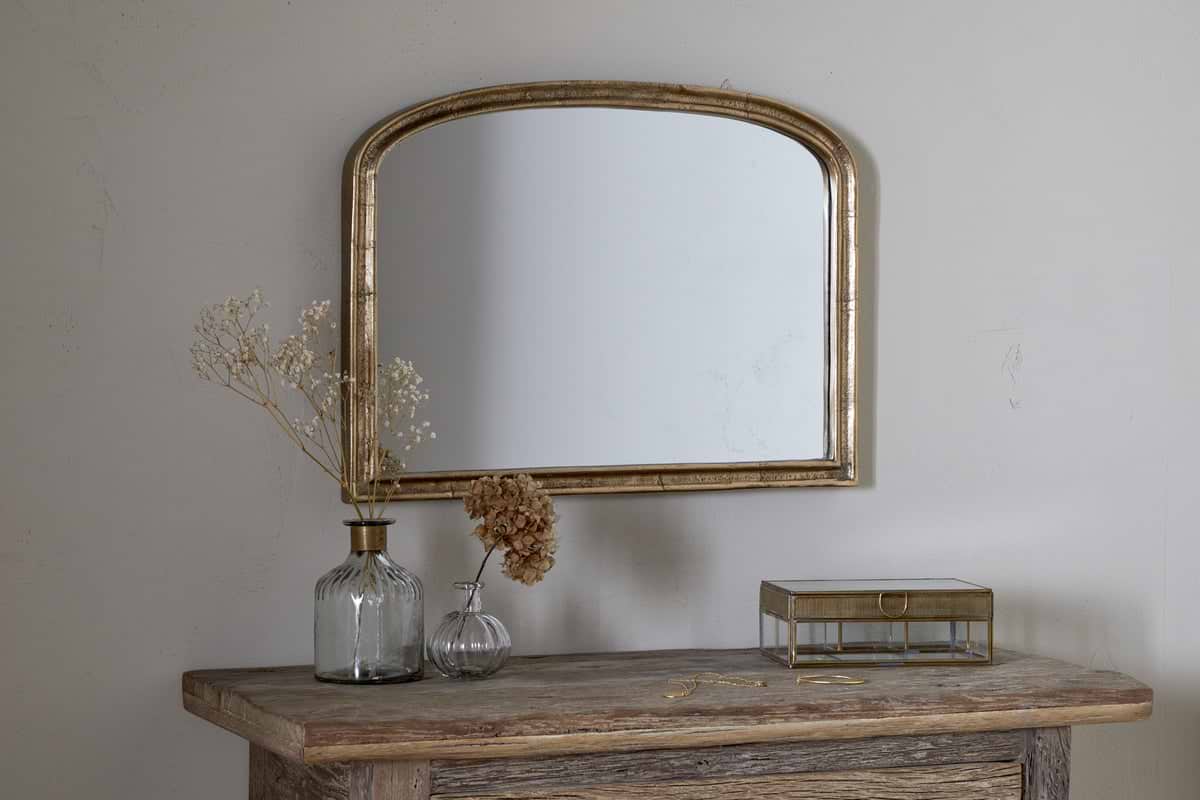
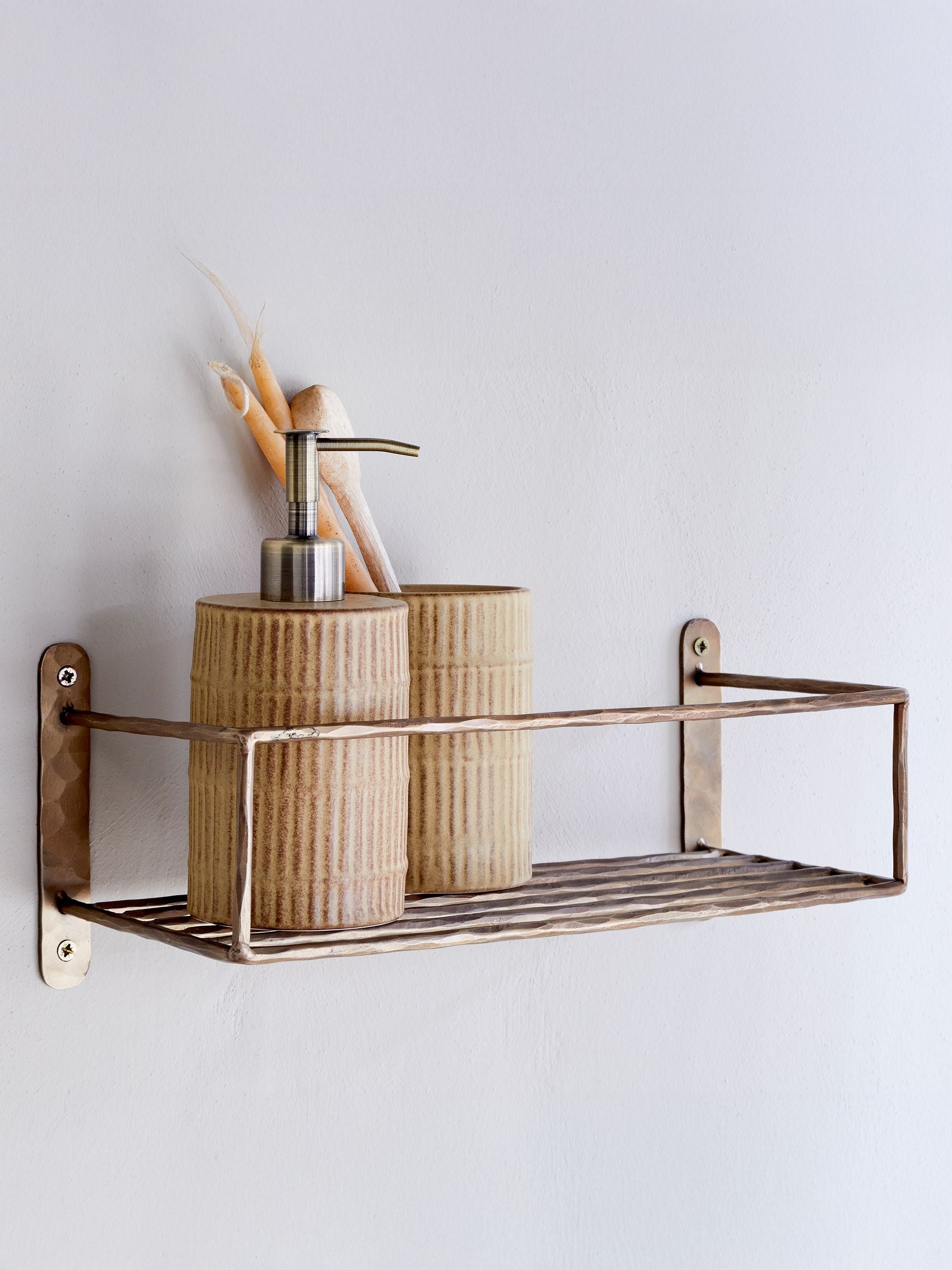
A mirror and ledge that pair with minimal shelving and let the layout breathe.
Some links above are affiliate links. If you buy through them we may earn a small commission at no extra cost to you. We only suggest pieces we think fit a calm, lived-in home.
Free guide
The Calm Shelf
12 styling ideas to help you compose calm, balanced shelves in natural texture homes.