

Many small living rooms struggle with a closed-in feeling—shadows pool in corners, art pieces often feel crowded, and wall decor quickly looks cluttered. Using large mirrors for living room spaces seems like the best quick fix, but the real risk is ending up with a wall that just feels busy and off-balance instead of open and bright.
This guide walks through the concrete steps: how big a mirror should be, which shape suits, and exactly where to place it for more light without feeling crowded. This works especially well in a compact living room when a single oversized mirror anchors the wall because the room feels brighter and simpler right away.
The short version: A single large mirror for living room walls works best when it covers about two-thirds the width of the surface and captures bright angles, not doorways. Picking one oversized mirror, rather than several small, opens a compact space, reflects more daylight, and looks calm instead of scattered.
Key takeaways
- A large mirror anchors a small wall better than multiple small mirrors, cutting visual clutter.
- Full-length leaner mirrors pull the eye upward and brighten dim corners naturally.
- The best spot for bouncing light is opposite or beside a window, never facing a doorway.
- Most extra-large mirrors are over 90cm wide and usually cost between £120 and £500, according to industry guides.
- A soft metallic or wood frame keeps a big mirror from dominating a small apartment scheme.

Where this works best
A large mirror fits best in a living room with one uncluttered wall and feels open when the rest of the decor is simple and low-profile.
Rooms that are narrow or low on daylight often benefit the most from an oversized mirror. In a compact apartment, one broad pane of mirrored glass can draw the whole wall back visually, taking up less mental space than two or three smaller pieces might. Small living rooms often feel tight, but a single mirror helps the furniture feel more spaced out.
Placing the mirror where it can reflect the brightest part of the room does two jobs: it multiplies natural light and gives the eye a place to rest. Unlike gallery walls that line up many frames, one oversized mirror sits quietly, never reading as cluttered. Instead of filling every stretch of wall, this approach leaves negative space around the frame, which helps a room feel lighter and calmer.
Avoid putting a large mirror above a crowded storage unit or in direct alignment with a busy bookcase—a busy backdrop makes the reflection look chaotic instead of bright. When there’s a radiator or TV nearby, hanging a mirror too close can break up the sightline and pull attention unevenly across the wall. In those cases, the mirror works better on its own section of blank wall.
Rooms with very little natural light won’t gain as much benefit unless a lamp or window is within the mirror’s sightline. For these, a standing or full-length mirror beside a window makes more sense than a wall-hung version that sits too high.
Try placing a single large mirror on the wall that faces your largest window if the layout allows, or directly adjacent to it. This often works better than spanning space over a sofa or next to an entry.
How big should a living room mirror be?
A large living room mirror usually looks right when its width covers about two-thirds of the wall area, avoiding both undersized and overwhelming proportions.
Sizing makes or breaks the effect of a mirror in a small living room. Most designers recommend letting the mirror fill a major share of the open wall, but not the entire surface. According to industry guidance, a piece is considered extra-large once it’s over 90cm wide, but what really matters is how much blank wall is left around the edges.
A good rule for small rooms: let the mirror’s edge sit at least a hand’s width from any adjacent molding or the next piece of wall art. This way it stays a clear focal point without feeling squeezed. Unlike smaller mirrors, an oversized piece creates a long sightline, amplifying both height and depth at once. In contrast, filling a wall with three small mirrors often looks both restless and busy, breaking the visual stretch and adding fuss instead of light.
If your sofa is centered on one wall, a mirror that roughly matches its span (just a little narrower) reads calm. For renters, free-standing leaner mirrors that are nearly as tall as the room itself can anchor a corner without making the space feel shorter. Most retail options in this “large” tier are between about 100 and 180cm in height, which best fits sitting or standing sightlines. This balance keeps the piece grounded, working for both conversation zones and solo reading nooks.
When a mirror runs almost the width of a sideboard with a good gap on each side, the set-up reads as deliberate and calm, not overstated.
Leaner or wall-hung: Which fits a small living room?
Leaner mirrors feel relaxed and easy to move, while wall-hung mirrors make a living room feel more structured and anchored to the architecture.
Both styles suit small apartments, but each style makes a different impact. A leaner mirror, often seen propped against a blank wall, invites casual movement—it’s simple to angle or shift as light changes across seasons, and works well for renters who can’t drill into plaster. Retailers recommend leaner mirrors for their versatility and ability to open up dark corners, as noted by specialist sources.
Wall-hung mirrors suit those wanting something rooted and permanent. Unlike free-standing options, a wall-mounted mirror can line up with other architectural details (like windows or mantelpieces) and won’t risk tipping, especially in homes with children or pets. Instead of feeling like a temporary fix, a wall-hung piece boxes out the space with a clear edge.
For compact living rooms that double as dining or work zones, table mirrors and smaller wall options can float behind furniture, catching the window’s angle while keeping surfaces free. Compared to a single large mirror, grouping small table mirrors looks fussy and can limit how much daylight bounces into the space.
| Type | Look & Feel | Best For |
|---|---|---|
| Leaner mirror | Relaxed, easy to move | Rental homes, flexible layouts |
| Wall-hung mirror | Structured, built-in | Permanent setups, anchor points |
| Table mirror | Functional, light-reflecting | Desks, small surfaces, layered styling |
Setting a leaner mirror in a corner softens sharp lines in a square room, while a wall-hung mirror on a fireplace wall draws the eye up, expanding the sense of height. For homes with limited wall space, the right format depends on whether you want to anchor the mirror or have the flexibility to reposition it throughout the year.
How do you place a large mirror for more light?
A large living room mirror throws the most daylight when angled to catch a bright window or beside one, but never facing a doorway where it can startle or distract.
In compact flats, natural light rarely fills every corner. Bouncing daylight with a well-placed mirror doubles the effect of one good window. The most reliable placement is either directly opposite or just off to the side of a daylight source—this multiplies sun and sky, brightening up the wall and softening shadows behind furniture.
Unlike a mirror facing a blank wall or doorway, a mirror catching the window’s view draws in more than just white light—it brings in the changing color of the sky, passing clouds, or leafy trees outside. Instead of direct light on dark days, angle the mirror to face a lamp placed nearby, which gives a softer, more “lived-in” glow than ceiling lights alone provide.
Face the glass away from the main entrance. Seeing your own reflection as soon as you enter the room often feels abrupt and disrupts the sense of calm. In smaller spaces, this layout can even make the room look smaller, as the reflection introduces a false wall. Instead, aim for a sightline that brings a bit of the outside in, or catches the shimmer of sheer curtains drawn in daylight.

For best results, shift the mirror slightly so it’s not a direct 90-degree angle with the window—just enough to catch light but not cause glare. A large mirror near a floor lamp or above a sideboard beside a window creates a layered lighting effect, but don’t place it at a height where only the ceiling is visible. That tends to flatten out the sense of space, making the mirror more decorative than useful.
Styling and placement
A large mirror in a living room looks grounded when its bottom edge lines up with nearby furniture and its frame stays matte, not glossy.
How you style around a mirror matters as much as its size. Too many little things nearby—photo frames, plants, vases—make a big mirror feel lost. A pared-back styling plan works better: keep the surface below (console, sideboard, or shelf) simple, and let one or two natural materials anchor the space. For example, a woven basket or a clay bowl next to the mirror’s base softens its straight lines and keeps the display from feeling stark or cold.
Compared to a high-gloss frame or a mirrored surface cluttered with objects, a mirror set above a quiet piece of wood furniture or flanked by linen curtains feels composed. Instead of a gallery display with dozens of little accents, use the mirror as the “reset” between other patterns or textures in the room. For living spaces that flow into dining areas, repeat one frame material—like brass or black metal—to link different zones together without fuss.
For small walls, leaving a strip of bare wall above and beside the mirror creates breathing room. In a bright room, stacking layered objects between the wall and the mirror breaks up the reflection, making the space feel busier. Instead, aim for clear lines and open edges so the mirror’s reflected light can reach further into the space.
Quick calm checklist:
- Keep no more than two companion pieces (like a plant or a woven tray) next to the mirror.
- Choose matte brass, black, or unfinished wood for frames to keep the look soft.
- Line up the bottom edge with a sofa back or sideboard, not above, for a grounded feel.
- Leave at least a hand’s width of blank wall around the frame where possible.
- Repeat the mirror’s main material once elsewhere in the room for calmness.
One well-placed mirror on a blank wall will always read calmer than a shelf full of knick-knacks and a scattering of small frames. Pair with a linen curtain or natural fiber rug to soften hard reflections and round out the space.
What frames and finishes look calm, not trendy?
A mirror with a simple matte frame—brass, black, or unfinished wood—feels more relaxed and natural than glossy or highly patterned options in a small living room.
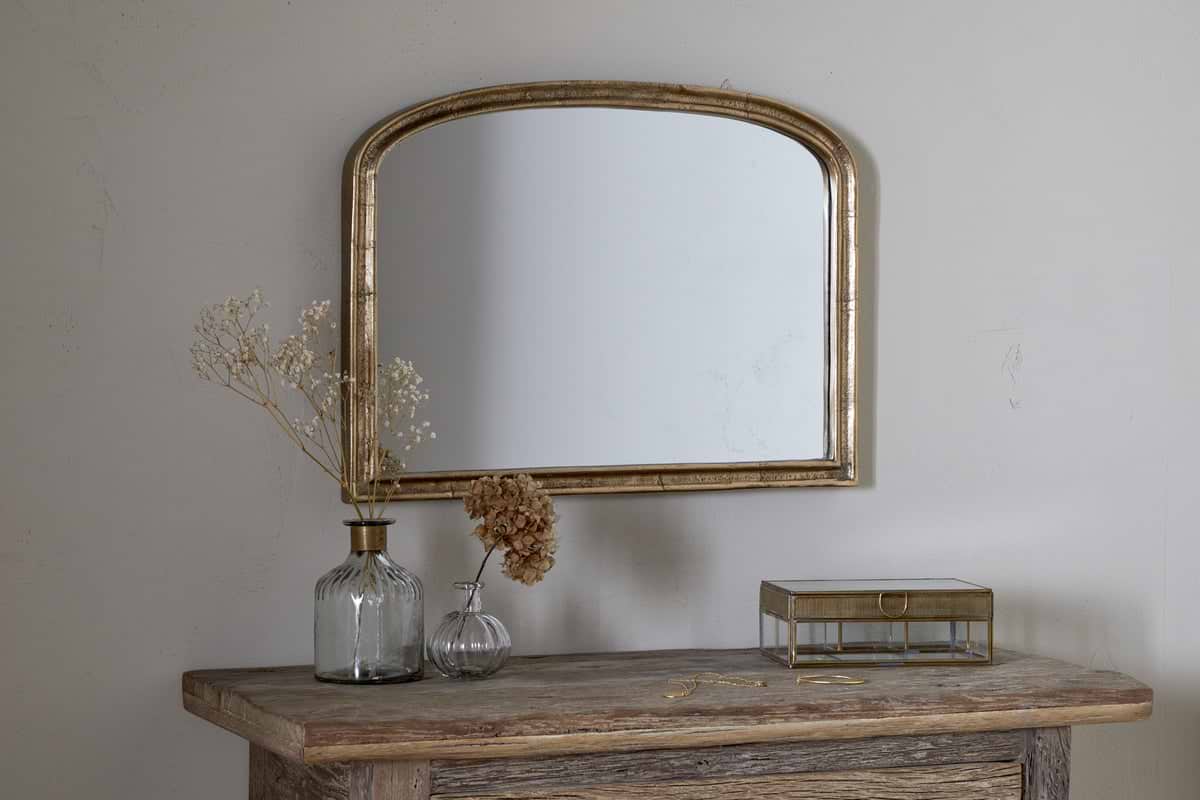
Finish makes the biggest difference in keeping a large mirror settled, not attention-grabbing. Shiny chrome, glittery gold, or mirrored frames reflect additional light and draw the eye, which can distract from the peaceful mood most people want in a compact space. Instead, a matte gold like the Kiko Brass Frame or a natural oak feels softer and blends with linen, jute, and clay textures found elsewhere in calm, slow-living rooms.
Compared to frames with trendy patterns or ornate embellishments, a plain finish holds up across seasons and lets the mirror’s size do most of the work. Instead of layering colors or trim, try matching the frame’s warmth to the room’s textile palette—brass for warm tones, black for cooler ones, pale wood for airy schemes. Avoid frames so thin or glossy they start to look almost invisible or overly high-shine, which tends to cheapen the whole setup rather than anchor it.
Most decorators recommend keeping all metals in a room to three or fewer, so if you already have brass pulls, a black lighting fixture, and a steel table, stick to one of these for the mirror rather than introducing another. Consistency grounds the wall and stops the reflection from clashing with the rest of the decor.
A matte metal or unfinished timber frame is less likely to pick up fingerprints, so it stays looking clean even in high-traffic rooms.
How much do large living room mirrors cost?
Most extra-large mirrors for living rooms cost between £120 and £500, with bigger, thicker-framed styles at the upper end, according to industry sources.
Price sits at the intersection of size, frame, and thickness. A simple, thin-framed mirror costs less than a chunky timber model or arched piece with bevelled edges. From specialist retailers, anything over 90cm wide is extra-large; most options in this range carry more glass weight and require stronger backing or thicker frames, which pushes up the price compared to small wall decorators.
Finishes counted as “decorative”—like an etched venetian mirror, full arch, or detailed gold leaf—add both cost and visual weight to the room. By contrast, a clean, straight-edge style in black or brass usually comes in lower, provided the dimensions stay sensible for a standard wall. According to market guides, wide full-length mirrors in standard materials often start around £120, with high-street options sometimes lower.
Shopping at IKEA or similar big-box retailers, the spectrum covers simple standing mirrors up to oversized wall models, usually stepping up in cost the taller and more robust the build. The pricier end usually features thick glass, built-in safety backing, a more substantial frame, and specialized hanging hardware. Before spending more, weight up how visible and “future proof” the frame looks against your other main pieces in the room.
Overall, the right mirror is the one you won’t feel you need to swap out next year—a calm, honest finish holds up longest.
There’s a point when you step back from your small living room and spot that something isn’t working. The art looks too “floaty,” the wall arrangement is crowded, or there’s a big patch of shadow in one corner while another wall feels empty. That’s often the moment you realize the space feels unsettled, not supporting quiet evenings or easy gatherings—just a bit unfinished and restless.
The core shift comes from narrowing your choices down to one focal point and letting the mirror shoulder the visual weight, instead of pushing small pieces side by side and hoping the room settles down on its own.
A common mistake is picking a decorative mirror that’s too small, pushing it too high above furniture, or pairing it with lots of little accents so the wall stays busy. Many homes end up with patchy light or a wall that looks more like storage than a feature, simply because there’s too much fighting for attention. This lack of focus can make the space feel heavier, not lighter, and no amount of rearranging fixes it until you start over with a single, oversized mirror and a clear margin around it.
Once you land on the right mirror and give it breathing room, the main wall brightens, the room feels larger, and you notice your eye stops jumping from one object to the next. Calm settles in fast.
Save this idea for later.

What tends to hold up with large mirrors for small living rooms
Looking across hundreds of homes, one pattern stands out: most rooms that feel calm use one large mirror per wall rather than scattered smaller ones. Reviewers often mention how matte frames make dust and prints less visible over time. Many decorators recommend matching the mirror frame to other visible metals for a cohesive, blended look—especially in open-plan apartments.
Wall anchors, safety straps, and making sure mirrors aren’t reflecting cluttered corners come up time and again in advice columns. Arched and full-length mirrors consistently rate as most useful for compact spaces wanting to feel more open. It’s not just about reflection; it’s about simplifying that surface so the rest of the room can stay quiet.
— Mara, Loom & Glow
Common questions
Does a large mirror look good in a living room?
A large mirror looks good in a living room when sized correctly, with space left around the frame for breathing room. Picking a single oversized mirror keeps the wall from looking crowded and bounces more light into the space. Simple frames and open styling give the cleanest and calmest result.
Where can I buy a very large mirror?
You can buy a very large mirror from specialty online shops, most big furniture chains, and home improvement stores. Brands like IKEA offer oversized and leaner mirror options in both vertical and horizontal styles. Compare delivery, installation, and frame options before deciding what fits your wall and aesthetic best.
Where should mirrors not be placed in the living room?
Mirrors should not be placed facing a doorway, directly across from cluttered shelves, or where they reflect a TV or radiator. These placements distract from the room’s flow. Instead of improving the atmosphere, misaligned mirrors can pull attention away from seats and break up available daylight.
What kind of mirror makes a room look bigger?
An oversized or extra-large mirror with a clean, matte frame makes a room look bigger by creating a stronger sense of depth and reflecting the brightest area. Using a single piece instead of multiple small ones prevents visual clutter and keeps the space open and inviting.
Explore more calm combinations inside our Shop The Look .
Shop the Look
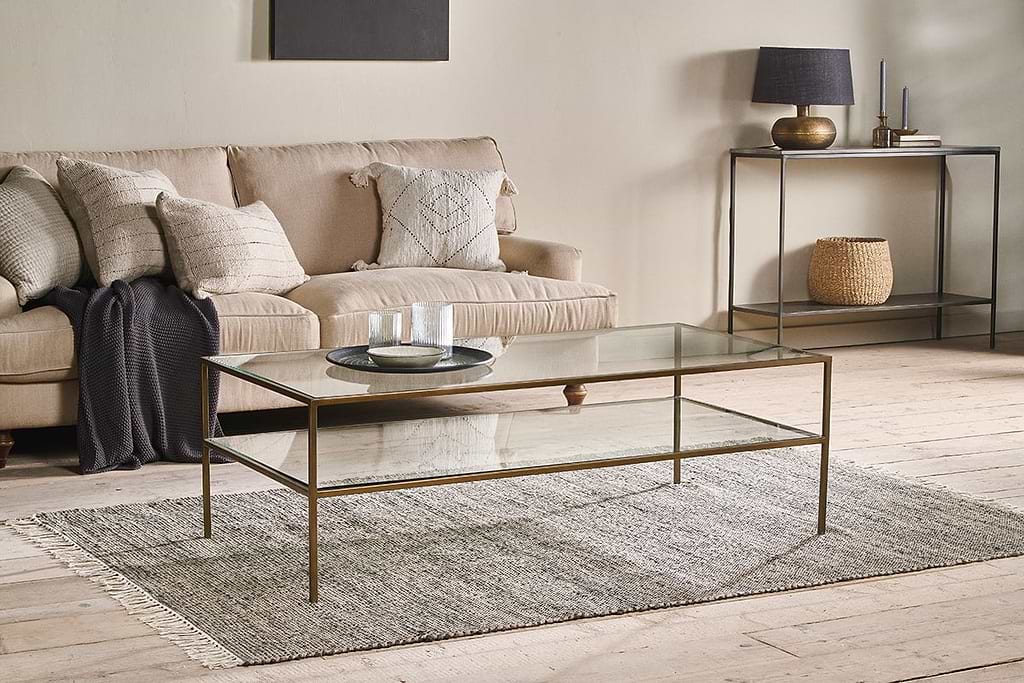
A modest mirror and airy table to keep the room feeling open without clutter.
Some links above are affiliate links. If you buy through them we may earn a small commission at no extra cost to you. We only suggest pieces we think fit a calm, lived-in home.
Free guide
The Calm Shelf
12 styling ideas to help you compose calm, balanced shelves in natural texture homes.