

Bedrooms pick up every scent. If you reach for a room spray, most supermarket or home store options can feel harsh, cling to bedding, or mix oddly with leftover perfume. Synthetic fragrance often fills the air but rarely sits well with fabrics, especially in a low-light or small bedroom at night.
Today shows how to choose a natural scent, where to apply it, and which notes to avoid for a gentler effect. This works especially well in small bedrooms when windows open onto a shared street because natural sprays stay subtle and don’t fight kitchen or city odors.
The short version: To create a calm bedroom with scent, use a room spray made with essential oils and natural fixatives, applying lightly to textiles and corners. This avoids the heaviness of synthetic sprays. A slow, steady approach keeps the room quiet and lets the aroma settle in naturally.
Key takeaways
- Room sprays with more natural ingredients feel lighter on bedding and won’t linger like synthetic blends.
- Bedroom scent lasts longer when applied to both air and soft furnishings.
- Earthy, herbal and soft floral notes feel calmer than anything sweet or citrus-heavy at night.
- Fixatives in natural sprays can double or triple how long the scent lingers, according to DIY perfumer guides.

What does a room spray do that a candle cannot?
A room spray adds a gentle scent that spreads evenly without heat or smoke, unlike a candle that pools fragrance near the wick and relies on open flame. Room sprays suit regular use, especially where fire risk or fuss isn’t welcome.
Bedrooms with filled shelves, low nightstands, or tight walkways often can’t take a candle, either because of flammable materials or limited safe space. A bottle of room spray tucks in and goes unnoticed until needed, never drawing attention or leaving wax drips.
Spraying near curtains, bedding or even the back of a wardrobe door reaches across a wider space. Candles, although rich in scent when lit, mostly concentrate near the source and fade quickly when blown out. A room spray, used right, lingers in soft furnishings and mingles with the air gently.
Unlike matches or lighters cluttering a side table, a spritz works at any time, before bed, after cleaning, or even after a guest leaves. The air stays clear, no open flame required, and the focus sits with the scent, not the object. Apply the spray above pillows or over a wool rug where scent molecules can rest.
Why do synthetic-heavy sprays feel wrong in a quiet bedroom?
Synthetic-heavy room sprays are sharper and tend to leave a strong aftersmell that clings, which breaks up a calm bedroom feel. Natural blends, in contrast, fade back and feel less distracting at night.
When you bring home a branded room spray from a supermarket or discount shop, the effect might hit you right as you close the door. The scent is nearly always the same, too sweet, too loud, sometimes with a faint chemical edge that stays after you leave. This can break the quiet, washing over curtains, wood, and bedsheets.
If a bottle uses only fragrance oils and alcohol (or synthetic fixatives), the molecules lift quickly but hang in the air and often mask other smells, rather than quietly toning them down. According to Jo Malone’s room spray collection, their scents use essential oils to soften this effect and keep the air light.
A bedroom with thick bedding or blackout curtains amplifies sharp scents instead of absorbing them. Compared to a gentle natural blend, synthetics press too much at once and leave the space feeling dense or fake. Use a low-alcohol, essential oil room spray on the foot of the bed or woven headboard for an easier rest.
Which natural scent notes are best for calm?
Mild herbal, green, and true floral scents from essential oils such as lavender, juniper, or rose make a bedroom feel calm without overfilling the air. Heavy fruit or spice notes tend to catch and hold too long.
If you check the label on a new spray, start with the main note, anything with lavender, chamomile, or cedarwood works especially well for a slow nighttime wind-down. Jo Malone’s Lavender & White Cedar and English Pear & Freesia both use earthier, green directions which rest in the background, never waking the senses.
A bottle with sandalwood, vetiver, or patchouli will feel grounding and dry, unlike a citrus blend, which sometimes leaves a zingy note that keeps you alert. In a narrow bedroom where sleep comes slowly, a scent with a touch of bergamot or neroli softens the air before bed but doesn’t linger past morning.
Compared to cloying vanilla or syrupy berry mixes, gentle earth and soft floral scents stay lighter and retreat sooner. Spray over linen throws, or a calm cotton cushion to let the botanicals settle just enough without jumping out.
Room spray or linen spray: which belongs where?
Room spray works best for air and harder surfaces; linen spray is safer for direct use on bedding, towels, or clothes because it’s often made with a lighter, fabric-safe base.
Bedroom air usually needs something that can handle the full range of surfaces: wood, walls, and soft decor. A basic room spray uses a mix of essential or fragrance oil, perfumer’s alcohol, and sometimes a fixative, which allows you to spray into corners or even near windows, covering stale or stuffy patches.
Linen spray, like Jo Malone’s Lavender & White Cedar, is made with a softer base, typically lower on alcohol and safe for direct contact with cotton, linen, or even wool. Regular room sprays might leave residues on fine textiles or build up faster if sprayed too close to fabrics, unlike true linen blends.
Compared to using only room spray, bringing in a linen spray for pillowcases and throws avoids possible staining or slickness. Keep room spray for closet interiors or above large rugs. On the other hand, linen spray stays with sheets and duvets, never overloading the air. This table helps sort the difference:
| Product Type | Best Use | Common Notes |
|---|---|---|
| Room spray | Air, hard surfaces, room corners | Herb, wood, light floral |
| Linen spray | Bedding, cushions, fabrics | Lavender, chamomile, cedar |

How do you use a room spray so the scent lasts?
Room spray lingers longer when misted above soft surfaces and into corners, not directly on the bed, and never in one spot. A light touch stays present without build-up.
Rooms with layered rugs, thick curtains, or wool throws allow scent to settle and hold. Most room sprays include a small amount of fixative, for example, dipropylene glycol, as shown in DIY recipes with up to triple the expected staying power over alcohol alone (source).
Instead of spraying directly on bedding, try one short spritz above a chair pillow or at the base of curtains after opening windows in the evening. The air picks up scent but doesn’t smother the sheets. In smaller bedrooms, applying less in more than one place keeps the effect balanced and prevents saturation.
Compared to diffusers or plug-ins, sprays refresh instantly but leave no trace by morning. Repeat about two or three times a week; most bottles last a full season. Keep the spray stashed on a nightstand shelf or in a low basket by the door, easy to reach but not on display.
Where this works best
Room spray works in bedrooms where space, airflow, or fabric layering limit the use of candles or plug-in diffusers. Quiet corners and enclosed spaces gain most from a lighter, more flexible scenting method.
Homes with narrow bedrooms, blackout curtains, or mixed-use desks often have less airflow than living rooms. Natural-scented spray gently replaces stuffiness, especially after changes in temperature or closing windows for the night. Even in a guest room, one easy mist before turning down the bed cuts through mustiness without overwhelming the space.
Use room spray on harder-to-wash materials, such as a wool rug or thick curtains, or to mask the smell of wood furniture in rental spaces where paint or plug-ins are off-limits. This is also useful for parents who want to swap scents between day and night routines, swapping from a citrus day mix to a lavender sleep one.
Avoid spraying in direct sunlight or high-traffic hallways; the scent doesn’t last and may clash with cooking or shoe smells. For best results, stick to bedrooms and quiet guest spaces where a bottle stays out of reach but on hand. Try setting the spray near the headboard or inside a drawer for an easy, gentle scent boost before bed.
Styling and placement
Room spray bottles look softer against wood, stone, or in woven trays, and should always stay away from direct sunlight or cluttered spots. Placement matters as much as the scent itself.
Set a bottle of natural spray upright in a wicker basket on an open-bottom nightstand, or nestle it between stacked books, out of the main visual path. Shelves near the bed, low dressers, or in a corner tray keep bottles handy but never crowded. Light and air keep aromas fresher, while dark glass bottles hold their color longer and don’t yellow on display.
The rule: A decorative fragrance bottle works best when it’s part of a calm, limited color palette, blending in, never shouting. Compared to a plastic trigger bottle left out, a glass bottle in a clay dish or propped on a cork lid signals care without pulling the eye.
Keep bottles capped when not in use, as exposed spray heads can pick up dust or dull the scent inside. Instead of lining up sprays in a row, less is always more, one on a nightstand, one in a guest basket, never more than two visible. Apply near soft textures, such as over a draped throw, to keep the effect grounded.
Quick calm checklist:
- Choose glass bottles with wood, stone, or basket accents nearby
- Keep only 1-2 bottles visible per room, spaced at least one surface apart
- Stick to a single main palette or texture group for all visible items
- Avoid scented candles, sprays, and diffusers all together, pick just one anchor per area
A bottle in a small Nkomi Basket beside the bed, with a single sprig of dried lavender, looks finished and feels calm.
The moment that most people notice something feels off comes after bedtime, when the room is neat but the air still seems stale, or a sharp scent lingers from another product. Calm isn’t just visual, it’s the air and quiet, with nothing leftover from earlier in the day.
Neutral palettes or bedding can start to feel unfinished if the air doesn’t match. Swapping the scent, or how it’s delivered, is often the quickest win for calm, even before changing decor.
It’s easy to let a beautiful bottle sit unused, or to mistake strength for quality, and overpower a room in one go. Most homes struggle here because high-street sprays promise freshness but leave residue or heavy afterscent, dulling fabrics and stealing from the quiet of the space. Taking time to pick the right base and use less, more often, resets both fabric and mood without the harsh hangover synthetic sprays can bring. The minute the right scent lands, the shift is immediate: air feels lighter, bedding holds a gentle aroma, and the space feels ready for sleep.
Save this idea for later.

What tends to hold up with natural room sprays in bedrooms
Across reviews and decor guides, calm bedrooms that feel most restful usually avoid strong, synthetic scents. Decorators and homeowners alike often recommend choosing lighter, herbal notes such as lavender and cedar. Most agree that fabric-safe bases, such as an alcohol-free, water-and-oil blend, create less build-up and suit people with allergies or sensitive sleep patterns.
Matte or dark glass spray bottles tend to last longer and avoid discoloration, especially if kept on low shelves and not exposed to direct light. Many who use room spray regularly also store them out of direct view, inside a linen closet, deep basket, or side drawer, helping both the scent and the bedroom feel less visually busy.
, Mara, Loom & Glow
Common questions
What are the best room sprays?
The best room sprays use mostly natural ingredients and offer a gentle scent that lingers without overpowering. Brands like Aesop, Jo Malone, and Diptyque are known for calm, soft blends, according to John Lewis. Choose an unsweet, herbal note for a quiet space.
Does room spray really work?
Room spray works by dispersing scent into the air and onto textiles, leaving a gentle aroma that freshens without smoke or residue. Its effect lasts longer on porous fabrics than on wood or tile. For best results, mist lightly and avoid oversaturating fabrics or spraying on delicate surfaces.
Which smell is best for a room?
The best smell for a room is one that suits its use; bedrooms do best with herbal and soft floral notes like lavender or cedar, while living areas may take citrus or green scents. Avoid heavy, synthetic, or spicy blends late at night. Experiment to find what relaxes you most.
Which is the best room freshener spray?
The best room freshener spray for a bedroom is a natural, essential oil-based blend in a glass bottle, offering a soft and lasting effect. Look for one without strong alcohol or artificial musk. Brands like NEOM and Aesop rate highly for subtlety and safe ingredients.
Explore more calm combinations inside our Shop The Look .
Shop the Look
A pair of warm pieces to anchor a calm bedroom alongside natural scents.

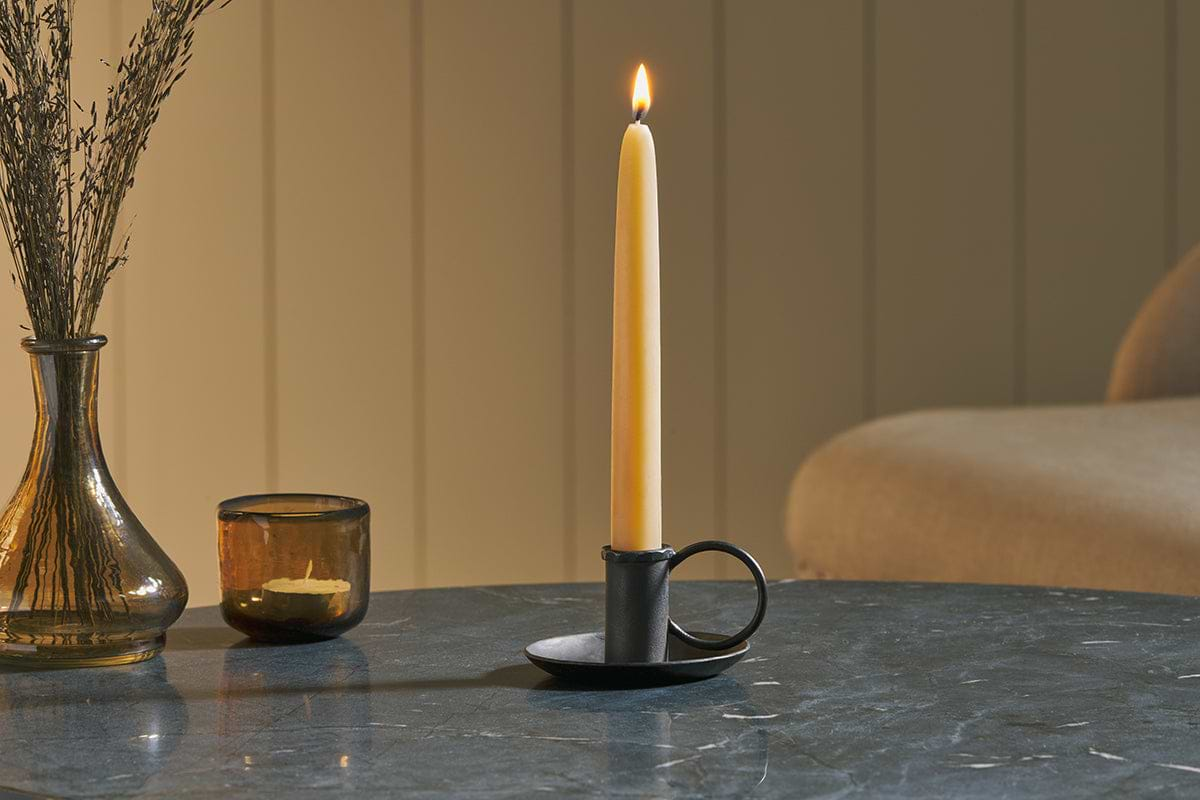
Amri Iron Candlestick
Slender iron with quiet presence, works alone or in clusters of three.
View at Nkuku →Some links above are affiliate links. If you buy through them we may earn a small commission at no extra cost to you. We only suggest pieces we think fit a calm, lived-in home.
Free guide
The Calm Shelf
12 styling ideas to help you compose calm, balanced shelves in natural texture homes.