

Linen curtains in the living room promise calm, but most homes struggle with the details. A blank wall with harsh light, a window framed by blinds, or thick, dark curtains in a neutral room can all leave the space either too ‘done’ or a little lost. The wrong fabric weight or a clash of textures leaves the room feeling busy, not grounded.
Today’s guide will help you set a clear order: you’ll see which roles are played by weight, light, and color, how to add linen to a living room without clashing with existing wood and woven furniture, and which small choices matter most. This works especially well in a small apartment living area when you want warmth without clutter because linen is breathable, soft, and quietly textured.
The short version: Linen curtains living room styles work best when you match light fabric weight to the sunlight and pick a color one shade lighter than your walls. Good linen curtains soften glare, add gentle privacy, and layer easily with wood, jute, or clay in a natural, calm home.
Key takeaways
- Linen curtains soften daylight and make a window feel warmer without blocking natural light completely.
- Using a consistent, pale neutral color keeps linen curtains from clashing with jute, rattan, or wood.
- A room feels least busy when you combine one soft curtain texture with only one or two natural accents nearby.
- Ready-made linen curtains are commonly available in oatmeal, white, and nuanced grey shades.
- Linen is best cared for when washed cold and hung damp to keep the gentle crumple, according to most product pages for linen curtains.

Why choose linen curtains for a calmer living room?
Linen curtains for the living room make daily light softer and less harsh, and the gentle weave never overpowers wood or woven accents. Choosing linen gives the room a matte finish and natural drape, which helps other materials stand out quietly.
A living room built on natural materials leans on surfaces that look and feel calm. Smooth walls next to a jute rug and warm wood usually want a fabric that looks relaxed but light. Linen, especially in a neutral tone, diffuses sunlight gently without making the window heavy or flat.
The way linen falls matters, unlike shiny polyester or heavy velvet, linen hangs with a dry softness and barely-there crumple. In a space with a woven basket, a clay planter, and pale wood, one textured curtain keeps the window from feeling “naked” but avoids doubling up on visual weight.
Choosing linen helps in any room where you want privacy, soft light, and a look that works across seasons. A pure cotton curtain can feel thicker and blockier, while polyester may look a bit too smooth or catch too much glare. Linen’s texture absorbs more light, so the room is gentler on the eyes at mid-day.
Compared to layered blinds or roller shades, a single pair of linen panels looks less busy and suits a relaxed, natural-material home decor approach. Hanging linen panels on a simple wooden rod above a low sofa keeps the focus close to window height and away from the clutter of too many objects.
In a living room with warm, pale neutrals, the effect is subtle: the window blends with the space instead of acting as a strong vertical stripe. The rest of the room stays grounded in natural textures without drifting toward visual chaos.
Where this works best
Linen curtains in the living room work best in spaces with moderate daylight and some exposure, rooms not shaded all day nor blindingly bright. Rooms with pale walls, raw or painted wood, and simple furniture benefit most from this pairing.
Shared living areas in apartments or small homes with only a single main window see the strongest difference. Light linen helps break up glare, so the room feels calmer even when the window faces a busy street or catches full sun part of the day. Neutrals like oatmeal, clay, and dusty greys go with most paints and woods.
Putting up linen curtains between two woven armchairs and a low light-wood coffee table makes a difference in a narrow or rental living area. Here, adding a single set of curtains softens one end of the room without drawing all the attention away from subtle flooring or a well-placed clay planter.
Avoid pairing heavy, dark linen with thick jute rugs and dense rattan shades in one small room. That often fights for attention and makes the space look “stuffed” rather than easy to breathe in.
Even in open-plan spaces, linen curtains provide a gentle transition from the cooler, harder kitchen surfaces. Their lightly textured, matte fabric acts as a visual pause, giving wood and ceramic objects more space to stand out alongside soft furnishings.
How do you pick the right weight for linen curtains?
Most homes work best with a mid-weight linen curtain that lets in daylight but blocks out the harshest direct light. For rooms facing brighter windows, a lined or double-layer curtain can reduce glare while keeping the texture visible.
Sheer linen is good for light-filtering in rooms that need softness rather than privacy. These panels look almost frosted, taking the edge off sunlight in a bright living space. A bare window feels sharper and colder by comparison, especially on clear days with little shade.
Mid-weight linen works in most UK homes, giving enough drape to look full without losing the gentle crumple that gives linen its relaxed feel. According to ready-made linen curtain product pages, these often come in practical widths and fall in soft folds even if you don’t press them.
Blackout or thermal linings aren’t always needed. If your window is large or faces south, picking a lined curtain can solve the “too bright in the morning” problem without weighing down the look. Lined linen is softer on the eye than a polyester blackout panel because the fabric keeps its loose weave, not a flat synthetic face.
For layered spaces, including open shelving, art, and indoor greenery, a curtain with too much structure reads stiff. Instead, try a relaxed pleat or a clip-top heading for a look that blends with everyday textures.
| Weight | Look & Feel | Best Used For |
|---|---|---|
| Sheer | Very light, airy, lets daylight pass easily | Rooms needing softness more than privacy |
| Mid-weight | Soft drape, gentle texture, modest privacy | Most living rooms |
| Lined (blackout/thermal) | Denser, blocks strong sunlight, keeps linen texture | Very bright or street-facing rooms |
Layered correctly, linen curtains match almost any natural material home decor scheme but avoid the “dense” look of lined velvet or heavy brocade in a lived-in space.
What colours work with natural home decor?
Light, neutral linen curtains, think oatmeal, stone, or soft white, work best with natural home decor and keep a living room from feeling flat. Choosing a curtain color just lighter or warmer than your walls prevents the space looking washed out or chaotic.
Pale linen looks right in rooms with sand-coloured jute rugs, raw or honey-toned wood, and beige or stone-textured plant pots. A white or cream curtain with a subtle weave reflects natural light, so the room feels bigger without adding starkness. Neutral tones hold the eye without pulling it sharply, unlike heavy prints or dark blue-purples.
Matching curtain colors to existing wood doesn’t mean exact copies. If your floor is dark oak or walnut, pick a curtain shade several tones lighter for calm contrast. A curtain that’s close to the wall paint or rug avoids a strong dividing line; a curtain too dark or bright for the room can fight with natural textures nearby.
Checked, striped, or strongly patterned linen curtains pull focus and work only in very plain rooms with little other texture. For most living spaces aiming at earthy home decor, a single block of soft color is calmer.
Ready-made linen curtains usually come in oatmeal, stone, grey, and off-white according to product pages for linen curtains. Keeping the look to one or two shades in the whole room keeps things from feeling patchworked.

Styling and placement
Linen curtains look best when hung high and wide above the window, letting fabric fall nearly to the floor with only a gentle break. Attaching a natural wood or metal rod keeps the look light and avoids drawing attention to brackets or hardware.
Windows that stretch higher or face main seating areas get the most out of longer, slightly puddled linen panels. In a shared family living room, shorter curtains often read unfinished; woven home decor works best when at least one fabric cues softness all the way down. Pairing the curtain drop with a well-placed clay planter or pale jute basket ground the look without fuss.
Simple heading styles (like tab-tops or hidden tapes) keep the top neat and match the informal drape of linen. Too many pleats or carved finials can break up the natural lines that make organic home decor appealing.
Keep the curtain width at least twice as wide as the window for full, deep folds that don’t stretch tight. Most modern rods allow sliding panels, so you can adjust privacy without breaking the gentle light. Folding linen panels open, not tying them back, makes their shape look more relaxed.
In a minimal neutral home decor idea, place one large organic piece (such as the jute rug pairing seen in calming living rooms) at the base of the window, repeating similar sandy tones for a look that feels finished.
Quick calm checklist:
- Choose unpatterned linen for softness and flexibility.
- Hang rods near the ceiling if possible for clean lines.
- Keep walls, curtains, and main textiles to two adjacent shades.
- Anchor one woven or clay piece at window height or below.
- Allow curtains to touch or pool very gently on the floor for fullness.
How to layer linen with jute, wood and rattan
Layering linen curtains with jute, wood, and rattan works best when there’s a clear material order, choose one texture as the focal point, and use the others for grounding or subtle contrast. A linen curtain near a woven jute rug and a pale wood coffee table balances the whole space.
When a living room has both soft and hard surfaces, start by reading which is most dominant, often the rug or the largest seating piece. A pale linen curtain against a jute rug gives a tactile variation: the curtain catches light, the rug grounds the color. Compared to rooms full of similar, shiny textures, alternating matte linen with fibrous jute feels more considered.
For rooms with strong wood, oak, ash, or pine floors, linen curtains stop the view from feeling vertical and wooden. Instead of matching exactly, try linen one or two tones lighter or dustier than the floor. In all-natural home decor, repeating the pale shade once more (clay plant pot, fabric shade, or a soft bowl) ties the look back together.
Adding rattan furniture? Pick one zone, such as under the window, for a woven piece. Too many basket-textured things in one sightline fight with the curtain. For visual calm, a linen curtain should take on the “soft” role, while jute or rattan sits below it.
Rooms with all botanical, neutral palette accents benefit when the largest surfaces (curtain and rug) let smaller shapes, like the linen home decor bowl or planter, shine against them. Keep groupings simple for slow living decor that avoids clutter.
Made-to-measure vs ready-made: What matters most?
Made-to-measure linen curtains offer the best fit and fullness for awkward windows or tall ceilings, while ready-made versions work for most standard living rooms. The main advantage is width and flexibility, not fabric quality alone.
If your living room window is unusually wide, high, or placed off-centre, made-to-measure panels solve size issues and give a deeper, more layered look. According to made-to-measure linen curtain retailers, fabric widths up to 300cm are available for a full, gathered finish.
Most standard living rooms use ready-made linen curtains easily, these usually come in gentle colourways like oatmeal and white. Ready-made linen curtain options now offer blackout, thermal, and unlined choices in lengths suitable for typical UK interiors. The real difference is often in hardware or heading style, not texture.
High-street stores often carry linen-blend versions for lower price and wider packs. According to mainstream stores, these offer colors like pale blue and beige, but the difference in feel is subtle unless you look closely. Pure linen ages better but shows crumple and wear over years of use.
If you want to cover an entire wall or create a single large “backdrop” behind sofa or dining, made-to-measure makes sense. For most rental or shared spaces, good ready-made linen panels work well and avoid waiting or committing to a custom color that could limit future moves.
Moderately-priced ready-made linen curtains offer a calm, natural look in most earthy home decor rooms, whether styled new or layered onto existing furniture.
What tends to hold up with linen and natural-material living rooms
The most consistent feedback from reviewers is that linen curtains are chosen to soften daylight and help a space feel less formal. Designers and buyers often mention that sheer or mid-weight linen holds up visually, even as the rest of the room changes with age or season. Heavy, dark fabrics or small, fussy prints make the window a strong focus, most quiet, organic home decor leans on using one main texture in each sightline. Linen keeps its casual crumple, wears in rather than out, and blends easily when the palette stays narrow and warm.
Working with real homes, decorators almost always recommend looking at how light enters first, then matching curtain weight and finish to suit. This prevents adding fabric that feels out of step with the way the room actually gets used. Matte, lightly textured finishes last because they don’t force the eye to keep reading the surface or tracking every fold.
, Mara, Loom & Glow
Common questions
Are linen curtains good for a living room?
Linen curtains are a popular choice for living rooms because they soften light and add gentle texture without making the space heavy. The relaxed weave suits natural home decor and supports a breathable, welcoming look. Linen also pairs well with wood, jute, and neutral furnishings.
What is the latest trend in living room curtains?
The latest trend in living room curtains is the use of sheer or mid-weight natural fabrics like linen in pale neutrals. Minimal hardware, wide drops, and subtle colorways feature in most modern rooms. These looks fit slow living decor and work well with woven and wood textures.
What are the disadvantages of linen curtains?
Linen curtains wrinkle more easily than some other fabrics, and they may shrink or distort if washed too hot. They also offer only moderate light blocking unless lined. Still, most buyers accept slight creasing as part of linen’s casual, organic character.
Should curtains be lighter or darker than a couch?
Most decorators recommend curtains in a shade lighter or just warmer than the main sofa, especially in neutral rooms. This approach keeps the room from feeling choppy or divided at eye level. For earthy, natural spaces, curtains and sofas that are close in tone usually blend best.
what is the current trend for living room curtains?
Current trends for living room curtains favour linen in pale neutral colours like oatmeal, white, and nuanced grey shades. Linen curtains soften daylight without blocking natural light completely, work well with natural home decor materials, and should be washed cold and hung damp to maintain their gentle crumple.
Explore more calm combinations inside our Shop The Look .
Shop the Look
A few Nkuku pieces that echo the quiet warmth of linen-textured cushions to layer alongside your new curtains.
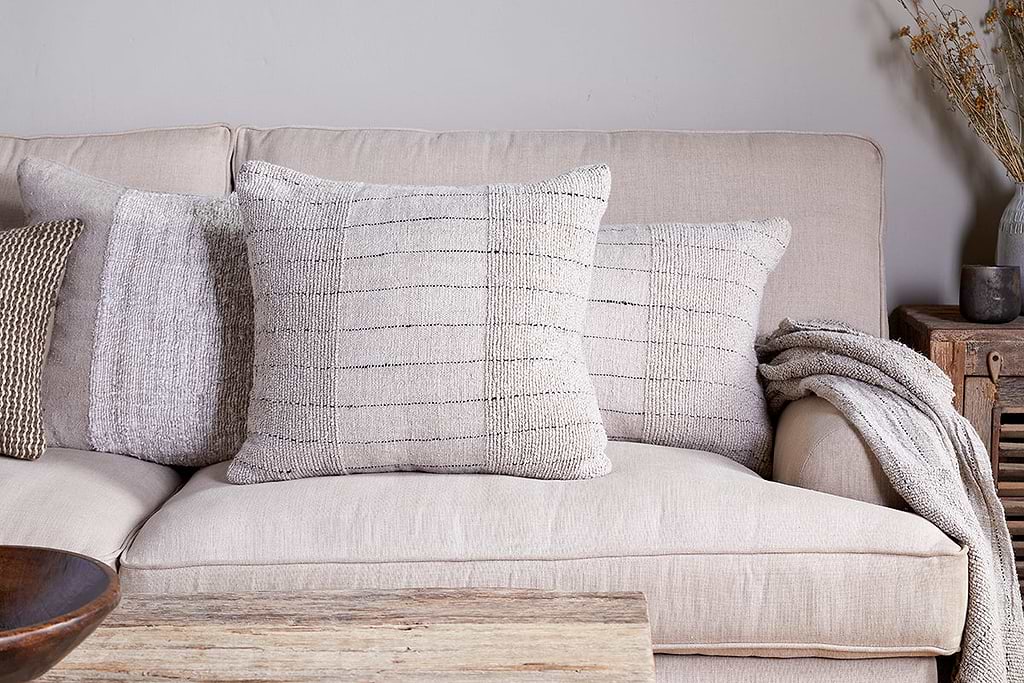
Mayla Cushion Cover
Soft hand-textured cover, instant warmth on linen sofas or chairs.
View at Nkuku →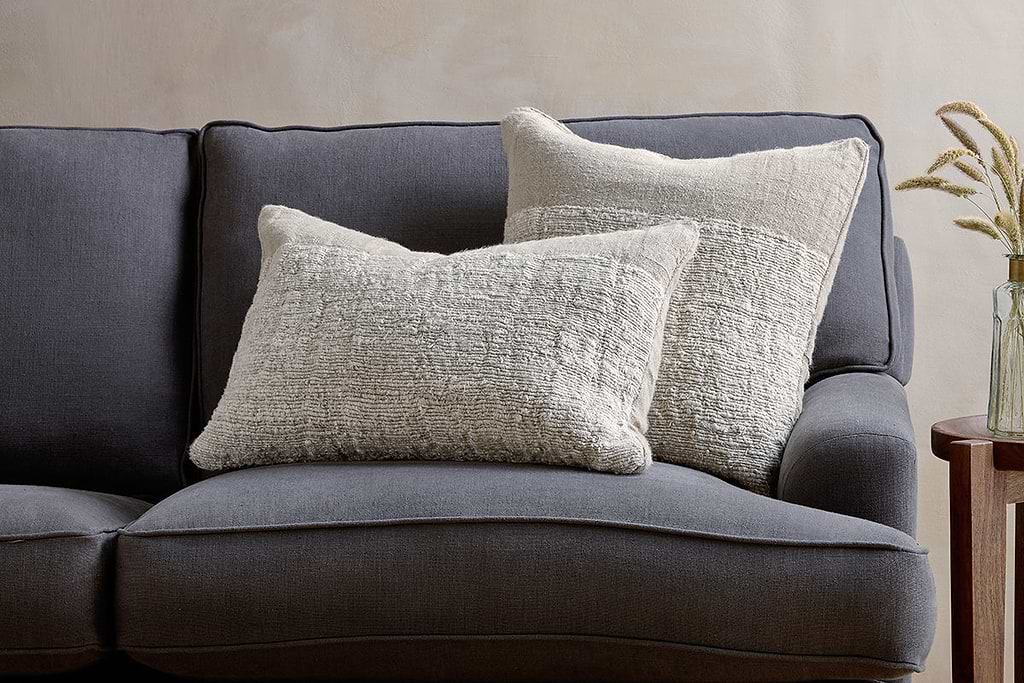
Puli Linen Cushion
Recycled linen in natural, pairs with woven textures and aged wood.
View at Nkuku →Some links above are affiliate links. If you buy through them we may earn a small commission at no extra cost to you. We only suggest pieces we think fit a calm, lived-in home.
Free guide
The Calm Leaf
12 quiet ways to bring dried botanicals, stems, and natural textures into calm spaces.