

Many bedrooms struggle with bedside table styling: the surface collects clutter or sits empty, making the space feel unfinished. Messy piles of chargers and random extras can make starting or ending the day less calm than it should be. Every surface needs to read as cared for, not just cleared of things.
Today, you’ll learn which items to keep close, which to move or store, and a simple formula that works for every nightstand. This works especially well in a small bedroom when storage is tight because it lets one smart arrangement handle both the practical and the visual needs of the space.
The short version: For bedside table styling, keep one lamp, a container for essentials, and one taller item, spacing them with room to breathe. Cutting extras and focusing on just a few anchors makes a shelf or nightstand look finished and easy to reset.
- What actually belongs on a bedside table (and what to lose)
- How do you style a shelf or nightstand without clutter?
- Where this works best
- How do you layer heights without it looking like a display shelf?
- Styling and placement
- Why one lamp beats overhead light for sleep
- What is the 3-5-7 rule for shelf decor?

What actually belongs on a bedside table (and what to lose)
A good bedside table holds a lamp, something for nightly essentials, and no more than two items with meaning or use. Anything else risks making the surface busy instead of calm.
Start with what you use every night. If a table lamp makes reading easier, keep it; if not, swap it for a soft-glow candle or a small ceramic dish for jewellery. A water carafe, your current book, and a simple catchall tray all earn their place with daily use. Decorative items are only helpful if they don’t block the basics.
Coloured cords and old skincare bottles pile up fast. Removing anything unused—spare glasses, receipts, dead pens—keeps the setup grounded in what’s needed now. If things end up here by default, find real storage elsewhere: a small box in a drawer or a shared family basket in the closet.
The cause of most crowding is keeping things “just in case.” That ends with a fast edit by use and feeling. A bare table looks cold but one extra mug creates clutter. Focus on use, not filling space.
Unlike a dresser top, which can handle seasonal displays, a bedside table does better with repetition: one lamp, one tray, one soft touch. Keeping the grouping spare is what makes the arrangement feel settled after a long day.
For most, moving extras out means the bedside feels lighter and is simpler to reset each morning. Most people find they use the same three or four items, so everything else can move off the surface.
Set the lamp on the back corner, tray in the centre, and book toward the front edge. The space left clear is what lets the eye rest.
How do you style a shelf or nightstand without clutter?
Keep groupings small and leave negative space between them. A table or shelf feels more finished when about two-thirds of its surface is left open.
Low shelves and nightstands often collect piles because everything looks equal. Choose one anchor, such as a mid-height vase or warm lamp, then allow space around it. A book stack, a woven basket, and a candle can round out the group, but leave gaps—never fill edge to edge.
The difference between calm and crowded is using the negative space on purpose. Empty space sets off what remains, making each object feel chosen, not random. If every inch is covered, nothing stands out; if you keep plenty of room, even a single vase carries more presence.
Unlike open shelving in a kitchen, which can hold row after row, a nightstand needs breathing room to be both useful and restful. Shelf styling tips often start with removing excess before arranging what stays.
Limiting grouped items on the shelf or nightstand works well in small bedrooms and open-plan studios, where extra visual weight makes the room feel smaller. Leave visible surface so the eyes and mind can settle at night.
Line up grouping so each item sits with a gap around it—usually, more than half the surface stays empty. Place the anchor item at the back or centre; this guides what feels organized and what feels lost.
Where this works best
Neutral bedside table styling suits any bedroom layout, but it’s most useful in small rooms, rentals, or shared spaces where clutter builds up fastest.
Bedrooms with little floor and wall space see the fastest improvement from reducing surfaces to just what is needed. In tight layouts, even a floating shelf becomes the nightstand, so every item counts. Open shelving setups—common in city apartments—benefit most from a strict edit because there is nowhere to hide clutter away.
If the bedroom feels unfinished or pockets of mess pile up after a week, setting up the surface once and sticking to it is the best fix. For shared rooms, a paired-down approach helps both sides look tidy with minimal effort, making a small apartment bedroom feel intentional without spending extra on furniture.
Avoid squeezing too much on small tables or using mirrored items on both sides of a double bed unless each surface really fits the same purpose. Matching nightstands only work when both are kept to the same basic rules: lamp, tray, one extra.
Stacking small things—like tissues, spare keys, lip balm—in a single lidded box keeps surfaces from feeling lost, especially on natural bedroom decor setups where the look is calm and spare by choice. Proper bedside table styling here does more than look good; it preserves sanity.
A lamp, one memorable object, and a low bowl for daily basics. That’s enough for any nightstand or shelf in a room that does more than one job.
How do you layer heights without it looking like a display shelf?
Use three heights: one tall lamp or vase, a medium piece like a small box or book, and something lower and wider. Group loosely so no item lines up exactly with its neighbor.
Mismatched heights create depth and break up lines along a shelf or table, so everything looks settled, not staged. Start with a standing object like the Akra Recycled Glass Vase – Clear, add a closed linen or jute box for warmth, then a short stack of softcovers or a ceramic catchall. Wide, low items anchor the grouping and make higher ones less stark.
The cause of that “display shelf” feeling is lining up items as if for sale: too even, too perfect. Instead, set the tallest item at one corner or just off-centre; the next at arm’s length beside it. Vary color and texture: a single coffee table styling trick is to repeat one color or a rough finish twice, with one sleek accent breaking the line.
Compared to crowding the space with small, similar objects, this three-height method draws the eye to the items that matter. Keeping a book or notebook flat, and a single low dish for keys or rings, stops clutter from building up in corners or underneath larger items.
Using a mix of heights is best in rooms with busy wallpaper, strong bedding patterns, or high headboards. A lamp, vase, and flat book work together to mark the bedside space without fighting for attention.
Arrange the three items in a lazy triangle, never a straight row, so each has its own outline. This keeps the grouping natural and not staged. Small changes in height and spacing make a table feel lived-in but not messy.

Styling and placement
The simplest formula: one anchor (lamp or vase), one practical container or stack, and clear breathing room between. Follow a soft triangle—nothing in a strict line, nothing crowding the edges.
Quick calm checklist:
- Pair one lamp or vase (never both) with a solid base—glass, ceramic, or matte metal.
- Keep one open container, like a shallow tray or woven bowl, for jewellery, keys, or small skincare.
- Apply a light color or natural material for soft contrast: linen runner, clay plate, pale wood box.
- Leave a third or more of the table empty—no stacks along the back or all the way to the corners.
- Repeat one accent color once, and keep all others neutral or pale to avoid busy looks.
Grouping objects diagonally, not in a row, loosens up the setup and lets each piece stand alone. Soft textures (linen coaster, matte ceramic, woven basket) break up hard surfaces and stop the arrangement from reading as cold or too uniform.
Placing the main anchor just off-centre to the back, and the tray or catchall in easy reach at the front, matches how most people reach for objects in the dark. Empty space near where your hand falls—rather than cramping every corner—means fewer knocks and less nighttime frustration.
Compared to stacking objects or lining them up, this approach keeps the space ready for nightly use without feeling decorated for show. Decisions about what stays and what faces out deliver lasting calm, not just a quick tidy. This type of arrangement works especially well with open shelf decor, letting floating shelf ideas extend to even the smallest rooms.
Set your group after nightfall to see what feels practical. Add or remove one item until nothing blocks the lamp or tray. What you reach for easily is what earns its spot.
Why one lamp beats overhead light for sleep
A lamp on the bedside table gives soft, direct light and helps the brain wind down, while an overhead light feels harsh and wakes you up again.
Table lamps filter light at a lower angle, which feels restful and helps mark nighttime from day. According to Housebeautiful’s expert tips, using a warm bulb, linen shade, or frosted glass cuts glare and protects sleep quality. The most soothing option is a lamp about head height when you’re lying down—easy to reach and soft on the eyes.
Harsh ceiling fixtures often create bright pools and hard shadows, making reading or prepping for bed a chore instead of a wind-down. A small, contained lamp creates a glow just big enough for your needs without filling the room with strong light. This shows in how your body feels—letting your senses relax as you set the book aside.
Unlike wall sconces, which can demand wiring or rental approval, a single plug-in lamp works in almost any room. Light at the edge of the table or shelf also stops the display from becoming too decorative, keeping it practical and simple.
Switching to a tabletop lamp is especially helpful in rentals and bedrooms where the ceiling light is fixed. A clear or pale lamp base helps the look stay airy at night and nearly invisible by day.
Place the lamp at the back left (if right-handed) or back right (if left-handed) for easiest switching and minimal glare. All other items get placed according to reach, not how they fill the tray.
What is the 3-5-7 rule for shelf decor?
The 3-5-7 rule means always grouping shelf decor in odd numbers—three, five, or seven—so a shelf or table looks more relaxed and welcoming than a flat even group.
Odd numbers catch the eye and feel more like choices, not displays. For bedside tables, this might be a lamp, a tray, and a single small plant—three pieces spaced to leave open ground between them. In bigger open shelf decor, five or seven pieces let you play with objects and negative space without making the shelf feel fussy.
This approach works because the eye finds odd groupings less rigid and more restful than strict pairs or fours. Items in a set of three or five settle into a soft flow, while even numbers read as formal and make a shelf look styled for looks, not use.
Unlike gallery walls or art ledges—where symmetry is the goal—nightstands and open shelves benefit from these odd-numbered vignettes. If matching pairs are needed for balance, add one extra element (book, bowl, or candle) to avoid a stiff look.
Following the 3-5-7 principle helps prevent the typical beginner’s mistake of crowding small objects with nowhere to settle the eye. As quiet table runners can break up a busy dining space, grouping in odd numbers softens the effect in bedrooms and shared rooms.
Set up your shelf or bedside table with one main piece, then add two others of different heights and shapes. If it still feels empty, stop at five—but never fill every spot. Breathing room matters more than an exact number.
What tends to hold up with bedside table styling
Over time, the simplest setups prove the least fussy. Most reviewers mention that three to five items—lamp, book, small vase, tray, and a useful dish—never look dated or forced, especially when repeated materials like glass and linen are used. Matte finishes get recommended again and again for surfaces near windows, as they avoid catching glare compared to glossy trays or vases.
Arrangements that leave negative space and focus on everyday use tend to last. Decorators point out that one thoughtfully placed anchor—like a clear glass vase or a lamp with a linen shade—gives the arrangement more visual weight than spreading small objects everywhere.
— Mara, Loom & Glow
Common questions
How do you make your bedside table look nice?
The easiest way is to use a lamp, a tray for small items, and one decorative object, then keep the rest of the surface clear. This keeps the look practical but also pleasant for daily use. Grouping in threes and leaving some empty space works in nearly every room.
What are common bedside table styling mistakes?
Piling on too many small objects, letting chargers and cords tangle, and crowding out essentials are common mistakes. Choosing a single anchor and a neutral color scheme prevents the space from feeling busy or heavy. Pay attention to what you actually use.
What are popular bedside table trends right now?
Natural glass, matte ceramics, and warm lamps are trending, along with keeping just the essentials in reach. Neutral shelf styling and odd-numbered groupings show up in most new spaces. Simple greenery or a small stoneware dish are favorites this year.
How to make your bedside table look nice?
Group three items—a lamp, a small tray, and one extra like a book or vase—spaced out, not all in a row. Avoid overstuffing and stick to a soft, neutral palette. Items with meaning or daily use always look better than random extras.
Explore more calm combinations inside our Shop The Look .
Shop the Look
Quiet pieces that add texture and height to a bedside table without clutter.
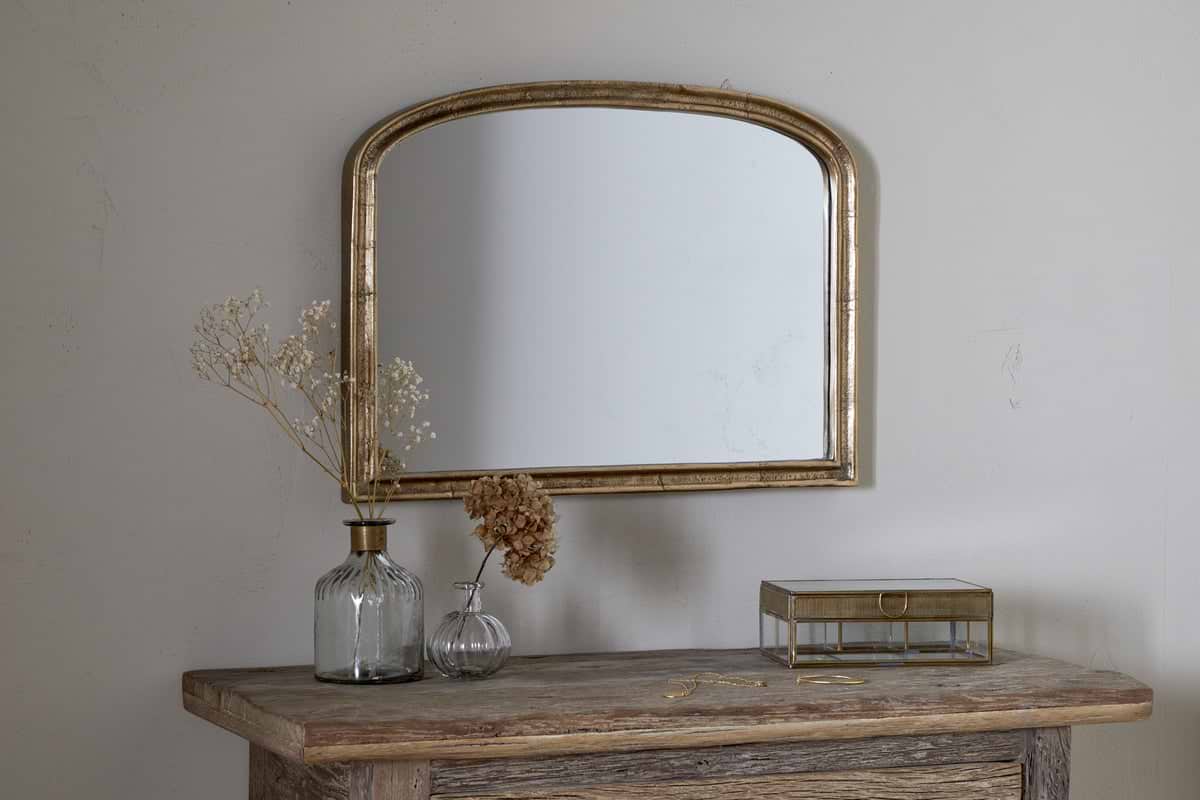
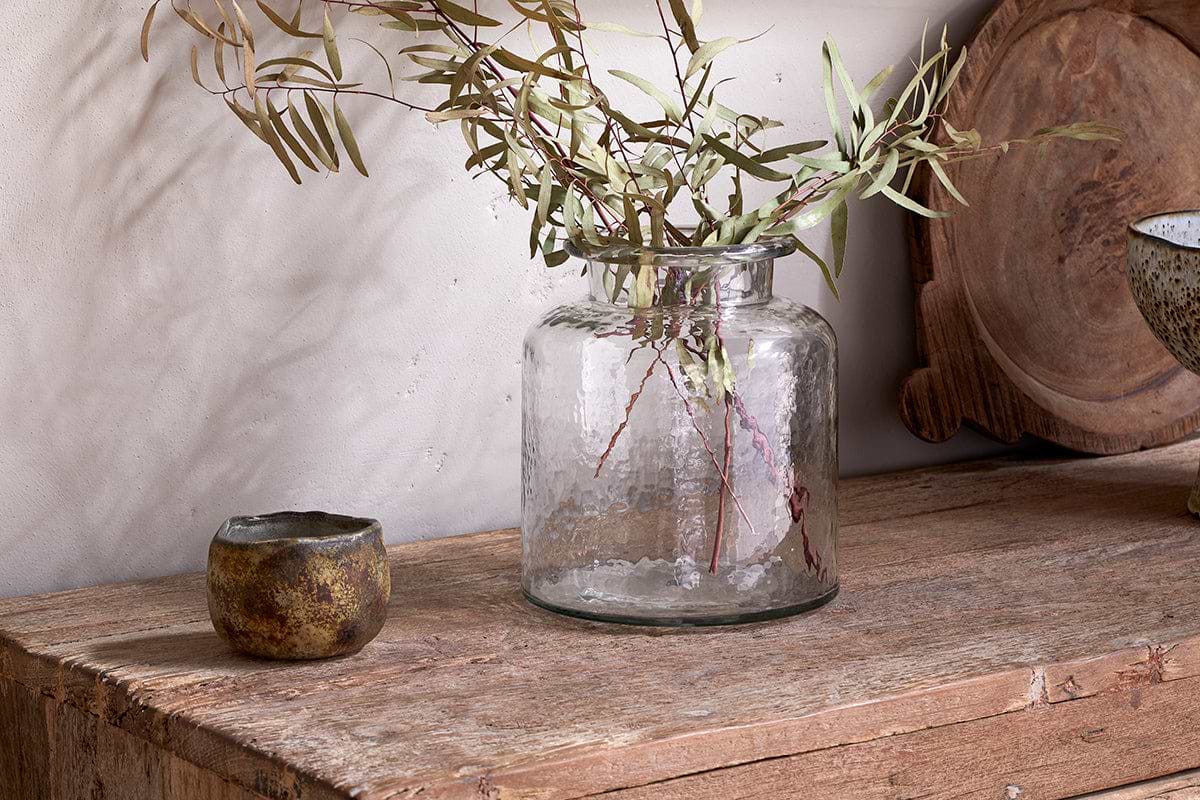
Akra Recycled Glass Vase
Clear cylindrical glass — pairs with stems or sits empty as a quiet accent.
View at Nkuku →Some links above are affiliate links. If you buy through them we may earn a small commission at no extra cost to you. We only suggest pieces we think fit a calm, lived-in home.
Free guide
The Calm Shelf
12 styling ideas to help you compose calm, balanced shelves in natural texture homes.