

Even with the best kitchen open shelving ideas, everyday shelves often swing between two extremes: clutter catching or bare-looking. It’s easy for open shelves to collect random mugs, plastic tubs, or too many pans—so the space never feels fully sorted or settled.
This guide offers a clear, flexible method to make any open shelf feel grounded and neat, not crammed or empty. You’ll learn how to spot what to keep, what to remove, and how to style your shelves with just a handful of materials and one or two focal pieces. This works especially well in a small apartment kitchen when upper cabinets aren’t possible because it turns awkward blank walls into useful storage without feeling busy.
The short version: The most useful kitchen open shelving ideas keep shelves about two-thirds clear, use 3-5-7 grouping, and anchor with one tactile piece. A simple formula and a few calm materials help shelves look smooth and useable, even in a tight or rental kitchen.
- Where this works best
- How do you keep an open kitchen shelf from looking cluttered?
- What should you actually put on open kitchen shelves?
- How to plan for negative space (and not waste storage)
- Styling and placement
- Which open shelving options work for renters?
- Does corner or tiered open shelving make sense?

Where this works best
Open shelves fit best in kitchens with blank walls, few upper cabinets, or difficult corners that waste space otherwise. In narrow galley kitchens, they can open up the line of sight.
Galley kitchens, shared homes with strict rental rules, or converted dining nooks often lack upper cabinets. Here, even a single oak shelf or a floating shelf above a counter can free up working space. Unlike closed cabinets that block light, open shelves feel lighter, especially with pale ceramics or glass.
Using the wall for display means mugs, bowls, or a clay dish are in reach and off counters. Floating shelf ideas can soften tall, bare walls so they aren’t just empty plaster. People often add a shelf above a backsplash or next to a cooker to store jars or daily-use plates.
Avoid squeezing open shelving against a crowded wall with tall appliances or behind doors that swing open. A shelf crammed between a fridge and a tall larder unit can look pinched and hard to reach, which makes it less helpful day-to-day. A gentle stretch of wall away from the main traffic lets shelves do their job.
Try one slim oak shelf in a nook where cabinets won’t fit, or above a small dining table on a blank wall where you can keep breakfast bowls and coffee mugs.
How do you keep an open kitchen shelf from looking cluttered?
Keep shelf decor ideas simple by using the 3-5-7 grouping rule. Most shelves look neater and calmer when two-thirds of each shelf stays open, with items in clear clusters rather than spread out.
Many kitchens slip into clutter when every shelf fills with random crockery, mismatched jars, and packets. If each shelf runs edge to edge with items—-even good-looking ones—-the space feels crowded. Leaving clear, intentional gaps (negative space) between groups creates breathing room for the eye and makes any shelf vignette ideas stand out.
A row of five stoneware mugs lined up on the left, a grouping of three pale cereal bowls toward the center, and a single clear vase as an anchor stops the shelf from reading chaotic. Unlike cramming all items tight, leaving open stretches signals that every piece has a reason to be there.
The main cause of a cluttered look is spreading small items everywhere with no visual stopping point. By using only three or five objects on a shelf and keeping gaps between them, open shelf decor feels sorted, not busy.
Apply the 3-5-7 grouping: three useful bowls, five glasses, one anchor item per shelf—never more than one or two groupings per shelf for a calm look that’s easy to keep up.
What should you actually put on open kitchen shelves?
Stick to the daily-use pieces you reach for most—plain plates, one or two glass jars, a clay bowl, or a favorite mug set. Avoid storing cleaning products or anything you don’t want on show.
Shelves meant for kitchenware display work best with sturdy, neutral pieces: stoneware plates, clear recycled glass, a wooden chopping board, and a woven tray or basket. Everyday items—like a dish drainer, mugs, or a lidded container of tea—are both useful and look good out in the open.
Unlike closed cabinets, open shelves put every object on stage. Clear glass storage jars work well for staples (salt, oats, rice) and anchor the look. Pops of natural wood or clay break up hard lines, and a basket hides loose packets or utensils. Framing your shelf with only a few staple pieces keeps it practical rather than strictly decorative.
The strongest shelf vignette ideas focus on repeated use: if you grab it every morning or every wash-up, it can stay out. Items that only come out for guests or holidays—large mixers, specialty glasses—often fill space and gather dust. Stick with the items that actually serve you daily.
Line one shelf with a set of everyday bowls, a clear glass vase, and one or two storage jars. Leave partyware or paperwork for cabinets, not open shelves.
How to plan for negative space (and not waste storage)
Leaving part of each shelf empty helps the eye rest and makes every item easier to find. At the same time, keeping shelves too bare wastes storage, so use negative space as a border around each group, not across whole shelves.
Leaving roughly one-third of each open shelf clear is a good rule for most homes. With too little space between objects, a shelf can feel forced and heavy. Too much empty shelf looks like you just moved in, not like an intentional choice.
Grouping items with clear space makes cleaning easier too—a damp cloth can swipe the run without shifting a dozen bits. A bare shelf collects dust faster than one with a few weighty pieces, like a chopping board or lidded jar, which helps to anchor loose space.
Instead of spreading things out to “fill” every inch, cluster kitchenware close then pull the group away from shelf ends. This natural negative space helps every object breathe.
Use negative space as a soft border: two groups (like mugs and bowls) on one shelf, with space at each end and between. It feels controlled, not wasteful.

Styling and placement
Start with a single anchor (a glass vase, a woven basket, or a wooden bowl), then arrange smaller items around it, repeating one material across the shelf. Keep one look and adjust as seasons or needs change.
Open shelf decor looks best when each shelf holds a single standout piece and a few repeats. A clear vase catches light and draws attention, while a group of three mugs and a stack of two bowls add use and rhythm. Placing heavier items toward the end of a shelf can ground the look, while lighter, transparent pieces feel less bulky at eye level.
Unlike scatter-filling each shelf with odds and ends, grouping like objects keeps the space sorted and easy to reset. Floating shelf ideas work best when shelves run higher than the counter and avoid the cooking zone, so oils and splatters don’t build up.
Palettes matter: two or three colors total. Materials like stoneware and recycled glass last well in kitchens where hands are wet and things get moved often. A shelf in an awkward spot is rescued by repeating one tone—natural wood, for example—so the whole zone feels stable.
Quick calm checklist:
- Stick to two or three main materials (wood, clear glass, stoneware)
- Keep at least one-third of each shelf open
- Group similar items together, using odd numbers
- Repeat one color or texture for unity
- Use a single anchor (basket, vase, or jar) per shelf
Place your anchor on one side, then build around it. This approach works on any open or floating shelf—long, corner, or above a sink.
Which open shelving options work for renters?
Freestanding units, suspension rails like KUNGSFORS, or shelves mounted with removable adhesive work well for renters. These avoid drilling and can be taken down when you move.
Rental kitchens, especially those with tiled walls, need options that won’t leave marks. Wall-mounted brackets that stick with strong adhesive (not screws) or simple suspension rails provide space for open shelf kitchen styling without risking deposit loss. [IKEA’s ENHET system] includes shelves that can be swapped out or moved as needed, and their KUNGSFORS setup relies on a heavy-duty rail, not wall screws.
Unlike fixed shelves, freestanding racks let you add vertical storage behind doors, in empty corners, or against unused walls. Temporary open shelving solutions like leaning ladder shelves hold mugs or produce and tuck into tight spaces where permanent carpentry isn’t allowed.
Adhesive wall hooks can hold small baskets or a BEKVÄM spice rack near windows for your favorite herbs—no tools required. Choose these shelf decor ideas when you want the flexibility to rearrange or repair with minimal fuss.
Use a freestanding oak shelf in a rental galley kitchen, or hang a rail for utensils and mugs where cabinets can’t go.
Does corner or tiered open shelving make sense?
Corner shelves and stacked shelving work when you need to use up awkward wall space, especially near windows or between tall cabinets. Tiered layouts turn a tight zone into practical storage that’s easy to reach.
In many kitchens, corners go underused, gathering clutter or staying empty. Single or multi-tiered open shelves can fit into corners, wrap around 90-degree angles, or run up a column by a fridge. This approach makes use of difficult spots that standard cabinets ignore.
Unlike one long floating shelf, stacking two or three shorter shelves in a vertical line breaks up a tall blank wall and pulls the eye across the room, especially in tight spaces. Tiered shelving near the window brings more light to everyday dishes and balances the look of a small, busy kitchen.
The main pitfall with multi-tiered shelves is overcrowding: if every shelf holds too much, the area looks heavy and cluttered. By grouping three jars or four dishes per shelf and keeping some space clear above and between, the shelving zone feels open and sorted—never busy.
Try a double-tiered floating shelf above a countertop to keep mugs on top and daily spices below, letting sunlight hit your shelf vignette without blocking the view.
Sometimes after placing all the bowls and jars, it hits: the shelf looks either crowded like a dish rack or too sparse, almost forgotten. That missing piece is usually a visual anchor—one object that feels weighty, tactile, and different from the rest. Setting this anchor, like a handblown glass vase or a natural stone jar, changes the shelf from a row of items to a composed display. Instead of chasing the right look by endlessly swapping pieces, shift to a mindset of small groups and single anchors. The improvement is immediate: surfaces look intentional, and shelves never feel busy or cold.
Often, people try to “fill” the shelf by spreading out every kitchen object they own or clustering several similar things all in one tight area. The result is a shelf that feels heavy, unfinished, or always a little off—like it can’t decide if it’s storage or display. Once you notice that feeling, it’s usually because the shelf lacks a pause point—either not enough gap between items or no rock-steady anchor piece. It’s subtle, but this is what makes the whole room feel calm or crowded.
Letting just one focal piece do the heavy lifting, keeping the color palette small, and repeating a texture (like ceramic or clear glass) gives the shelf a finished look that stands up to daily use.
Save this idea for later.
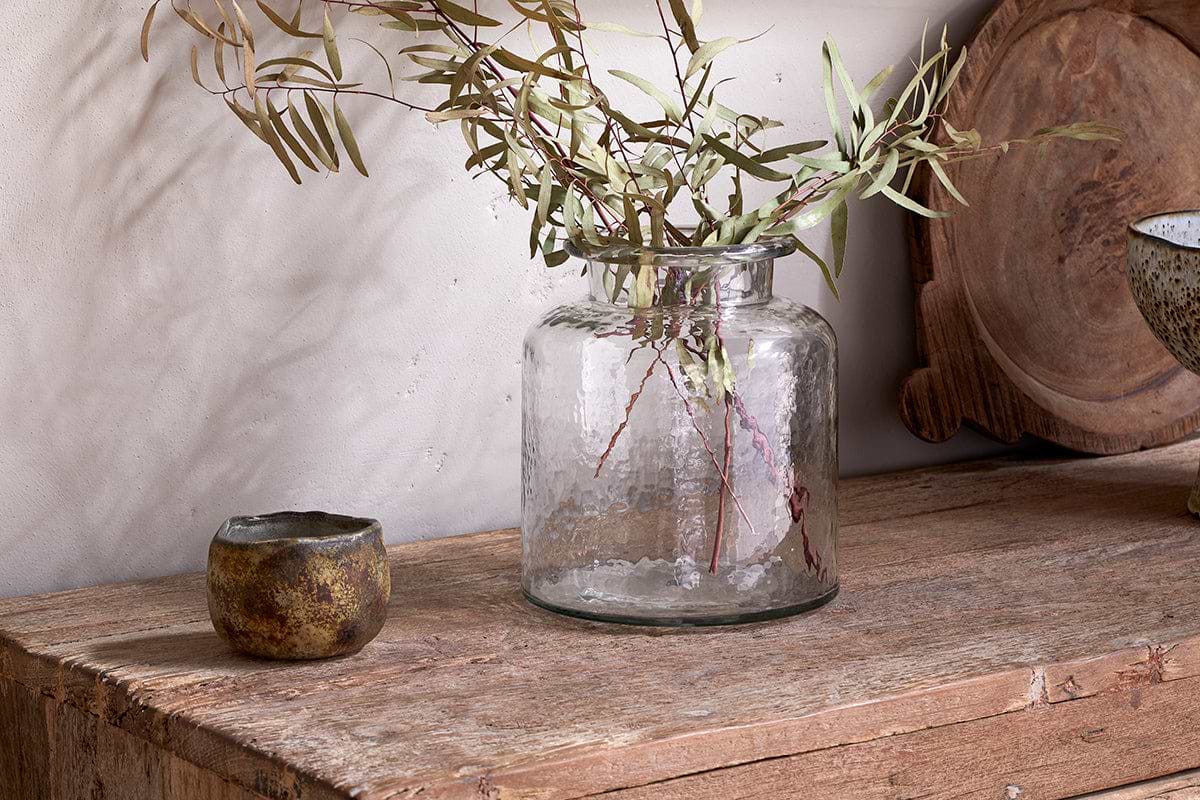
Akra Recycled Glass Vase – Clear
adds quiet structure and warmth while keeping the room balanced.
What tends to hold up with everyday open kitchen shelving
Clear formulas and a repeatable setup tend to work best in real homes. Most reviewer feedback points to the importance of limiting palette—using mostly wood, pale clay, or glass—for easy cleaning and less visual stress. Decorators often recommend stoneware over painted ceramics: stoneware resists chips, holds its finish, and won’t pick up odors or stains from regular kitchen use. Matte finishes come up again and again for shelves facing windows, since they pull less light than glossy ones.
No one solution fits every kitchen, but anchors like a recycled glass vase or lidded container, paired with plain bowls and occasional green stems, appear in hundreds of the most “kept” kitchens. Shelf styling that considers negative space usually reads calmer even after months of daily use and shifting contents.
— Mara, Loom & Glow
Common questions
How do you make open kitchen shelving look good?
The simplest way to make open kitchen shelving look good is to group items in odd numbers (like three or five), keep about a third of each shelf empty, and use one anchor item per shelf. This makes any shelf look sorted and easy to keep up. Stick with simple colors and repeat one material for consistency.
Are open shelves in the kitchen a good idea?
Open kitchen shelves are a good idea in rooms with limited storage, awkward walls, or where upper cabinets won’t fit. They allow everyday items to stay in reach and bring a lighter, more relaxed look. Maintenance is easy with regular dusting and a quick wipe-down every week or so.
Are open kitchen shelves still in style in 2026?
Open kitchen shelves are still in style for 2026, especially in smaller or open-plan spaces and for those who prefer a neutral, minimal look. Many current renovators and designers use floating or tiered open shelves to show off practical kitchenware while saving space.
What should you put on open kitchen shelves?
Put the items you use each day on open kitchen shelves—stoneware plates, bowls, mugs, glass jars, and a small anchor piece like a vase or wood bowl. Avoid storing bulky appliances, paperwork, or mismatched plastic containers on display. Keep it simple and stick to a small set of repeatable items.
Explore more calm combinations inside our Shop The Look .
Shop the Look
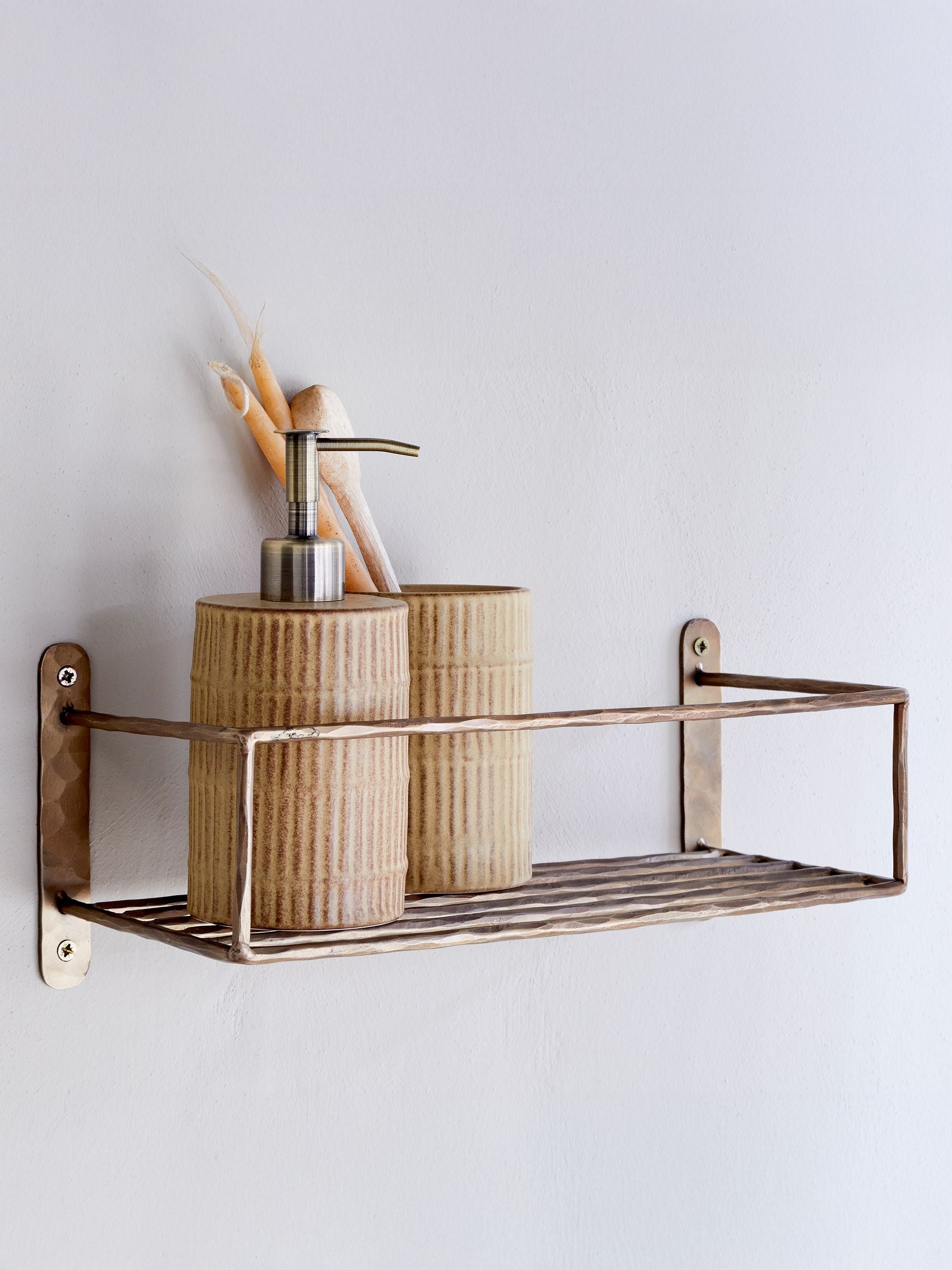
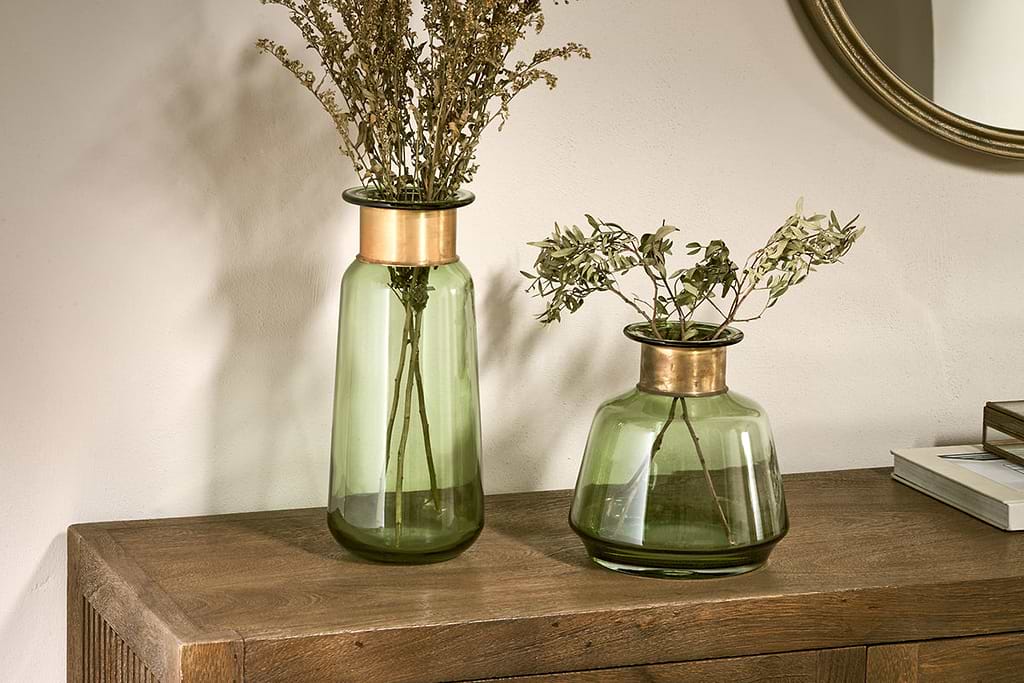
A shelf and vase that work on open kitchen shelving and read as both storage and decor.
Some links above are affiliate links. If you buy through them we may earn a small commission at no extra cost to you. We only suggest pieces we think fit a calm, lived-in home.
Free guide
The Calm Shelf
12 styling ideas to help you compose calm, balanced shelves in natural texture homes.