

Many homes have small ledges or uneven light that make arranging windows easier to ignore than to style. With so many windowsill decor ideas online, it’s easy to add too much and end up with a cluttered view instead of something calm. Even a few off-balance pieces—like two vases of different sizes, a pile of books, or a too-bright pot—can make the ledge feel busy.
Simple, layered natural objects are all you need, and you can start today by clearing out excess and picking what works for your light, size and mood. This works especially well in a small apartment kitchen when bench space is limited because a neat row of herbs on the windowsill brings comfort without mess. You’ll learn how to mix textures and set a quiet order, no matter the size or view from your window.
The short version: The most reliable windowsill decor ideas involve one grounded main piece, grouped with two or three natural textures, spaced to let in light. Editing for shape, material, and palette stops the ledge looking cluttered and helps each window become a simple, useful spot in the room.
- Where this works best
- What actually earns a place on a windowsill?
- How do you use natural material home decor without visual mess?
- How does grouping help windowsill decor look tidy?
- Styling and placement
- What plants and flowers suit different window light?
- How do you refresh a sill by season and keep it simple?

Where this works best
Narrow ledges, shallow frames, or deep old sills can become peaceful spots when you limit what you place and use simple natural textures. Each room benefits differently—think about light, use, and how often you want to move pieces.
Bedrooms, kitchens, and living rooms all have windows with different constraints. Some sills are barely deep enough for a candle, while others run the full depth of a vintage frame. Most rentals have shallow ledges that can’t hold heavy pots, but layering linen, jute, or glass helps keep the look light. Views also matter—an apartment looking at another building needs less clutter to keep the space open.
A windowsill in a kitchen works for growing fresh herbs or holding small ceramics, while a bedroom ledge may do best as a spot for a tiny lamp and a single glass vase. South-facing living rooms can take a recycled glass candle holder or a low lantern, as long as there’s still space for the light to come through. Using materials that feel soft or look unfinished, like hand-woven trays or unglazed terracotta, suits sills that catch afternoon sun.
Avoid forcing a style that clashes with how you use the window. Placing tall vases or busy groupings in front of blinds or closing the curtains around bulky pieces makes the ledge feel awkward and hard to clean. Choosing simpler, lighter pieces changes this dynamic—they look at home and don’t get in the way when you open the window for air.
What actually earns a place on a windowsill?
Pick only what serves a clear purpose or feels good to keep in sight. Anchoring the ledge with one solid piece, like a stone pot or a blocky ceramic, gives everything else a sense of order.
Most windowsills turn messy when everything is small or delicate—lots of tiny objects scatter the eye. Selecting a single anchor object not only simplifies cleaning, but also provides a base to group lighter things. For example, a simple clay bowl or a recycled glass vase instantly adds weight, making the sill feel intentional rather than leftover space.
Objects made from natural materials—linen, jute baskets, unglazed ceramic, or wood—are honest, easy to touch, and usually lighter than metal or glossy finishes. If a ledge feels empty, a woven tray can gather smaller items into one group. Grounding a collection on a wooden or rattan tray is the quickest way to keep things from looking scattered.
Compared to using only one type of material, mixing two or three (like linen with clear glass and a rough pot) softens the look and reflects light differently through the day. A bare shelf reads colder than one with a jute basket and a textured candle. A ledge always does best with objects that look handled and are easy to move when you want to change the mood.
How do you use natural material home decor without visual mess?
Limit your palette to two or three textures and stick to earthy or neutral tones under soft daylight. This stops chaos and makes the sill read as one simple shape.
A kitchen with terracotta pots, woven baskets, and scattered utensils becomes noisy. If you switch to only earth-toned ceramics and one plant in a plain pot, the ledge starts to feel clean. This calm comes from narrowing the mix—too much contrast or color breaks up the scene for the eye.
Linen and rattan together fade into the background under natural light, instead of fighting for attention. Using a recycled glass candle holder with a short, pale candle works much better than a brightly colored pillar or heavy metal lantern. When each piece is a different color or sheen, the ledge looks busy, even if nothing overlaps. Limiting palette creates visual quiet, while still making the shelf feel alive.
Unlike plastic or mirrored objects, neutral home decor ideas—dried grasses, pale ceramics, a single stem in a glass vase—absorb or diffuse light. This blurs the edges so the window ledge softens into the rest of the room instead of becoming a sharp line.
How does grouping help windowsill decor look tidy?
Grouping small pieces on a tray or a folded linen cloth makes them read as one arrangement, not clutter. Odd numbers and varied heights give the eye an easy path across the sill.
One of the best-known windowsill decor ideas is the rule of three: group items in sets of three or five for a balanced look. Two matching vases feel stiff, while three pieces—like a glass vase, a bowl, and a candle—give more flow. Placing all three on a small tray keeps them gathered, so the group looks tidy and complete.
Varying the heights is key. A ceramic vase next to a low jute tray and a taller jar means your eye naturally travels from one to the next, rather than fixating on a single spot. This works well in rooms where the windowsill sits at or above eye level, making the items visible from most angles.
Before you finish styling, always check you can still close the curtains, see out from your usual seat, and lift every item easily to dust the sill and clean the glass. Some people forget that, and end up with delicate arrangements that need to be dismantled every week.

Styling and placement
Keep to one main piece, three grouped items at most, and always leave open space at both ends of the sill for light and daily use. Give each object enough air so nothing feels crowded.
Placement is about more than where you set things—it’s about making sure nothing blocks the light or blocks access. Near windows that open for air, lighter items like a linen runner or a glass holder are practical. In a bathroom, a handwoven box can hold soaps without looking heavy on a tight ledge. A tray or cloth keeps everything easy to move for cleaning.
If you need to tuck the ledge behind curtains or blinds, keep the arrangement low and spaced so nothing snags. Leaving a finger-width gap between each item and the windowpane prevents condensation and damage, which matters on cold-season nights or in rental homes where marks are not easily fixed. In wide sills, a table lamp or low lantern works, as long as you leave at least two-thirds of the ledge clear for everyday needs.
Applying the rule of odd numbers—three, five—makes a big difference. Odd groups feel relaxed and easy, while even numbers look accidental or forced. If you style in a rush and toss up four or six objects, you’ll feel the restlessness each time you walk by.
Quick calm checklist:
- Use only natural materials (linen, rattan, jute, unglazed ceramic, wood, recycled glass)
- Leave space to open curtains and windows comfortably
- Keep the color palette to earth tones or soft neutrals
- Gather small objects on a tray or cloth so they read as one
- Allow open space at both ends for light and movement
What plants and flowers suit different window light?
South-facing sills suit sun-loving plants like succulents and cacti, but all-day sun can scorch leaves. North-facing windowsills do best with slow-growing, shade-tolerant foliage or ferns.
Windowsills catch different light depending on direction. South-facing windowsills give the brightest light and warmth for most of the day—perfect for a terracotta pot of succulents or a recycled glass vase filled with dried grasses. But in the hottest weeks, a thin linen curtain helps filter harsh rays and keep softer leaves from burning.
North and north-east facing ledges are better for plants that do not want as much light: a ZZ plant, aspidistra, or a soft fern in a hand-thrown ceramic pot give texture without the risk of wilting. If the window is often closed, choose a small arrangement of dried flowers or a woven tray with a mason jar and a few wild stems. These hold up better in less sun.
In the kitchen, a small trio of herb pots works best when the sill gets a few hours of sun each day; use earthy, light ceramics instead of dense, deep planters so the row looks neat and easy to move for watering. A kitchen windowsill is also the easiest place to use edible plants as decor, since you can grab a few sprigs while cooking.
How do you refresh a sill by season and keep it simple?
Change just one element by season—like swapping dried lavender in summer for seed heads in winter—rather than restyling everything. This keeps the look consistent and easy.
Changing out an entire arrangement with every shift in weather creates work and leads to piles of out-of-season clutter under the bed. Instead, stick to a constant base: one low tray, a set of light ceramic pots, and the same glass candle holder year-round. Rotate the contents—dried flower stems or grasses for late summer, sprigs of pine or berry in winter. Keeping the main pieces neutral means these swaps always look right together.
Even for those who like earthy home decor, the urge to bring in baskets, shells, pumpkins, or ornaments every few months ends up crowding the sill. A better option is to use fewer but carefully-chosen accents that fit the season’s light—lighter, greener sprigs in brighter months; heavier, rougher shapes during the dark ones. Clean, real edges make the transition obvious, so anyone glancing by sees a tidy, not seasonal, jumble.
Compared to weekly overhauls, this habit saves time and stops style fatigue. It’s simple enough that you can keep window ledges coordinated with other shelf styling in the home without feeling forced to keep restyling.
A moment comes when you stand back and something about the ledge feels unsettled. Maybe everything looks okay alone, but grouped together it’s fussy. Maybe the colors all seem right but somehow, the eye gets stuck and never rests. This is often the sign that you need to pull one piece away, let the light in, and set a clearer order.
Most of the time, windowsills look crowded because there are too many similar-sized objects, or too many different colors. The ledge ends up feeling heavy or like it’s always in use, even when nothing is happening there. Fixing this brings breathing space to the whole room and makes the windowsill feel easy to live with.
When you focus on fewer objects and use the same tone or family of materials, everything looks clearer at a glance. The window feels lighter. Cleaning and moving the pieces gets simpler. Save this idea for later.
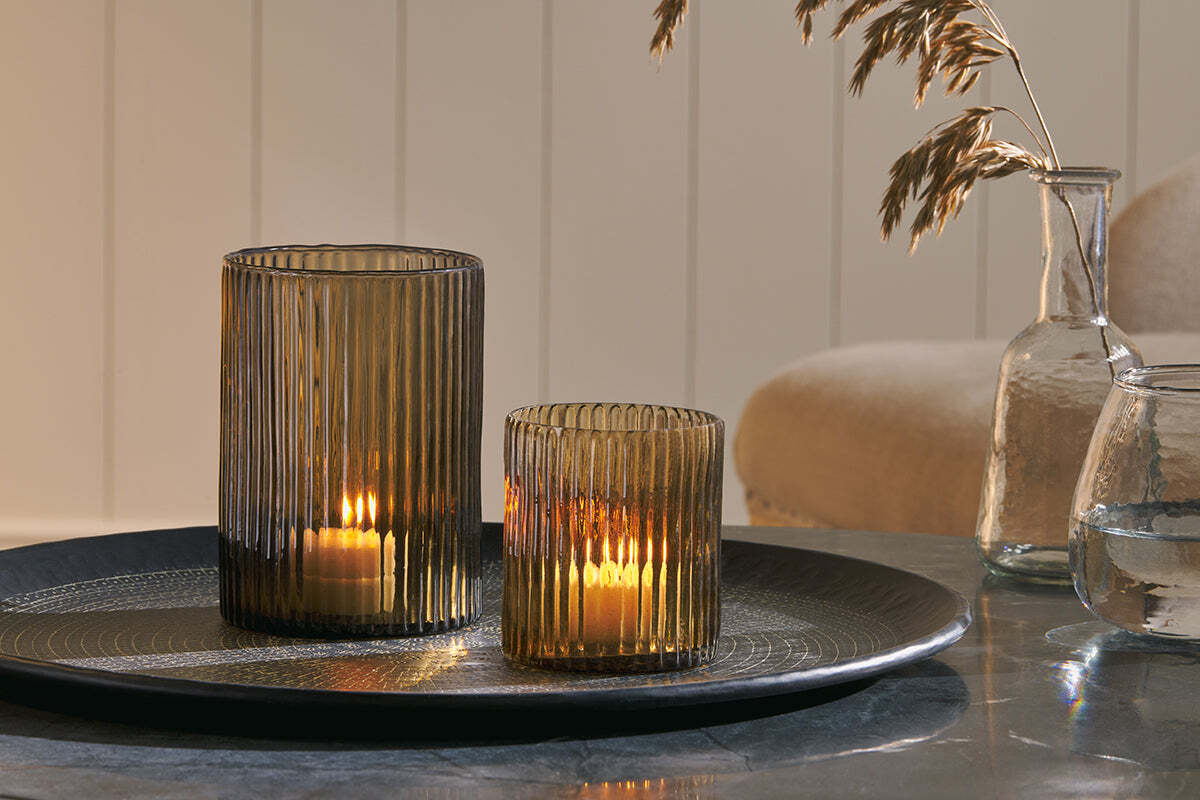
Malana Recycled Glass Candle Holder
adds quiet structure and warmth while keeping the room balanced.
What tends to hold up with windowsill styling
Most approaches that last in real homes make use of uncomplicated materials and keep the routines flexible. Shelves made from unfinished wood, matte ceramics, and jute or linen keep their good looks even as styles shift, since their surfaces age gently and handle sun or steam well. Decorators regularly suggest matte finishes for ledges near windows, as glossy ones catch glare and highlight dust more easily.
A clear pattern across reviews: groupings grounded on trays or cloths always outshine spread-out displays. Not only do they look neater, but cleaning is much easier, and nothing gets lost or knocked over in a rush. Palettes that stay in one range—sand, clay, pale green, soft white—hold up even when trends drift elsewhere.
— Mara, Loom & Glow
Common questions
What looks good on a windowsill?
The best options for a windowsill are small pots of herbs, recycled glass vases, candles, and low ceramic bowls in earthy or neutral tones. These blend well with natural light and don’t block the view. Mixing two to three textures—linen, jute, glass—keeps the display simple and calm.
How do you decorate a window sill?
The most effective way to decorate a window sill is by starting with one main object and grouping a few natural pieces around it, using odd numbers for balance. Keep colors similar and leave space for opening windows and cleaning. A tray or folded cloth brings loose items together neatly.
What can you put on a window sill?
You can put potted plants, a candle holder, small ceramics, or a collection of glass bottles on a window sill. Objects should be easy to move, light enough for cleaning, and low enough not to interrupt curtains. Using natural or organic home decor feels warm and uncluttered.
What is the 3-5-7 rule of decorating?
The 3-5-7 rule of decorating means arranging objects in odd-numbered groups—preferably three, five, or seven—since odd numbers are more pleasing to the eye. This rule helps avoid stiff, formal rows. On a windowsill, grouping in threes creates visual flow and balance without crowding the ledge.
Explore more calm combinations inside our Shop The Look .
Shop the Look
Small, considered objects that sit naturally on a narrow ledge and catch the light.
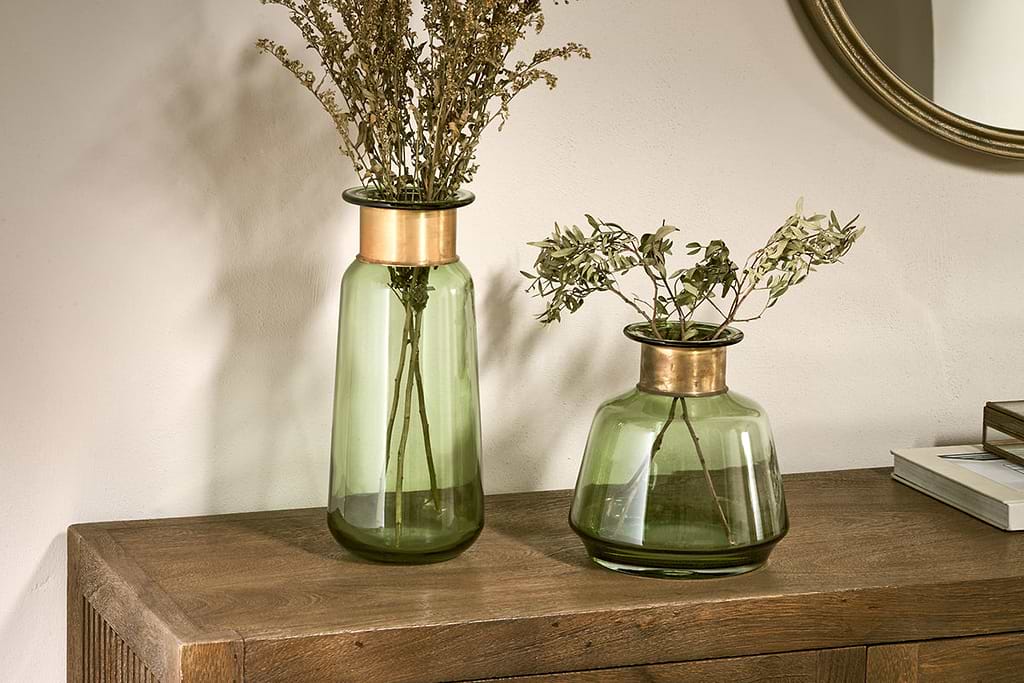
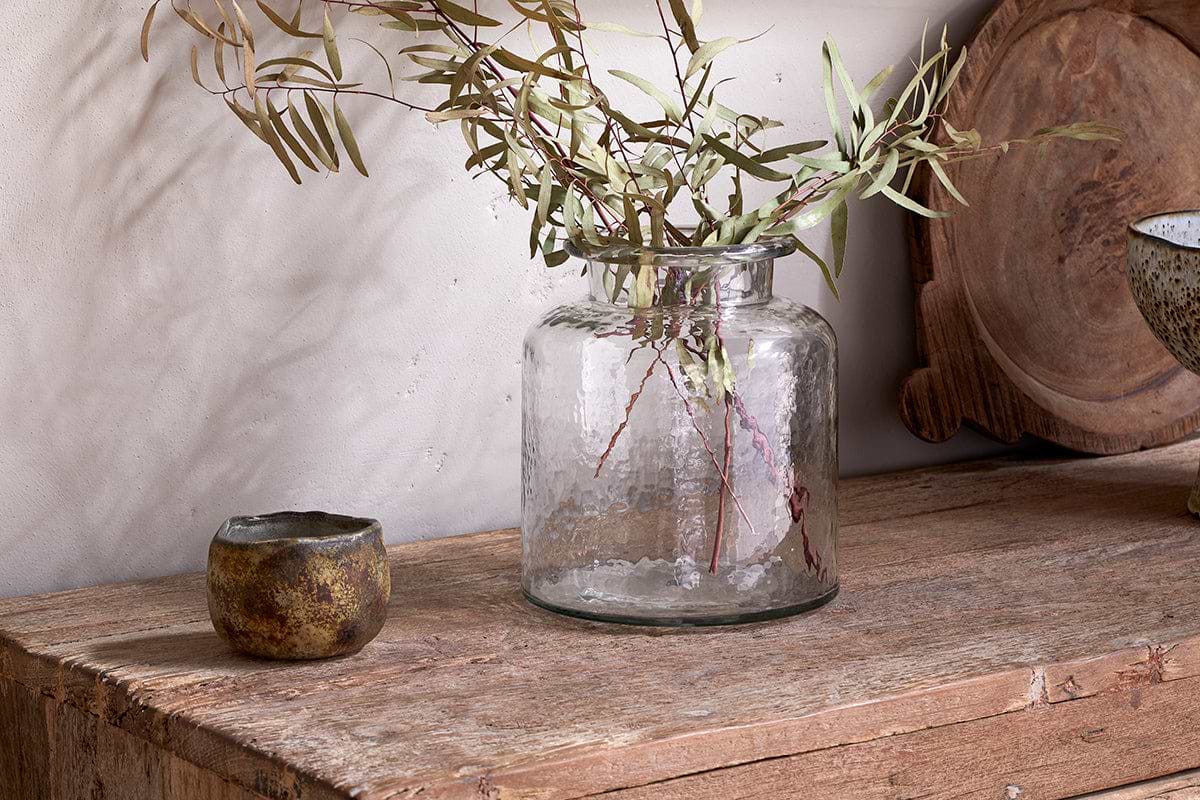
Akra Recycled Glass Vase
Clear cylindrical glass — pairs with stems or sits empty as a quiet accent.
View at Nkuku →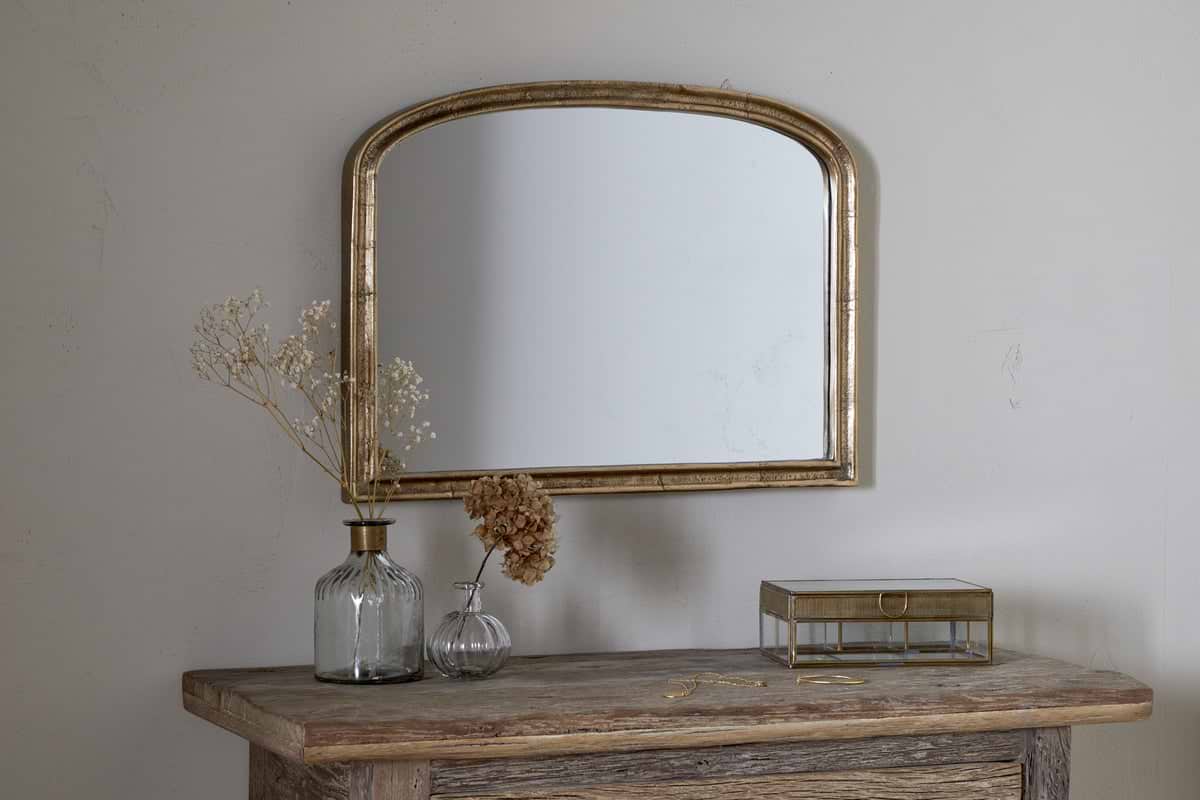
Some links above are affiliate links. If you buy through them we may earn a small commission at no extra cost to you. We only suggest pieces we think fit a calm, lived-in home.
Free guide
The Calm Leaf
12 quiet ways to bring dried botanicals, stems, and natural textures into calm spaces.