

Low light, shared walls, and closet doors that crowd the layout, these are a few reasons small bedrooms often feel crowded before you even add curtains. Dark grey curtains sometimes seem risky here; the wrong shade or weight could make a tight room feel even closer or shut out the morning light that most small bedrooms need.
Today, the goal is different. The right dark curtain won’t add bulk or shadow. Instead, you’ll soften sunlight that’s too harsh, make the most of your space, and remove the heavy look so common with thick or overly lined drapes. This works especially well in small apartments with low light because the colour can block glare without swallowing what little daylight you have.
The short version: Dark grey curtains are the simplest way to cut harsh light in a small bedroom without making the space look heavy or closed-in. Choosing fabric, texture, and the right header keeps the colour feeling calm, so your bedroom feels quieter without losing softness or light.
Key takeaways
- Dark grey curtains block harsh daylight in small rooms without adding extra visual bulk to the walls.
- A linen or dimout fabric in charcoal softens glare better than thick blackout velvet in a small bedroom.
- Eyelet headers leave the curtain fall looking tidy, compared to heavier pinch pleats that bunch up.
- Choosing a curtain around two times the window width is a common rule, keeping folds light and avoiding clutter.
- Accent textiles and pale walls offset the visual weight of darker drapes and avoid a boxed-in look.

Why dark grey works in a small bedroom
Dark grey curtains work in a small bedroom because they soften harsh light without making the room feel shut in. Deeper neutrals create boundaries but still blend with most bedding and paint.
Most small bedrooms are short on both space and natural light. Using a pale curtain can sometimes mean the room tips into feeling flimsy, while vibrant shades can crowd the walls. Neutral, darker tones like charcoal and slate grey have weight but don’t flare out into the room like black or navy.
A common situation in rentals: boxy, short-ceilinged bedrooms that already fight for daylight. A pair of dimout curtains in charcoal cut direct sunlight at noon but look softer than blackout panels, so you don’t lose the benefits of natural light.
Unlike bolder jewel tones, dark greys pair well with most accessories. This lets you rework furniture or bedding with fewer constraints, so the scheme stays flexible but never jumps out as mismatched. A dark curtain also hides dust or marks more discreetly than pale or patterned fabric.
A bedroom with dark neutral curtains feels anchored. Add a woven basket or wood side table and you spread that sense of calm throughout the room, rather than drawing focus to the window alone.
Where this works best
Dark grey curtains work best in bedrooms where bright daylight causes glare or where lighter curtains feel insubstantial. Rooms with street-facing windows or awkward layouts especially benefit.
In a flat with thin walls and a window facing the pavement, outside lights and uneven sun can pull you out of sleep. Here, heavier neutrals like dark grey absorb stray beams without making the wall feel like a total block. In low-light rooms, this shade works because it looks solid but doesn’t crowd a bedside lamp or pale painted wall.
For guest bedrooms or shared rooms, you often have little control over the main colours. Grey sits between the bright end of minimal and the comfort of a heavier scheme, blends with anything, hides creases, and works if you need to swap out bedding seasonally.
Avoid pairing dark grey curtains with walls or bedding that share almost the same dark tone. This can flatten the whole look, leaving the eye with nowhere to rest. Instead, better to mix with soft whites, clay, or oatmeal colours so the curtains anchor, not overwhelm.
Bedrooms with low ceilings gain most from this setup, a darker curtain draws the eye vertically but only if the rod is set higher than the window, letting the drape break downward instead of bunching horizontally.
How do you choose the best fabric and weight?
Choose a medium-weight linen or cotton blend for dark grey curtains if you want light to filter quietly without sharp edges. Avoid heavyweight velvets unless you need a full blackout effect.
The right fabric decides whether a curtain looks soft or heavy in a small bedroom. Linen and cotton blends are common because they let in a little light but help you avoid glare, too sheer and the point of adding a deeper colour disappears. Velvet curtains, while popular for coziness, sometimes feel overwhelming in tight spaces, especially when paired with other upholstered or plush furniture.
Product options are broad. Dunelm offers 178 pairs of curtains and 162 grey eyelet curtain styles, many in medium-weight blends. A linen or voile curtain reads lighter even with a deep charcoal tone, softening late-afternoon sun without plunging the room into shadow.
Compared to synthetic blackout or shiny faux silk, natural textures diffuse sunlight and hide dust better. A velvet curtain works if your bedroom faces direct morning light and you prefer total darkness, but for most, a dimout-style fabric gives enough control without overpowering.
In rental-friendly bedrooms, or if you use your room for work during the day, look for light-diffusing fabrics that hang cleanly but don’t block too much sun. This lets you control privacy and keep the room from feeling boxed in.
What’s the difference between eyelet, pencil pleat, and pinch pleat curtains?
Eyelet, pencil pleat, and pinch pleat are header styles that change how curtains hang and fold. Eyelet is easiest for clean, modern drops; pinch pleat forms deeper folds.
Most ready made dark grey curtains come in a few header types. Grey curtain product types such as eyelet and pencil pleat suit different setups. Eyelet rings slide directly onto a pole, producing even, wide waves. This suits modern, smaller bedrooms where less bunch means less clutter at the window. Pencil pleat tape gathers the curtain into small folds, while pinch pleat is stitched for more formal, deeper creases.
In a room with limited room between bed and window, eyelet curtains are practical, they pull open easily and tuck to the edges out of sight. Unlike thick pinch pleats or classic tab tops, which can eat up wall space, eyelets leave more light and visual openness.
Choose pencil pleat if you want to adjust fullness or hang on tracks instead of poles, better for bay windows or if you want a traditional look. Pinch pleat adds depth but can look bulky over a small sill. A good rule: eyelet curtains work best when the room is modern and needs to feel as open as possible.
Here’s a quick comparison for bedrooms:
| Header Type | Look | Best For |
|---|---|---|
| Eyelet | Wide, smooth folds | Modern, small bedrooms |
| Pencil Pleat | Soft, gathered folds | Traditional, or track hanging |
| Pinch Pleat | Structured deep folds | Formal, spacious rooms |

Styling and placement
To avoid bulk or clutter, hang dark grey curtains so they break just above or below the floor and sit wider than the window frame. This keeps sightlines clean and light balanced.
Placement shifts the mood more than most realise. Mount your rod higher than the top of the window to draw eyes upward, especially effective in bedrooms with low ceilings. Let the curtain panels extend at least a hand’s width beyond the window edges so, when open, they don’t block daylight.
Against pale walls, the dark fabric frames the view cleanly, pulling the wall out and making the room feel a touch larger. Layering a single oatmeal throw or pale herringbone blanket at the foot of the bed can soften the line between curtain and bed, helpful for calming contrast.
Compared to pooling floor-length curtains, a break right at the floor collects less dust and avoids the weight that gathering fabric brings. One neutral accent, like a warm minimalist lamp or brass frame, on the opposite wall offsets the darkness and repeats a grounded tone without heaviness.
Quick calm checklist:
- Stick to linen, cotton, or subtle velvet for muted texture.
- Keep curtain panels wider than the frame, but not so full they crowd each other.
- Limit accent colours, one or two at most, soft not stark.
- Balance with a single light wood or brass piece across the room.
- Choose a rod finish (matte black or brushed brass) that disappears, not demands attention.
Let curtains open fully during the day to prevent blocking precious daylight, especially if the room feels dark on cloudy afternoons.
How should you measure for dark grey curtains?
For small windows, measure from a few inches above the frame to just grazing the floor. Curtains should cover the width generously to avoid short, pinched folds.
Measuring for the right curtain size changes everything. If the panel is too short, your eye stops mid-wall and the room can feel chopped open. Too wide and folds become bulky, eating up space. As a normal rule, curtain width should be roughly double the window width for a good gather.
Most made to measure and ready made options, like those found in specific grey shades such as Chilham Whisper Grey or Clarendon Serene Grey, let you pick both drop and width. For a small bedroom, longer is usually better than shorter, the break at the floor gives a neater finish and hides radiator pipes or scuffed skirting.
Unlike mini blinds or short net curtains, full-length drapes add a sense of completion, especially when hung high and wide. This helps turn the window into a feature rather than a missing patch in the colour scheme. For door panels in a studio, let the fabric brush just above the floor so door clearance stays effortless.
If unsure, err on the longer side for drop, and double the window width for panels. Most curtain makers write this guideline in their specs, worth checking for small, awkward windows.
How to care for and maintain dark fabrics
Caring for dark grey curtains means shaking out dust regularly and washing gently to avoid fading or streaks. Drapes hung away from direct sun tend to keep colour best.
Dark fabrics can show dust and water marks more than mid-tones. Lint and stray fibres appear faster on charcoal or slate. Shake curtains out weekly or run a small lint roller down the surface, especially if pets or central heating are issues. Spot clean small stains instead of heavy washing, as repeated hot washes may dull the finish.
To keep colour even, avoid strong chemical detergents or hot water cycles, these are the main causes for visible fading or uneven patches. Linings help; most grey curtains include dimout or blackout backing that shields the front from UV and keeps texture more stable.
Unlike lighter shades, dark curtains rarely need whitening; instead, use cold water and gentle detergent, or let them air outside on a cloudy day. Avoid drying in direct sun, as even high-quality charcoal or faux silk can streak along the folds and edges.
For velvet curtains, a soft brush keeps the pile standing upright, while linen should always come off the rod before washing to keep the grain of the weave smooth and relaxed.
There’s usually a moment, right after you hang a dark curtain and step back, when the room feels heavier than you expected. Maybe the panels bunch at the ends, or the colour pulls the eye too much away from the rest of the space. If you’ve chosen a heavy fabric or let the curtain sit too close to the window frame, you’ll notice the room grows dimmer and sleepier, even during the day.
The practical shift is this: use texture and proportion to control how much of the curtain the eye takes in at once. Let one piece anchor the window, not the wall, spread the grey tone, but don’t let it take over. Add a brass frame or woven stool on the other side of the room to repeat the shade gently. Keep the panel breaks clean at the floor, not puddling.
It’s easy to trip up by picking a fabric or style that collects in heavy bunches, or goes too shiny under artificial light. Most people stick with the first ready made panel they find, then regret it when the room starts feeling smaller, messier, or darker than before. The difference comes when texture, width, and height are treated as separate decisions, not just colour swaps.
Fix these issues, and the space clears: there’s less clutter, the window sits comfortably on the wall, and the bedroom feels lighter even with a dark accent. Reading a book or settling down becomes easier; light softens but the pattern of the day stays the same.
Save this idea for later.

What tends to hold up with dark curtains in small rooms
Most reviewers, designers, and renters notice that matte or textured finishes, like linen or brushed cotton, age far better than shiny synthetics or heavy velvet, especially in sunlit bedrooms. The tone of dark grey never goes sharp or cold if there’s one contrasting pale piece elsewhere, a tip decorators often repeat. Patterns on curtains rarely suit smaller spaces; the simplest solutions have always been solid panels with subtle grain or slub.
The best setups I’ve seen keep the curtain panel break right above the floor and away from the wall by just enough to keep the folds moving. It’s rarely about adding, but subtracting until what’s left feels quiet. Sometimes what looks bold at first becomes a background for the room’s day-to-day calm.
, Mara, Loom & Glow
Common questions
What colours work well with dark grey curtains?
Soft whites, pale sands, ochre, blush, and muted greens all work with dark grey curtains in a bedroom. Lighter wall and rug choices lighten the mood and keep grey from feeling too dense. A single wood or brass accent lifts the overall look without fighting the calm of the neutral tone.
Should curtains be lighter or darker than the wall colour?
Curtains can be either lighter or darker than the wall, but in a small room, darker curtains on lighter walls usually feel calmer and more polished. Pale curtains on similar pale walls may read unfinished, while too-close darks can make a room feel boxed in. Keep some contrast for the easiest result.
What are the current trends for grey curtains?
The main trends for grey curtains today lean toward textured, matte fabrics like washed linen or herringbone, and hardware that’s slim or minimal. Eyelet headers and soft pleats replace heavy, formal folds. Layering dimout or blackout linings for added control is also popular, according to recent retailer releases.
Are grey curtains a good choice for a bedroom?
Grey curtains are a strong choice for bedrooms because they control light without taking over the space visually. Soft greys bring quiet to busy patterns on bedding or artwork, while darker shades block early sunlight or street glare. They’re versatile and work with most room styles and constraints.
Explore more calm combinations inside our Shop The Look .
Shop the Look
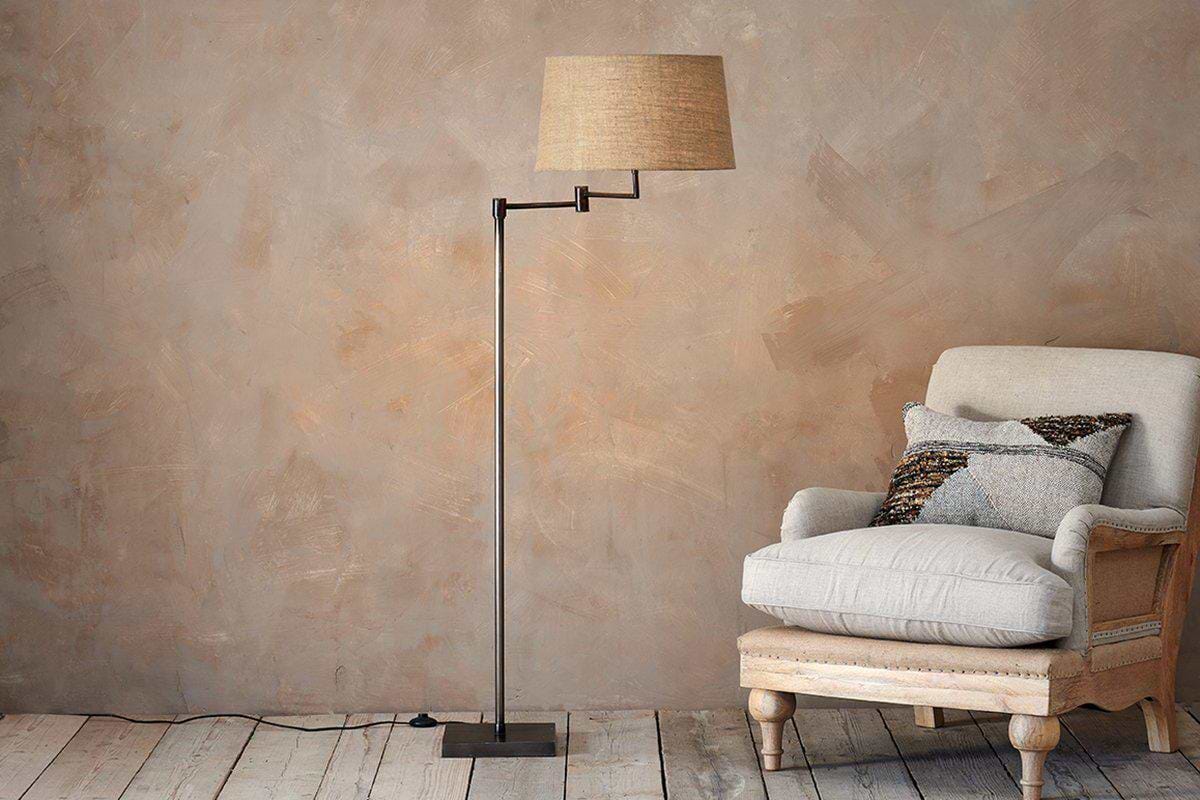
Soft lamplight and natural linen balance the calm weight of charcoal.

Puli Linen Cushion
Recycled linen in natural, pairs with woven textures and aged wood.
View at Nkuku →Some links above are affiliate links. If you buy through them we may earn a small commission at no extra cost to you. We only suggest pieces we think fit a calm, lived-in home.
Free guide
The Calm Shelf
12 styling ideas to help you compose calm, balanced shelves in natural texture homes.