

Books spill across small tables, cardboard boxes stacked in corners. The room you want, quiet, shadowed, full of old books and slow afternoons, never feels quite right. You buy dark academia candles, but most smell sugary or sharp, too much like a boutique at the mall instead of a moody library. The promise on the label fades as soon as you light the wick: instead of a gentle, lived-in depth, there’s a layer of noise you can’t name.
There are ways to fix this. The right candle, grounded, not sweet, brings the atmosphere you want. Today, you’ll see what actually makes a candle fit a scholarly room, which scents and materials work, and how to make your shelves or reading nook feel like a place to stay. This works especially well for windowless studies when lighting is low because deep, resinous notes settle in and don’t feel lost.
The short version: The best dark academia candles use wood, leather, and resin notes, with muted visuals, to create a scholarly calm that lasts all day. Less sugar, more subtlety; you simply swap cloying fragrance for grounded depth and your reading space changes at once.
Key takeaways
- Dark academia candles with soy wax and muted scents avoid clashing with books or wood furniture.
- The top scent families, leather, parchment, rain, and resin, signal a scholarly mood, not a cafe aroma.
- One strong candle often works better than many weaker, sweet-smelling candles in a small room.
- A moody palette, brown glass, paper labels, rough ceramic, feels less busy than a rainbow of jars.
- Most reviewers agree that a single resin or leather candle can anchor a reading corner without feeling heavy.

What makes a dark academia candle different?
A dark academia candle usually mixes leather, paper, smoke or resin scents and forgoes anything sugary or bright, giving a dense, thoughtful weight to a room.
Most scented candles promise calm, but end up filling living rooms with dessert-like vanilla or perfumed florals that clash with old books. A dark academia candle breaks from this: it draws from scholarly references, dusty parchment, polished wood, old leather, ink. According to Instagram profiles devoted to dark academia candles, the most-loved blends avoid anything too fruity or candy-like.
If your bookshelf is stacked with hardbacks and vintage finds, a standard candle brings out an odd, chemical sweetness. Instead, a mix of frankincense, smoked tea, or cedar balances with the natural musk of books and furniture. Compared to guest bathroom candles, these are designed for long hours spent reading or writing, not just covering up odours.
Full daylight changes how a room feels. A lit candle in late afternoon, in a dim study, gives off slow, even notes that let you focus. One subtle candle does more than three mismatched ones burning at once.
Which scent families feel scholarly and moody?
Leather, parchment, resin, damp stone, and tea are the core scent groups that make a room feel studious and grounded, rather than light or sweet.
A reading nook with old wood needs a candle that settles in quietly. The best dark academia candles layer deeper notes, frankincense, amber, a little moss or tobacco, rather than crowding the air with vanilla or orange blossom. Scent families most often described as “scholarly” include those that match a real library: leather-bound books, paper, soft smoke.
A bright citrus or sugar note reads modern or generic. Instead, one study-friendly candle lets subtle resin or tea hang in the room. The effect is slower, giving a sense of time passing that fits a stack of dense novels or a study session with no hurry.
Leather and amber last longer in low light, while tea and tobacco match with deep-stained wood or a brown glass vase. A room with dry air and old books holds these heavier scents better than something sharp and floral.
How do you avoid sweet or common candle smells?
The simplest way is to read the first three notes on the label, skip any that mention “sugar”, “berry” or “cotton candy”, and find small batch blends with soy wax.
In a small apartment, sweet bakery candles often settle on furniture and feel stuck. A dark academia candle built with soy wax and grounded fragrance notes won’t compete in a closed space. Most mass-market candles list “caramel”, “cupcake” or “jasmine” as main scents, instead, look for anything that says “library”, “tobacco”, “oak”, or “petrichor.”
Avoid teal glass or bright boxes. Dark jars, unbleached labels, even a matte black tin pull things together. The big shift happens when you buy from makers who describe the actual scent story, sometimes referencing novels or scholars, like Donna Tartt and The Secret History.
Unlike mass-produced candles, small-batch soy candles rarely give off a sharp, overpowering smoke or an artificial note that lingers after the flame is out. Placing just one soy wax candle in a draft-free spot can clear the air and support long hours of quiet work.
Where this works best
A moody, scholarly candle works best in a study, reading nook, or quiet living corner where old books and wood set the visual theme.
Rooms with shadow, few windows, or rows of shelves, like hallway libraries, bedrooms set up for study, or living rooms shaped by deep sofas and brown rugs, benefit most from these grounded scents. If you’re renting or can’t repaint, a single candle often does more than any wall change. Sparse lighting, especially from desk lamps or shaded sconces, makes the scent linger near eye level.
On a desk tucked near a window, a dark academia candle can create a sense of place, anchoring a stack of books or an old mug within arm’s reach. In a corner of a shared living room, one candle can carve out a private atmosphere without making the whole area feel heavy.
Avoid mixing in bright, clean-smelling candles in the same area. Trying to fix a “flat” feeling room by layering sweet or zesty jars rarely works, especially in spaces with heavy wood or dark textiles. If you stick to just one deep note, the room reads grown up and focused.

Styling and placement
Styling a dark academia candle works best when you place it alone on a shelf or pair it with old books, a ceramic mug, or a matte tray.
A single candle near the side of a shelf lets the label and glass catch soft light, setting off the objects around it. On a desk or reading table, a low cluster, one candle, a stack of hardbacks, maybe an old cup, avoids crowding. The weight of brown glass or stoneware keeps the setting from tipping toward “decorative for its own sake.”
Most rooms look cleaner with one strong focal point than many small candles scattered around. Balance matters: pairing a sharp black candle with pale wood jars breaks the flow, where grouping one dark, rough-textured container with matching items calms the shelf.
For a small room or a shared apartment, use a tray or plate under the candle; this marks it as purposeful, not just left out. Compared to a rainbow of mini candles, the single anchored arrangement reads much more intentional and peaceful.
Quick calm checklist:
- Pick dark glass, clay, or matte black as the main container material.
- Leave clear breathing space, don’t crowd more than two objects per shelf area.
- Keep the palette to browns, blacks, paper, off white, or deep greens only.
- Balance one candle with books, not decorative jars.
- Center the arrangement on a tray, plate, or cloth square when on a table.
What container, label and material build the look?
A dark academia candle in a brown glass jar or rough ceramic with a plain paper label fits best in rooms with wood and paper textures.
The container matters as much as the scent. Brown apothecary jars, black tins, or unglazed ceramic feel grown up. Paper labels with serif fonts and minimal branding read quiet, avoiding the clutter that comes from bold colors or gold foil. Candles poured in small batches, especially with soy wax, burn more cleanly and avoid that slightly toxic smell that lingers after some mass brands, as noted by The Real Reason Your Reading Nook Smells Toxic.
On an actual shelf, a candle in brown glass blends with book spines, especially if you’re stocking hardbacks or weathered paperbacks. A white candle with a gold lid pulls the eye, while a deep jar nearly disappears, letting the label do the work. For rooms with lots of thrifted furniture, rough containers read like they belong, while shiny, mass-produced ones fall out of place.
Most reviewers agree: glass, soy, and paper last longer in low-light rooms because they don’t reflect glare or clash with matte surfaces. Placing a candle with a heavy, plain label alongside stacked novels or a dark bowl repeats the same calm visual rhythm as linen throws or simple ceramic mugs.
Why does one candle change a whole room?
A single, moody candle shifts the atmosphere by anchoring the senses, scent, light, and texture, so the room feels slower and easier to settle into.
A desk, even with modern clutter, feels more settled once deep, resinous scent lingers near where you read or work. The dim flicker, paired with non-sweet fragrance, slows you down. Unlike brighter, cheerful candles meant for kitchens, a scholarly candle fits quiet routines and lets visual distractions fade.
One clear focal point, be it a leather-scented candle atop a stack of books, or an amber jar flanked by a clay mug, pulls a scattered room back together. The result is more than mood: air cleansed of synthetic vanilla, with a visual anchor to return to. On a rainy evening, the line between furniture and candle softens, grounding the whole space.
Placing candles with the right scent also helps hide musty odours without covering them in sugar. If you add one resin or paper note, it neutralises stale book smell while leaving a sense of depth. See bookshelf styling to bring this detail into an actual shelf arrangement.
The decision often lands at the tiniest detail, the label, the wax, the colour of the jar. That’s usually when a homeowner steps back, noticing the room still feels off: the scent sits on top of the air, or the look is too busy. If the label fights the books, or the candle sits lost among clutter, the mood never settles.
A clear shift comes the moment you decide to treat the candle as a focal point, not a filler. One deep scent, one quiet spot, and the rest of the shelf or table kept pared back, these are the moves that build a true scholarly calm.
Many people collect candles that sound interesting but place them without attention, piling too many sweet scents in a single room. The room turns busy and scattered; scent notes cancel each other out and the space feels less restful. Leaving only the strongest, most grounded candle in place gives the eye and nose a place to settle.
Once you clear away extras, the improvement is obvious: the fragrance lingers, the corner reads finished, and the room takes on a lived-in calm.
Save this idea for later.
What tends to hold up with scholarly candle choices
After reviewing many moody rooms and dozens of dark academia candles, the same pattern shows up: Deep, resinous scents last through open windows, shared apartments, and the slow wear of everyday routines. Matte containers, especially brown glass and unglazed ceramic, blend in while still catching soft light, and hardly ever pull the eye away from shelves or reading tables.
Decorators and reviewers often point out that soy wax options work best for anyone stacking books or mixing in vintage finds, as they burn more cleanly and leave fewer lingering toxic traces than paraffin blends. Small batch makers mentioned on Etsy consistently reach for apothecary jars and aged-paper labels, because these avoid reading as trendy or fleeting.
, Mara, Loom & Glow
Common questions
What makes a dark academia candle different?
A dark academia candle usually mixes leather, paper, smoke or resin scents and forgoes anything sugary or bright, giving a dense, thoughtful weight to a room. Most scented candles promise calm, but end up filling living rooms with dessert-like vanilla or perfumed florals that clash with old books.
Which scent families feel scholarly and moody?
Leather, parchment, resin, damp stone, and tea are the core scent groups that make a room feel studious and grounded, rather than light or sweet. A reading nook with old wood needs a candle that settles in quietly. The best dark academia candles layer deeper notes-frankincense, amber, a little moss or tobacco-rather than crowding the air with vanilla or orange blossom.
How do you avoid sweet or common candle smells?
The simplest way is to read the first three notes on the label, skip any that mention “sugar”, “berry” or “cotton candy”, and find small batch blends with soy wax. In a small apartment, sweet bakery candles often settle on furniture and feel stuck. A dark academia candle built with soy wax and grounded fragrance notes won’t compete in a closed space.
What container, label and material build the look?
A dark academia candle in a brown glass jar or rough ceramic with a plain paper label fits best in rooms with wood and paper textures. The container matters as much as the scent. Brown apothecary jars, black tins, or unglazed ceramic feel grown up.
Explore more calm combinations inside our Shop The Look .
Shop the Look
A few Nkuku pieces that suit a quiet, moody room.
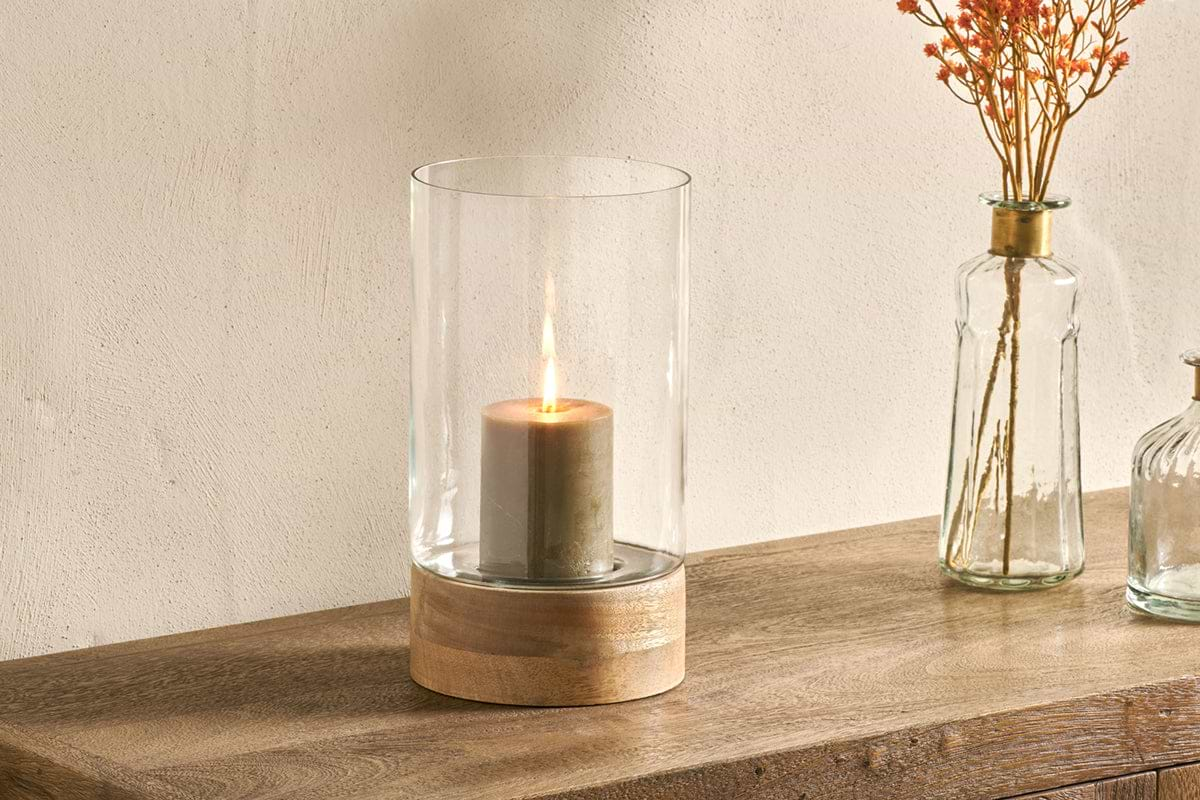
Idha Hurricane Lantern
Straight-sided glass, for candles indoors or sheltered patios.
View at Nkuku →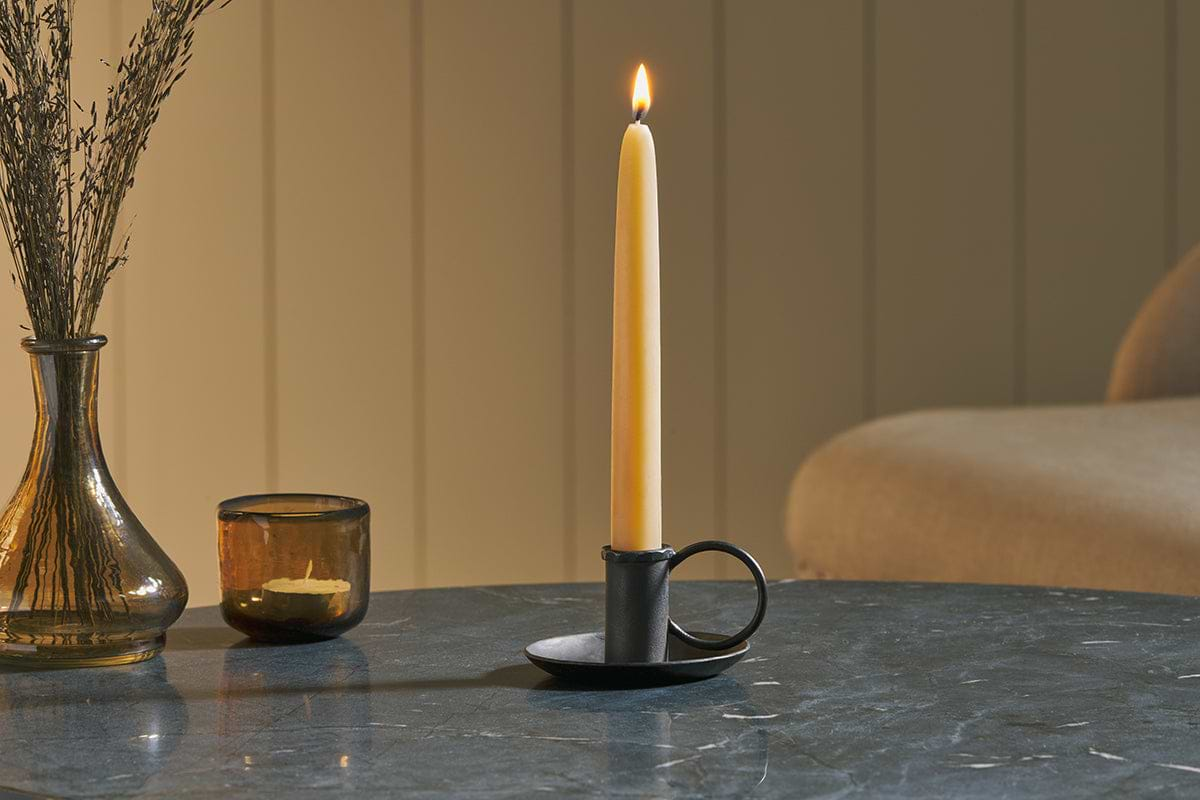
Amri Iron Candlestick
Slender iron with quiet presence, works alone or in clusters of three.
View at Nkuku →Some links above are affiliate links. If you buy through them we may earn a small commission at no extra cost to you. We only suggest pieces we think fit a calm, lived-in home.
Free guide
The Calm Shelf
12 styling ideas to help you compose calm, balanced shelves in natural texture homes.