

Shelves in a bedroom promise storage and display, but deciding what to put on shelves in bedroom settings often leads to clutter, not calm. Many shelves end up stacked with spare books, impulse decor, or laundry piles, making restful rooms feel busy.
The right mix of objects and restraint changes this. Today, you’ll pare away distractions, give each shelf a clear purpose, and see how less can feel soothing. This works especially well in a small bedroom when storage is limited because open surfaces demand more clarity than closed cupboards.
The short version: The best answer to what to put on shelves in bedroom spaces is to limit each shelf to one practical item, one personal touch, and some empty space. A calm bedroom shelf serves the room, not the other way around, by focusing on function and restraint.
Key takeaways
- A bedroom shelf feels restful when most of its surface is empty space.
- Three objects per shelf, one practical, one personal, and one textural, keep visual noise down.
- Deep shelves often make clutter look worse and need extra editing, according to Pinterest researchers.
- Natural materials like wood, linen, and clay prevent shelves from appearing cold or flat.
- Unused accessories look heavy and out of place in quiet bedrooms.

Where this works best
Bedroom shelves work best when each shelf supports one daily need or warm detail, and most of the surface stays open.
Shelves in bedrooms range from floating wood ledges above a headboard to full built-in bookcases by a window. Smaller bedrooms or rentals with few closets often rely on shelves for both storage and decor, so choices matter more here than in a spacious living room.
Limiting what lives on these shelves makes the whole space quieter. For example, a single clay bowl on a wooden shelf holds loose jewelry and adds an earthy surface, without making the wall feel busy. Unlike packed display units, this approach keeps bedroom air calm and surfaces light.
Avoid filling bedroom shelves with random souvenirs, paperwork, or tech chargers, these rarely add to comfort and tend to draw attention for the wrong reasons. If too many items land in line of sight, sleep and focus both suffer.
Try this in a room with limited floor space or too few drawers. Leave most of each shelf open and add only what you use or want to see every day, like a quiet bedside lamp, a pottery vase, or a framed family photo. A small bedroom instantly feels less heavy when the shelves become less of a drop zone.
How do you prevent bedroom shelves from looking cluttered?
A bedroom shelf looks uncluttered when most of the surface is empty and objects are gathered in small, loose groups, not long lines.
Too many things spread evenly across a shelf create a line of visual noise, the eye doesn’t know where to land. Instead, group two to three items together and leave space on both sides, creating spots of interest rather than a stripe of objects.
For example, a wide floating shelf above a bed holding only a woven basket, a dried flower stem, and an empty corner looks quieter than a shelf with small items spaced all along its length. The difference is immediate: one pulls the gaze, the other bounces it around.
The cause is simple. Open areas give relief, while packed shelves keep drawing your attention, making rest harder. A bedroom is where most people want less stimulation, not more.
If your shelves already feel full, start by removing half the items and shifting what’s left into short, thoughtful groups. This helps even deep or built-in shelves serve as rest spots instead of visual to-do lists. To find more ideas on shelf grouping for bedrooms, visit the guide on bedroom floating shelves.
What should you avoid putting on bedroom shelves?
Items that show paper, screens, or tangled cords make shelves in bedrooms feel busier than they need to.
Objects with harsh colors, paperwork, loose tech chargers, or packaging all pull attention away from sleep or quiet time. A single paperback novel cover in red will feel much louder than a tan ceramic bowl, even if both are alone on the shelf.
Unlike the living room, where bright coffee table books and speakers feel social, bedrooms are best with soft shapes and low-contrast objects. A lacquered box might look stylish in a hallway, but in a sleep space, it feels too sharp.
The main problem is that these items act as reminders of chores, digital work, or unfinished business. If your eye keeps finding a to-do, you’re less likely to wind down.
Instead of crowding the shelf, choose a quiet item, a linen tray, a smooth wood dish, or a single photo, then take away old receipts, wallet overflow, or spare keys. For more bedroom storage options that stay calm, the small bedroom storage page has added ideas.
How to use materials to soften shelf decor
Natural materials like wood, clay, and linen soften shelf decor and help the bedroom feel less hard or cold.
Shelves made from pale, unfinished wood look softer and catch sunlight in a way painted MDF never does. When paired with a linen-wrapped box or a rough clay vase, the shelf gains texture and depth instead of feeling like a plastic organizer.
Choosing only smooth surfaces, glass, glossy paint, makes the whole arrangement feel artificial, and every fingerprint shows. Natural materials disguise dust and scratches, keeping a bedroom shelf feeling lived-in instead of precious or sterile.
Contrast comes into play clearly here. A wooden shelf with a single metal lamp looks colder than a wooden shelf with one clay bowl and a folded fabric accent. Add one textured item for every two smooth ones to prevent the display from looking flat.
If the walls in a master bedroom are cool white, try a shelf in pale oak with a single hand-thrown mug or a simple woven tray. The result is a softer finish that reads gentle at the start or end of any day.

Styling and placement
A shelf above eye level suits a larger object, while bedside shelves need just one or two compact, useful items with negative space around them.
The way you place items matters as much as which ones you pick. One framed print leaning against the wall instantly anchors a deep shelf, compared to layering several frames, which feels busy. Placing the heaviest item near the edge offers a stable look and keeps surfaces tidy.
Contrast shows up here: a bare shelf can feel stark, while too many baskets stacked on a built-in shelf make a small room close in. Instead, repeat one texture or color for a calm impression, such as two linen items spaced several feet apart, or use one dark and one pale object to draw just enough attention.
A shelf by the door rarely needs much: a catch-all bowl and a bud vase work better than a stack of books or shoes. In narrow spaces or rentals, a single floating shelf above the headboard is practical and keeps nightstand tops clearer.
Quick calm checklist:
- Use wood, linen, and clay for warm, natural texture.
- Keep a clear color palette, no more than two main hues for shelf items.
- Leaves at least half of each shelf empty or with visible space around items.
- Balance shapes: pair one round piece with one square or flat object.
- Place heaviest objects closest to side walls or the base of built-ins.
Adopt these ideas with a decorative wall shelf hung above a dresser. The shift from scattered accessories to a single, anchored bowl can make the wall itself feel softer.
What does the three-layer rule mean for bedroom shelves?
The three-layer rule for bedroom shelves means each shelf gets one useful item, one story item (photo, memento), and negative space.
Think of the shelf in layers. The first is functional: what gets used every day, like a book you’re reading or a bedside clock. The second is personal, a framed photograph, a tiny dish from a favorite trip. The third is visual, a gap or empty space to let the first two breathe.
Most shelves feel cluttered not from how many things are on them, but from how little air is left around objects. The rule is simple: a shelf that is two-thirds clear looks more restful than one packed with small trinkets, according to decor experts on Houzz.
Compare: a shelf with just a book, a clay bowl, and a clear spot feels focused, while a similar shelf with a dozen tiny photos, a candle, a pen pot, and a stack of change reads noisy and scattered.
For bedrooms with built-in shelves, this three-layer approach stops the space from feeling like a catch-all. Apply it in a child’s room too: a bedtime story, a small keepsake, and empty surface for tomorrow’s drawing supplies.
Why books are different in the bedroom
Books on bedroom shelves need stricter editing, as large spines and mixed covers pull focus more than other objects in a calm space.
In bedrooms, books often outgrow their space and turn restful corners into noisy ones, especially with deep shelves. Most books are bright, tall, and varied in color, demanding attention. Unlike a living room wall, a bedroom shelf rarely needs a row of reading options.
Instead, bring in only one or two titles you are actually reading or referencing. Store the rest elsewhere. Books can keep company to a low lamp or pottery cup, but only when their covers are soft-toned and not crammed tight.
If you have only floating wooden shelves, a horizontal stack of two books with pale covers, plus an empty space beside them, offers a grounded look. Compared to ten books upright, this reads lighter and less like a mini library.
The effect of a pared-back shelf is freeing when you enter the room at night, no unread piles or to-do reminders to catch your eye. To browse shelf-ready objects, try these wall shelf ideas for more pairing options.
What tends to hold up with styling bedroom shelves
Repeated advice from both designers and homeowners points to materials and restraint as what works, year in, year out. Matte finishes get recommended again and again for shelves near windows, because they don’t catch glare the way a glossy tray does. People also agree that two main colors, warm white and soft wood, keep shelf displays calm, even as styles change.
Staying with natural textures doesn’t mean giving up personality. Just one handmade bowl or a rough linen tray adds all the softness a narrow room needs. The pattern across real rooms is clear: surfaces kept half-clear, objects in small odd-numbered groups, and storage mixed with something gently personal last longer without looking forced.
, Mara, Loom & Glow
Common questions
What are some ideas for wall shelves in my bedroom?
The best ideas for bedroom wall shelves are to combine function and calm, like a single wood shelf above a bed with a framed print and a linen basket. One practical item, one soft accent, and open space reduce clutter. Warm colors and textured materials prevent shelves from feeling too stark.
What are some cool items to put on shelves?
The coolest items for bedroom shelves are handmade pottery, woven baskets, and framed family photos. These pieces have interest without adding clutter. A single natural element helps the shelf feel softer, while too many small gadgets or souvenirs look restless instead of inviting.
How to organise shelves in a bedroom?
To organise shelves in a bedroom, limit each shelf to one or two usable objects and leave the rest open as negative space. Group similar textures or colors together for a smooth flow. Edit out rarely-used items to keep surfaces quick to dust and calming to see each morning or night.
What to put in a small empty space in a bedroom?
The best items for a small empty spot in a bedroom are one soft material, like a cotton basket or fabric tray, and an object you use daily. Minimise layers. Extra pockets of emptiness can be left open, or hold only a single plant to lift the feeling of the whole wall.
Explore more calm combinations inside our Shop The Look .
Shop the Look
A couple of Nkuku pieces that sit quietly on a bedroom shelf.
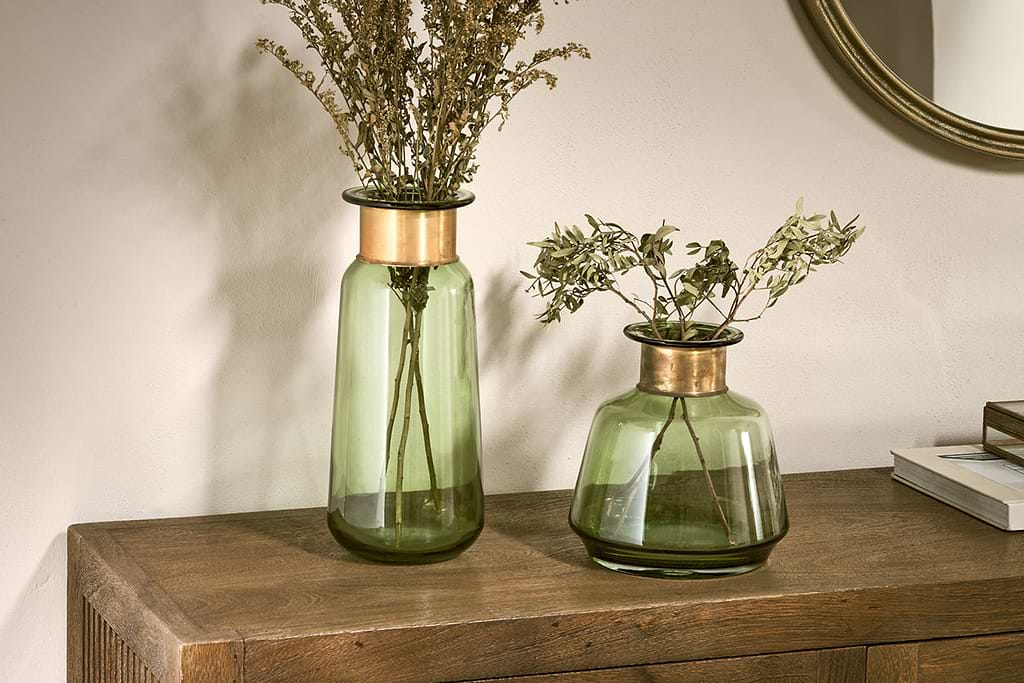
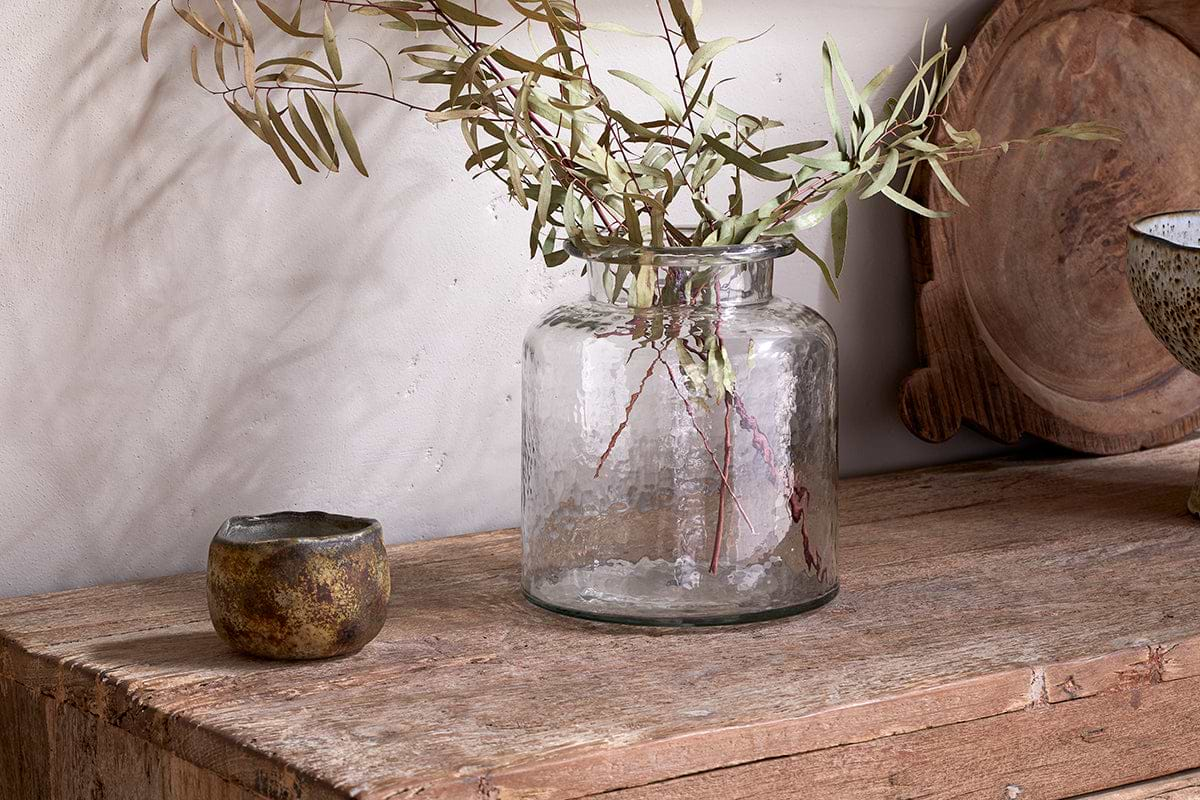
Akra Recycled Glass Vase
Clear cylindrical glass, pairs with stems or sits empty as a quiet accent.
View at Nkuku →Some links above are affiliate links. If you buy through them we may earn a small commission at no extra cost to you. We only suggest pieces we think fit a calm, lived-in home.
Free guide
The Calm Shelf
12 styling ideas to help you compose calm, balanced shelves in natural texture homes.