

Most hallway ideas focus on the big, bright entryway, but in many small apartments and terraced homes, the hallway is a cramped, narrow space where coats pile up and shoes get left. Natural light is rare, and a leftover bulb or radiator crowd the walls, making it feel more like a passage than a welcome. For renters, every fix has to be non-permanent and simple.
You can make a narrow hallway work for you by choosing lighter colours, adding a single small mirror, and cutting clutter to a minimum. This works especially well in a small flat when you have low ceilings or limited window light because each change helps the space look open, calm, and useful. Today you’ll see what to pare back, what to add, and what to leave out entirely for small front room ideas that feel finished from the first step inside.
The short version: The most effective hallway ideas for small homes pair one simple mirror with light wall colour and a clear floor, making the space feel wider, brighter, and less like a corridor. Even narrow entryways become more welcoming when you choose a single storage piece and stay simple with colours and textures.
Key takeaways
- A hallway works best when the floor is kept mostly clear and storage doesn’t block the walk-through space.
- Lighting and mirrors together add depth and brightness to any hallway, according to Easy Panels.
- Hooks placed along one wall reduce coat piles and free up floor space by the front door.
- Soft, pale colours help a narrow hallway feel less crowded than deep, saturated tones, especially in low light.
- Choosing one natural material, like oak or jute, is enough to add texture without making the space look busy.

Where this works best
A hallway makeover using these ideas works best in entry spaces that lack window light, have low ceilings, or serve as drop-zones for shoes and coats. Most people notice the improvement instantly.
Small narrow hallways are common in older terraced houses, city flats, and townhome extensions. They often have a radiator or meter box along one wall. Floor space is limited, so any fixture or storage quickly fills up the area. The same issues appear in many rental apartments, where tenants can’t make permanent changes.
For daily life, making one side open and uncluttered helps everyone move through without bumping bags, hurrying guests, or tripping on shoes. A runner can soften sound and signal the way in, while a set of hooks or a skinny rack handles everyday coats. A single narrow console or basket gives keys and hats a home without blocking the route into the front room.
Avoid adding too many features. Cramped hallways get smaller when both walls are lined with hooks and art or when a chunky bench sits opposite the front door. Placing a shoe rack right by the entrance can block people coming in and makes the space look even tighter. Keeping storage slim and one-sided works better.
What makes a hallway feel calm, not cold?
Natural finishes like oak, wool, or jute add warmth and softness to a hallway faster than plastic or metal. Pale wall colours stop the space from looking chilly or blank.
A narrow entry can look sparse if it’s all white paint and metal fixtures. By swapping synthetic shoe mats for a plain natural-fibre runner, or using woven baskets instead of plastic bins, the space feels softer underfoot and less clinical. A small wall hook rail in bare wood is easier on the eye than a row of shiny metal pegs.
The reason to use natural materials is practical: they catch light differently, and their texture distracts from flaws in old plaster or worn floors. Compared to smooth, cold surfaces, the grain of oak or roughness of jute catches shadows in a way that looks less harsh, especially in winter or low light.
A hallway that leans too much on plastic or gloss can feel colder than one with one or two natural textures. For example, a metal shelf on a painted wall looks flat, but swapping it for a pale wood one softens the look. Adding a wool runner helps dampen sound so footsteps don’t echo. Place a single small basket or tray near the door to collect letters or odds and ends; this instantly reads warmer than a stack of plastic trays.
How do you make a hallway look wider?
Pairing a frameless mirror with a light wall colour makes a hallway look wider and deeper, even in small homes. Both work together by reflecting light and extending sightlines.
In a narrow space, placing a mirror on the longest wall creates the effect of a second opening and bounces any window or lamp light back into the hallway. A mirror that runs vertical instead of wide works best when floor width is limited, as it draws the eye up rather than across. The mirror should always reflect something tidy, never a pile of coats or open shoe rack, so position it opposite blank wall or a small artwork.
Unlike a bare wall, a well-placed mirror actually doubles how much light appears, especially at dusk or in a hallway with no side window. Lighting and mirrors work as partners for this, with the lamp or pendant angled so the mirror bounces the glow along the corridor.
Instead of packing both walls with art or storage, keeping one blank and adding one slim mirror achieves the feeling of extra width without filling the space. Hang a mirror around eye level or slightly above a console if you use one. In very low light, adding a small lamp on a narrow table by the mirror boosts the effect further.
Styling and placement
A hallway looks calm and inviting when the largest item, a mirror, runner, or console, is placed away from the swing of the front door, and only one side is styled. Grouping objects instead of spreading them keeps sightlines open.
The heart of styling a small hallway is restraint: pick two or three functional touches that don’t block movement. If there is room for furniture, go for a leggy, open-base console table, not a full cabinet. On top, one clay or wooden bowl for keys and a single low vase of greenery give a lived-in look without covering the surface. Store everything else out of sight underneath or in a narrow basket.
Crowding smaller items along the length of the hallway (for example, a line of photo frames or five baskets) adds visual noise and breaks up the sense of openness. A bare shelf reads colder than one with just one woven basket, but overloading even that shelf starts to feel busy. Framing a radiator or awkward corner with a small artwork or textured piece helps draw the eye while hiding what can’t be moved.
Quick calm checklist:
- Use only one storage piece, basket or slim console, against a single wall.
- Keep the palette to light neutrals or one soft accent, avoiding high-contrast patterns.
- Leave floor space mostly open past the front door swing.
- Choose hooks or rails in natural wood or unpainted metal for a softer look.
- Lean artwork rather than hanging multiples; one small print beats an overcrowded gallery wall.
Group hooks at adult and child height if needed, always on the same wall as other storage. If the hallway opens straight into the front room, keep its palette or a single accent colour echoed as a link between spaces.

What’s the best lighting for a narrow entryway?
Wall lights or small table lamps offer softer lighting in a narrow hallway than a bright overhead bulb. Good hallway lighting reduces shadows and makes the entry feel less like a tunnel.
Many older hallways have just a central ceiling bulb, which creates harsh shadows on pale walls and makes the area feel shorter and colder, especially at night. Swapping to a warm-tone LED bulb, or adding a wall sconce with a fabric or glass shade, changes the mood. Soft light spreads out, cutting hard shadows beside radiators, shoe racks, or awkward corners.
An easy improvement is a plug-in table lamp, tucked onto a narrow console, using a linen shade for diffused glow. Compared to harsh white LEDs, a softer white or golden tone reads warmer. The height of the lamp should be below eye level so it doesn’t glare as you walk past.
Where there’s no surface for a lamp, wall lights that angle up and down can be mounted with adhesive pads, safe for renters, as a temporary fix. Pendant bulbs with woven or paper shades break up the harshness overhead. The main rule: avoid a single point of cold light. If you see shadows all along the skirting board, the lighting is too direct. Placing the lamp or sconce near the mirror spreads their effect even further.
Which colour choices help small hallways?
Soft pale colours like off-white, warm grey, or pale blue-green reflect more light in a small hallway and make it feel less boxy. Bright colours can crowd the space.
Hallways with little natural light often look even darker when painted in deep shades, even if those colours are in style. Farrow & Ball hallway ideas recommend keeping entryway colours lighter than the main rooms to give a stronger first impression and to make the space feel more open. One classic move is using a warmer white or soft biscuit tone for the walls, with a contrasting trim in pale grey or sage green.
In homes with old or uneven walls, a matt finish shows fewer scuffs and reflects less glare than gloss paints. Semi-sheen paints on the trim or a pale, neutral runner on the floor keep the look from reading flat. If you want to use a richer colour, keep it to the lower part of the walls or the door, and let the rest stay light.
Compared to all-white, a hallway in muted pastel or stony neutrals feels warmer, especially where light is limited. For those who like a more period-house look, consider pairing classic pale paint with a narrow patterned runner or a single framed print to add character, as suggested for Farrow & Ball inspired spaces.
How to use storage without making a hallway crowded
Slimline wall hooks and narrow benches offer storage for daily items in a hallway without choking the walk-through space. Low, open baskets handle loose shoes and bags discreetly.
Many people default to a small shoe rack or pile by the door, but these quickly take over the floor and make it hard to pass through. Using wall hooks instead, ideally spaced so each coat hangs flat, keeps everything off the ground and makes it simpler to sweep or mop. In homes with children, double rows near the door catch schoolbags lower down.
Unlike built-in shelving, freestanding slim benches or baskets are easy to move when more room is needed or for cleaning. According to Easy Panels, storage is most successful as a layer on top of a simple floor and wall, not as the main feature. A closed basket hides mess but doesn’t add bulk like a deep cupboard.
| Storage Type | Best For | Downside |
|---|---|---|
| Wall Hooks | Coats, scarves, bags | Shouldn’t overload, looks messy if crowded |
| Narrow Console | Keys, mail, small decor | Takes up floor space if too deep |
| Baskets | Shoes, gloves, loose items | Can spill over if not checked weekly |
Place baskets or benches against the wall opposite the door swing so you don’t block the entrance. If your hallway feeds straight into a living area, a storage piece in a matching wood or colour keeps the look cohesive, carrying the mood right into the front room or connected space without hard stops.
There’s a moment, often after hanging up two coats or parking muddy shoes, when you notice the hallway still looks cluttered or cold, even though everything “should” fit. The corridor never quite feels welcoming, and it’s tempting to fill it with more baskets or hooks until it looks busy. Instead, stepping back and picking just one anchor, a single wall mirror, a pale runner, or a row of wooden hooks, anchors the space and makes it feel simple.
Walking through then feels lighter, leaving space to breathe at the home’s entrance.
Save this idea for later.
What tends to hold up with styling small hallways
Across dozens of hallway refreshes and reader photos, it’s clear that small, natural details last, a wool runner or a wood tray wears better than plastic, and neutral paint makes scuffs less obvious. Matte finishes get recommended again and again for spaces with side light, since they mask glare and make wear and tear disappear more quickly.
Decorators and reviewers agree that hooks or a mirror on just one wall gives enough function without turning a hallway into storage. There’s always the temptation to over-accessorise, but fewer, well-placed pieces make a space hold up visually and in daily use, especially right by the front door.
, Mara, Loom & Glow
Common questions
How do I make my hallway look nice?
The best way to make your hallway look nice is to clear clutter, use one light wall colour, and choose simple natural textures. Adding a slim mirror and keeping just a few functional pieces visible makes the space feel larger. Limit colour changes and group storage along a single wall for balance.
What’s a good colour for a hallway?
A good colour for a hallway is a soft neutral, such as warm white, off-grey, or a pale sage, because these reflect light and make the space feel open. Farrow & Ball’s hallway advice includes layering small personal touches over lighter paints for warmth. Use deeper colours only for trim or detail, not the whole wall.
What are the trends for hallways in 2026?
The trends for hallways in 2026 are softer, natural textures, pared-back wall treatments, and more hidden storage. Warm LED lighting and woven pieces are returning, as are hand-finished neutrals. Many are using painted acoustic wall panels for sound and subtle style. Clean lines and unfussy materials stay central.
What’s on trend for hallways right now?
On trend for hallways right now are slim benches, pale runners, natural wood hooks, framed prints, and calm lighting close to the wall. Front rooms and hallways increasingly share neutral palettes and open storage. Clear floors and one mirror are preferred to maximize flow and keep homes feeling calm as you enter.
what makes a narrow hallway look bigger?
Light wall colour combined with a single small mirror makes a narrow hallway look wider and deeper by reflecting light and extending sightlines. Keeping the floor clear, choosing one natural material like oak or jute, and avoiding too many features on both walls all work together to open up the space, especially in low-light entryways.
Explore more calm combinations inside our Shop The Look .
Shop the Look
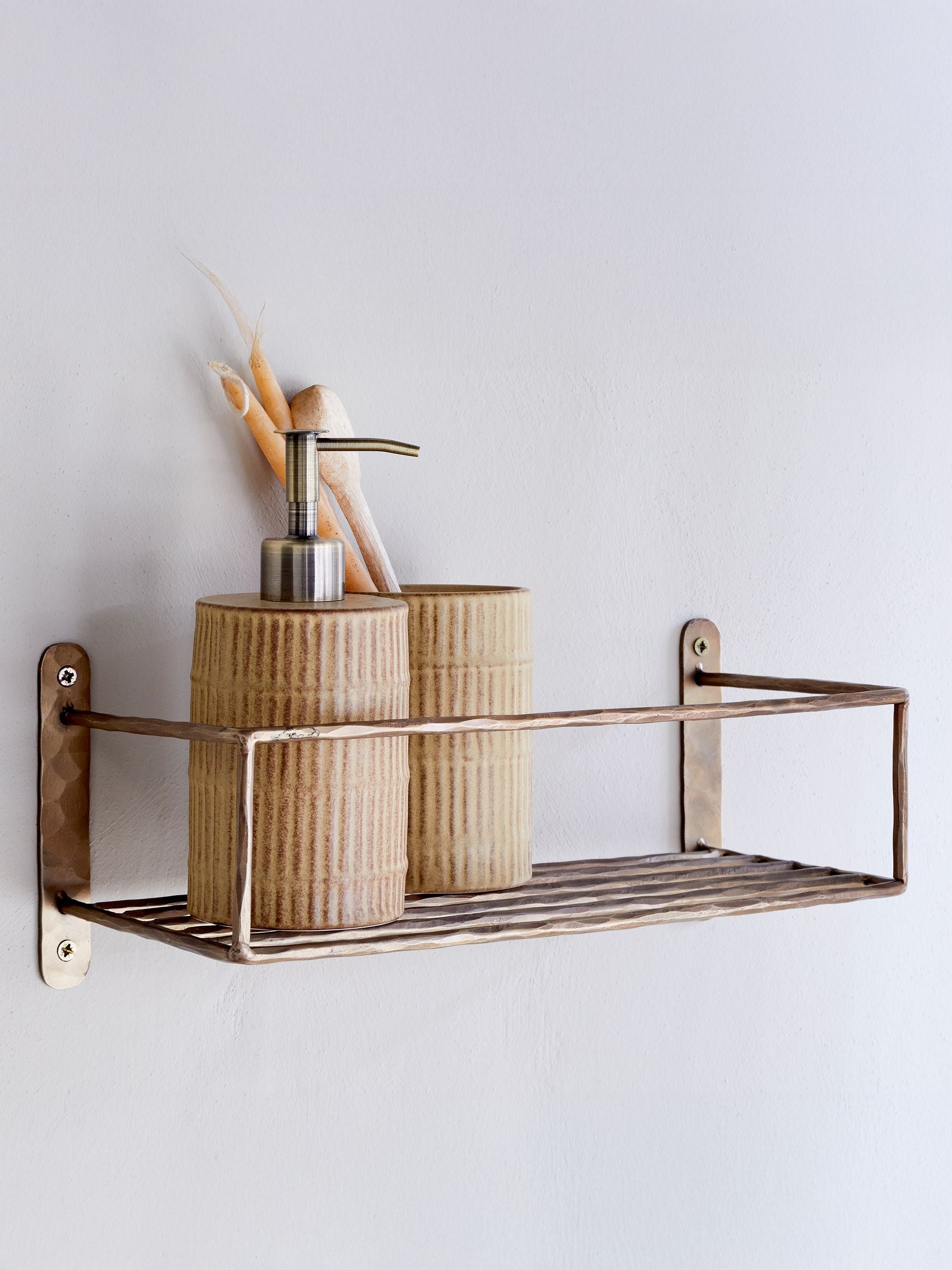
A console anchors a narrow hall, a small mirror catches light without crowding, and a wall shelf holds keys and quiet accents.
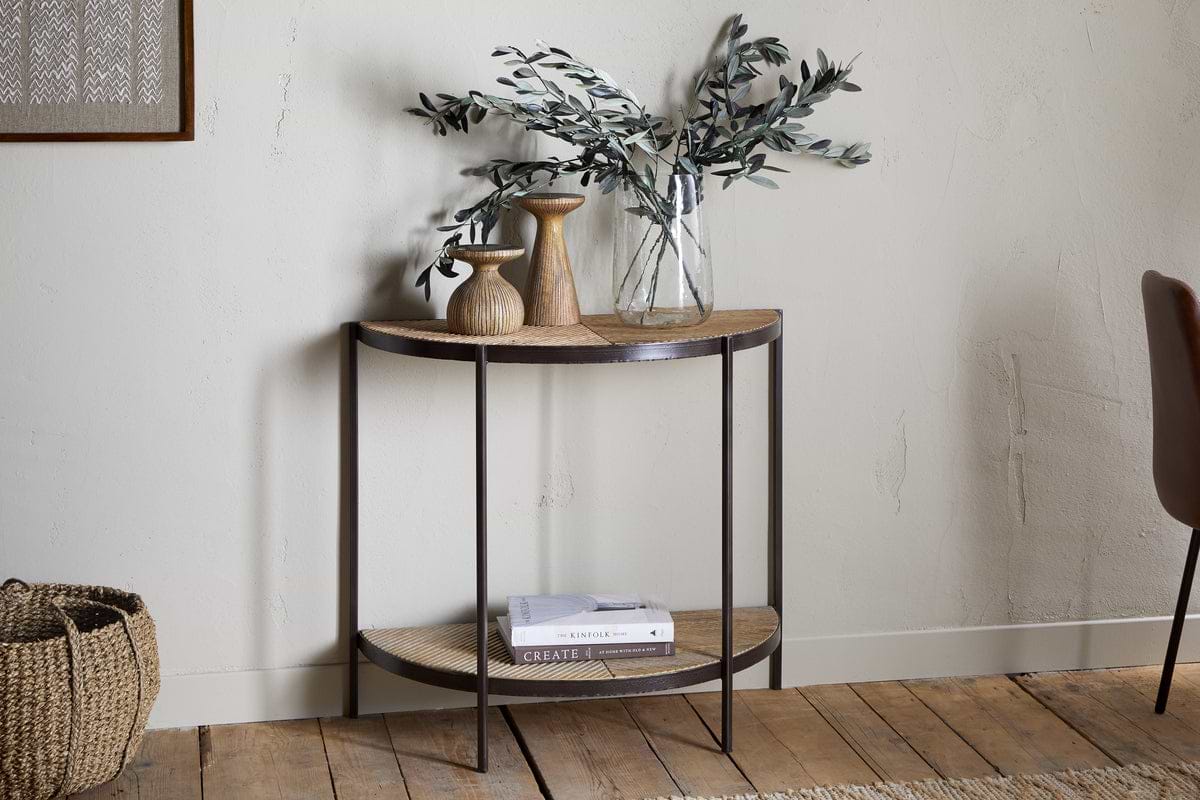
Aasha Console Table
Half-moon silhouette in mango wood; anchors entryways and narrow walls.
View at Nkuku →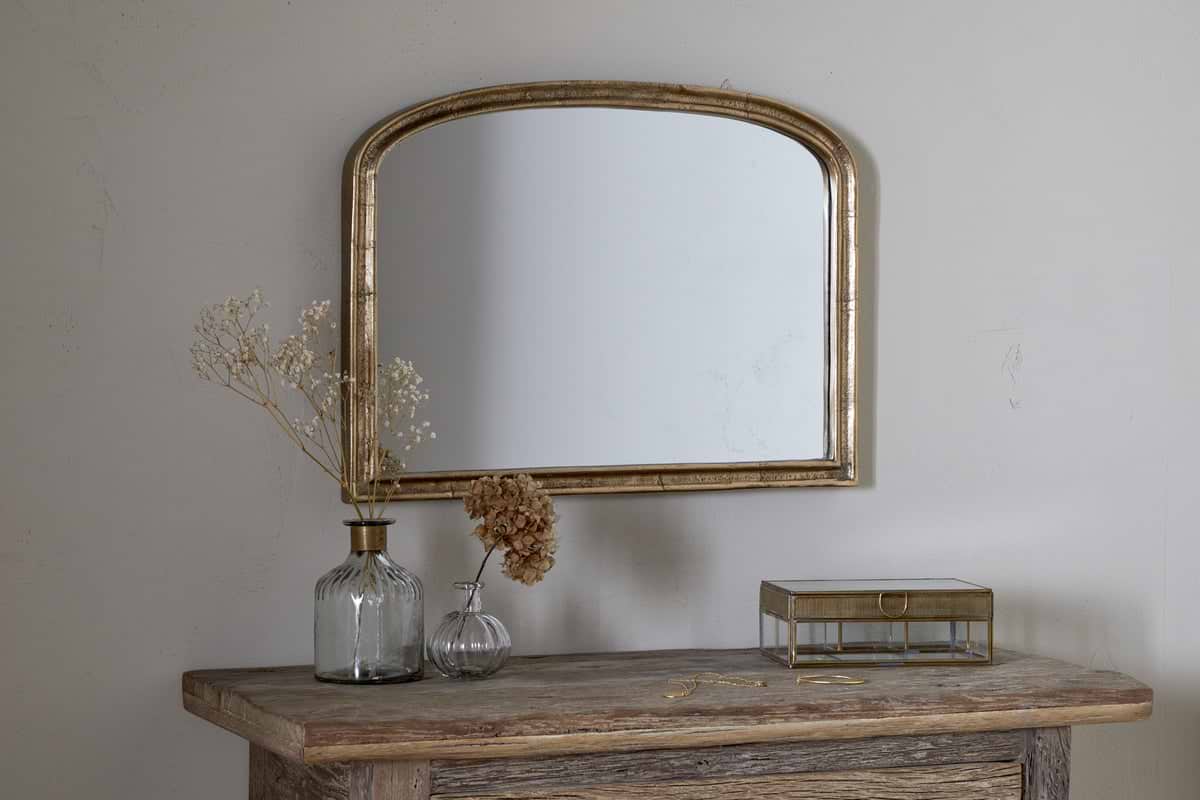
Some links above are affiliate links. If you buy through them we may earn a small commission at no extra cost to you. We only suggest pieces we think fit a calm, lived-in home.
Free guide
The Calm Shelf
12 styling ideas to help you compose calm, balanced shelves in natural texture homes.