

Too many bedrooms feel rushed by quick choices—an odd set of bedroom curtains in a bright synthetic, a cold grey from the bargain aisle, a creased sheer that lets in too much light. The problem shows in awkward fabric weight, mismatched headings and shades that catch every speck of dust and glare. Many renters and homeowners settle for what fits the pole, not what fits the room’s need for calm and warmth.
You can step away from that cycle today. Refresh the space by choosing linen or another natural fabric, understanding headings, and curating colour that works morning and night. This works especially well for small apartments when storage is tight and visual clutter quickly builds because clean, natural curtains anchor the space without drawing too much attention.
The short version: For a restful and inviting room, choose bedroom curtains made of natural linen or cotton, using soft neutral shades and a loose, full drape. You avoid glare and harsh lines, gain privacy, and let in filtered light—making the whole room feel warmer and less busy.
Key takeaways
- Linen and natural fabrics keep bedroom curtains soft without making them look heavy or stiff.
- A curtain heading affects the flow of fabric and how calm the room feels.
- Stick with neutral shades like cream, natural, blush, or duck egg for reliable warmth (Terrys Fabrics’ range covers these well).
- Bedroom curtains work best when they end just above the floor and hang with gentle fullness.
- Ready made curtains often have both blackout and dimout options for light control and privacy.
- How to choose bedroom curtains that feel calm, not cluttered
- Curtain heading styles explained: eyelet, pencil pleat, pinch pleat and wave
- Blackout, dimout or thermal: choosing light control without losing warmth
- Why linen and natural fabric curtains suit a warm-minimal bedroom
- Colour rules for bedroom curtains in a neutral palette
- Where this works best
- Styling and placement

How to choose bedroom curtains that feel calm, not cluttered
Linen or cotton curtains in a loose weave will keep the bedroom feeling open, while synthetic fabrics make the space feel closed in. Choose a heading that lets the fabric fall cleanly, and you won’t add accidental noise to the room.
A small bedroom with two windows often looks crowded if each window gets a busy pattern or a heavy curtain. Instead of doubling up synthetic, shiny panels and relying on bold colour to hide light leaks, keep the fabric quiet and natural. This makes it easier for the eye to rest in the morning, and helps the room look less boxed-in at night. A bedroom curtain works best when it filters daylight without blocking it entirely; according to Terrys Fabrics, neutral weaves in cream or blush are among the most popular for this reason.
Spaces built around a single strong texture—like a linen curtain paired with one jute basket—tend to land softer than rooms filled with different synthetics. The cause is plain: too many conflicting surfaces catch the light at odd angles and create sharp stops for the eye. A bare plastic curtain rail, for example, leaves the window feeling even colder.
Natural fabric curtains look especially right when the room’s other textures echo the same approach—timber, cane, wool, or gently faded bedlinen. Unlike patterned polyesters, which can read busy, a plain woven panel supports calm by fading into the background and catching light in a gentle, forgiving way. Try this in a guest room where you want restful mornings without every crease showing in the sun.
Avoid the trap of adding more layers “for coziness” if the room is already short on space. Stick with one or two natural curtain panels for balance and let the windows guide the feel of the space.
Curtain heading styles explained: eyelet, pencil pleat, pinch pleat and wave
A bedroom curtain’s heading style shapes how the fabric hangs and moves, and is key to keeping the look soft. Eyelet headings give a casual feel, while wave and pinch pleats produce smoother, quieter folds.
In a slow-living bedroom, a curtain’s heading should let the fabric gather in broad, easy folds. If you use pencil pleats on a stiff fabric, it can feel too formal and distract from a balanced setting. According to Swift Direct Blinds, wave and eyelet styles are commonly chosen for relaxed spaces, as they avoid fussy, tight bunches.
Ready made curtains almost always offer both eyelet and pencil pleat. Unlike traditional pinch pleat, which pulls fabric into a series of tight bunches near the rail, a wave heading allows the curtain to move quietly and flow from wall to wall. This can make rented bedrooms and compact master suites look less stiff, as the fabric falls in gentle, regular lines. A pencil pleat in a heavy synthetic, on the other hand, can look dated and emphasize creases.
Table: Common Heading Styles for Bedroom Curtains
| Heading Style | Visual Effect | Best For |
|---|---|---|
| Eyelet | Casual, broad folds | Modern rooms, easy to hang |
| Pencil Pleat | Tighter, classic gathers | Traditional rooms, adjustable width |
| Pinch Pleat | Formal, gathered look | Formal bedrooms, heavy fabrics |
| Wave | Soft, uniform waves | Calm minimal rooms, light fabrics |
In a shared guest room, a plain pencil pleat might look fussy, while a slim wave header makes the curtain fall neatly without drawing attention to the rail. The slower the fold, the calmer the final effect.
Try eyelet or wave if you want easy movement and a forgiving finish for slightly uneven floors. Both help a linen curtain sit right without regular steaming.
Blackout, dimout or thermal: choosing light control without losing warmth
Bedroom curtains with blackout lining suit those needing full darkness, while dimout and thermal linings filter light and add insulation without making the space heavy. The right choice depends on how you sleep and the room’s orientation.
Most people want some light blocked, but a full blackout curtain can feel out of place in a gentle, slow-living bedroom. Blackout linings often add weight, so use them only for east-facing rooms, children’s bedrooms, or shift workers who truly need darkness. Dimout curtains—like those found in Dunelm’s range—let early light in but stop harsh sun stripes from waking you. Unlike shiny, coated synthetics, a brushed cotton or linen dimout lining keeps the window soft, diffusing daylight in a way that keeps mornings calm.
Thermal curtains combine a heavier lining with a woven front, buffering against drafts and holding heat overnight. In a poorly insulated rental, this small change keeps the room more stable and can save on heating. If your bedroom runs cool, a single pair of lined linen curtains often makes a bigger difference than piling extra bedding on.
Unlike layering velvet or stacking multiple roller blinds, a single set of lined linen or cotton panels protects both privacy and warmth without closing off the room. For small spaces or where a window sits against the bed, it’s usually enough to use a dimout lining and skip anything heavy.
Avoid blackout in narrow spaces where natural light is limited, unless a true sleep cave is needed. Let the curtain’s lining match the room’s natural rhythm—dimout for daytime naps, blackout for city noise, unlined linen for quiet early light.
Why linen and natural fabric curtains suit a warm-minimal bedroom
Linen curtains work because their relaxed texture, muted colour, and drape let light in without showing every wrinkle or collecting dust. Natural fabrics won’t overload the room or reflect harsh sunlight.
Linen, washed cotton, and bamboo panels are forgiving to touch and eye. In a neutral bedroom with oak bedside tables, a washed linen panel softens strong wood edges and helps keep the palette from sliding into “cold minimal.” Fewer chemical dyes and an open weave make these fabrics fall differently than polyester blends. Linen curtains also age better, developing a pleasant weight and a less “just bought” look after a few washes.
Unlike stiff, synthetic curtains—which hold every line and look shiny in morning sun—a natural fabric seems to settle into the space. People with allergies often note that linen and cotton panels don’t attract dust as quickly. This is part of why they’re often recommended in calm bedroom ideas boards and slow living guides.
If the rest of your room is pale, use a slightly darker curtain to ground the window, but keep to natural shades. A linen curtain never upstages a textured rug or a solid oak bench. Instead, it highlights what’s durable and soft in the space.
Pair your curtains with a woven storage basket or unbleached bedspread for gentle balance. The room feels more restful with fewer types of surface competing for your attention.

Colour rules for bedroom curtains in a neutral palette
Bedroom curtains in neutral hues—cream, blush, latte, or duck egg—help keep the space from becoming busy, according to most major retailers. Overly dark or saturated shades can make rooms with limited daylight feel smaller and colder.
Terrys Fabrics’ bedroom curtain range covers cream, blush, latte and duck egg as core shades. Duck egg and blush work best for bedrooms where artificial light skews yellow; both temper that tone and sit gently against white walls. In spaces with less natural light, avoid cool greys or deep navies—these shades shrink the space visually and underline any gloom. If your bedroom sits at the back of a terrace or has frosted glass, a latte or cream curtain holds the window visually without calling much attention.
Unlike accent walls or bold rugs that draw the eye, curtains in soft neutrals recede, letting other elements—like a clay lamp, a stone vase, or a jute rug—set the room’s mood. If your bedding runs to white or soft tan, tie the curtain to that palette, never straying more than two shades darker.
Ready made curtains with a subtle slub or texture often hide small marks better than flat polycotton. A Trustpilot-rated retailer like Terrys Fabrics groups their curtain options by tone, which helps narrow choice in a crowded market.
Try pairing a duck egg curtain with a pale oak chair or a blush panel with off-white linen bedding for a gentle but clear contrast. The key is sticking to two or three base tones, never pushing a small or busy room into visual overload with high-contrast patterns.
Where this works best
Linen and natural bedroom curtains work best in rooms where light control and texture matter—small bedrooms, rentals and dual-purpose guest rooms. They blend in with both pale and mid-tone spaces, keeping warmth and privacy without harsh lines.
Compact flats and rental bedrooms often feel cold because landlords fit bright white plastic blinds or cheap synthetics. Switching to soft, natural curtains helps—especially if you use them in rooms with one main window and an awkward radiator or low ceiling nearby. In a shared home with several mismatched design elements, a calm curtain provides visual rest and avoids the hard edge that cheaper options bring.
Renters usually can’t change paint colours, but swapping curtains has a fast visual impact. It’s one of the few big-surface changes allowed in most agreements and can make even a busy student bedroom look more finished.
Avoid hanging heavy velvet or high-gloss panels in narrow or north-facing bedrooms, as these tend to claim too much attention. Let the curtain lead the window—if the wall runs pale or mid-tone, use a linen curtain with soft gathers, rather than a dark polyester or a busy geometric pattern.
Layering natural texture looks even better in open-plan master bedrooms, especially those with dark wood floors or built-in shelving. Unlike metal or plastic venetians, woven curtains keep the room forgiving and blend with simple decor.
Styling and placement
A linen bedroom curtain falls best when hung wide enough to cover the window frame, ending just above the floor. Leave the fabric loose enough to ripple, rather than stretched tight; too little fullness makes a window look bare.
Hang the curtain high, using a slim, matte rail or a plain wood pole in a light finish. A subtle pole doesn’t pull attention away from everything else. If the ceiling is low, lift the rail just above the window frame to make the wall seem taller. A curtain that drops softly just above the floor looks finished but won’t collect dust like one that pools.
If space is short, keep the sides clear. Push the curtain away from the centre by using a wider pole or adjusting the brackets. Unlike net curtains or short blinds, proper-length panels anchor the room and soften edges. You can frame a neutral bedroom decor scheme this way without extra clutter.
Quick calm checklist:
- Choose washed linen, bamboo or undyed cotton for natural drape and subtle texture.
- Hang curtain so the hem clears the floor for neatness and easy cleaning.
- Stick to two or three muted shades near the window, avoiding sudden contrasts or bold prints.
- Opt for slim poles or rails in wood or matte finishes to keep focus on softness.
- Layer with one storage basket (like the Nkomi) to anchor the corner and cut visual noise.
A curtain should anchor the main vignette—a bedside basket, a pale rug, a plain quilt—without needing more objects. In a shared bedroom, style the curtain next to a single plant or a stack of books, never crowding the sill with extras.
Getting curtain fullness right matters. A panel that fits the window exactly tends to look flat; use wider panels for soft folds even when drawn. If you like a heavier look, use natural fibre blackout lining rather than adding double panels. Compared to sheers or roller blinds, a full-length natural curtain settles the space without drawing attention to every line or crease.
There’s usually a moment just after the new curtain goes up, when something feels not quite right. Maybe the fabric looks too tight, the light isn’t soft, or the heading feels abrupt next to the bed. That sense of “off” is often the result of mixing too many colours, mismatched textures, or hanging panels at the wrong length.
Often, people buy a curtain for function alone and forget to look at how fabric, length and pole affect the overall mood. Choosing just one simple, natural curtain, hung at the right point, often fixes a busy or unfinished-feeling bedroom.
Save this idea for later.

What tends to hold up with bedroom curtain choices
Linen and natural-fibre curtains consistently draw fewer complaints for dust, static, or fading than synthetics, according to reviewers and decorators. Many recommend plain wave or eyelet heading for lasting calm—finishing the window without exaggerating it. Softer textures blend in quietly even as bedding and decor shift with the seasons. Where rooms lack strong architectural features, natural curtains provide enough visual interest without crowding the space. Over time, the main regret is usually choosing a colour or lining that subtracts from the room’s natural light.
A steady principle: a bedroom curtain works best when it supports the existing materials and keeps the window easy to dress and clean. Minimal headings and natural palettes age far better than anything bold.
— Mara, Loom & Glow
Common questions
Which curtain is best for a bedroom?
The best curtain for a bedroom is a natural-fibre panel—such as linen or cotton—with a dimout or blackout lining for privacy and restful sleep. Most people choose neutral tones and a simple heading like wave or eyelet. These options provide both style and gentle light control while making the room easy to wind down in.
What kind of curtains are good for bedrooms?
Linen, cotton, or bamboo curtains work well in bedrooms because they offer breathable texture, warmth, and effective privacy. Ready made curtains in neutral colours are easier to work into existing bedroom schemes. Full-length panels with gentle gathers keep the space restful without extra bulk.
What is the trend for bedroom curtains?
The current trend for bedroom curtains is natural, undyed or washed fabrics in a soft neutral palette, often with a wave or eyelet heading. Homeowners lean towards long, gently pooling curtains that soften the window instead of strict, formal pleats. Minimal hardware and unlined or dimout linings are gaining popularity for a warm look.
Who sells the best ready-made curtains?
Terrys Fabrics is widely respected for ready made curtains, offering a huge selection of natural, blackout, dimout, and voile options, with 24,054 Trustpilot reviews since 1970. Dunelm and Swift Direct Blinds also provide extensive bedroom curtain ranges, grouped by fabric, colour and heading for easy matching.
Explore more calm combinations inside our Shop The Look .
Shop the Look
Natural linen cushions echo the calm of linen curtains and ground the room.
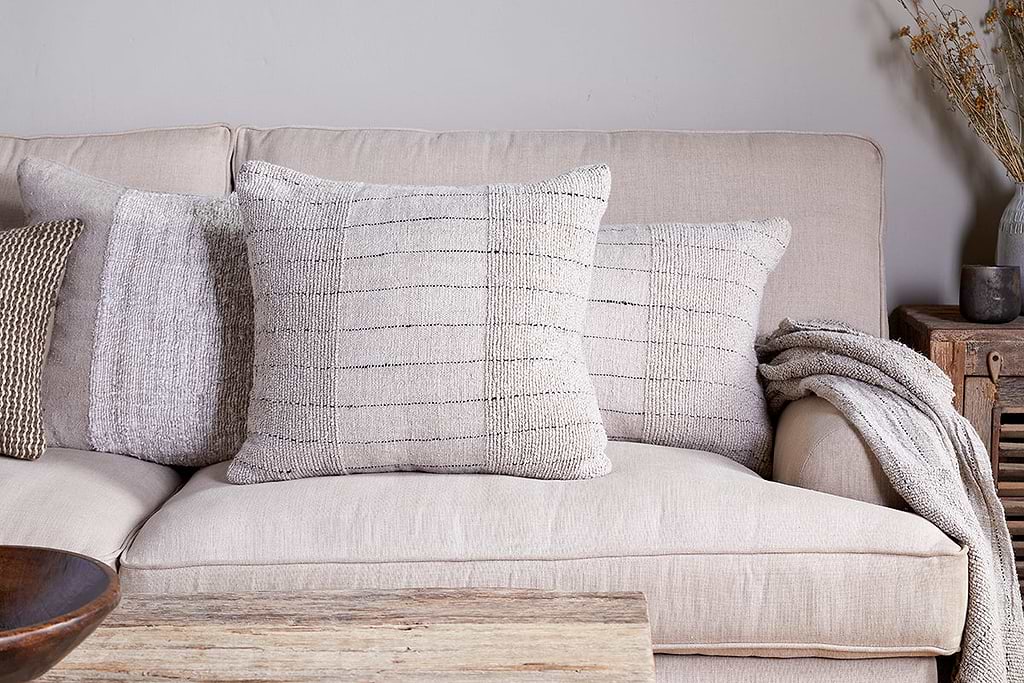
Mayla Cushion Cover
Soft hand-textured cover — instant warmth on linen sofas or chairs.
View at Nkuku →
Puli Linen Cushion
Recycled linen in natural — pairs with woven textures and aged wood.
View at Nkuku →Some links above are affiliate links. If you buy through them we may earn a small commission at no extra cost to you. We only suggest pieces we think fit a calm, lived-in home.
Free guide
The Calm Shelf
12 styling ideas to help you compose calm, balanced shelves in natural texture homes.