

The best hallway and stairs decorating ideas focus on a single strong accent, keep most surfaces clear, and use natural textures for quiet interest to make a small space feel calmer and more airy. Choose a statement piece like a large canvas or a woven basket that takes up less visual space and reduces clutter. Limit your colour palette to light or mid-toned shades and anchor your main focal object at natural eye level. Use durable, natural-fibre stair runners and consider a vertical mirror to bounce light and add depth in dim hallways.
Hallways and stairs in a small home often catch mess before you notice it. Shoes build up by the front door. A shallow ledge becomes a landing pad for keys, sticky notes, and old post. The hunt for hallway and stairs decorating ideas usually stops when every object starts to look like clutter.
Today you will see how to keep these spaces calm by choosing fewer, smarter pieces and knowing what to remove. This works especially well for a narrow UK hallway when lack of natural light makes a space feel boxed-in because every object stands out more sharply.
The short version: The best hallway and stairs decorating ideas use a single strong accent, keep most surfaces clear, and rely on natural textures for quiet interest. Small choices, like one large canvas or a woven basket, take up less space visually, reduce clutter, and let a tight area feel more airy.
Key takeaways
- A hallway feels calmer when the palette is kept light and surfaces are mostly clear.
- A single focal point, such as a statement runner, prevents the display from reading busy compared to a cluster of smaller objects.
- Open shelving above eye level offers storage without narrowing a passageway, according to DIY.com.
- Mirrored panels can add depth in dim or low-light hallways, as recommended by Checkatrade.
- Pressed flowers and mounted pottery fit a small hall or stair without adding bulk, per Sharps.

Why does a hallway need different rules than other rooms?
A hallway or staircase deals with more passing feet, less light, and less surface area than a bedroom or living room. These spaces need fewer decorations, more durability, and pieces that stay out of the way.
In a narrow hallway, walls are closer and the ceiling often feels lower. Every object stands out, and anything too deep or too bright makes the space feel tight. Unlike a big kitchen, there’s no spare table for plants or trays, and little margin for error.
The solution is to use fewer focal points, one simple mirror, for example, instead of a row of frames. Natural finishes like raw wood on a bench or coir in a stair runner add detail without crowding. A hallway works best when you edit tightly.
Compared to a living room, where layers look welcoming, too many layers here only shorten the visible breadth and make the walk feel fussy. Matching the load to the space keeps the path open and the sightline clear.
One application: A pale jute rug underfoot, paired with a single oak peg rail for coats, makes a small hallway feel pulled together without filling it up.
Where this works best
Calm hallway and stairs decorating ideas work best in entryways, small landings, and tight stairwells where clutter piles up quickly. These spots need pared-back solutions that withstand daily use and stay tidy with little effort.
Typical homes in the UK often have a compact entrance, with the front door opening right into a stairwell or a corridor that doglegs into the main rooms. In these spaces, there may be no good spot for furniture, and shoes and bags easily stack at the door. Shared family homes, flats, and rentals often share these limits.
For these zones, functional decoration is key. A slim wooden shelf with an off-white bowl for keys replaces a bulky cabinet. Hanging natural baskets for hats or gloves adds a warm touch that stands up to daily grabs. A soft runner on the stairs feels finished but doesn’t trip up your step.
Avoid hanging large, framed art where the wall narrows beside a staircase, as it disrupts the path and feels like an obstacle. Instead, mount smaller sculptural elements, pressed flowers, for instance, for interest that keeps to the side.
This approach brings order to a hall with no natural light or a stairway that sees plenty of traffic. Even in a shared flat, a few strong pieces do more than a spread of collectibles.
How do you know if a piece earns its spot?
A hallway or stair decor piece earns its place if it serves a daily use, introduces a soothing texture, or anchors the gaze without adding visual mess. If an object is only filling space, it’s probably too much.
Check how often you touch an item on your hallway shelf or landing. If the object is only dusted, never used, consider removing it until the shelf holds just the essentials. A floating cube shelf, for example, commonly works above a radiator or door for this reason: it adds storage but keeps the floor open (source).
In practice, a hallway with hooks for daily jackets has more real value than one with three small vases on a ledge, which are easily knocked and seldom looked at. If you wouldn’t miss an item after a week away, it likely isn’t needed here.
Compared to a bedroom, where decorative bowls or books rest quietly, objects in a thoroughfare either help or hinder. Choose only what helps, and put the rest away.
To apply this, keep only high-rotation pieces visible: a dish for keys, a reusable tote, or a flat weave rug. Everything else lives behind closed storage or leaves altogether.
Styling and placement
Styling and placement in a small hallway succeed when you keep surfaces mostly clear, use natural materials in one or two places, and limit the color palette. Placement matters more than quantity.
Start by anchoring a main focal object, a mirror, a linen-covered bench, or a framed print, at natural eye level. This gives the eye somewhere to land and helps fill awkward wall height without creating a busy look. A floating shelf styling guide can help if installing shelves in a passageway feels uncertain.
Keep colors soft and lighting warm. A hallway lamp with a fabric shade reads gentler than a bare bulb; natural terracotta pots, if used, break up a long row of hooks. A monochrome palette makes a small landing feel more cohesive than a mix of brights. Materials like raw oak or textured clay work quietly here.
Open storage should line up tidily, not stagger across the wall (beside the front door, above the radiator). Compared to scattershot hooks or overlapping baskets, one aligned row feels less cluttered and stays tidier longer.
Quick calm checklist:
- Pick one natural anchor: a wooden peg rail, a large sisal basket, or a low linen bench.
- Keep color to fewer than four grounded shades, light or mid-tone.
- Hang main elements at natural eye level, not leaning or stacked.
- Leave at least a hand’s width between any objects on floating shelves or hooks.
Try placing a handwoven basket under an open shelf near the front door. Shoes tuck under; umbrellas lean beside. The shelf stays neat and the entry doesn’t crowd as you come and go.

What works for stair runners and patterns?
A stair runner with natural fiber or subtle color works because it adds softness, absorbs footfall, and needs less maintenance than full carpet. Too much pattern on steps can shrink a small staircase visually.
Stair runners, especially in a small home, stand up to muddy shoes and pet paws. Common choices are sisal, coir, or flat woven wool, all durable and easy to vacuum. According to Checkatrade, a statement stair runner lets you add pattern without covering every step in wall-to-wall carpet. This makes cleaning easier and the stairs feel more open.
In a tight stairwell, a striped or geometric runner works when the rest of the décor stays neutral. If walls are white or beige, a muted navy or ochre stripe adds detail without overstating. Compared to a bold stair carpet, which draws all attention to the floor, a runner lets wood edges show and breaks up long lines.
If your landings have little space, end the runner just as the top step meets the upper floor. This keeps transitions clean and avoids a patchwork look. Install a runner so that there’s a tidy margin on both sides for balance.
Use a natural-fiber runner if children or pets often use the stairs. The stronger weave withstands years of steps and cleans up faster than plush or synthetic carpet, according to most flooring retailers.
How do you use mirrors and glass in small halls?
Mirrors and glass in a hallway or stair bounce light around, stretch the view, and brighten dull corners. The key is to pick slender, simple frames and avoid placing them directly opposite messy shelves.
For hallways with low or no natural light, a vertical mirror will reflect light from a nearby lamp or window, making the space feel less tunnel-like. Mirrored panels are often placed at the end of a hall or around a stair landing to increase perceived depth, as recommended by Checkatrade.
Unlike heavy art or bulky wall cabinets, a mirror sits flat and doesn’t stick out. A glass balustrade on stairs also works to open up a tight stairwell but can make fingerprints more visible, something to keep in mind in high-traffic homes.
Compared to curved or ornate frames, a plain wood or brushed metal mirror keeps the look clean. Hang it above a console table or peg rail, rather than directly across from doorways, to avoid odd reflections or a busy look.
Apply this by mounting a tall, frameless mirror behind a shoe bench. The space feels lighter, and morning routines move faster when you can grab and go.
Open shelving or closed storage: which fits a small landing?
Open shelving makes a landing feel lighter but needs careful curation; closed storage helps hide clutter in homes with little spare space. The best choice depends on how much you need to store versus what you want to display.
Open shelves, like floating cubes or ledges, suit stair landings when you want to show a few favorite books or display pottery. According to DIY.com, these shelves add storage without tightening up a walkway. Too many small items, though, can look like noise.
Closed storage, such as a skinny cupboard or a radiator cover with hidden bins, lets you hide shoes, umbrellas, or pet gear when company arrives. Enclosed pieces give more visual rest and handle busy household days better than shelf clutter. However, too much closed furniture risks feeling boxy if space is tight.
Unlike open bookcases in a living room, open hallway shelving takes more thought, since everything is on display. If you place a shelf, fill only one-third with visible objects, the rest stays spare.
| Option | When to use | Main benefit |
|---|---|---|
| Open shelving | Light storage, favorite pieces | Makes space feel open |
| Closed storage | Hidden shoes, busy homes | Hides mess, quick tidy up |
For real calm, use open shelves for display and add a small closed basket or cabinet for stashing the rest. If you struggle with shelf styling, see our one styled object guide.
What tends to hold up with calm hallway and stair styling
Across hundreds of spaces, it stands out that the best small hallways rarely use more than three materials. Wood, jute, and matte paint repeatedly perform well, because they soften angles and don’t mark easily. Reviewers consistently say that wall hooks with rounded ends outlast plain nails, less snagging, easier for children, less patchy paint. Decorators also point to how limiting visible shoes makes even a narrow space read tidier without extra effort.
Mirrors make the greatest difference where natural light is limited, but only if the rest of the wall stays clear. Extra accessories, especially on shelves, tend to make the spot feel like storage, not entry. Matte finishes get recommended again and again for shelves near windows, because they don’t catch glare the way a glossy tray does.
, Mara, Loom & Glow
How do you decorate a hallway with no natural light?
Decorate a hallway with no natural light by using mirrors to bounce artificial light and create a sense of depth. Choose a vertical mirror with a simple, slender frame and position it to reflect light from a nearby lamp. Keep your colour palette light and warm, using soft whites, beiges or greys to help brighten the space. Incorporate textures from natural materials like raw wood, linen or woven baskets to add visual interest without relying on colour, which can appear dull in poor light.
What are the best storage ideas for a narrow hallway?
The best storage ideas for a narrow hallway use vertical space and keep the floor clear. Install a slim wooden peg rail or a single row of hooks at eye level for daily coats and bags. Use a floating shelf above a radiator or door for items like keys, positioned with a hand’s width between objects to avoid a cluttered look. Choose a tall, woven basket to tuck under an open shelf or bench for shoes and umbrellas, which adds storage without narrowing the passageway.
Common questions
What is the best colour for a hallway and stairs?
The best colour for a hallway and stairs is usually a light, neutral tone like warm white, soft grey, or gentle beige. Pale shades bounce light and make a small or dim area feel less cramped. A muted base lets you change accent objects seasonally without repainting.
What is the trend in hallways in 2026?
The trend for hallways in 2026 is natural textures with subtle, tactile details, think pale timber, woven baskets, and off-white paint with a matte finish. Floating shelves and understated patterned runners are appearing in curated inspiration shots. The goal is calm order: no more than three materials visible at once.
How do I make my hallway look luxurious?
The simplest way to make your hallway look luxurious is to use natural materials and keep surfaces clear. A well-proportioned mirror, a slim console table, and one beautiful basket for shoes make a small hall feel deliberate and finished. Less is usually more here.
What’s on trend for hallways?
On-trend hallway style uses pared-back palettes, single statement pieces like a runner or mirror, and calmly repeated finishes. Panelled walls, floating shelves, and artfully placed glass or metallic accents appear often. The focus remains on practical comfort over maximal decoration.
Explore more calm combinations inside our Shop The Look .
Shop the Look
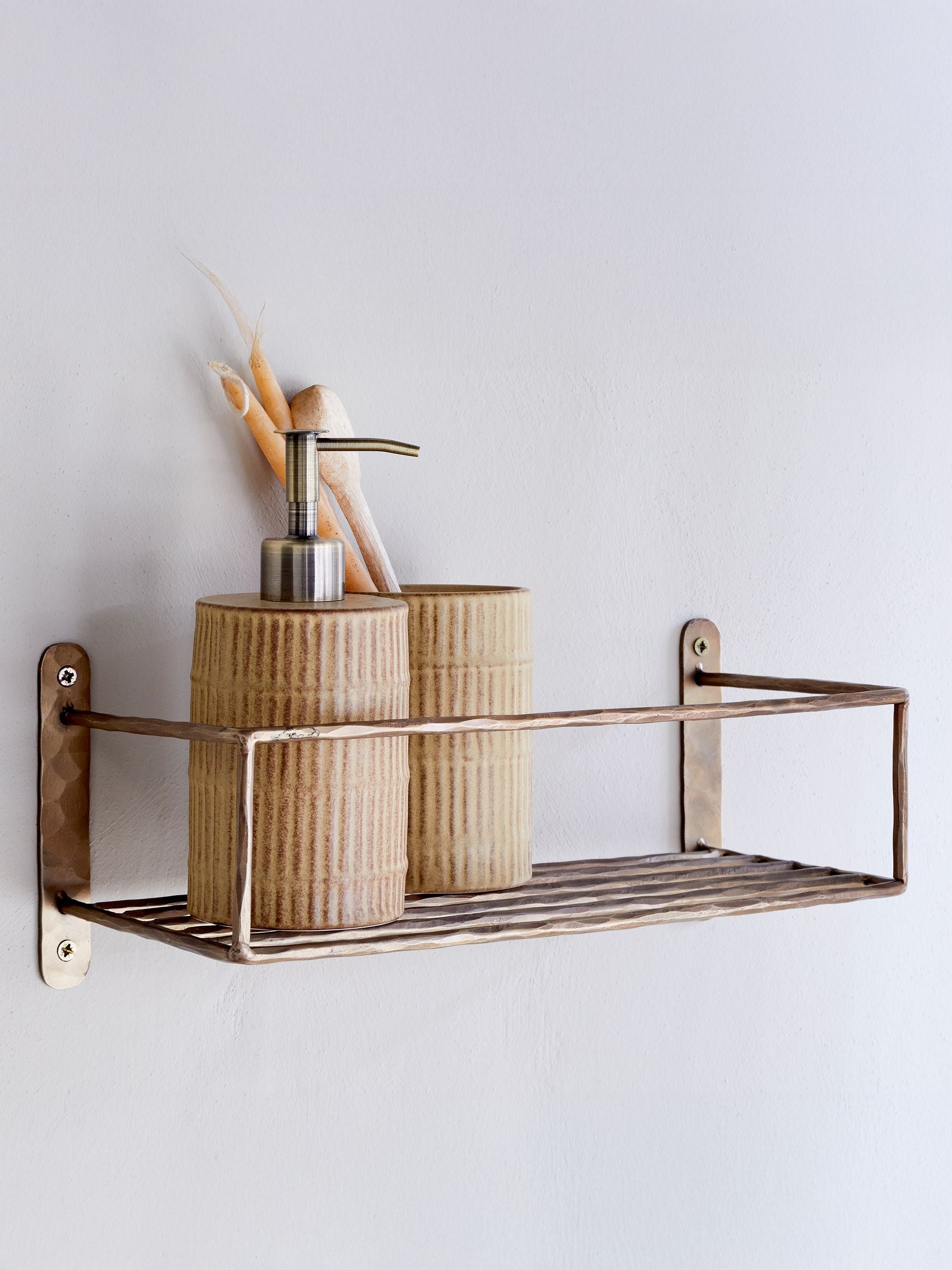
The Aasha console suits narrow hallway walls, the Almora mirror opens up landings, and the Olani shelf works on stair alcoves and understairs spaces.
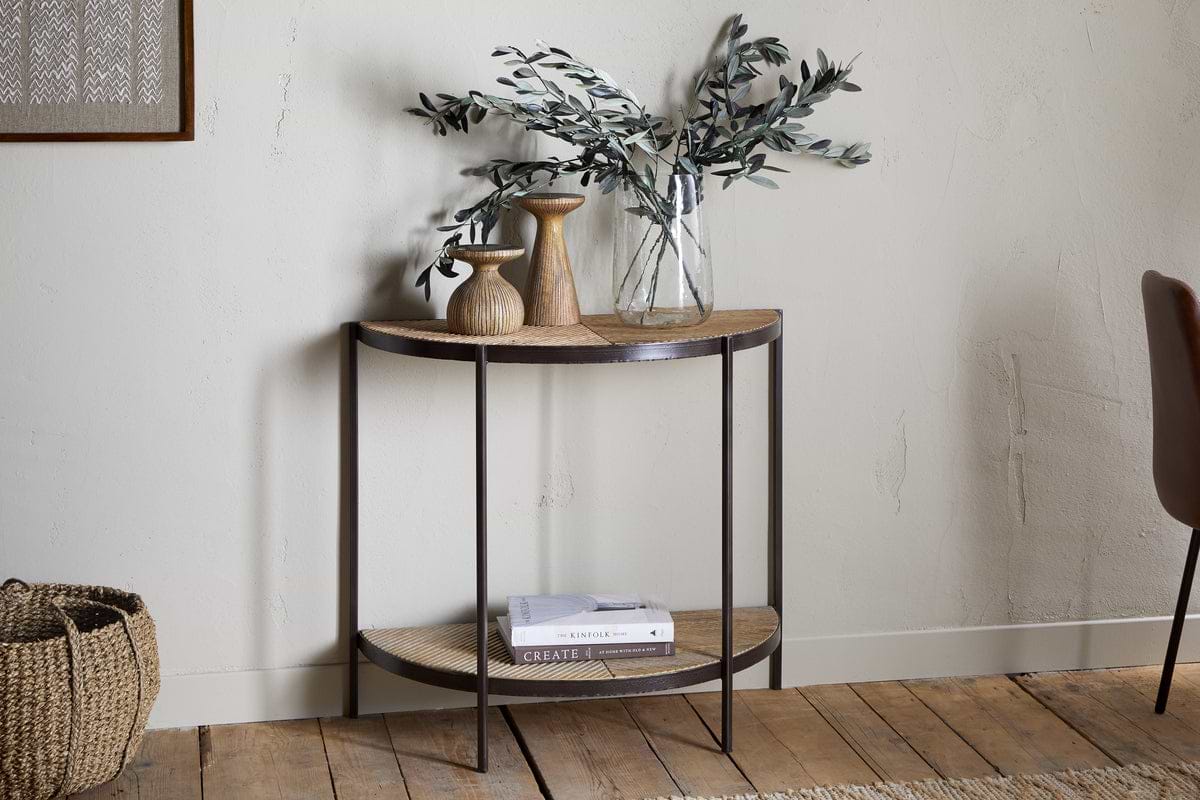
Aasha Console Table
Half-moon silhouette in mango wood; anchors entryways and narrow walls.
View at Nkuku →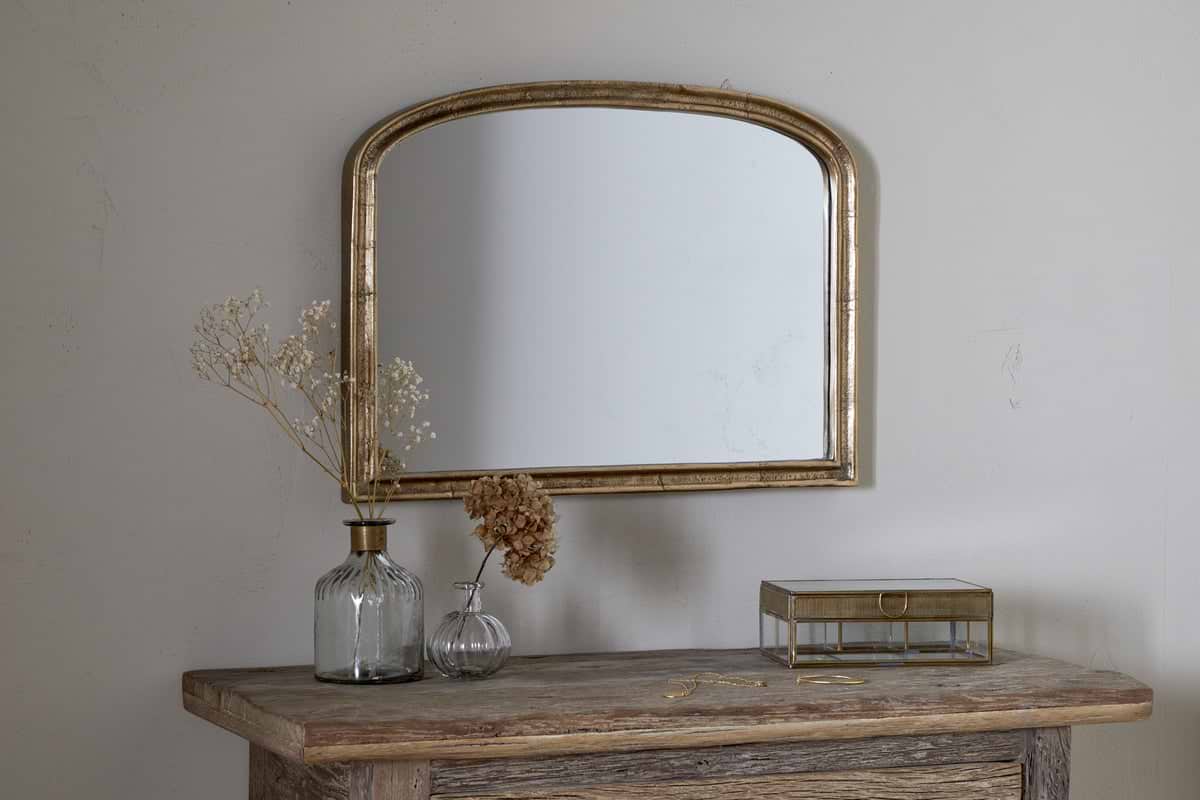
Some links above are affiliate links. If you buy through them we may earn a small commission at no extra cost to you. We only suggest pieces we think fit a calm, lived-in home.
Free guide
The Calm Shelf
12 styling ideas to help you compose calm, balanced shelves in natural texture homes.