

Many homes have dark, narrow halls that make choosing hallway mirrors feel tricky. The wrong size, shape, or placement can add clutter to a tight space instead of helping it breathe.
Today, you’ll see exactly how to select and position a mirror that expands a narrow corridor and lifts the light—without feeling noisy or staged. This works especially well in small apartments when the hallway brings little natural light because a well-chosen mirror changes both brightness and the sense of space immediately.
The short version: Hallway mirrors can make a narrow, low-light hallway feel larger and brighter when you choose the right shape, size, and spot. Quiet, simple placement creates breathing room and clears visual clutter.
Key takeaways
- A large hallway mirror reflects more light and visually widens a narrow space.
- Round or arched mirrors soften sharp corridors, while rectangles suit longer walls best.
- Most hallway mirrors are grouped by size and shape by major retailers for fitting different spaces, according to Mirror Outlet.
- Placing a mirror above a console table or across from a window brings out the most light.
- Good mirror fixings are essential for safety in high-traffic areas and treated as a separate purchase factor.
- Why does a hallway mirror do more than check your outfit?
- Where this works best
- What size mirror suits a narrow hallway?
- Styling and placement
- Round, arched or rectangular: which shape suits your hallway?
- How do you avoid a hallway mirror looking like an afterthought?
- What fixings do you need for a heavy wall mirror?

Why does a hallway mirror do more than check your outfit?
A hallway mirror can make a small hallway feel wider and brighter while also becoming a quiet focal point in a tight entry. The right mirror pulls in daylight and reflects natural materials nearby.
In a narrow corridor, mirrors are often thought of only as a spot for one last glance. But hallway mirrors play a bigger role. The right mirror multiplies light, changes the sense of width, and even alters the movement through a small passage.
Natural light is in short supply in many halls, especially ones with no windows nearby. Using a mirror opposite a doorway or light source can bounce what’s already there and draw it further down the space. A glass vase or raw wooden stool next to the mirror can enhance this effect.
Compared to pure wall art, a hallway mirror has a job beyond decoration: it gives a view beyond the hallway’s boundaries. A blank frame feels static; a mirror with subtle brass or wood brings softness and purpose to the wall.
For a main corridor or a smaller rental, anchoring a mirror at eye level means every person passing benefits—no need to crouch or stretch. A hallway mirror should pull light throughout the whole walk, not just one patch.
Where this works best
Hallway mirrors work best in tight entry halls and inside long corridors with little daylight. Positioning them where foot traffic is highest brings the biggest impact.
Most homes have some area that runs long and narrow between rooms—a classic hallway challenge. Here, windows are rare, corners are sharp, and light often feels heavy or absent, especially deep inside older buildings or rentals.
Entryways with a coat rack, slim console or bench below a mirror are especially suited to this approach. Placing a mirror in a small hallway right above a piece of simple furniture keeps things anchored and encourages tidy habits for keys, bags, or shoes. For homes with little wall space, a frameless or thin-framed glass helps the wall breathe.
Avoid placing hallway mirrors where the wall is busy with hooks, artwork, or outlets. In these places, a new mirror often looks forced or crowded. Instead, choose a clear run of wall and let one mirror do the work.
This makes the most difference in a flat or city apartment when the hallway is both entry and traffic zone, with too little storage and too much movement. Placing a mirror in this type of space opens sightlines without creating new mess.
What size mirror suits a narrow hallway?
A large mirror can make a narrow hallway feel open, but a small mirror suits tight rental spaces where wall mounting can’t be permanent. Mirror size changes the sense of width and light.
Many retailers, according to The Range, group hallway mirrors by size because a too-small mirror disappears on a long wall and a giant one can feel overwhelming in a slim corridor.
For most standard halls, a rectangular or arched mirror as tall as the door but not wider than the console below keeps things proportional. A round mirror adds width to a short corridor but can look lost in a space with high ceilings.
Compared to a cluster of little mirrors, one larger mirror reads calmer and never gets as dusty. The fewer the shapes, the less scatter for the eye.
In a rental, where drilling is discouraged, a smaller mirror that leans or hangs on sturdy adhesive strips is a friend. Use a single statement size on the widest portion of wall for the best balance.
Styling and placement
A hallway mirror looks calm when styled with one or two practical objects and a clear floor below. Placement above a console or bench keeps the space purposeful.
The easiest way to style a hallway mirror is to hang it just above a slim console table. Keep the surface spare: a clay bowl for keys, a single woven basket, or a small plant is enough. The mirror then feels connected, not floating randomly on the wall.
A mirror opposite a window or doorway will always reflect extra light and make the hallway feel larger. Glare is rare in a corridor, but if direct sun hits, hang the mirror slightly off-center to avoid harsh spots.
Compared to a wall packed with art or photos, using just one decorative mirror helps a small space keep its shape. Too much visual noise makes every entry or exit into the hallway feel a bit more urgent.
Quick calm checklist:
- Choose natural frames: wood, metal, or bamboo blend quietly into most halls.
- Allow some empty wall around the mirror—avoid edge-to-edge placement.
- Keep the hallway palette limited to two or three calm tones.
- Use one simple focal object below: a round basket or stone tray works well.
- Keep pass-through space clear; nothing blocking the line under the mirror.
Style a hallway mirror above a table in high-traffic spaces, especially near an entryway styling point, to keep things looking easy and uncluttered.

Round, arched or rectangular: which shape suits your hallway?
Rectangular mirrors work best for longer walls, round mirrors open up stubby corridors, and arched options soften sharp entry space lines. Shape changes both reflection and feel.
Mirror shape isn’t just about style—it really affects how a hallway feels. Retailers like Mirror Outlet arrange stock by round, arched, and rectangular for a reason: each works with different wall proportions, especially where the ceiling is low or the passage is tight.
A rectangular wall mirror stretches sightlines down a narrow hall, making it feel longer. A round mirror breaks up hard corners and brings a softer mood, especially in shorter corridors. Arched mirrors—wood or metal—sit between the two, gently offsetting boxy entry layouts and pairing well with curved decor.
Compared to an oval, which can sometimes feel out of place amid square doorframes, an arched top feels natural over doors or bench seating. Choose the shape that matches the corridor’s main lines, and the result will look intentional instead of forced.
| Shape | Best For | Effect |
|---|---|---|
| Rectangular | Long, narrow halls | Stretches length, doubles space |
| Round | Short corridors | Softens look, adds width |
| Arched | Entryways, above doors | Lightens lines, pairs with curves |
For a space with a lot of right angles, try a round or arched mirror to loosen up the geometry. Rectangular mirrors make sense where walls run longer or ceilings feel lower.
You’ll see this applied well in narrow hallway ideas galleries, where the shape of the mirror shapes the whole mood.
How do you avoid a hallway mirror looking like an afterthought?
A hallway mirror looks purposeful when offset by a single surface and surrounded by breathing wall space. Repeating one texture grounds the look.
The most common mistake in a small hallway is placing a mirror at random height among other frames or hooks. This makes the mirror feel like a late addition, not part of the plan. Keep the mirror’s center at eye level for most adults—usually around the same spot you’d place a picture.
Use the same frame finish twice in the entry: if the mirror has a brass frame, add a brass tray or hook nearby. Echoing a material once—never more—makes the wall feel complete with minimal fuss.
Compared to a gallery wall, an entry vignette built with a mirror, one low-profile shelf, and an object in a natural texture looks calmer and is easier to clean around. In a tight hall, fewer layers always look more finished.
In narrow hallway decor, the difference between “afterthought” and calm is often just spacing and restraint: less always feels steadier.
What fixings do you need for a heavy wall mirror?
Heavy hallway mirrors need purpose-chosen wall fixings rated for their weight, especially in busy areas. Sturdy hardware protects both people and plaster.
Most mirror fixings are sized according to weight and wall type, making safety a main issue in hallway placement, according to Mirror Outlet. A loose screw or anchor in a worn wall can bring down even a modest mirror, putting passersby at risk.
Many modern mirrors, especially large window-pane or metal wall mirror options, feel heavier than they look. For plasterboard walls, toggle bolts hold better than nails or plastic anchors. Solid brick or block can take heavier hardware if needed.
Compared to lightweight decor, a heavy rectangular or arched mirror in the hallway is worth an extra minute choosing fixings. Many homeowners regret redoing work when a mirror droops or tilts from daily bumps.
For shared family halls or busy apartments, safe wall mounting means less worry and more confidence in the space.
What tends to hold up with hallway mirrors
Reviewing hundreds of home photos and room schemes, one thing stands out: simple, large hallway mirrors do more for space and light than any collection of small frames. Designers almost always recommend a single open surface below—most often a bench, shelf, or table. Matte-finished frames in wood or aged brass get called out repeatedly because they stay smudge-free and blend well with everyday shoes, bags, and outerwear in a busy entry.
One detail that reviewers and decorators agree on is the benefit of repeating a material, but never too much. Reuse wood or metal once or twice, then let the rest breathe. Most mistakes in halls come from crowding or clutter. The simplest approach—one mirror, one anchor surface, and clear flooring—lasts best.
— Mara, Loom & Glow
Common questions
What is the best mirror for a hallway?
The best mirror for a hallway is one sized to cover much of the available wall without crowding other features. Frameless or thin-framed options in wood or brass look natural and stay timeless. Always choose a weight and shape that suits the width and height of your corridor.
Do mirrors look good in hallways?
Mirrors look good in hallways because they add light, widen the feel, and give a natural stopping point without adding visual noise. Simpler frames tend to blend better. Many designers place mirrors above a surface—console, bench, or shelf—for a complete and useful look.
What is the best mirror shape for a hallway?
The best mirror shape for a hallway depends on the wall length and ceiling height. Rectangular mirrors lengthen narrow passages, round ones soften sharp corners, and arched shapes pair well with curved or classic entry furniture. Stick to one main shape to keep things calm.
Where should a mirror be placed in a hallway?
A mirror should be placed on the longest section of clear wall, ideally opposite a window or doorway. Most are hung at eye level above a surface like a console or bench. Leave space around the frame so the mirror feels open and not squeezed onto a busy wall.
Explore more calm combinations inside our Shop The Look .
Shop the Look
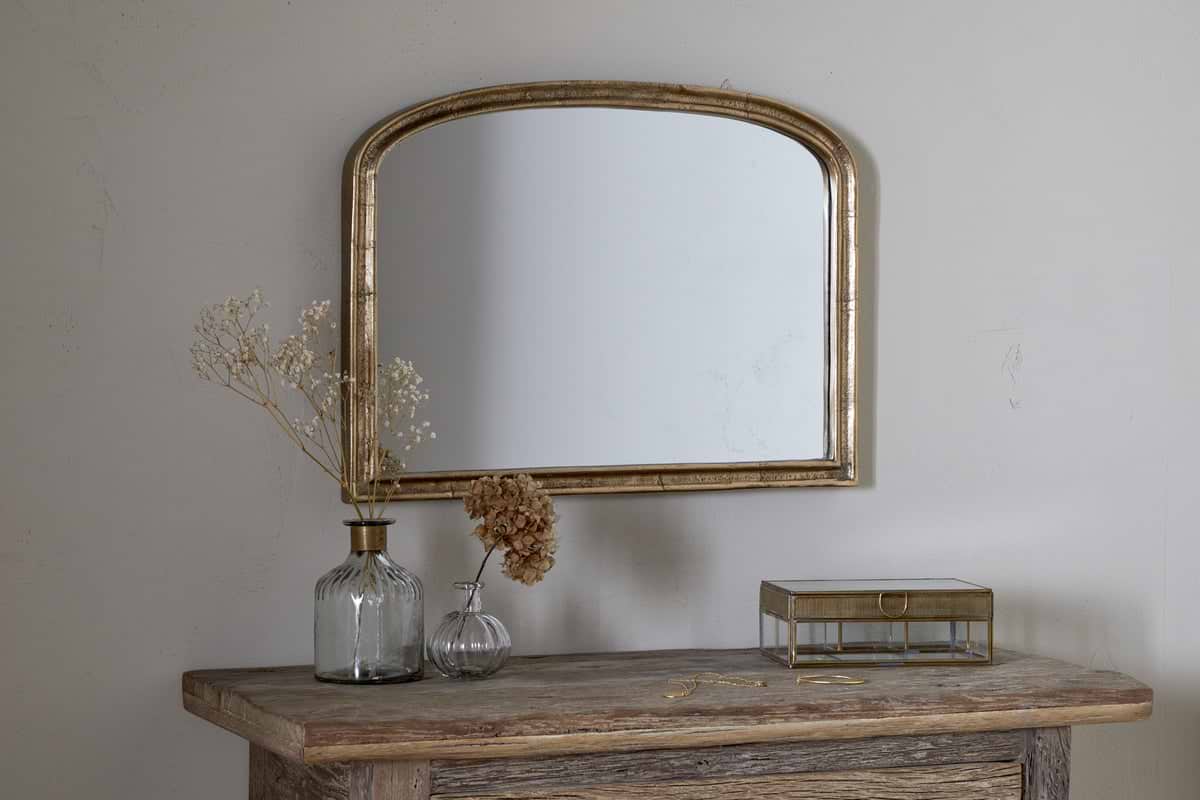
An antique brass mirror paired with a half-moon console creates a composed entryway anchor.
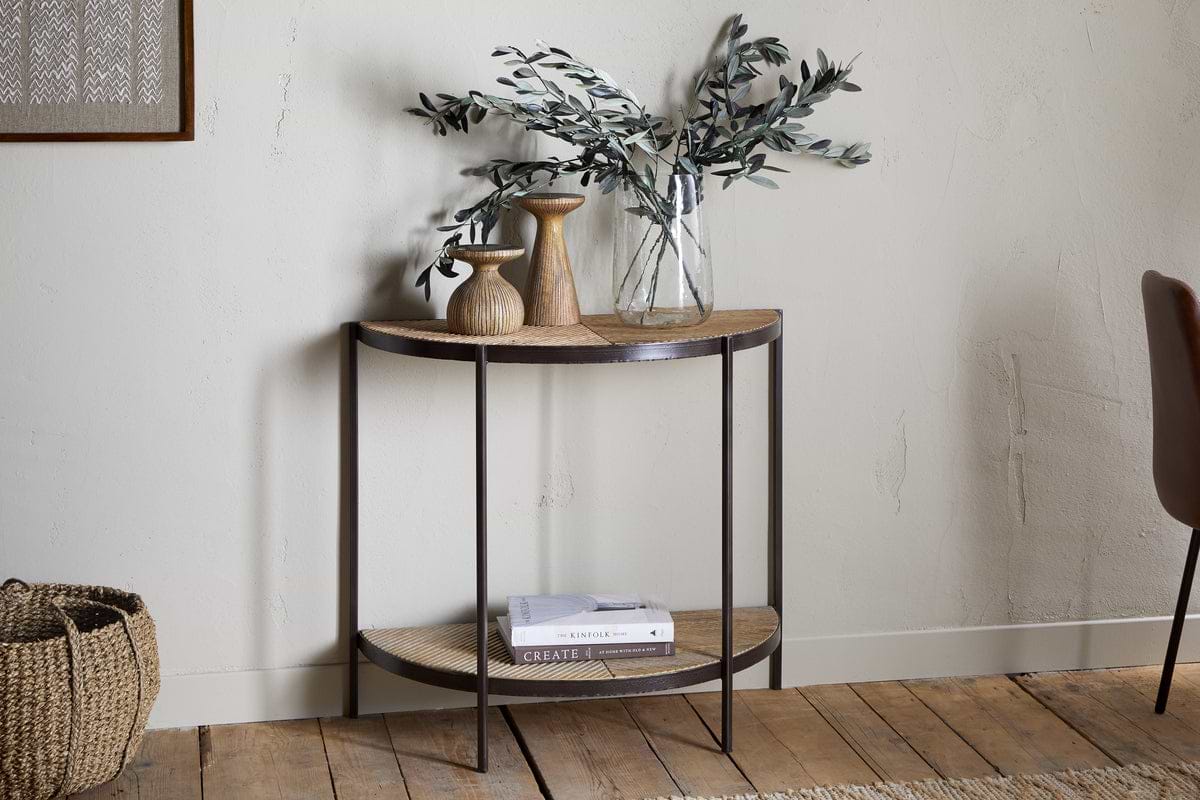
Aasha Console Table
Half-moon silhouette in mango wood; anchors entryways and narrow walls.
View at Nkuku →Some links above are affiliate links. If you buy through them we may earn a small commission at no extra cost to you. We only suggest pieces we think fit a calm, lived-in home.
Free guide
The Calm Shelf
12 styling ideas to help you compose calm, balanced shelves in natural texture homes.