

It’s easy for open shelves in a living room to look random or overcrowded, especially when you need storage as well as style. Figuring out how to style open shelves in living room spaces gets confusing quickly—most rooms have a mix of too many small objects or big, empty gaps.
Today, you’ll learn a step-by-step way to make a shelf look calm and finished, not just less crowded. This works especially well in a small apartment living room when you’re short on closed storage because it lets you use every shelf without adding visual clutter.
The short version: The easiest way to start with how to style open shelves in living room is to use the 3-5-7 formula, leave empty space between groups, and anchor with one heavier item per shelf. This simple shift keeps shelves looking clear and pulled together, even when you need them to hold more than just art.

Where this works best
Open shelf decor gives the most control and impact in rooms with limited closed storage or odd wall layouts. Shelving pulls double duty where storage and display mix.
An open shelf system works in spaces where storage is visible—apartment living rooms, corners near entryways, or under a window. Floating shelf ideas are popular when the budget or lease doesn’t allow built-ins. Most renters face this and need open shelf decor that doesn’t rely on custom joinery.
People often use open shelves above a TV bench, next to a window, or along a blank wall in a small living room. Library walls and alcoves with awkward shapes are also good spots. Open shelves blend into the wall if placed at eye level and kept light in color, which is gentler on the senses than chunky bookcases in the middle of a room. Neutral shelf styling helps shelves disappear into the background when stacked storage would feel heavy.
Avoid forcing open shelf decor in walkways or on a wall with too many outlets. This creates both clutter and a sense of things in the way, making rooms feel cramped, not clear. Shelving works best where you want people to pause, not rush through.
What is the 3-5-7 shelf formula?
The 3-5-7 formula means using odd-numbered groups on a shelf—either three, five, or seven objects. This pulls the eye along a shelf naturally and keeps things from looking stiff.
Arranging items in odd numbers stops a shelf from feeling too even or staged. If you put three vases of different heights together, your eye flows over them instead of freezing in one spot. The 3-5-7 shelf formula works whether you style tall, thin objects or mix one bowl with two frames. This is the reason so many shelf vignette ideas show groupings of three or five—our brains sort odd groupings as less formal.
In busy homes, it’s common to see shelves with six or eight mixed things: a figurine, a stack of books, too many frames. Unlike groupings in even numbers, odd-numbered sets make the shelf feel relaxed but also structured. If shelves feel busy or scattered, the formula gives instant structure by setting a boundary for what stays and what goes.
Grouped items can share a tone (like pale wood), weight (like a stack of linen-bound books), or use (a cup holding keys beside two catchall trays). The main point is that there are never pairs or perfectly lined-up rows; instead, there’s a gentle rhythm that feels more natural and less forced. A shelf with seven tiny collectibles may still look fussy, but a group of three mixed-scale pieces reads much more settled. Apply the rule to each level of shelving and watch scattered collections fall into place quickly.
How do you keep open shelves from looking cluttered?
Leave space around and between grouped items, so each object can be seen on its own. Gaps act like pauses and stop the shelf from reading as a row of clutter.
Living rooms that get cluttered often have shelves jammed full, with no space between items. Unlike a closed cabinet, open shelves need air around objects or everything blends into a busy strip. A blank gap breaks up the row so that a bowl, a book, and a basket all stand out as separate pieces, even when there’s storage tucked in. This is a core principle in neutral shelf styling ideas designed for busy corners.
If you want the shelf to double as storage, use smaller baskets and leave breathing room between them. Compared to cramming every inch with items, a shelf that is just over half full reads lighter and let the wall color show through. Most decorators aim to keep about two-thirds of each shelf open and clear, especially in smaller rooms where visual chaos builds fast.
Shelves that use this rule feel calmer because you can spot favorite pieces at a glance. Too many things, even if pretty, merge into one big block. If a shelf gets used as a catchall for keys, papers, and chargers, pause and remove extras until only useful and loved items remain in front view. The result is a shelf that feels easy to live with—even more so with one strong, anchoring piece for each level.
Styling and placement
The way you set objects on shelves matters as much as which items you pick. A shelf works best when each thing has a clear spot, not shifting day to day.
Start by spacing out your anchors—a handmade vase, a brass frame, or a heavy bowl—so they aren’t bunched together. Place smaller, lighter pieces on each side to frame the anchor. By staggering heights and shapes, the eye bounces gently across the shelf instead of fixing on one spot. This use of uneven placement keeps the look from being stiff.
Lightweight items, like a ceramic mug or a small candle, balance out books or framed art that would otherwise read as heavy or static. If placing groups, the rule is simple: make sure no two things of the same height sit side by side, and always break up stacks with a different shape or finish. Floating shelf ideas depend on this—spacing and layering build interest.
Quick calm checklist:
- Use wood, brass, linen, or stone—avoid shiny plastic or anything highly patterned.
- Leave gaps between every group; keep the edges clear.
- Choose one main item per shelf for your eye to land on, not two or three competing.
- Limit colors to similar pale shades or earth tones (three or fewer per shelf).
- Always step back and remove one thing—less is nearly always better.
Apply this checklist especially in narrow shelf runs or over radiators, where less is more effective visually. Shelves look less busy and more settled when materials repeat, colors are quiet, and nothing is crowded near the ends.

Why does negative space matter?
Negative space—the empty wall or shelf between things—gives every object on your shelf a place to breathe. Gaps stop the eye from running into a wall of stuff.
A cramped shelf causes visual stress, making it hard to see what belongs or feels useful. If sunlight moves across the room, empty spots let shadows fall and light bounce, giving shelves depth. When everything lines up side by side, there’s no relief, and the effect is flat or even overwhelming.
In homes with limited daylight or dark walls, negative space keeps shelves from looking as heavy. Setting a woven basket alone at one end and a bowl at the other, with nothing in the middle, turns each into a feature. The wall shows through, which helps keep small rooms from feeling boxed in or overfilled. For a calm effect, leave about a third of each shelf empty.
Designers recommend negative space in every room—especially in feng shui—because it lets energy and attention travel. This shifts shelves from basic storage to a display that feels fresh even when you add or subtract items over time. Try this approach in a living room near a window, and see how it draws the eye around gently, instead of stopping short at cluttered ends.
How do you choose product anchors for shelves?
Pick one weighty or distinctive object for each shelf—a frame, vase, box, or large bowl—to anchor the group and guide the eye. The right anchor sets the mood for the whole row.
Choosing an anchor, like a Kiko Brass Frame or a stone bowl, makes the rest of your objects look deliberate. Glass frames, lidded baskets, or a big sculpted candle can all work; the material and finish matter as much as the color. Heavy pieces settle the shelf visually, so the lighter accents can scatter beside them without looking lost.
Most shelf decor ideas start with an anchor: a pottery vase with thick, matte glaze, a hardcover book turned sideways, or a photo in a brass frame. Compared to a dozen tiny keepsakes, a larger piece grounds the shelf and stops it from becoming a jumble. The anchor draws attention immediately and lets other, smaller things fade into the background.
Use anchored objects especially on higher or lonelier shelves, where a row of little things would get lost or look messy. Try a rough-hewn wood box or a glass jar with a lid for a similar sense of weight. Choose anchors that feel satisfying to touch—a hand-thrown bowl, a kiln-fired cup, a linen-wrapped book—since their texture adds another layer of interest, even for shelves out of reach. Anchors work best when they are steady in place, not moved on a whim.
What are some easy neutral shelf styling ideas?
Keep your shelf calm with a few neutral, textured pieces—linen-covered books, a clay vase, or a jute basket—grouped with lots of breathing room. Fewer tones, more touchable surfaces.
Neutral shelf styling works well if you want the shelf to fade into the wall rather than jump out. Choose flat, pale tones—off-white, sandy beige, gray stone. Add things that catch the light softly, like a linen-bound journal or matte pottery. Skip anything shiny or plastic, as these can feel cold and out of sync with natural light. For texture, tuck in a cotton-wrapped photo album or a handwoven grass basket.
If you’re starting from scratch, look for shelving ideas that use one wood tone throughout the living area. On white or pale walls, light oak or maple shelves blend best. On darker walls, deep walnut or painted wood adds warmth without clashing. Books with light covers, a small dry floral arrangement, and a single neutral spring shelf styling accent set the tone—no need for pattern or bold colors. This method fits especially well where you want shelves to sit in the background, such as above a sofa or at the end of a long room.
Compared to bright vases or multicolored frames, sticking to quiet, natural materials keeps daily shelf dust and water marks less visible. Linen, wood, stone, and glass are all easy to wipe or refresh. Mixing in a single, larger leafy plant or a trailing vine is a low-effort way to bring color without clashing. Choose species that thrive indoors and check care recommendations to keep things green without extra work.
The moment that often signals something feels “off” comes after you’ve set up your shelf and realize it still looks either flat or too full, even with everything tidied. You step back and it feels unsettled—a mix of objects that don’t pull together, or gaps that look awkward instead of calm.
Often, the problem is that there’s no clear choice about what the shelf should do: display, store, or accent. If everything’s roughly the same size or style, the shelf turns into a strip of background clutter instead of a feature that helps the room make sense.
Most people crowd too many small objects, skip anchors, or don’t give their favorite things enough room to matter. The result is either a busy, messy look or one that feels empty and forgotten. This makes it hard to feel energy settle in the room—shelves seem unfinished, even if they’re clean.
It always feels lighter (and lets the rest of the room breathe) once a shelf has a single anchor, spaced groups, and enough gaps. The room suddenly feels both useful and finished.
Save this idea for later.

What tends to hold up with shelf styling formulas
After seeing many room setups and reader questions, one thing is clear: every shelf benefits from having some negative space around key pieces. Reviewers repeatedly mention that matte finishes, especially on pottery or stone, work better on shelves facing windows because they diffuse glare and soften the look. Anchored objects—frames, boxes, or bowls—give a shelf purpose, even if they change season to season. Natural textures like jute and linen also tend to wear well and don’t show every smudge or dust mark. Simple grouping rules almost always make a difference, whether for a tiny apartment or a larger open-plan space.
— Mara, Loom & Glow
Common questions
What is the 3-5-7 shelf formula?
The 3-5-7 formula means using odd-numbered groups on a shelf-either three, five, or seven objects. This pulls the eye along a shelf naturally and keeps things from looking stiff.
How do you keep open shelves from looking cluttered?
Leave space around and between grouped items, so each object can be seen on its own. Gaps act like pauses and stop the shelf from reading as a row of clutter.
is open shelving still in style?
Yes, open shelving remains in style and works especially well in small apartment living rooms when closed storage is limited. Open shelves blend into the wall if placed at eye level and kept light in colour, which feels gentler than chunky bookcases; they give the most control in rooms with odd wall layouts or where storage and display need to mix.
Explore more calm combinations inside our Shop The Look .
Shop the Look
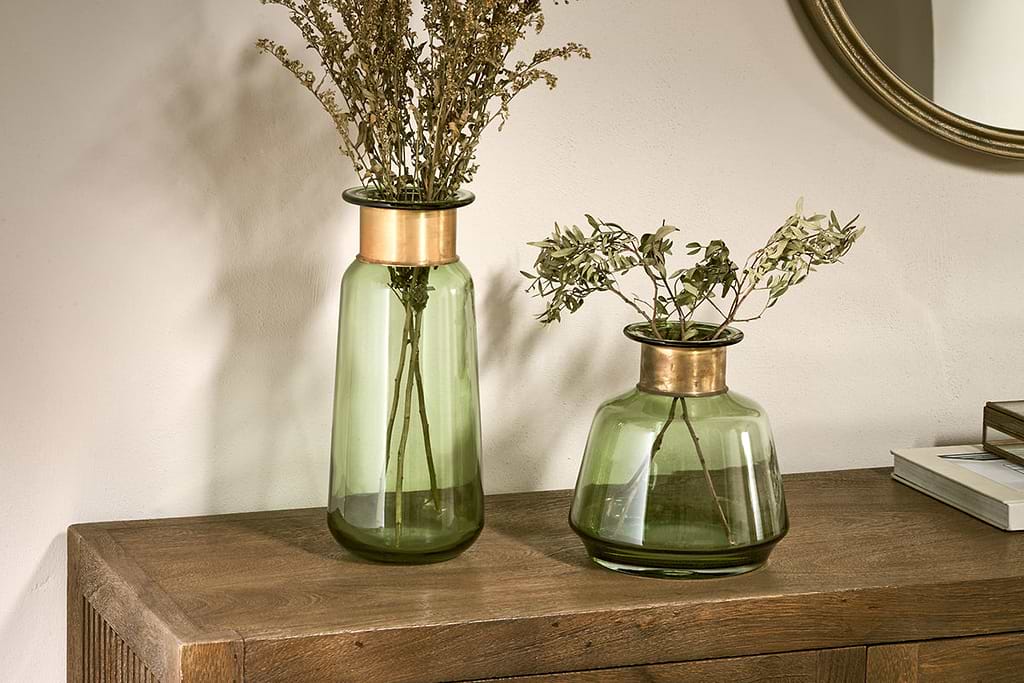
Three quiet focal points-vases and a small mirror-that teach shelf styling through restraint and breathing room.
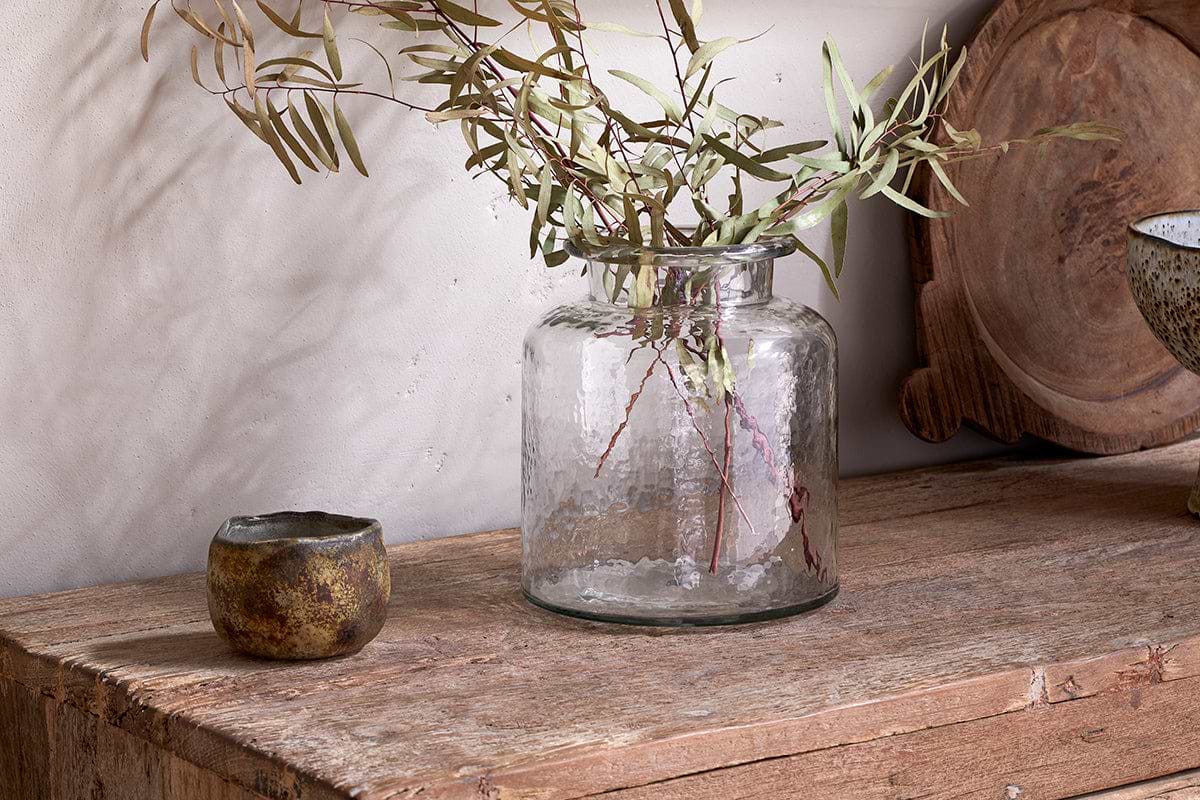
Akra Recycled Glass Vase
Clear cylindrical glass — pairs with stems or sits empty as a quiet accent.
View at Nkuku →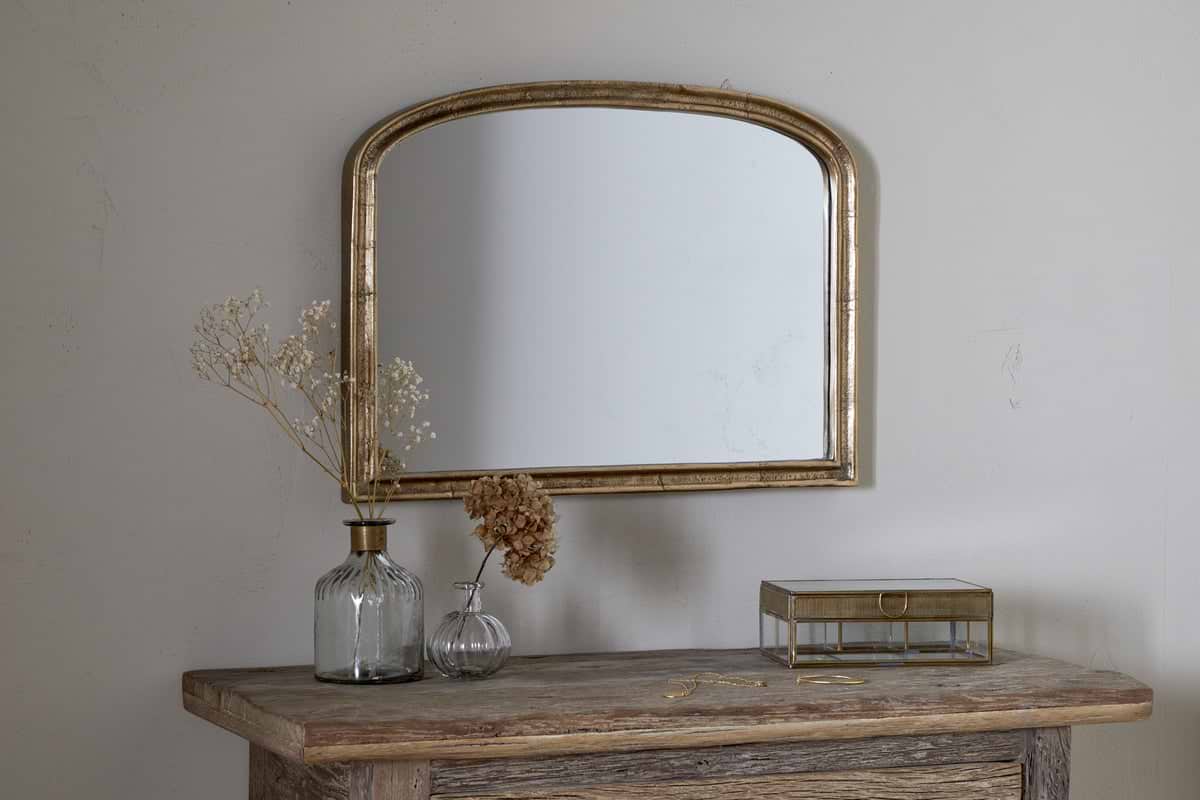
Some links above are affiliate links. If you buy through them we may earn a small commission at no extra cost to you. We only suggest pieces we think fit a calm, lived-in home.
Free guide
The Calm Shelf
12 styling ideas to help you compose calm, balanced shelves in natural texture homes.