

When you live in a small flat or share an open-plan bedroom-living space, even the simplest furniture layout can start to blur together. Without a calm room partition, a sofa drifts into the edges of your bed, or the kitchen table becomes part of your sleeping area. Everything feels mixed, and rest is hard to find.
Today you’ll see clear ways to separate zones, remove distractions, and choose natural dividers that actually fit your day-to-day. This works especially well in a rental lounge or studio when you want privacy and order but still need to keep the space bright because permanent changes can cost your deposit and block the light you rely on.
The short version: A room partition made from natural materials is the most practical and rental-friendly way to split up a small space without losing light or flexibility. By using lightweight dividers or open shelving, you can gently mark out sleep and living zones while keeping the room calm and open.
Key takeaways
- A folding room divider can separate a bed from a lounge area without blocking daylight.
- Open shelving lets you double up on storage and division, giving structure to shared spaces.
- Natural textures like rattan, bamboo, and linen soften harsh lines in minimalist rooms.
- Rental-friendly partitions avoid wall damage and are easy to move or adjust as layouts change.
- IKEA offers room dividers in real wood and rattan designs that suit calm, neutral palettes.

Why choose a room partition instead of a wall?
A room partition gives you privacy and order without heavy construction, which is vital in rentals where walls aren’t allowed and light is precious.
Flat dwellers and renters are rarely allowed to build new walls. Landlords say no, and even minor construction risks a lost deposit. A movable divider lets you shape your space without breaking any rules.
If you set up a folding screen between your bed and sofa, your sleep zone feels protected. The living area keeps its function, but the two no longer spill into each other. This reduces distraction and lets you keep separate routines.
Permanent walls often block sunlight, leading to shadowed corners and a heavy look. Partitions—especially those with open slats or translucent fabric—let daylight flow through and keep air moving, making even a narrow room feel bigger. Unlike bulky wardrobes, a slim divider keeps the layout light and flexible.
A rental living room that uses a rattan screen instead of curtains for separation stays calm and easy to change as life demands. In daily use, this means your bedroom corner feels truly yours—private at night, hidden from guests, and always reversible.
Where this works best
Room partitions work best in small, open spaces where beds and sofas share one room or where there is no hallway for extra privacy.
Shared studio flats, spare rooms turned sleep nooks, and open-plan apartments all benefit from visual boundaries. When there’s no true division, everyone’s things drift across the floor, and privacy becomes hard to find. A lightweight partition solves this instantly.
In a studio, placing a bamboo folding screen beside the bed means you can sit with a book while someone else works or hosts friends. The two areas keep their own feel, and clutter stays put. This is especially helpful for renters who don’t want to drill fixtures into the walls.
Avoid using heavy, opaque furniture pieces as a barrier; a chest-high bookcase blocks light and feels bulky in a small flat. Open-sided shelving or linen panels work better than dense units because they mark zones without closing off either side completely.
The best placements are between your bed and sofa, between a desk and a sitting area, or along the side of a sleeping nook. This small shift means less mess and more freedom to move furniture whenever needed.
What are the main types of room dividers for small spaces?
Folding screens, open shelving units, and lightweight sliding doors are the most practical room divider options for renters and small spaces.
A folding screen, such as a rattan or fabric panel, can be put up or packed away in minutes. These are especially popular in open-plan flats where flexibility and quick change matter the most. IKEA offers room dividers in calm natural textures, including the TOLKNING rattan screen and the wood-stained NÄMMARÖ privacy panel—both easy to set up and move according to IKEA.
Modular shelving, like a two-cube KALLAX unit, breaks up a lounge from a bed zone while holding books or baskets. Open shelves keep things light and let sunlight reach every corner. Shelving is also easy to reconfigure if you swap rooms or replan your space.
Sliding partitions—like the B&Q Alara or doors from SpaceSlide—offer semi-permanent division. While some sliding solutions must be fixed, many are modular and stand alone, suiting renters who want flexibility. Unlike folding screens, sliders suit larger divides or areas where sound blocking matters.
A three-way comparison helps clarify what each type offers in practice:
| Type | Best for | Main drawbacks |
|---|---|---|
| Folding screen | Temporary separation, bright flats | Low sound block, must store folds |
| Open shelving unit | Added storage, visual order | Needs tidying, not full privacy |
| Sliding divider | Permanent feel, wide spaces | More expensive, may not suit renters |
In a compact studio, a linen-covered folding screen can screen off a desk without closing in the space. Shelving dividers let you combine storage and zone-marking, which is important in small spaces longing for less clutter.
How do you pick the right divider for your space?
To pick the right room partition, start with how much privacy you need, what you want to store, and how much natural light matters.
Start with a clear goal: Do you want to hide the bed during the day, block noise, or just signal two different zones? If the answer is mostly visual, a light folding screen or slim bamboo divider may be plenty.
Check your storage needs. A modular shelf, like the IKEA KALLAX, works hardest when you need to hold blankets, books, or shoes in one spot. An open bookcase divides space while multiplying hidden storage with baskets or boxes.
Think about sunlight. Linen curtains or rattan panels filter light but soften harsh shadows, keeping the whole flat feeling bright. Hard dividers or painted units can shade the room and make things feel boxed-in, especially in basement-level or window-limited flats.
Compared to solid wood screens, woven rattan or sheer fabric panels are much easier to lift and move—perfect for renters who shift layouts every few months. Choose a divider that rolls, folds flat, or is easy to disassemble so the next move is never a burden.

Styling and placement
Styling a room partition is about using soft, natural textures, open spacing, and a tidy palette so a divider looks part of the room instead of sticking out.
Place folding screens so the edges line up with a rug or pendant, not in the middle of walkways. In a shared bedroom-living lounge, keep the screen slightly off-centered to soften the division and avoid splitting the room too neatly in half. Use shelves perpendicular to the main wall for stability and shadow play.
Materials matter. Open rattan or bamboo panels look lighter than dense particleboard or glossy laminates. Linen drapes or flax curtains drawn across a tension rod blur the zone line without blocking air. A clay bowl or vase set on a shelf divider pulls the schemes together, so the eye lands calmly instead of bouncing between zones.
Palette makes a difference. A white screen on a white floor fades away, while a soft blonde-wood or neutral rattan divider brings gentle contrast without dominating the scene. If you crowd the partition with many colors or baskets, you bring noise back. A folding screen reads softer than a mirrored divider.
Quick calm checklist:
- Favor natural materials: rattan, bamboo, linen, pale wood.
- Leave space so the divider breathes—never tuck directly into corners.
- Limit each partition to no more than two calm colors (whites, sand, pale grey, muted clay).
- Anchor the divider with one grounding object (vase, basket, or low lamp) to tie both sides together.
Set the divider where changing sunlight can brush through. Positioning it so the corner stays open gives flexibility to flip layouts with minimal fuss in daily use.
Which options feel calm, not cluttered?
Open-frame room partitions and light fabric panels create separation without weighing down the room or adding clutter.
Dense partitions—tall wardrobes, solid MDF, mirrored panels—tend to trap daylight and reflect mess. Open-frame dividers, especially in rattan or slatted oak, allow both air and sightlines to travel, keeping the feeling relaxed rather than boxed in. A linen curtain shifts in the breeze and glows when backlit, which makes any corner softer.
Folding screens made with cane or bamboo weave filter the view but don’t overwhelm a plain rug or bedding set. Unlike solid screens, a natural partition casts light patterns and brings in mild texture without visual noise. This difference is immediately clear if you set up a low, stained-wood screen in place of a bright white board.
Shelving units only work when kept sparse. A shelf overloaded with shoes and gadgets ruins the logic of using it for calm separation. Leaving some cubbies empty or filled only with one type of basket softens the effect. A shelf divider feels more open than a hedge of plants, which can become busy if overdone.
Calm partitions are best placed where people don’t brush by constantly—next to the sofa, beside a bed, or flanking the entrance to a hallway. This keeps zones clear, functions simple, and easy movement between areas.
Affordable dividers: what actually works under £50?
Handmade fabric panels, basic rattan screens, and simple tension rods with curtains are the most affordable and rental-friendly room partitions available.
A classic tension rod with a linen sheet spans a corner to create a sleep zone or hide a workspace. This setup leaves walls untouched and costs much less than custom carpentry. Many renters choose light rattan screens, which often run under £50 on secondhand sites or budget brands. IKEA offers room dividers, including the TOLKNING and NÄMMARÖ ranges, at accessible prices for calm, pale-wood looks according to IKEA.
Printed panel screens are widely available online, like Bimago’s folding boards with soft landscape motifs starting from about £80 according to Bimago. If price is crucial, prioritise simple bamboo frames or freestanding fabric panels—these weigh less, are easy to move, and avoid drilled holes.
Compared to full sliding doors (which can exceed £1,000, according to SpaceSlide), a basic fabric screen or open cube shelf works for almost all rental needs. If you source baskets and panels together, keep both to natural tones so the zone divider stays quiet. Visual noise creeps in if every shelf or panel hosts a different color or object, especially in shared areas.
For calm effect, place the divider opposite a window so filtered light gives the space life. Sectioning off a reading area with a linen curtain or rattan panel under £50 keeps your flat undamaged and feeling peaceful.
Most people realise their space doesn’t feel right when clutter spreads everywhere or zones start to merge. The sofa ends up holding laundry, the kitchen table collects bags, and every wall feels equally busy or bare. A simple, natural divider—placed in the right spot—makes one area feel special and signals to the mind that “this is where rest begins and ends.”
When you decide to settle the question of calm versus clutter, the shift happens by picking one spot and limiting yourself to one main texture or divider type. The effect becomes visible: less stuff, clearer sightlines, and the freedom to use each area for its real purpose.
Flat dwellers often think any divider will do, but this isn’t true—a thick wardrobe or random bookshelf usually makes a room feel cramped or unfinished. The most common mistake is picking a piece that blocks all the light or doesn’t fit the room’s line. It’s worth taking a moment to step back, clear extra pieces out, and focus on openness as much as privacy.
Once the right partition is in place, noise and mess tend to fall away. Leaving the area near your screen or shelf divider tidy lets the eyes rest and keeps zones anchored in daily use.
Save this idea for later.

What tends to hold up with natural partitions in small flats
Looking at many shared spaces and compact rentals, the most successful partitions are those that work with light, not against it. Many reviewers say woven screens or slatted shelves look best when placed where sunlight can pass through, because these materials filter glare and never read as heavy.
Designers commonly recommend sticking to one main divider per room; too many barriers break the flow and create more corners to tidy. In most homes, open shelves or modular screens in neutral shades stay fresher and show wear less than fabric panels in bold colors.
— Mara, Loom & Glow
Common questions
How can I partition a room cheaply?
The cheapest way to partition a room is by using a tension rod with a linen or cotton sheet, or a basic rattan folding screen. Both methods avoid wall damage and cost far less than built-in solutions. You can shift them as you change layouts or move to a new flat.
What is the best way to partition a room without building a wall?
The best way to partition a room without a wall is to use a lightweight divider like a folding screen, open shelving, or a fabric panel. These options preserve light and are renter-safe, so you won’t risk your deposit. Modular solutions also let you adjust the layout as your needs change.
Where can I find an affordable room divider?
You can find affordable room dividers at IKEA, B&Q, and online shops like Bimago and WoodUpp. Prices range widely, with folding screens and tension-rod solutions usually the least expensive. Look for lightweight models in rattan, bamboo, or plain wood for a calm, neutral effect.
How much does it typically cost to add a room partition?
The cost of a room partition varies, but most folding screens and fabric panels are available for under £100, with basic options starting below £50. Built-in sliding doors or custom work can exceed £1,000. Choose a freestanding or lightweight model for the most cost-effective result.
Explore more calm combinations inside our Shop The Look .
Shop the Look
Woven baskets sit beautifully alongside dividers, softening sight lines and adding warmth to partitioned zones.

Nkomi Basket
Woven storage with a calm silhouette — works open or tucked under a console.
View at Nkuku →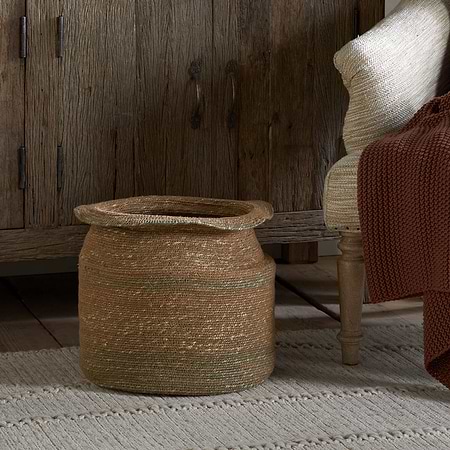
Some links above are affiliate links. If you buy through them we may earn a small commission at no extra cost to you. We only suggest pieces we think fit a calm, lived-in home.
Free guide
The Calm Shelf
12 styling ideas to help you compose calm, balanced shelves in natural texture homes.