
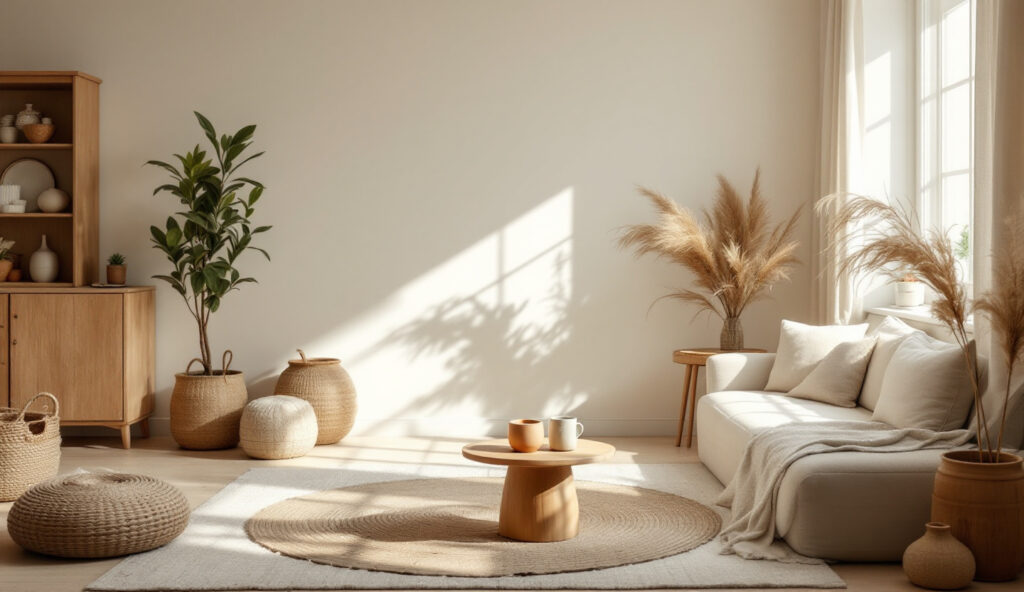
Many hallways are slim, short or barely more than an entry ledge, which makes figuring out small hallway ideas for storage and lighting a challenge. Shoes pile up, coats slip off hooks, and the whole spot feels dim or awkward day to day. Storage options are often too bulky for tight spaces and lighting can leave the area feeling slightly grey, especially in the evening.
This guide is about pairing simple, clear changes with the way your hallway actually gets used. You’ll learn which to keep, what to add, and how to avoid common mistakes that add clutter or darken your entry. This works especially well in a rental hallway when you want it to look lighter without drilling or permanent paint because small changes make the space more practical and easy to live with.
The short version: The simplest small hallway ideas group storage and lighting in one place, keep clutter off the floor, and use wall-mounted lights for a softer feel. Making a narrow space work well mostly means picking two to three slim, hardworking pieces and placing them together, not spread out.
Key takeaways
- A wall-mounted shoe cabinet or slim bench keeps the entry clear and practical.
- Soft wall lamps make a hallway feel larger and avoid harsh overhead glare.
- Natural baskets or closed boxes help hide everyday clutter fast.
- One large mirror is usually better than two small ones for depth.
- Houzz UK categorises many hallway design ideas for compact spaces.
- How do you make a narrow hallway look bigger?
- Small hallway storage ideas that actually hide things
- Where this works best
- What’s the best lighting for dark hallways?
- How to decorate a small hallway without adding clutter?
- Styling and placement
- Is a bench, console, or shoe cabinet better for entry storage?

How do you make a narrow hallway look bigger?
A small hallway looks bigger when you keep most of the floor clear, pick pale wall colours, and use one mirror at eye level to reflect light. Using horizontal lines instead of vertical makes walls feel longer and more open.
Many people try to squeeze storage or art into every gap, but this draws attention to how tight the space actually is. Instead, use a large mirror near the door or above a bench. It reflects the opposite wall and spreads daylight, so the entry immediately feels wider and less cramped.
Paint in a lighter shade, especially whites or soft greys, has more effect on hallway brightness than a strong accent colour. A deep green wall, for example, reads heavier than a plain cream or pale blue, especially at night or on cloudy days.
One simple rule: A hallway feels wider when the largest object sits low or floats off the floor, not blocking eye level.
Adding a flatwoven rug in a single tone stretches the floor visually, while a patterned runner can chop the space up. Shoe racks with exposed shoes tend to clutter the look; a closed cabinet or bench with a lift-top is subtler. Placing a wall-mounted shelf higher than elbow height pulls the eye up and leaves room to pass underneath.
Compared to an open shoe rack, a closed shoe cabinet helps the hallway look tidy at a glance.
For true impact, rely on one large wall mirror and a quiet colour on both walls, letting the rest of the arrangement fade into the background.
Small hallway storage ideas that actually hide things
A closed-front shoe cabinet or a bench with internal storage keeps daily clutter out of sight in a narrow entry. A wall-mounted coat rack with a shelf gives double duty without taking much extra room.
Storing hats, gloves, or dog leads neatly is tough when there’s no real cupboard. A woven lidded basket or small closed box near the entry bench quickly stashes bits and pieces as you come in the door. Unlike open trays, these don’t show the things inside and always look neat, even when full.
Slim benches with storage, such as those IKEA suggests using for narrow hallways, are practical for sitting to put on shoes and for tucking clutter away underneath. According to IKEA, a storage bench in a hall collects heavy bags, winter boots or scarves without dragging them into the rest of the flat.
The way these solutions work is simple cause and effect: A hallway with hidden storage looks ready every time you pass through, not half-finished or busy.
Open shelving near the door can look messy after a few days unless you use baskets or boxes to corral the small things.
If you have space for only one storage unit, chose one with a lid or doors, this hides clutter without taking more room.
Where this works best
Compact storage and soft lighting improve small and busy hallways, especially where there’s no window and not much floor space. These ideas work for tiny entranceways, rental flats, or narrow Victorian terrace halls.
Rooms with little or no natural light benefit most from a combined mirror and lamp, especially when the entry opens straight onto the living area. Small hallway ideas matter even more if you share the hallway with family or flatmates, since shoes, bags and coats build up fast.
Entry corridors in older homes often have awkward radiator placement or a stepped floor. A bench or shoe cabinet that fits snugly beside the door can make a spot to pause and leave keys, with a small basket tucked beneath. For a modern apartment, a wall-mounted shelf placed above the skirting board keeps the hallway passable but adds function where it’s needed most.
Avoid using deep console tables or tall stacks of shoe boxes, which make a narrow entry feel even more squeezed. In houses with a staircase coming off the hallway, skipping heavy furniture and sticking to just hooks or a hat rack allows for easy movement up and down without bumping into things.
Placing a mirror higher than shoulder height doesn’t help if the main users are children or the hallway is very slim; keep reflections at a practical level.
Entries that open into a kitchen often need even tighter solutions and closed boxes, not open racks, work best to catch spills and mess.
What’s the best lighting for dark hallways?
Wall-mounted sconces with warm bulbs make a slim hallway feel softer and calmer than one overhead light. Avoiding bright white or blue bulbs keeps the entry from looking cold at night.
In many homes, the default is a single ceiling bulb or downlight that leaves corners in the shadows. Instead, a pair of small wall lamps at eye level, spaced evenly along the wall, bathes the entire space in a more gentle light. Reflection from pale walls or a large mirror boosts this even further and makes the hallway feel much less boxy.
Wall-mounted lighting is practical because it spreads light across the walls, not down from the ceiling. A pendant lamp can work well, but only if the ceiling is high enough that adults don’t brush against it. Most small hallways are better served by lamps that sit flat to the wall.
Warm bulbs (sometimes called soft white, around the same warmth as a classic lamp or a summer evening) make coats and bags read true in colour, not harsh or washed out. A hallway fitted with bright, bluish bulbs tends to look almost grey and unwelcoming after sundown.
Compared to a table lamp perched on a console, a fixed wall sconce can never be knocked over and leaves surfaces clear for storage.
Place a mirror directly opposite a wall sconce for extra light bounce. This setup is especially helpful next to a shoe cabinet or bench where you’ll stop and put on shoes.

How to decorate a small hallway without adding clutter?
A small hallway stays uncluttered when you use one large object for display, like a round mirror or single vase, and keep all daily items hidden in closed storage. Fewer objects make busy spots look less crowded.
Entryways often become drop zones for parcels, handbags or spare change. Placing a clay bowl or small wooden tray next to the door gives these things a home, but choosing one that matches the wall colour keeps it visually quiet. Unlike string lights, which can feel messy in daylight, a lined basket under a bench is always neat, even when full.
Limiting decoration to one wall, instead of all four, lets the space breathe. Hang artwork at eye level above the bench and skip anything below. If two or more hooks are needed, keep them together in a straight line rather than scattered, so the wall still feels open.
Natural materials like woven baskets or a simple wool runner on the floor add some texture without looking busy. Closed door fronts on storage hide mismatched shoes or shopping bags in a way that an open stand never does.
A hallway with just a mirror, a bowl for keys and closed storage usually looks more finished than one stuffed with baskets and hooks along both sides.
Styling and placement
Styling a small hallway works when you cluster storage and a mirror together, choose matching objects and keep clear space around the door. Placing the main piece in view as you enter makes the whole spot feel organised.
Arranging hallway pieces in a small flat is not about filling every empty patch. The most effective placements group the storage item (like a bench or shoe cabinet), a basket, and a wall-mounted mirror on the same wall, near the door. This allows one visual group for the eye to settle on, instead of lots of bits scattered up and down the entry.
Matching the basket, bench and coat rack in material or colour gives the area a settled look. For example, a pale wood bench with a woven basket and a simple oak peg rail feels coordinated. A hallway with a white basket, mismatched bench and metal shoe rack feels busier, even if the number of items is the same.
Using too many accent colours in a slim hallway often pulls focus away from the items that matter. Sticking to a tight colour group, with two or three shades at most, helps the spot look more planned.
A calm entry is not about what you add but what you remove. Take away hooks that are never used or baskets that crowd the baseboard and see if the space feels lighter.
One rule of thumb: A group of hallway items looks best when placed on the same wall as the entry door, with enough space to open fully.
Placement also depends on who lives in the space. A bench works well for families with small children, but solo dwellers might prefer just a shoe cabinet and mirror.
Adding a simple rug under the storage spot can create a defined area for shoes and bags, catching grit and dirt before it spreads.
Quick calm checklist:
- Pick one main natural material for storage, like pale wood or jute.
- Keep loose floor space by choosing a wall-mounted mirror and hooks.
- Limit the colour palette to two or three connected shades.
- Align storage, basket and mirror on the main wall near the door.
Is a bench, console, or shoe cabinet better for entry storage?
A slim bench with lift-up storage is the most practical option for most small hallways, but a shoe cabinet is the better choice where there’s no room to sit. Console tables work best only in wider entries.
| Storage Type | Best for | Main Limitation |
|---|---|---|
| Bench with storage | Slim halls where seating is needed | Takes floor space |
| Shoe cabinet | Very narrow entries, rental-friendly | Limited to shoe storage, no seat |
| Console table | Wider entryways needing drop zone | Bulky for most small halls |
Most floating shoe cabinets are less deep than a bench. A good one typically runs under 30 cm deep, suiting places where there’s barely enough space to turn. Closed doors keep shoes out of sight, so the entry looks tidy day to day.
Benches with hinged tops or slide-out baskets are useful for stowing bags, backpacks and extra shoes. According to IKEA, combining seating and storage in one piece keeps daily routines simple and keeps clutter near the doorway, not trailing into the rest of the home.
Console tables, compared to the other options, demand more floor space and do not normally offer hidden storage. They mostly suit older homes with wide halls or apartments with large open entry areas.
If you share a hallway with others, the shoe cabinet is usually best, as it assigns each person a spot for their shoes without the scramble of baskets or over-door hooks.
A two-in-one mirror with internal storage, like the LINDBYN, also fits where you have zero floor space.
A bench is the clearest winner for families with children or anyone who wants a place to sit while putting on shoes. For everyone else, a shoe cabinet keeps order without eating into the main walkway.
Why simple storage and lighting stay useful over time
After years of reviewing hallway setups for both small apartments and larger homes, the pattern that stands out is how slim, closed storage and wall lamps hold up. Reviewers consistently point out that baskets and benches with hidden storage keep the hallway neat, even on busy days. Most decorators choose matte finishes and woven natural textures because they are forgiving, scuffs blend in, and the space still looks tidy months on.
When people swap overhead lighting for wall lamps or sconces, the hallway feels softer for longer. It’s a change that holds up because it fits how people use the space every day, not just for a photo. Big, bold fixes rarely outlast the simple ones.
Mara, Loom & Glow
Common questions
How small can a hallway be?
The minimum hallway width is often the width of one door plus enough room to pass through with a bag or coat. Most apartment and flat hallways are labelled “compact” by Houzz UK. Good hallway storage and lighting choices make even the tightest entry feel brighter and less crowded.
How to brighten a small hallway?
Use wall-mounted lights with warm white bulbs and place a large mirror opposite the main light source to maximise the available light. Keeping wall colours pale and storage minimal helps reflect daylight deeper into the hallway. If possible, avoid blocking any natural light sources.
What is the best way to decorate a small entry hallway?
Limit decorations to one large mirror, a simple closed storage unit, and a single bowl or tray for essentials. Natural materials like wood or woven baskets add subtle warmth. Avoid adding multiple hooks, baskets or ornaments, which quickly make small spaces look busy and unfinished.
What colour is good for a small hallway?
Pale tones like soft white, cream, light grey, or chalky blue are best for making a narrow hallway feel airy. Lighter colours reflect both daylight and artificial light, making the area feel more open. Dark or very bright colours can make a small hallway appear shorter and more enclosed.
is a white living room a good idea?
The simplest small hallway ideas group storage and lighting in one place, keep clutter off the floor, and use wall-mounted lights for a softer feel.
Explore more calm combinations inside our Shop The Look .
Shop the Look
A few Nkuku pieces that make a narrow hallway feel wider and more welcoming.
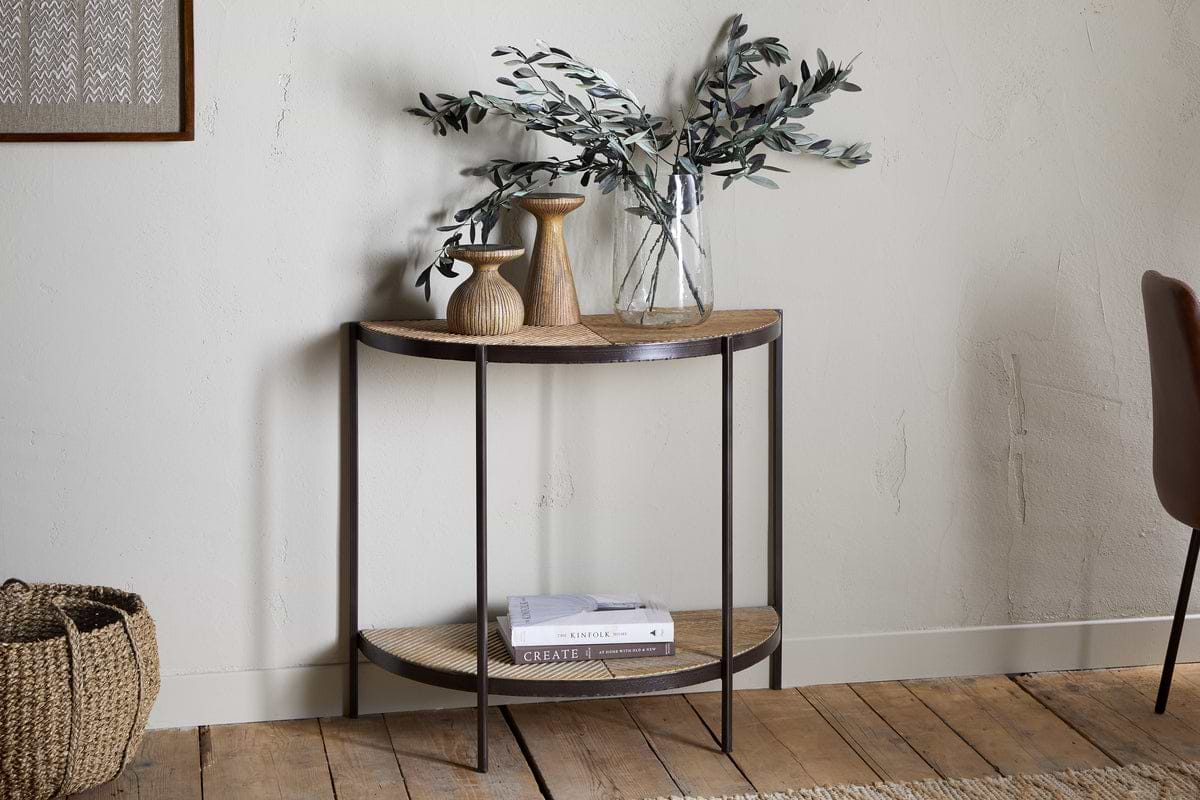
Aasha Console Table
Half-moon silhouette in mango wood; anchors entryways and narrow walls.
View at Nkuku →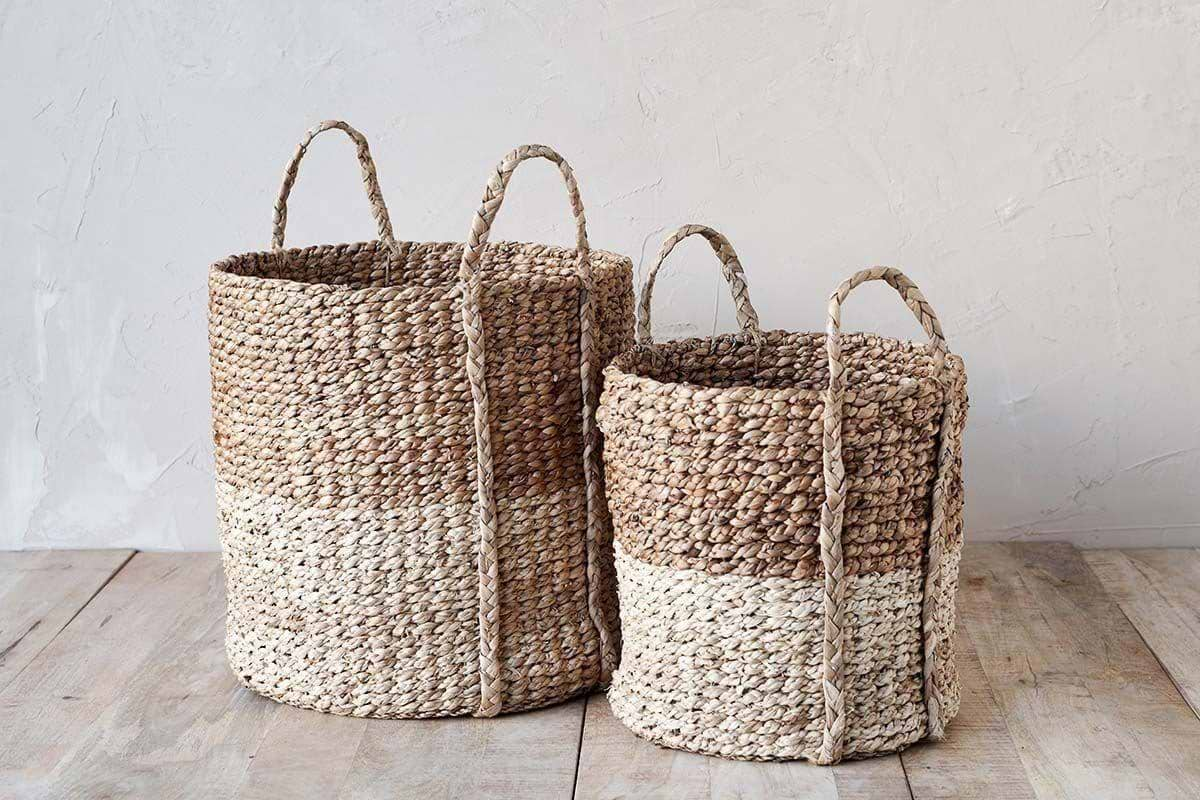
Nkomi Basket
Woven storage with a calm silhouette, works open or tucked under a console.
View at Nkuku →
Some links above are affiliate links. If you buy through them we may earn a small commission at no extra cost to you. We only suggest pieces we think fit a calm, lived-in home.
Free guide
The Calm Shelf
12 styling ideas to help you compose calm, balanced shelves in natural texture homes.