

Bookshelf decor often starts with good intentions—a few favourite novels, a plant, a candle—but quickly turns messy in most homes. The problem isn’t the number of books; it’s the mix of unrelated objects and too many colours, which makes the shelf read busy instead of calm.
By choosing what stays and what goes, you shift your shelf from a jumble to a space that feels thought through. Today, you’ll see specific steps to sort, group, and simplify, using only practical ideas. This works especially well in a living room with open shelving when you want the shelf to look tidy, because there’s nowhere for clutter to hide.
The short version: Bookshelf decor feels calm and ordered when you limit colours, group similar items, and keep more shelf space open than full. Most clutter comes from too many small, unrelated things spread everywhere; a clear structure helps every shelf look softer and more welcoming.
Key takeaways
- A bookshelf with grouped items and fewer colours looks less busy than one with scattered objects in mixed shades.
- Nordic Nest’s styling guide sets out three core rules for bookshelf decor: balance, proportion and variation.
- Small vases or woven baskets pull loose things together so they read as one instead of many.
- Bedroom shelf decor benefits from fewer books and softer objects like textiles or candles.
- Bringing in one living plant works best for shelves near daylight, while battery candles suit darker corners.

Why does my bookshelf look cluttered instead of calm?
A bookshelf looks cluttered when every shelf is packed, colours clash, and objects of different heights stand alone instead of grouped. The eye jumps from item to item with no clear place to rest.
Living rooms with open wall shelves often fill up quickly. Extra mail, souvenirs, or unread books land there “for now” and never leave. The shelf turns into catchall storage, not part of the room’s style.
A bare shelf can look as off as a shelf holding too much. When everything lines up in even rows, it reads flat and stiff. Unlike a shelf with loose stacks gathered into a tray or one anchor object, scattered clutter draws attention to disorder rather than to what matters.
Most people find the shelf distracting, especially in spaces you use to relax, because the brain gets stuck on the jumble. A grouped, pared-back shelf with space to breathe actually helps people unwind at the end of the day.
Where this works best
Limiting bookshelf decor to a controlled palette and a few key objects works best on open shelving in busy rooms. This is especially effective in small living spaces with limited storage.
Open living room shelves, narrow hallway units, and wall shelves above a low sofa work well for a more selective approach. When you pare down to just a handful of objects, each piece has room to matter—especially in smaller apartments or studio setups.
This method fits homes with kids, pets, or shared spaces, where shelves can gather loose items fast. Focusing on what you reach for daily and letting the rest go means less visual stress, quickly making the room feel easier to clean and use.
Avoid styling a crowded full-wall unit the same as a small single shelf. Too many big accents line up as “props,” not as storage. Instead of repeating the same bowl or frame throughout, try a soft variation: a low plant at one end, a woven holder at another, and switch between upright and stack arrangements.
How do you group books and objects so it looks easy?
Grouping books upright and stacking objects in odd-numbered clusters pulls your eye to those spots and keeps the shelf readable. Using trays or baskets helps several small things act as one.
Shelves in the living room often mix novels, small vases, and keepsakes. Instead of evenly spacing each one, pull objects of similar height together and ground smaller bits in a low tray or bowl. Books can be stacked flat or grouped upright with gaps between sets so nothing feels crowded.
Grouping creates one focal anchor, not a scatter. Nordic Nest advises grouping smaller items together on a shelf to create a focal point, rather than spacing them evenly. For example, a set of little clay pots in a row looks tidier than five unrelated small things across the shelf.
A shelf that reads as “one piece” rather than “many spots” calms the room, especially when you use one big bowl or vase instead of several tiny bits collected at random. This shift works in living rooms with open shelves alongside the TV or in bedrooms with shelves above a chest of drawers.
| Arrangement | Result | Best for |
|---|---|---|
| Items evenly spaced | Scattered look | Large, casual shelving |
| Clustered in threes | Focal grouping | Small shelves, alcoves |
| All objects stacked together | Weighted anchor | Open bookcases |
Choosing a colour scheme for a quiet shelf
A calm shelf relies on a limited colour palette—two or three related shades and natural materials—so nothing jumps out or jars the eye. Bright spines or objects add contrast only if matched elsewhere.
Wall shelf decor ideas for the living room work best when most pieces belong to one colour family. Nordic Nest recommends decorating a bookshelf in a harmonious colour scale rather than mixing unrelated colours. Cool-toned shelves feel cleaner; warmer wood and woven details add texture without stealing focus.
Most homes have books in many cover colours, but wrapping the wildest tones with neutral paper or stacking the most colourful horizontally can soften the shelf. Contrasted with a row of pale ceramics, even a stack of glossy cookbooks pulls less attention.
Too many colours on one shelf look random, especially in open-plan rooms. Choosing one soft ground (like oat, white, or pale grey) plus one accent (rust, green, or navy) keeps shelf decor ideas practical and livable. If you want brighter moments, repeat the same pop twice—once in a small vase, once in a book spine.

Styling and placement
A shelf feels calm when objects are spaced out and set at different heights, and when books and objects alternate shelf by shelf. Natural textures and plain materials add softness.
Start with one anchor piece per shelf—a solid bowl, a stack of two or three books, or a small plant. Fill open space with air, not more things. Most floating shelves sit about the depth of a hardback book, so deeper items can easily stick out or tip over and should be used with care.
Unlike styling floor-to-ceiling bookcases by just lining up everything you own, living room shelf decor ideas that work keep some open space in each row. A shelf feels more balanced with one item left-justified, one right, and one centred below.
Wood, linen, and rough clay work as stable base textures. Glass adds light. Mixing too many shiny or bright items breaks the flow. A shelf with one woven basket grounds the eye more than a row of glossy candle jars.
Quick calm checklist:
- Limit materials: wood, linen, clay, clear glass.
- Leave space between each set of grouped items; never crowd every gap.
- Stick to one base shade for the shelf and one accent colour or metal.
- Every shelf gets one visual anchor (book stack, basket, vase).
- Switch up height and placement shelf to shelf.
Use these steps for open wall shelving in a living space or over a bench in a narrow hallway, where simple lines matter most.
floating shelf decor is a popular search for small homes—this approach works on those surfaces too.How do you add plants, candles, and lighting without it looking busy?
Plants, candles, and portable lights belong on shelves but look crowded if used together on every shelf. The best trick is to use only one of each, spaced out.
Open shelving with a single healthy plant draws the eye, especially in rooms with daylight. According to Nordic Nest’s guide, portable lighting, LED lights and candles are among the most-used shelf accessories because they bring warmth both day and night. Small battery candles work where outlets are scarce, while one glass hurricane on a top shelf reads elegant and safe.
If you use more than one plant, choose a mix of heights but match the pot colour to your scheme. Avoid tall trailing plants on every shelf—one softens sharp lines, but too many take over. Group soft items together: basket, candle, soft plant, and almost any shelf reads easier.
Natural fibre baskets or a ribbed clay pot with a plain surface feel less fussy than reflective metal or coloured glass. Use this approach for dark corners or enclosed shelves where there’s little daylight and the aim is to make the shelf feel lived in, not staged.
neutral shelf styling works particularly well for rooms with low light or rental restrictions.What changes with bedroom shelf decor?
Bedroom shelf decor shifts from display to rest—fewer books, more soft things, and pieces that feel easy to reach. Fabrics and candles work better here than bold art or heavy baskets.
Bedroom shelves near a bed benefit from quiet details—one slim stack of magazines, a scented candle, maybe a bowl for rings or a linen-wrapped box. Unlike living room shelves, bedroom shelf decor ideas rely on fewer upright books and more soothing shapes or textures.
Lighting matters. Battery lights or dimmable lamps add convenience, especially if the shelf sits behind a headboard. Hard shadows from spotlights can make a bedroom shelf feel harsh, so softer, diffused lights work best.
Open shelves risk getting crammed with charging cords, creams, and books you’re meaning to read. Grouping these things in a shallow basket hides mess fast. Bedroom shelf decor ideas often pair a pale palette with relaxed lines—wider spacing and one big cushion do more for calm than loads of “decor” pieces could.
Bedrooms where shelves stretch across a whole wall do better with one-off art or a family photo in a muted frame. Keep the routine: group, pare back, and match textures, and the shelf will always look restful.
bedroom shelf decor inspiration often favours gentle, soft-coloured accessories over vivid statement pieces.The moment most people realise their bookshelf feels off is when they catch themselves tidying it every few days and still feeling a sense of clutter. The room looks busy no matter how often things are straightened and swapped around. This is usually the sign that too many different colours, items and odd shapes are on display at once.
The shift comes from choosing one focal point per shelf, repeating one or two natural textures, and letting extra space show. Suddenly, the mess fades and objects feel easier to appreciate.
Many homes end up with shelves that act as storage for whatever doesn’t have another home—remotes, toys, chargers, unread books. The downside is clear: shelves fill fast and the overall look is heavy or half-empty. Most people try to correct this by adding more, which just worsens the feeling.
When you pick a single anchor for each shelf and match a small set of materials or colours, the cluttered feeling lifts.
Save this idea for later.
What tends to hold up with bookshelf decor in everyday homes
Looking at living rooms and bedrooms over time, one thing stands out: shelves styled with fewer, heavier pieces stay looking neat for longer. Baskets made from woven seagrass or rattan mask daily clutter and don’t collect dust the way ceramics often do.
Reviewers and stylists consistently push the same idea—matte finishes for ceramics or painted wood shelves stop sunlight glare and offer a softer backdrop for other decor. Setting just one plant or one signature candle per shelf, spaced apart, is a rule that helps almost every situation, whether you rent, share, or own the space.
— Mara, Loom & Glow
Common questions
Why does my bookshelf look cluttered instead of calm?
A bookshelf looks cluttered when every shelf is packed, colours clash, and objects of different heights stand alone instead of grouped. The eye jumps from item to item with no clear place to rest. Living rooms with open wall shelves often fill up quickly.
How do you group books and objects so it looks easy?
Grouping books upright and stacking objects in odd-numbered clusters pulls your eye to those spots and keeps the shelf readable. Using trays or baskets helps several small things act as one. Shelves in the living room often mix novels, small vases, and keepsakes.
How do you add plants, candles, and lighting without it looking busy?
Plants, candles, and portable lights belong on shelves but look crowded if used together on every shelf. The best trick is to use only one of each, spaced out. Open shelving with a single healthy plant draws the eye, especially in rooms with daylight.
What changes with bedroom shelf decor?
Bedroom shelf decor shifts from display to rest-fewer books, more soft things, and pieces that feel easy to reach. Fabrics and candles work better here than bold art or heavy baskets. Bedroom shelves near a bed benefit from quiet details-one slim stack of magazines, a scented candle, maybe a bowl for rings or a linen-wrapped box.
Explore more calm combinations inside our Shop The Look .
Shop the Look
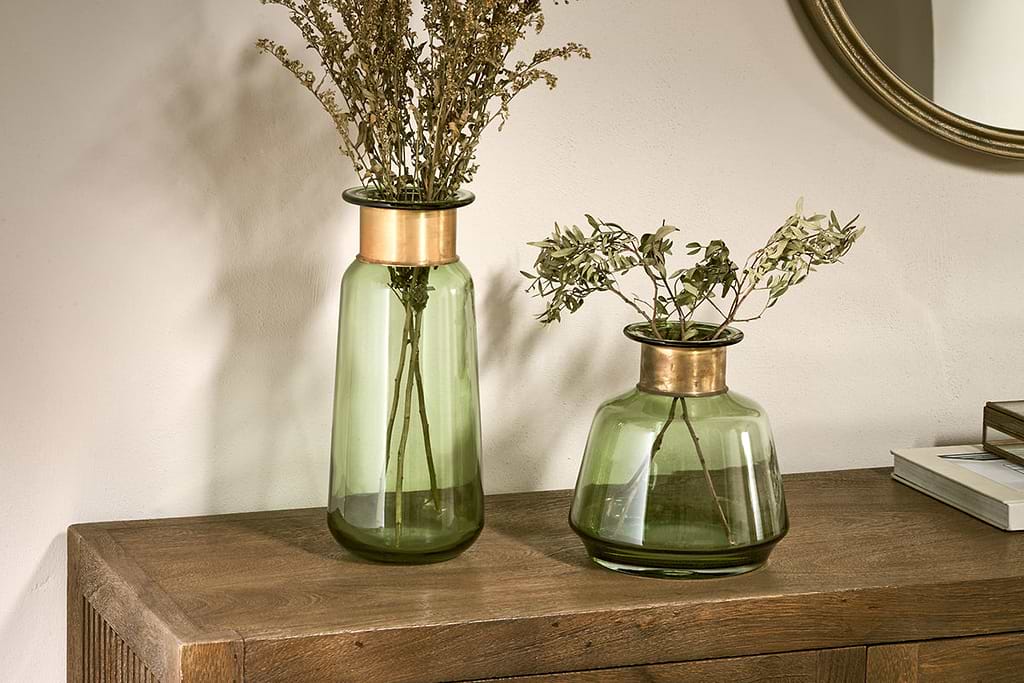
A few Nkuku pieces that balance proportion and add gentle variation to bookshelf displays.
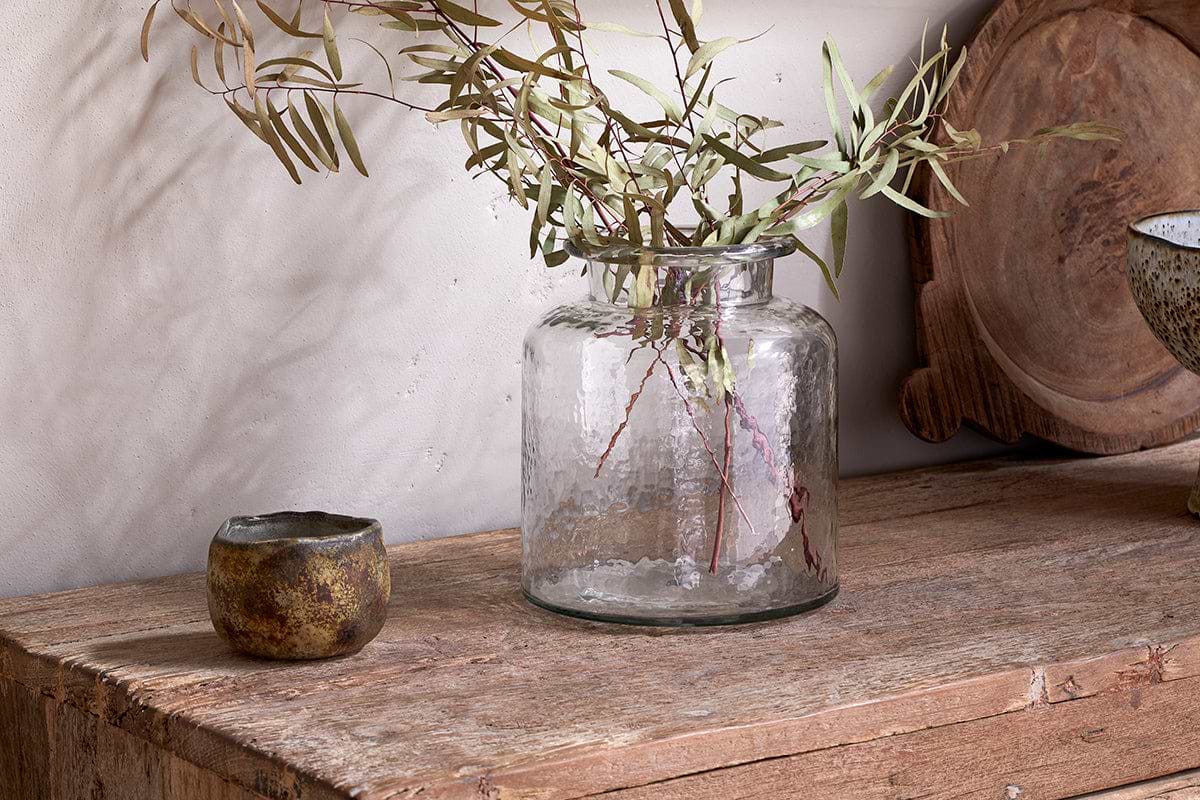
Akra Recycled Glass Vase
Clear cylindrical glass — pairs with stems or sits empty as a quiet accent.
View at Nkuku →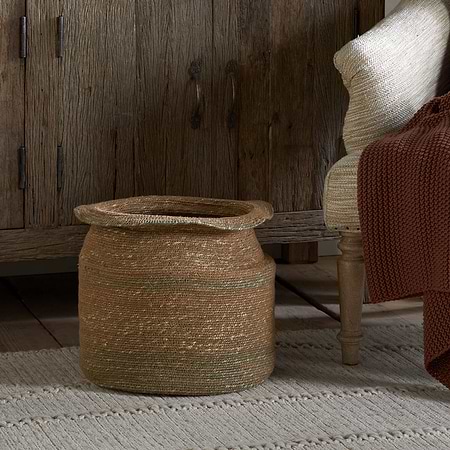
Some links above are affiliate links. If you buy through them we may earn a small commission at no extra cost to you. We only suggest pieces we think fit a calm, lived-in home.
Free guide
The Calm Shelf
12 styling ideas to help you compose calm, balanced shelves in natural texture homes.