

Shelves fill quickly. What starts as a minimal look turns busy, vases, baskets, travel finds, plants, framed prints, and small gifts each add up fast. It’s a familiar Pinterest problem: after stacking up new shelf ornament ideas, the result often feels less like a calm feature and more like clutter in plain sight.
The right choices, and a clear order for what stays and where, change the mood entirely. Today, you’ll see what to remove, what deserves a spot, and how to build a shelf display that feels open instead of crowded. This works especially well in apartments with open living rooms when visual noise needs to drop because storage furniture is limited and every shelf is on show.
The short version: Shelf ornament ideas that work start with picking fewer, heavier-weight pieces and grouping them simply. Leaving space around objects helps shelves look intentional and calm instead of cluttered or random.
Key takeaways
- A calm shelf display uses more space than objects for an open feel.
- Natural materials like jute, stone, and matt ceramic add weight and quiet texture.
- One statement piece per shelf limits visual competition and creates a clear resting point.
- Grouping ornaments in small trios or pairs keeps shelves from looking scattered.
- Lighting, such as cordless lamps, can highlight a shelf display and set the mood.
- What actually counts as a shelf ornament?
- How do you choose shelf ornaments that never look cluttered?
- Where this works best
- How do you arrange shelf ornaments so the shelf feels calm?
- Styling and placement
- What materials and shapes suit a slow, natural look?
- How do you use lighting and books to anchor ornaments?

What actually counts as a shelf ornament?
A shelf ornament is a decorative object meant to be noticed but not used, like a small sculpture, a stone bowl, or a ceramic apple. Shelf ornaments are solid or gently textured, not practical or purely storage-based.
On a shelf, common ornaments include a single vase, a glazed ceramic figure, a wooden bead strand, or a woven basket too small to store much. Unlike plain storage bins or piles of books, these add shape and catch light, pulling the eye for a moment. Framed artwork sometimes straddles the line, leaning on a shelf, it becomes more décor than wall feature.
Groupings of three work in many homes: a rough-cut bowl, a small plant in a matt pot, and a stack of slim books. Each holds its own space. Compared to seasonal bunting or tinsel, these keep their interest year-round and don’t drift into holiday mood. Shelves filled end-to-end with trinkets or small toys look busy, so a heavier, larger object often works better.
The difference between an ornament and a decoration comes down to lasting quality and how it claims space. Decorations (like garlands or seasonal ribbons) come and go, while ornaments stay out, grounding a shelf. Try a matt white ceramic apple or a simple wood sphere; they quietly add weight without feeling fussy.
Place your chosen ornament where it can stand apart, never wedged between objects. In a reading nook, a stone or clay figure calms a floating ledge, blocking the urge to overfill.
How do you choose shelf ornaments that never look cluttered?
Choose heavier-looking pieces, avoid more than one statement per shelf, and pick a tight, neutral palette. These rules reduce visual noise and keep collections from feeling accidental.
Rooms with many shelves, an open-plan living area or a hallway ledge, quickly become busy when every trinket is visible. Keeping objects in calm colors and starting with just two textures, like unglazed clay and soft-woven grass, makes the shelf easier on the eye. A bare shelf reads colder than one with a single woven basket, but too many small items look messy.
The most useful rule: one statement ornament per shelf. This lets the piece draw the eye, like a bold glass vase, a chunky wooden bowl, or a sculptural figure. According to John Lewis, statement objects create the pause point every shelf needs.
Avoid matching sets or lining up small, similar items in a row, these often look like clutter, not décor. Instead, alternate height and texture within a tight group. Mix a tall, soft-edged white ornament with a heavy ceramic pot or a squat, round stone. Shelves above a work desk especially benefit from this less-is-more approach.
Try laying objects out on a table before placing them on the shelf. Remove one item for each two you add. In a bedroom, just a ribbed glass vase and a fine-woven basket can bring both presence and softness to a shelf above a table lamp.
Where this works best
Shelf ornament ideas work best in areas where shelving is visible daily and space is limited, like living rooms, entryways, and kitchen nooks. These locations benefit most from careful editing.
Open shelving in a small apartment often sits in the main living space, doubling as both decoration and storage. Here, a shelf filled with intentional ornaments can soften a sharp wall and keep the room from feeling spare. Unlike shelving behind closed doors, open shelves are part of daily life, meaning clutter becomes immediately visible if not kept in check.
On bookshelves in a home office, statement objects, like a single stone sphere or an abstract white figure, break up straight rows of hardbacks. Dining rooms with glass-fronted hutches also suit this approach; a textured bowl or a matt ceramic apple draws the focus away from any unstyled storage. In low-light entryways, shelves stand out especially when decorated with heavy, simple forms rather than lightweight clusters.
Avoid styling every shelf identically. Repeating the same object or color across different heights can make the space flat, even in a calm room. Pick two or three areas for display and leave other shelves mostly functional, like a woven tray for keys in an entry. This shapes the overall look without cluttering every level.
Try grounding an open shelf with a single, heavier ornament on one end and a soft stack of books on the other. In a hallway, this divides open surfaces so they aren’t quickly overtaken by mail or spare change left behind.
How do you arrange shelf ornaments so the shelf feels calm?
Arrange ornaments in small groups and use more empty space than filled space. This method avoids crowding and keeps every piece noticeable but not overbearing.
Grouping works in all sorts of rooms, a living room with open shelving, a home office, or a bathroom ledge. Use odd numbers: a trio works better than a pair, unless the items are very different in weight and color. According to the shelf styling formula recommended by stylists, leaving at least half the shelf open is a reliable starting point for most rooms.
Unlike a tight row of knick-knacks, a cluster forms a focal area. Try setting a heavy decorative bowl between a framed postcard and a ribbed glass abstract. The effect is stronger if the heights vary, a low, broad basket alongside two taller pieces. On tall, narrow bookshelves, place heavier pieces lower to anchor the look.
In rooms with more shelving, use negative space to guide the eye. Tall spaces (like above a sideboard) can handle a sculptural vase with nothing else, while smaller cubes work better with a soft plant and a textured candle. A clay bowl always softens a ledge more than stacks of slim trinkets.
Apply this setup in kitchens by using a heavy mortar, a bunch of dried herbs, and a single enamel jug spaced apart on open shelves. Light remains open around each shape, so the shelf stays practical but calm.

Styling and placement
Proper placement means leaving space between ornaments and anchoring them with a larger item or a small group. Materials matter: matte, rough, or hand-made finishes look softer and avoid glare.
Quick calm checklist:
- Stick to one or two main materials: unglazed ceramic, woven grass, or smooth stone.
- Limit the palette to neutral shades, wooden tones, and one soft color accent.
- Group no more than three items per shelf; leave at least one-third of the shelf open.
- Balance heights, place the tallest item at the end or middle, then step down.
- Anchor groupings with a wider or heavier object (a bowl or basket) to prevent floating.
Placement makes or breaks a shelf. On a narrow hallway ledge, place the heaviest piece at one end and add a single, slim vase on the other, never centered unless the shelf is over a bed or bench. A neutral shelf styling approach works best with hand-thrown pottery or a cotton basket, which pull less attention than shiny glass or metallics.
Rough ceramics or natural wood naturally ground a shelf. Matt white ceramic ornaments, such as apples, are especially good at calming a crowded display when paired with a stack of books or a framed print, according to Pretty Little Home.
Try this on shared shelving, mix a wide storage basket with one sculptural vase, spaced far enough apart that neither crowds the other. The shelf stays practical but draws the eye without feeling full.
What materials and shapes suit a slow, natural look?
For shelves that feel grounded and lived-in, pick natural textures, wicker, stone, rough ceramic, and simple shapes. These materials soak up light and feel solid, not flashy.
Living rooms with open shelves benefit from woven baskets or thick-walled clay bowls. Ribbed glass and hand-carved candle holders also add texture. Glass feels lighter, but stone and matt pottery weigh the display down, which keeps it from looking busy or scattered. Unlike polished metals or bold plastics, these materials feel softer and wear well over time.
According to woven basket storage guides, a single jute basket on a shelf provides not just texture but also subtle storage for spare cords or remotes. In a bathroom, a stone tray for soaps or a rough ceramic tumbler can add just enough weight and calm.
Shapes matter: choose orbs, bowls, or squat vases over sharp or angular forms. Soft, rounded objects suit shelves with many edges or strong lines. Compared to intricate figurines, a low bowl or a simple wood slab draws less attention but grounds the group.
| Material | Look/Feel | Best Use |
|---|---|---|
| Matt Ceramic | Soft, calm, no glare | Living rooms, kitchens |
| Woven Rattan | Textured, warm | Entryway, bathroom |
| Stone | Heavy, grounded | Office or hallway |
Fit these materials into your shelf by replacing any shiny object with a matte one, or swapping a small trinket cluster for a chunky, textured bowl. On an open kitchen shelf, a ribbed glass jar and a heavy linen napkin often look calmer than a row of tins or cups.
How do you use lighting and books to anchor ornaments?
Use small stacks of neutral books under ornaments and soft lighting to make the display feel steady. This turns isolated pieces into a grounded group without filling the shelf.
Living rooms and bedrooms both benefit from this trick: a stack of three paperbacks under a ceramic vase turns loose objects into a clear vignette. Lighting, such as cordless lamps or subtle LED accents, helps a shelf feel inviting after dark without drawing all the focus. Subtle lighting, like LED ceramic houses, adds warmth while keeping the display soft
On a deep shelf, a short pile of books next to a small ribbed glass object balances height and weight, so nothing appears to float. In high shelving, book stacks help fill negative space without adding clutter. According to Pretty Little Home, soft color accents next to lighting can warm up neutrals.
Try pairing a soft LED with a small white ornament on the same shelf, light catches the curve and gives even a plain bowl more presence. In a hallway or above a headboard, just one small lamp beside a stack of pale books can shift the whole mood of the shelf.
The moment you notice shelves feel off is often late at night, when the room is quiet, background light is soft, and every surface seems to hold a little too much. What’s supposed to feel ordered reads instead like a jumble. The intent fades, and what’s left is visual noise that makes it harder to rest or focus. A shelf with no clear star or too many tiny objects often pulls the room out of balance.
Choosing one focal object and leaving space on either side makes any shelf instantly lighter. The shelves feel easier to keep tidy, too.
Save this idea for later.
What tends to hold up with shelf ornament choices and placement
Across many styled shelves, two patterns come up again and again: heavy materials last and works best, and matt finishes, especially on lighter ornaments, absorb glare for a softer effect. Decorators recommend spacing objects so no group overwhelms, and to keep at least a third of any shelf clear, preventing clutter and letting materials show. Reviewers repeatedly mention how a single woven basket or stone bowl often outlasts trends, adding texture without turning shelves into storage racks.
A shelf display holds up best when the heaviest objects are used sparingly and grouped simply. True for both small city apartments and open-plan homes, what matters most is resisting the urge to fill every gap.
, Mara, Loom & Glow
Common questions
What actually counts as a shelf ornament?
A shelf ornament is a decorative object meant to be noticed but not used, like a small sculpture, a stone bowl, or a ceramic apple. Shelf ornaments are solid or gently textured, not practical or purely storage-based.
How do you choose shelf ornaments that never look cluttered?
Choose heavier-looking pieces, avoid more than one statement per shelf, and pick a tight, neutral palette. These rules reduce visual noise and keep collections from feeling accidental.
What is the most useful rule for arranging shelf ornaments?
The most useful rule: one statement ornament per shelf.
Explore more calm combinations inside our Shop The Look .
Shop the Look
A handful of Nkuku pieces that feel intentional on a shelf.
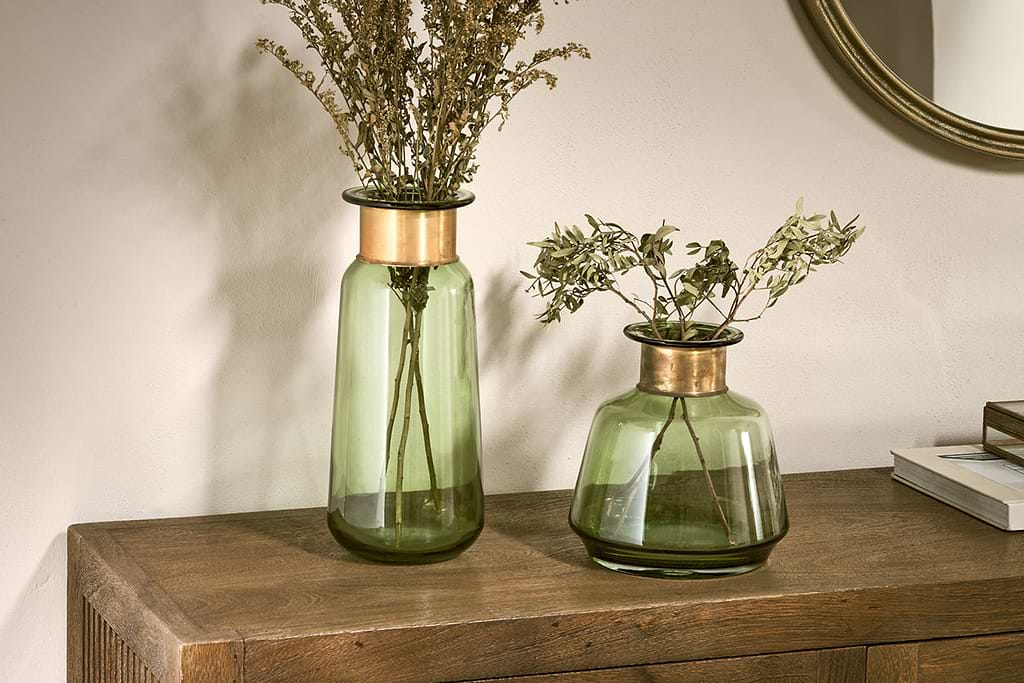
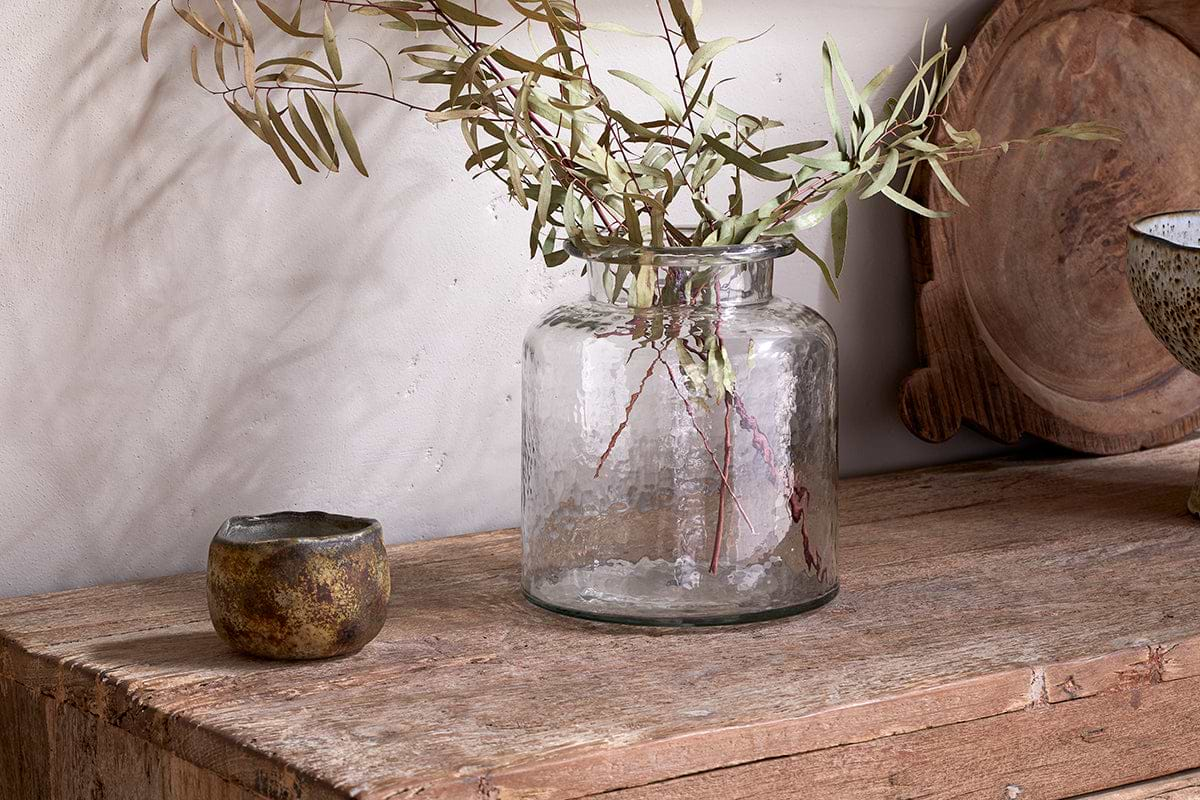
Akra Recycled Glass Vase
Clear cylindrical glass, pairs with stems or sits empty as a quiet accent.
View at Nkuku →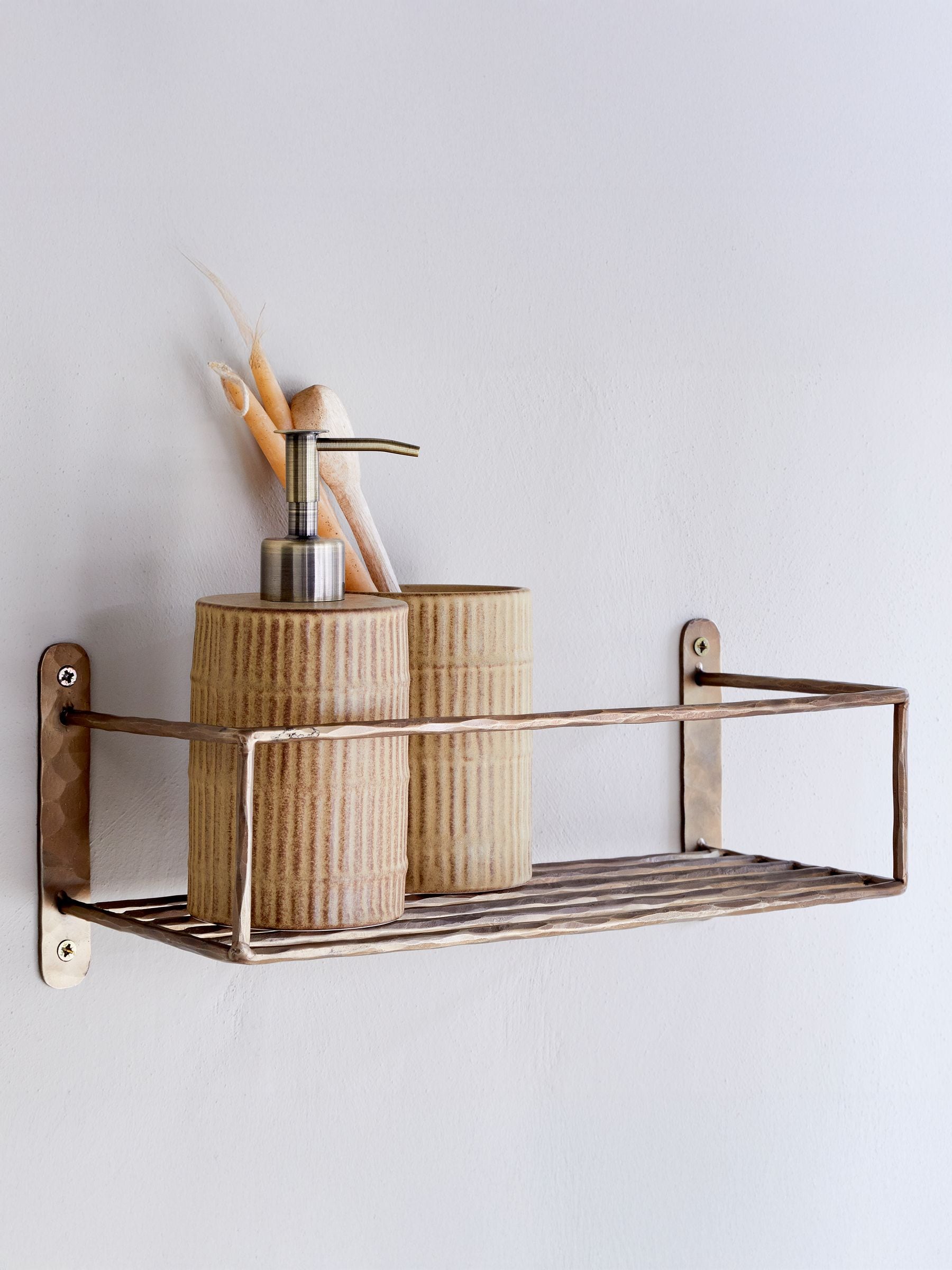
Some links above are affiliate links. If you buy through them we may earn a small commission at no extra cost to you. We only suggest pieces we think fit a calm, lived-in home.
Free guide
The Calm Shelf
12 styling ideas to help you compose calm, balanced shelves in natural texture homes.