

Many small homes rely on bookshelves wooden for everyday storage, but these often look out of place because rental spaces are short on natural materials and don’t allow much remodeling. Most affordable shelf options are flat, heavy particle-board units that feel temporary or clash with calm styling.
The right wooden bookcase can help create cleaner lines, reliable storage, and a warmer look you want to keep through many moves. This works especially well in a compact reading nook when floor space is tight because a light wood finish keeps things bright without drawing too much attention.
The short version: Bookshelves wooden made from real wood are longer-lasting and look more natural than laminate shelves, making cramped rooms feel settled. Choosing solid wood and the right shape cuts visual noise and helps every object feel more considered.
Key takeaways
- A bookshelf made from natural wood brings warmth and texture that blends into both modern and lived-in spaces.
- Grain pattern and finish matter: for the calmest look, pick a wood with a subtle grain and a matte finish.
- Most wooden bookcases are available in a range of sizes, from narrow to grand, to suit unique constraints (CotswoldCo).
- Mango wood bookshelves stand out due to their distinctive grain pattern (Trade Furniture Company).

Why choose a solid wood bookshelf?
A solid wood bookshelf lasts years longer than a particle-board shelf and takes on a softer, more natural look as it ages. The grain gives each piece quiet detail, which helps break up flat or harsh lines.
In a rental or first apartment, most people default to whatever is lightweight and easy to carry, but these pieces rarely look satisfying. Solid wood bookcases come in ash, oak, mango, and pine, so you can match to anything from warm flooring to pale curtains. The difference in room feel is immediate: wood warms up a bland corner without much effort.
A bare shelf made from veneer looks colder than a pale oak shelf where the grain shows through. This is because wood ages gradually and takes on tiny marks, which makes a room feel lived in even if you haven’t been there long.
The way solid wood holds up matters if you plan to use the shelf for several years or move it often. A wooden bookcase can be sanded, spot-fixed, or even stained if you get scratches, while particle-board often chips. If you want your books to stay in easy reach and your shelf to last, choosing real wood is a simple fix. Place it in any spot you want to feel settled, like the area beside a window or your main living wall.
Where this works best
A wooden shelf works best in rooms with low light or cramped layouts because the grain and finish soften hard edges and blend with natural decor.
Study corners, bedroom reading nooks, and entryways are all common spots that need both storage and softness. Many renters worry about marking walls, so a freestanding oak bookcase or scaffold shelf can lean safely against a wall without drilling. Slatted or open-back bookshelves also let light through, so they don’t swallow up daylight. A compact freestanding model works for a blank wall in a narrow hallway, while a wider shelf helps fill a windowless bedroom corner.
In a spot where bags, shoes, or work-from-home items collect, adding a wooden shelf helps pull order from clutter. The warmth of the wood is a subtle anchor for linen bins or a woven catch-all. It’s especially useful for small spaces with little built-in storage. Grouping a short shelf with a soft rug or natural baskets makes a tucked-away reading zone with less stress on your walls.
Avoid heavy, dark wood in a tiny room without much sun, as it can make the whole area feel smaller. Wide, boxy bookcases also tend to stick out next to smaller couches or beds. Instead, stick with pale woods or open-lattice designs that handle light better. For small rentals, place these shelves on the least-used wall or near a window seat to get the best effect.
What types of wooden bookshelves suit small spaces?
Narrow freestanding shelves, reclaimed wood scaffold units, and wall-mounted ledges make the best use of tight or awkward spaces without adding bulk.
For a tight living room or slim bedroom wall, tall scaffolding-style shelves use vertical height more than width. Reclaimed wood versions often have natural knots or uneven edges, which breaks up boxy lines and keeps things interesting without feeling loud (see real examples). These come in single-column or ladder shapes that fit almost anywhere.
Wall-mounted wooden ledges work best above desks or next to doors, where a floor unit would get in the way. Unlike deep, oversized “home office” bookcases, a simple wall shelf keeps books and a single frame or small plant at eye level, so nothing looks too busy.
Freestanding narrow oak or mango wood bookcases are popular for a reason: they can stand alone, tuck beside a bed, or break up a plain living room wall. A slender shelf with open sides blends in more easily than a chunky boxed case. Try putting one in a hallway alcove, where floor space is scarce but books still need a home.
How do you choose a wood finish that looks calm?
A matte, low-sheen finish on wood hides dust and fingerprints better than gloss, and softer shades let a shelf feel lighter in dark or busy rooms.
Pale oaks, unfinished pine, and Mango or Dakota wood all have a lighter touch than walnut or dark-stained finishes. The best effect comes from finishes like Dove Grey, classic cream, or a mild whitewash, especially if you’re pairing the shelf with linen or light woven baskets. These choices reflect more light and help a bookshelf “sit back” instead of sticking out. Most wooden shelves from CotswoldCo come in a full range of these tones and work for both modern and older apartments.
Unlike high-shine lacquers, which draw the eye to every fingerprint or smear, a matte or eggshell finish blurs minor marks and adds depth. This matters if the bookshelf is in a spot that gets heavy use, like a living room wall opposite a window, as shiny bookshelves can bounce glare around and distract from your display.
To keep things calm, always match the color of the shelf to your dominant room palette. A light honey or beige shelf feels warmer in a white room, while a pale grey reads modern next to black furniture or a dark rug. In most cases, finishing with a clear wax or low-gloss oil will help the shelf resist water spots and keep dust under control. Place the bookcase where natural light hits it—usually across from or next to a window—so the calm color stays consistent throughout the day.

Styling and placement
Styling a wooden bookshelf with repeated textures, small gaps between objects, and a limited palette helps a shelf look calmer and more connected to the room.
Keep shelf clutter low by repeating one texture in each section, such as linen spines or woven storage baskets. A patterned ceramic vase next to paperbacks breaks up long blocks of spine color. For the most relaxed look, never pack shelves full: most stylists leave about two-thirds of a shelf open for objects and negative space (according to professional organizers who specialize in apartments).
Unlike floating glass shelves which show every smudge and edge, a pale mango wood shelf ages gently and softens the look of bright-colored book covers. This also makes cleaning easier—a quick dusting with a damp cloth is enough, and matte shelves don’t glare in evening lamp light.
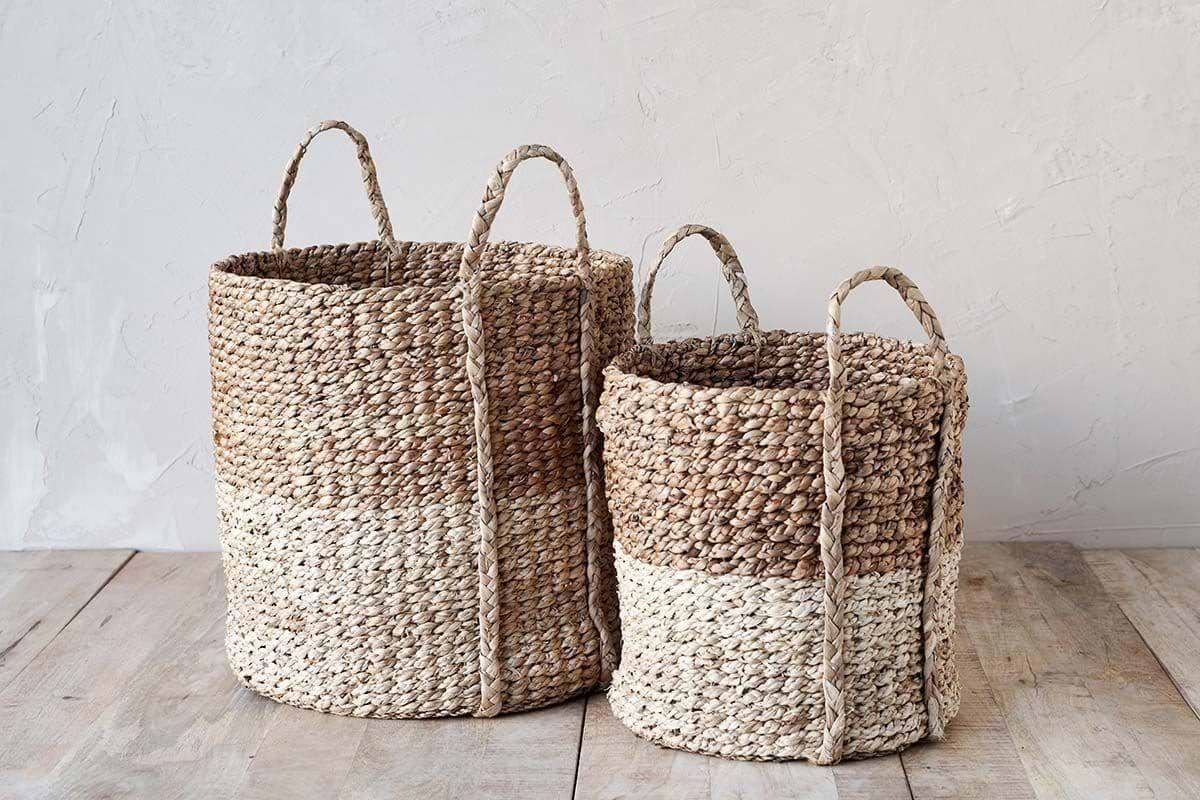
Placement sets the tone: a low bookshelf works under a window, while a tall, narrow unit draws the eye up without boxing in a small wall. In a rental, try to line up the bookshelf with other natural objects (like a sisal rug or light clay pot) rather than squeezing it between plastic bins. Anchor the whole arrangement with one soft accent, like the Nkomi Basket or a single linen throw folded on the bottom shelf.
Quick calm checklist:
- Keep to two or three main colors—use whites, creams, and blond woods for a lighter feel.
- Choose natural fillers: linen bins, woven baskets, or a single clay bowl.
- Leave gaps between each cluster of books to avoid a crammed look.
- Balance one “soft” item (a basket or folded throw) per shelf line.
- Match shelf finish to other visible wood tones in the room.
How do you know what size bookshelf to pick?
A bookshelf should cleanly fit the wall where you want it to stand, and never block doors or windows; most rooms do better with a shelf that’s tall and narrow rather than deep and short.
Start with the space you need: for a hallway or nook, narrow bookshelves—less than arm’s span wide—are the best fix. According to CotswoldCo, wooden bookcases are available in a range of widths and heights, which helps renters and small-space dwellers choose without overfilling the room. Deep, boxy bookshelves work best for open-plan rooms, but in compact or awkward areas, look for extra height instead of depth.
Compared to low benches or cubby units, a tall shelf naturally breaks up a blank wall and moves storage up off the floor, which is helpful in a studio or tight living space. IKEA bookcases, like the BILLY series, are designed in a mix of widths, heights, and shelf counts to fit unusual corners or line up side-by-side as a built-in library wall.
Tables and sideboards can be too short for large book collections. Instead, pick a slender shelf for most paperbacks, and a wider model only for rooms where the main wall is empty and the light is good. Placing the shelf against the longest unbroken wall keeps your reading area from feeling busy and gives books a visual home.
| Type | Best Room Fit | Visual Impact |
|---|---|---|
| Tall, narrow | Small bedrooms/nooks | Blends in easily |
| Wide, low | Open-plan living | Anchors a long wall |
| Wall-mounted | Above desks/doors | Keeps floor clear |
What materials last and feel best?
Solid woods like oak and mango hold up better to everyday use than veneers or particle board and develop character as they age.
Oak bookshelves are classic and suit almost any decorating style, from modern to rustic. The grain is tight and even, so dust marks and small dings don’t stand out. Mango wood has a lively, one-of-a-kind pattern—which often draws in the eye and makes each bookshelf unique (see examples). Both woods resist chipping and sun-fade, so they’re practical for rooms with changing light.
Reclaimed wood brings a rustic look and usually arrives with small knots, nail holes, or rougher textures. These shelves, especially the “scaffold” style, are built from timbers salvaged from previous use, so they already have age and character (see more). In busy homes or with pets, this patina hides small accidents and daily wear.
Unlike classic pine, which dents more easily, mango and oak balance strength and looks. For ongoing use, choose a finish like Dove Grey or classic cream on oak for a softer touch, or leave mango wood natural for maximum visual warmth. Place these shelves wherever you want storage and a softer look that won’t show dust or fingerprints quickly. If pairing with other wood pieces, keep finishes consistent but mix grain directions to add subtle texture.
The decision to add a real-wood bookshelf usually comes at a turning point—a room that feels cluttered but still blank, or a corner where plastic shelves never look quite right. Recognizing that the problem is more about visual weight and texture than just storage makes it simpler to fix. Choosing solid wood, a softer finish, and a simpler placement grounds the whole room and quiets the sense of visual chaos by replacing high-gloss or dark, heavy furniture with lighter, more tactile materials.
It usually hits all at once: the room looks busy or never fully comes together, no matter how many baskets or bins you clear out. Shelves stand out as “filler” rather than as something you want to keep for years. A small change—switching to calmer, lighter wood and giving objects room to breathe—starts to settle everything down.
Too often, the brittle rattle of particle-board or the wobble of flat-pack shelving pulls the look off balance, leaving the room cold or unfinished. When books stack up, or kids’ projects drift from shelf to shelf, the effect turns messy fast instead of calm and lived-in. Adding a real-wood shelf steadies the space and gives every book, basket, or frame a place that reads as “done.”
The right material and simpler palette settle the eye and make daily tidying easier.
Save this idea for later.
What tends to hold up with wooden shelf styling
Reviewing countless rental spaces and compact apartments, one pattern repeats: shelves that work are almost always lighter in finish and never overloaded, even with much-loved objects. Decorators often recommend a matte or soft-sheen finish for bookshelves that face daylight, because these avoid glare and age with fewer marks than glossy lacquer. Readers regularly mention that real wood, even if it’s reclaimed or slightly rough, makes a difference in feeling like the shelf belongs—not just taking up space.
Contrast stands out in every room: a pale, natural shelf is quieter next to mixed baskets or a plant, and heavier woods work only with enough sun or a large blank wall. What matters most is how much space and air you leave around each object, which is a detail that pays off over years, not just a single tidy afternoon.
— Mara, Loom & Glow
Common questions
How long do wooden bookshelves last compared to particle board?
A solid wood bookshelf lasts years longer than a particle-board shelf and takes on a softer, more natural look as it ages.
What wood types work best for small spaces?
Solid wood bookcases come in ash, oak, mango, and pine, so you can match to anything from warm flooring to pale curtains.
What types of wooden bookshelves are best for tight spaces?
Narrow freestanding shelves, reclaimed wood scaffold units, and wall-mounted ledges make the best use of tight or awkward spaces without adding bulk.
Explore more calm combinations inside our Shop The Look .
Shop the Look
Three Nkuku accents that sit gently on wooden shelves without competing with the wood.
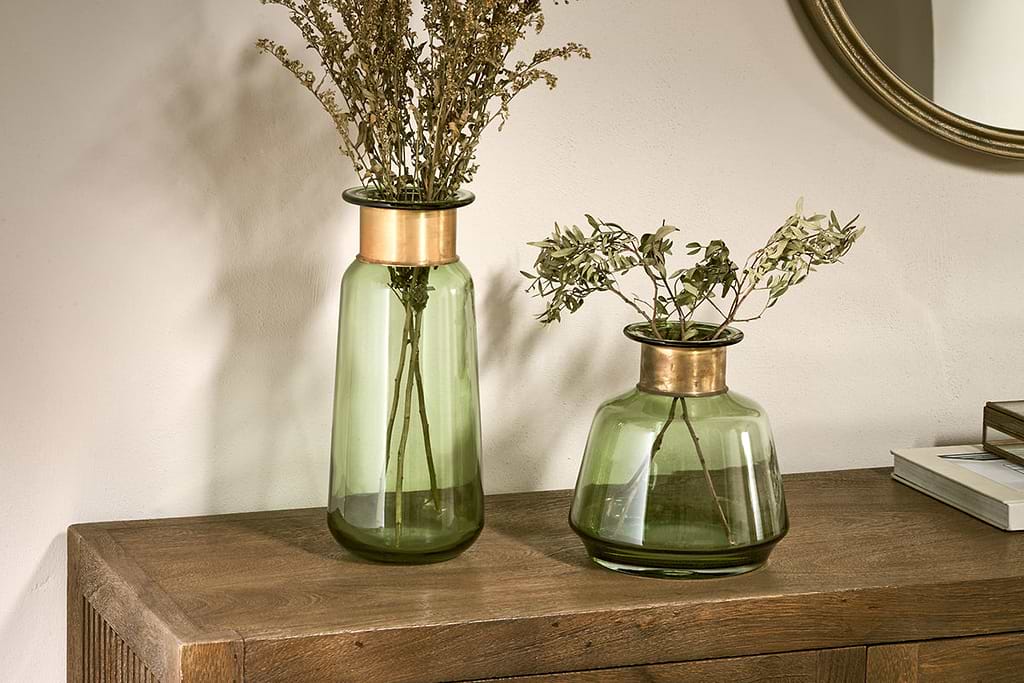
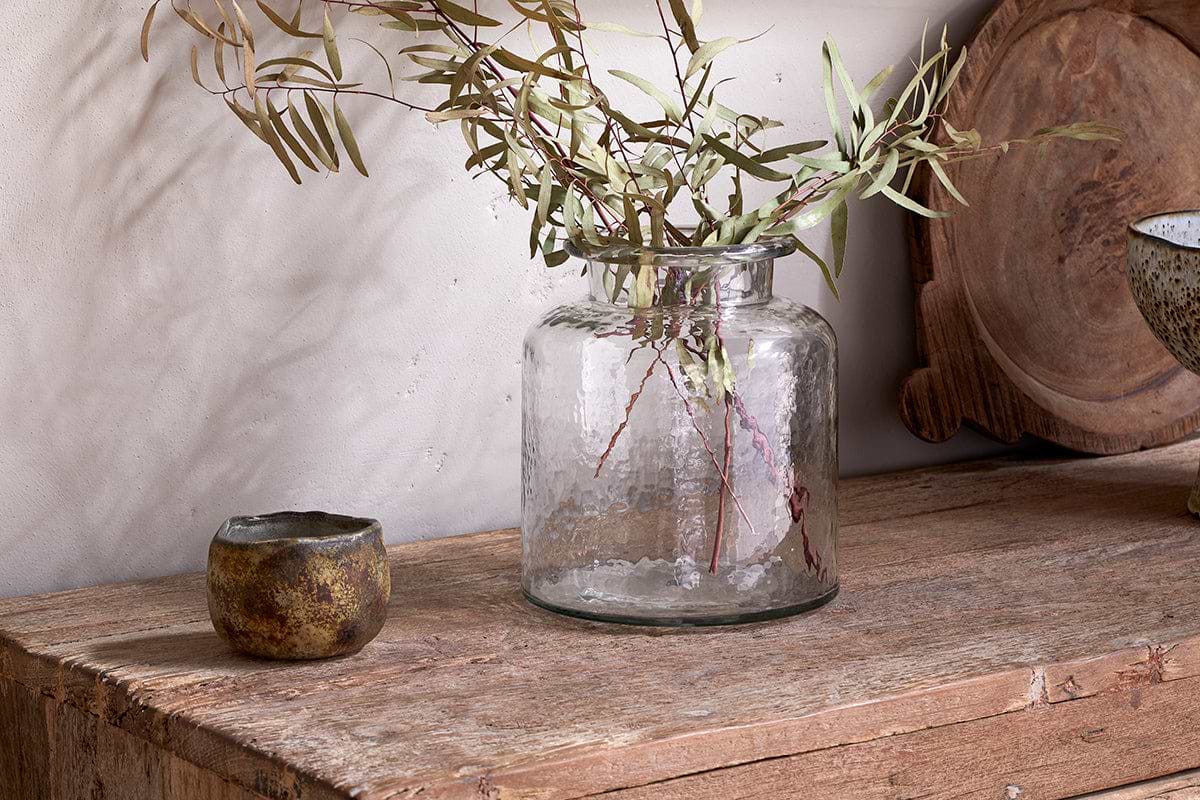
Akra Recycled Glass Vase
Clear cylindrical glass — pairs with stems or sits empty as a quiet accent.
View at Nkuku →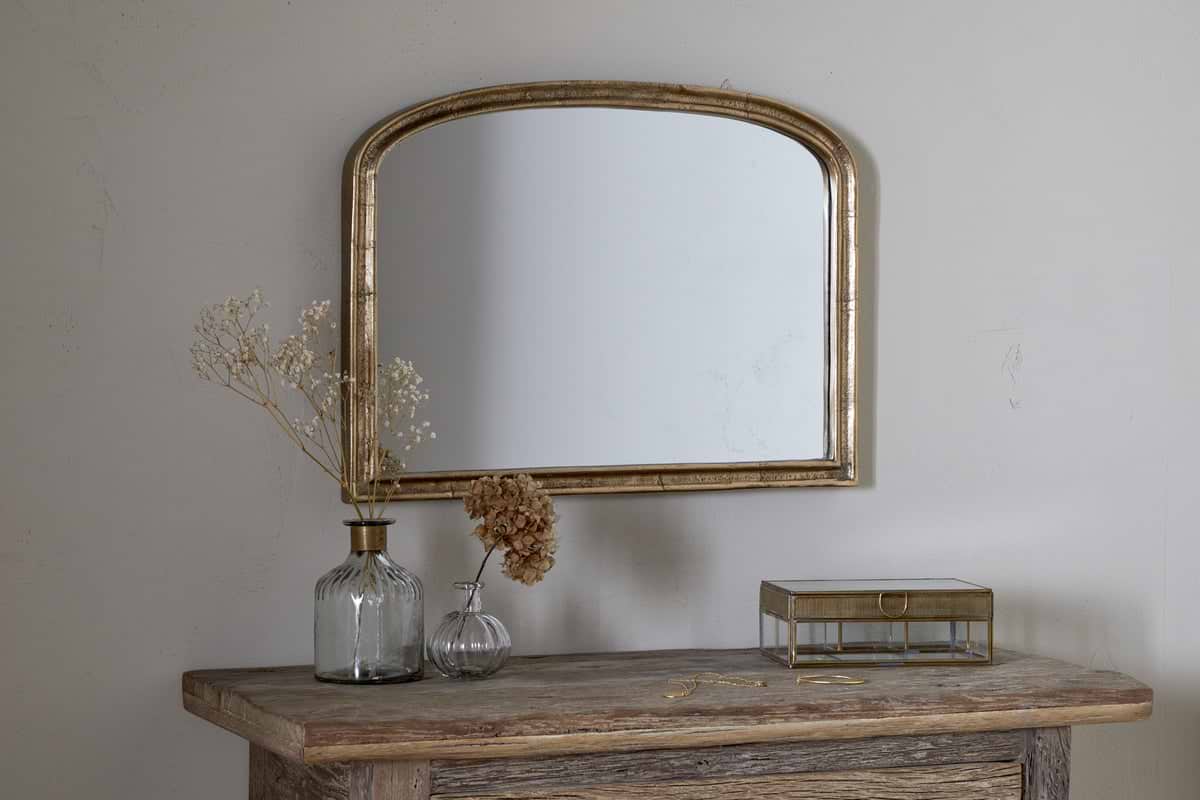
Some links above are affiliate links. If you buy through them we may earn a small commission at no extra cost to you. We only suggest pieces we think fit a calm, lived-in home.
Free guide
The Calm Shelf
12 styling ideas to help you compose calm, balanced shelves in natural texture homes.