

The best small living room furniture uses simple shapes, lighter colours, and pieces with visible legs to keep sightlines open and floors clear. Floating your main sofa or chair away from the wall, choosing rounded edges over sharp corners, and storing items in closed baskets under benches all reduce visual clutter and make the space feel calmer and easier to move through.
Most small living room furniture ideas don’t last when the room feels crowded by everyday things, shoes at the door, cables under the table, books and consoles all competing for space. It’s hard to see what’s important when low seating or deep sofas cover half the rug, and storage pieces weigh down already short walls.
The right pieces change how a room feels and works. Today, you’ll learn what to move out, what to bring in, and what to avoid so the room opens up and feels calmer. This works especially well in small apartments when floorspace is cut off by rental rules or odd layouts because simple choices reduce visual clutter and free up movement.
The short version: The best small living room furniture ideas use simple shapes, lighter colors, and just a few anchor pieces so the room feels open and easy to use. Start by picking one focal chair or sofa, remove any extras, and let surfaces stay mostly clear for a calmer look.

What pieces really suit a tiny living room?
Leggy furniture and soft-round pieces give a small room more visible space and avoid heavy corners. Open bases and rounded lines help the eye move easily around the room.
In a narrow living room with only one window, heavy-box storage units pull all the focus to the floor and block light. Lifting pieces off the ground gives you more visible floor, a trick decorators often use in small room decor for apartments that need to feel bigger.
Rounded edges on coffee tables and chairs keep sightlines moving. Square-corner bookcases and sharp-sided sofas break up flow, but a round side table or an armless chaise creates softer lines that feel less cramped.
Choose a storage bench or a chair with exposed legs for a lighter look. Unlike big sectionals or deep cube storage, pieces with lift give rooms more breathing room. When using small living room furniture ideas, open space under each piece keeps the area from feeling heavy.
Try placing an open-legged chair by the window, or a small round table trimmed in light wood, to see how much airier the space feels.
How do you avoid a cramped layout?
Leave space around each piece, never wall-to-wall, and float one anchor item off the wall for more depth. You’ll get better movement and the room feels less packed.
Rooms packed tight with seats and tables push people and light into corners. Floating your key sofa or chair just a little off the wall stops everything bunching along one side and makes a rental-friendly space work harder.
Each extra table or standing lamp you add cuts down how much floor is visible, making the whole place feel crowded. Removing even one unnecessary surface, such as a double coffee table or a low TV bench, unblocks the paths you actually walk.
Unlike rooms with built-in alcoves or custom shelving, open layouts with fewer large pieces feel easier to use every day. A single low armchair, for example, can give you more seating without closing the room like a bulky loveseat.
Try floating your main chair or sofa away from the wall and pull small side tables in, keeping clear lines for walking through the space.
Where this works best
Choosing light, open furniture suits rooms that are narrow, have odd angles, or double as workspaces. Living spaces with less natural light or no built-in storage change the most with these simple swaps.
Corner apartments, shared spaces, or rooms with a single wall for both TV and seating are common places where too many pieces make the room hard to use. Renter decor ideas often work best here because you don’t need to build or attach anything to the walls.
Try switching out a heavy media unit for a slim sideboard, or use baskets under a bench instead of built-in cabinets. In low-light rooms, lighter upholstery and thinner legs reflect light instead of blocking it, making the area feel less shut in.
Avoid placing two large pieces directly across from each other, as this can box in the pathway through the room. A better match is placing a single armchair across from a slim table, leaving the middle open.
Switch out one oversized item for something open and see how the rest of the pieces fit around it, this gives you a reading on what changes next.
How can you store things without adding clutter?
Closed soft bins and baskets tuck things away while keeping the floor clear. Storage built into seating works well when you’re tight on space and don’t want extra chests.
A living room can feel busy with open shelves full of books, chargers, or toys. Switching to closed baskets under a bench, or a coffee table with hidden storage, cuts down visible clutter and keeps the look simple.
Most good woven baskets or lidded fabric bins blend with calm small room palettes and don’t read as extra furniture, but as part of the needed storage. Leaving at least two-thirds of an open shelf clear, as decorators often do, makes things look tidy even in small space ideas for shared apartments.
Open cube units, in contrast, tend to fill up with odds and ends and collect dust. Using a bench with baskets underneath or a trunk that doubles as a table gives you storage without new visual bulk.
Store chargers, remote controls, or extra throws in covered bins or a lift-top ottoman, then keep the top surfaces uncluttered for a neater result.

Styling and placement
Keep surfaces more open than covered, place taller pieces in corners, and use repetition of color or material for a calmer look. A single large item shows better than a scatter of little things.
Small rooms feel unsettled if every surface holds a different object, too many pretty bowls, frames, or lamps can distract. Placing a single soft lamp in one corner or using repeated natural materials, think linen, unvarnished wood, gives a visual link that settles the space.
Any plant or lamp set at eye level pulls the gaze up, which works especially well for apartment decor ideas where ceilings feel low. Keeping at least half of your coffee table, bench, or open shelf totally clear helps light travel and avoids visual clutter.
Compared to spreading smaller decor everywhere, grouping a couple of objects in one spot keeps the room deliberate and soft. Placing storage under benches rather than on them also keeps the sightlines clean.
Quick calm checklist:
- Go for simple shapes and natural textures (linen, pale oak, woven jute).
- Keep half of all flat surfaces empty if you can.
- Stick to two or three main colors for all soft goods.
- Group two items together instead of spreading smaller things across the room.
- Place taller lamps or plants in corners, not the middle of ledges.
Group a linen throw and a single soft-shaded lamp at one end of your sofa, keeping the rest bare, and the entire seating area feels less busy.
How do you pick colours and textures for small spaces?
Soft neutrals and lighter fabric textures help small rooms look bigger and reflect more light. Repeat the same tones for pillows, throws, and baskets for a put-together feel.
Color can make or break a sense of space. Most small living room furniture ideas work better with soft white, pale grey, or clay tones, the kinds used in slow living and calm small room styles, rather than strong, busy patterns. A single deep accent (like moss green) grounds all the light tones around it.
Linen and cotton finishes absorb glare and feel softer than shiny surfaces, which can bounce light in harsh ways. According to the [principles of color](https://www.britannica.com/science/color), lighter surfaces reflect more ambient light and can make tight corners recede visually.
Unlike bold patterns that pull the eye or wallpapers with sharp contrast, solid-tone soft goods, such as a clay-toned pillow or a bone-white cotton ottoman, blend into the room. This makes the small space feel uninterrupted, while repeating the same material twice, a jute rug and a jute basket, locks the look together.
Choose soft-woven pillow covers and a pale cotton slipcover for the main seat, using small pops of green or clay for a gentle lift.
What kinds of seating actually help a small room?
Chairs and sofas with visible legs and lower backs keep the sightlines open. Modular stools or poufs can move as needed without filling the room.
Standard sofas with bulky sides or tall backs stand out in a small room and can block light from windows. Picking an armchair like the Otas Teddy Cotton Armchair, rounded, armless, raised off the floor, keeps the appearance lighter and easier to move if you need to swap things around.
Floor poufs and small cricket stools double as extra seats or serve as surfaces when needed. They’re easier to tuck away under shelves or behind a main chair, which works well in any small room decor scheme where every inch matters.
Compared to solid or skirted seating, open-legged chairs and low, modular benches stay out of the eyeline. A [quiet seating corner](https://loomandglowhome.com/quiet-seating-corners-comfort/) with just a single cotton chair and a small side table draws the eye more gently than a cluster of mismatched stools.
Place one light-colored, raised armchair in a corner with a woven pouf nearby, leaving the middle of the room open for easy movement.
It starts with a feeling: after moving things around or adding new storage, the room still feels “off.” The pieces might be useful, but the space stays restless, never quite open, never quite settled. Something about the mix makes the room feel tighter, even when you’ve tidied up.
Instead of adding more, the shift is to remove or replace one item at a time, choosing a single anchor chair or clearing surfaces so just one lamp sits alone. Repeating the same finish or color in more than one spot helps everything tie together.
Most homes pile up with extras, extra chairs, side tables, baskets, or mismatched storage. Too many surfaces or different finishes make any calm small room look busy and unfinished, even with careful styling. Without enough visual pause, the eye keeps bouncing from object to object, leaving the room unsettled and hard to use.
When you pare down and let surfaces breathe, rooms look lighter and are easier to keep tidy.
Save this idea for later.
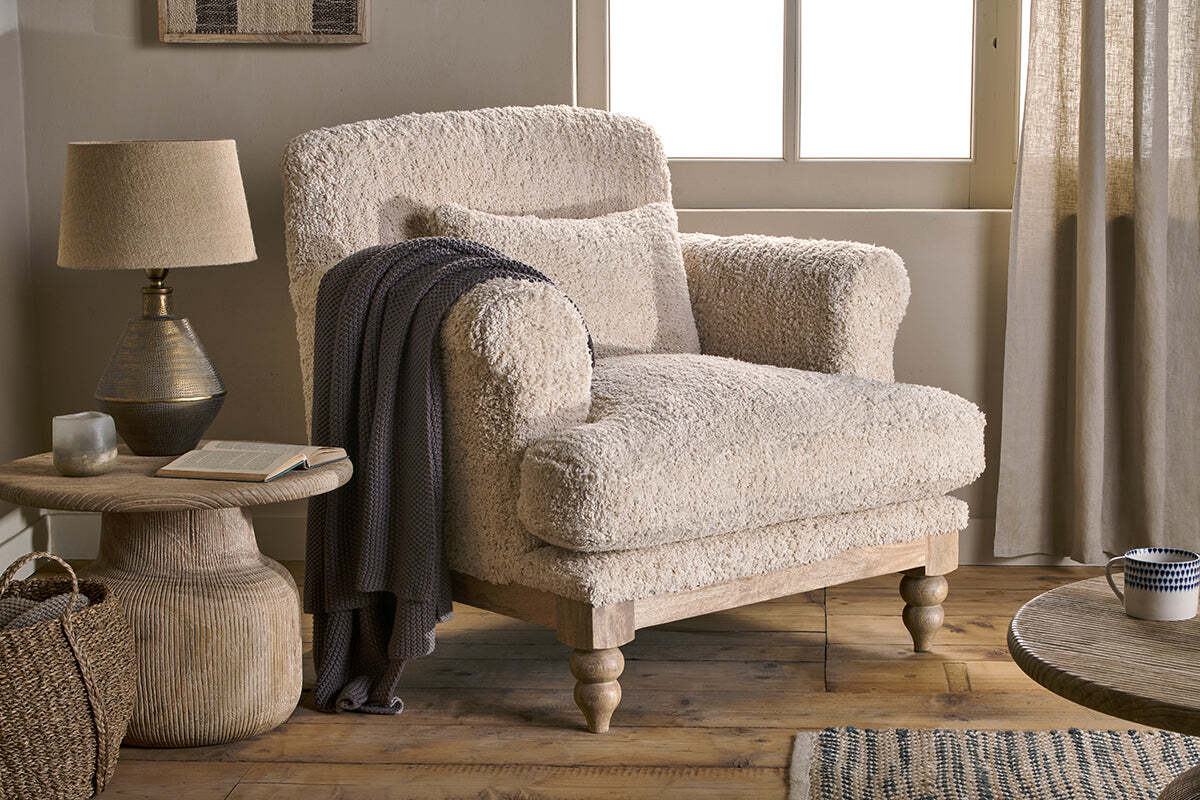
Otas Teddy Cotton Armchair – Off White
adds quiet structure and warmth while keeping the room balanced.
What tends to hold up with small living room furniture ideas
Over time, rooms with fewer and lighter pieces are easier to manage and style. Designers and readers both notice that real wood, linen, and cotton take on a soft patina with use, unlike glossy or fake finishes, these materials stay pleasant to touch and don’t show dust as quickly. Matte and soft finishes, in particular, cut glare and stay looking good even in rooms with lots of window light.
Repeating one material, a woven basket or a washed linen pillow, lets the whole room feel pulled together, even as your needs change. Most decorators recommend keeping at least half of every shelf clear, which instantly slows down the whole space and makes each piece matter more.
, Mara, Loom & Glow
Common questions
What types of furniture work best in a tiny living room?
Leggy furniture and soft-round pieces give a small room more visible space and avoid heavy corners. Open bases and rounded lines help the eye move easily around the room.
How can I avoid a cramped layout in a small living room?
Leave space around each piece-never wall-to-wall-and float one anchor item off the wall for more depth. You’ll get better movement and the room feels less packed.
What is the best way to store things without adding visual clutter?
Closed soft bins and baskets tuck things away while keeping the floor clear. Storage built into seating works well when you’re tight on space and don’t want extra chests.
How should I style surfaces in a small living room?
Keep surfaces more open than covered, place taller pieces in corners, and use repetition of color or material for a calmer look. A single large item shows better than a scatter of little things.
Explore more calm combinations inside our
Shop The Look
.
Free guide
The Calm Shelf
12 styling ideas to help you compose calm, balanced shelves in natural texture homes.