

Shelves in a busy kitchen or a tight cottage hallway often feel awkward when rustic shelf brackets are chosen just for their look. If the brackets are too chunky or thin, the shelf can look top-heavy, cluttered, or out of place — even when everything else fits the room’s style.
Today, you’ll see how different bracket materials change the shelf’s weight and feel, and what that means for wooden, metal, or woven supports. This works especially well in a narrow entry when shelf space is tight because the bracket’s form and finish shape how open or calm the wall actually feels.
The short version: Rustic shelf brackets set the whole look and feel of open shelving, so the material and shape matter as much as the shelf itself. Wood, metal, and woven supports each add a different mood—choose based on shelf weight and room style for shelves that feel right, not busy.
Key takeaways
- A wooden rustic shelf bracket brings warmth and works best on lighter walls in bedrooms or kitchens.
- Metal shelf brackets anchor deeper-toned, industrial, or high-use rooms, but can look harsh on their own.
- Woven supports like rattan or leather loops lighten up small shelves, especially for gentle, natural storage.
- Most floating shelves are about as deep as a folded bath towel, which fits both display and daily use needs.
- Oakcrafts stocks over 100 bracket styles, useful for matching uncommon wall colors or hardware details.

What defines a rustic shelf bracket?
A rustic shelf bracket is a visible support for open wall shelves, made of straightforward materials like wood, metal, or woven fibres and finished in a way that feels natural, not polished.
Most homes using open shelves rely on brackets as part of the look, not just for support. In a small kitchen or a cottage entry, the bracket style anchors everything above and below—even when the wall is plain. Compared with flat, modern supports, a rustic bracket is chunkier, visible, and hand-finished, whether that’s rough oak, iron, or basket weave.
The bracket’s shape and finish set the tone. A black powder-coated iron piece feels sturdy and a little industrial, while a soft-worn oak bracket slips quietly into a pale living room. Woven leather or rattan reads lighter, holding baskets or small decor with a gentle lean. Each material adds its own shadow and line to the wall.
Proper rustic brackets are about honesty: no hidden hardware, no shiny gloss, no fake-grain wrap. Most are fixed with exposed screws or bolts that blend into the material or stand out for effect. Unlike closed, modern systems, a bracket that shows its shape adds a bit of presence—a shelf with no support underneath can feel adrift instead of settled. In a room with wood floors and linen fabric, wooden shelf brackets blend in and soften corners, while metal brackets add a clear edge by the stove or in a shared work nook.
Use a rustic bracket to pause the eye and create an anchor between the shelf and the wall, so open storage never looks like it’s floating awkwardly. A chunky bracket suits a visible spot where you want both function and finish, such as beside a reading chair or over a kitchen counter.
How do wood, metal, and woven brackets change a room?
Wood, metal, and woven shelf brackets each pull focus differently: wood softens, metal anchors, and woven lightens, shaping the overall feeling above and below the shelf.
Wooden brackets, especially oak or reclaimed pine, blend quietly into most natural rooms. They catch the light, show grain, and feel subtle next to linen, soft paint, or stoneware. A shelf with a wooden support looks warmer than one with just metal, especially in a bedroom or hallway with soft furnishings.
Metal brackets stand out—black iron, industrial steel, or even copper-finish pieces work best where you want a punch of contrast. A metal bracket on a pale wall can draw more attention than the shelf itself, which is useful in busy utility rooms. Compared to wood, these brackets hold heavier loads and tend to suit rooms with exposed pipes, old light fixtures, or darker floorboards.
Woven supports, like sturdy rattan loops or thick leather, suit shelves that aren’t too deep or loaded. They bring a relaxed, handmade energy that softens the usual sharp line between wall and shelf. Unlike wood or metal, woven brackets shift a shelf’s mood—perfect for storing baskets, bath items, or lightweight vases in spots where metal might feel cold.
Each bracket type works best when the material repeats something already in the space, like a bit of black iron in the light fixtures or a woody tone in the frames nearby. Place woven brackets above a bench in a back hallway, metal in the kitchen, and wood in the living room for a calm mix that clearly separates each space.
Where this works best
Rustic shelf brackets are most effective in spaces where the walls and shelving need both visual strength and everyday support, but the look should stay unfussy.
Cottages, older rentals, and rooms with bumpy plaster or stone do particularly well with rustic style brackets—especially where open shelving is the main storage. In small entryways, painted kitchens with tile, or beside a bathroom mirror, these brackets add visible support without overwhelming the details you want to keep.
Shelving is often used for a mix of everyday things: keys by the door, mugs, or baskets for hats and gloves. A natural wood or metal bracket keeps the edge of a shelf grounded against busier wallpaper or textured surfaces. Try rustic brackets above a bench in a narrow hall, or over the sink in a kitchen, where both visibility and strength matter most.
Avoid brackets that repeat the exact wall color or echo a high-gloss paint. If the support disappears completely, the shelf can look oddly thin or under-built. Instead, pair an unfinished oak bracket with a pale wall, or contrast a dark iron bracket with white or muted tones. This draws just enough attention to the bracket’s shape and keeps shelves visually settled, not floating uncomfortably.
Placing rustic brackets in high-traffic rooms makes open storage practical for daily routines. A kitchen shelf for jars and bowls wants a stronger bracket than a display shelf in the bedroom. Choose by support needed and visual weight, so nothing feels tacked on.
How can you judge the right bracket size and support?
The best rustic shelf bracket stays in line with your shelf’s depth and the typical load—pick a bracket that’s roughly two-thirds the shelf’s width for practical, calm support.
Sizing a bracket is easier with a clear rule of thumb. For most home shelving, a typical shelf sits deep enough to hold a stacked set of plates or folded towels. Brackets should reach far enough under the shelf to support the load, but not stretch past the front edge. According to Oakcrafts, matching the bracket length to roughly three-quarters the shelf depth is standard for stability and looks.
Heavy-duty shelf brackets in steel or cast iron offer a steadier hold for thick shelves or busy family rooms. Metal and industrial styles are designed for loads like cookware or books. Wooden brackets are best for medium or small shelf spans, so they don’t bow with weight. Woven supports, including rattan or leather, suit shelves for baskets, towels, or plants—lighter use only. Unlike metal, woven brackets can stretch or sag with too much pressure, so use them above a bench or in a small space, never a kitchen pantry with jars.
Most bracket sets come in pairs, and the spacing should never outpace the wall studs behind, or the brackets lose their strength. If the shelf is too wide between brackets, it will sag in the middle, even with the strongest wood. Choosing the right support means the shelf stays straight and the display uncluttered, with no tilting mugs or sliding books.
Pair the bracket’s visual weight with the shelf: a deep oak shelf for stoneware, a slender metal support for lighter décor, or woven for places you only store soft accessories. Each works for a different reason—but a kitchen shelf bearing pots should always use a strong, wide iron or wooden support.

Styling and placement
Shelves look calm and well-placed when bracket material, spacing, and color echo something already present in the room’s palette or hardware.
The most settled shelves usually repeat just one or two surface materials already visible nearby—a wood bracket below a wooden seat, a black iron beside door handles, or rattan above a woven basket. Place brackets at regular intervals, ideally in line with wall studs, and sit the shelf neither too high nor too close to the ceiling. A shelf at eye level keeps the contents accessible and keeps the bracket line visible, not cramped against the ceiling.
Keeping a palette limited to natural wood, matte black, or pale rattan stops the wall from feeling noisy. Unlike metal brackets with bright finishes or glossy edges, matte or raw materials disappear a little more on pale walls. Woven brackets sit best with natural linen, clay pots, or quiet glass, while iron can pair with heavier wood furniture for continuity.
If the wall is tight for space (like above a radiator or in a low hallway), choose narrow brackets and avoid heavy wood. The shelf should reach only slightly past the bracket, never overextended. Matching bracket finish to nearby hardware, like window frames or cupboard handles, brings the whole wall together without too much repetition.
Quick calm checklist:
- Pick bracket material that matches a visible detail—wood with wood, black iron with black handles, woven with baskets.
- Keep brackets spaced in line with wall studs or visible support points, not floating midpoint or off-center.
- Stay with two main colors—one for the bracket, one for the shelf—with the option to mix in neutrals for baskets or accents.
- Anchor one item (a basket or stack of plates) to echo the bracket’s material nearby—like a woven bowl with rattan supports.
- Leave at least half of each shelf clear for negative space and easier dusting.
Use these rules to keep shelves practical and pleasant, especially for high-traffic rooms.
What contrasts make shelves feel calm, not crowded?
A shelf feels calm when the bracket’s shape and color set it apart from the wall, but don’t add too many lines or textures on their own.
Contrast keeps a shelf from disappearing or looking cluttered. A pale wooden bracket on a white wall can feel faded if the shelf and supports are too slender—while a thick black iron bracket can dominate a narrow hallway or small bath. Instead of matching everything exactly, use a bracket and shelf that differ just enough to mark each as its own element, but stop short of making the wall too busy.
Pairing a chunky reclaimed scaffold board above a slim iron bracket creates a strong base without bulk. According to Rustic Land, scaffold board shelf brackets are best for heavy woods and work in modern industrial rooms as well as classic cottages. If a shelf reads too heavy—jammed with solid pots and metal supports—swap one with a woven basket or a glass object to soften the dominant lines.
Unlike matched metal hardware in every corner, mixing just one basket or clay bowl into a row of stoneware plates can loosen the shelf’s look, without adding visual clutter. For shelf stability and lightness, make sure your strongest contrast is between the bracket and the wall color, not among objects on the shelf.
| Bracket Material | Best For | Cautions |
|---|---|---|
| Oak / Wood | Living rooms, bedrooms, lighter everyday storage | Can blend too closely with pale wood walls |
| Iron / Metal | Kitchens, pantries, heavy displays, utility | May feel harsh if overused in small or sunlit spaces |
| Rattan / Woven | Baskets, light shelves, soft storage | Not for heavy or high-traffic shelves |
Calm comes from using contrast as a border—not as a battle. Choose shelf supports that let the eye rest, mix one detail at a time, and leave room to breathe between shelf and ceiling. For more ideas, see natural wood shelves and their placement with different bracket materials.
Where to buy rustic shelf brackets in the UK
The UK offers handmade and industrial rustic shelf brackets in over 100 styles from specialist shops, with options in wood, iron, rattan, and mixed natural materials.
For DIY shelves or unique support shapes, Oakcrafts stocks a catalogue of over 100 bracket styles and sizes, including Victorian, honeycomb, and classic ironwork, offered in both raw and painted finishes. There are handmade sets for wall-mount installations and ready-to-fix pairs for floating shelves or deep book ledges.
Funky Chunky Furniture sells bracketed wood shelves with a range of natural finishes, such as English Oak or Walnut, matching classic or modern cottages. For metal support, heavy-duty shelf brackets in raw steel, black iron, or powder finishes can be found at Unique Metalcraft and Ben Simpson Furniture, suited for utility rooms or kitchens where strength is needed most.
Woven and alternative brackets, while less common, are appearing in online shops focused on baskets or natural homeware. Pieces like the Nkomi Basket or hand-laced leather straps work well for soft storage or plant shelves. Retailers who focus on rattan furniture often carry matching shelf supports as part of their range. Mixing and matching these retailers lets you tie shelf storage to other natural details in the house, rather than settling for an off-the-shelf option that almost fits.
Check finish details—raw iron may show darkening near the weld, and wood finishes can shift warmth or coolness under lamp or sunlight. Choose the finish and shape that repeats a detail you want to see more of, not just the first bracket on offer.
Sometimes, the moment something feels “off” is hard to name—a room with a shelf that looks busy, support brackets that distract, or wall storage that feels patched together. That’s when small choices like bracket lines or finish color suddenly come into focus. It’s only then that the decision to keep or swap a bracket style feels weighty—like finding the right coat hook or the right piece of art for a tight wall.
Too often, shelves get overwhelmed by chunky cast iron, fussy carvings, or brackets that match nothing else nearby. When supports are too slim, the shelf sags or feels unfinished. A shelf bracket out of scale pulls all attention, making it hard for the eye to rest on the objects above. Most rooms end up either weighted down or looking too makeshift. This matters even more now with open-plan layouts—the lines of each fitting shape how calm the space actually feels.
Choosing one bracket type and linking it visually to something nearby—like a woven basket echoing a woven shelf support—makes the shelf part of the room again. Shelves look balanced, contents easy to reach and dust, and brackets sturdy without dominating the wall.
Save this idea for later.
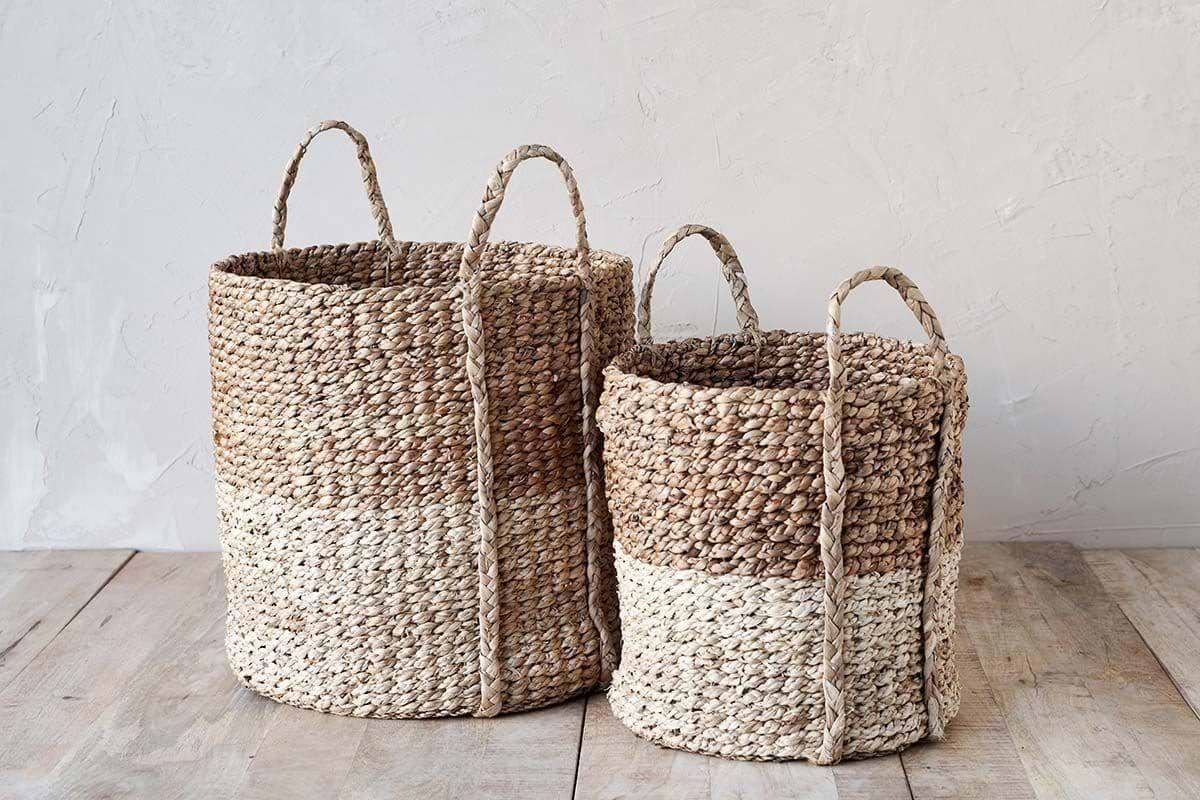
What tends to hold up with picking calm shelf brackets
After seeing hundreds of room photos and bracket designs, one thing stands out: simple shapes, matte finishes, and repeating the bracket’s material or color with something nearby consistently hold up over time. Bracket styles that follow the lines of the room—echoing floorboards, window trim, or cabinet handles—feel settled, even as trends shift from bare wood to deep black metals.
Reviewers often point out that heavy duty shelf brackets made from iron or steel, like those found through Unique Metalcraft, stay reliable for daily use but can look harsh without softer objects nearby. Mixed textures—such as wood shelves with woven baskets or matte metal with stoneware—age well and let the room change, while overly intricate bracket shapes start to look dated or distracting quickly.
— Mara, Loom & Glow
Common questions
What defines a rustic shelf bracket?
A rustic shelf bracket is a visible support for open wall shelves, made of straightforward materials like wood, metal, or woven fibres and finished in a way that feels natural, not polished. Most homes using open shelves rely on brackets as part of the look, not just for support. In a small kitchen or a cottage entry, the bracket style anchors everything above and below-even when the wall is plain.
How do wood, metal, and woven brackets change a room?
Wood, metal, and woven shelf brackets each pull focus differently: wood softens, metal anchors, and woven lightens, shaping the overall feeling above and below the shelf. Wooden brackets, especially oak or reclaimed pine, blend quietly into most natural rooms. They catch the light, show grain, and feel subtle next to linen, soft paint, or stoneware.
How can you judge the right bracket size and support?
The best rustic shelf bracket stays in line with your shelf’s depth and the typical load-pick a bracket that’s roughly two-thirds the shelf’s width for practical, calm support. Sizing a bracket is easier with a clear rule of thumb. For most home shelving, a typical shelf sits deep enough to hold a stacked set of plates or folded towels.
What contrasts make shelves feel calm, not crowded?
A shelf feels calm when the bracket’s shape and color set it apart from the wall, but don’t add too many lines or textures on their own. Contrast keeps a shelf from disappearing or looking cluttered. A pale wooden bracket on a white wall can feel faded if the shelf and supports are too slender-while a thick black iron bracket can dominate a narrow hallway or small bath.
Explore more calm combinations inside our Shop The Look .
Shop the Look
A few Nkuku pieces that sit well on rustic shelves and complement natural materials.
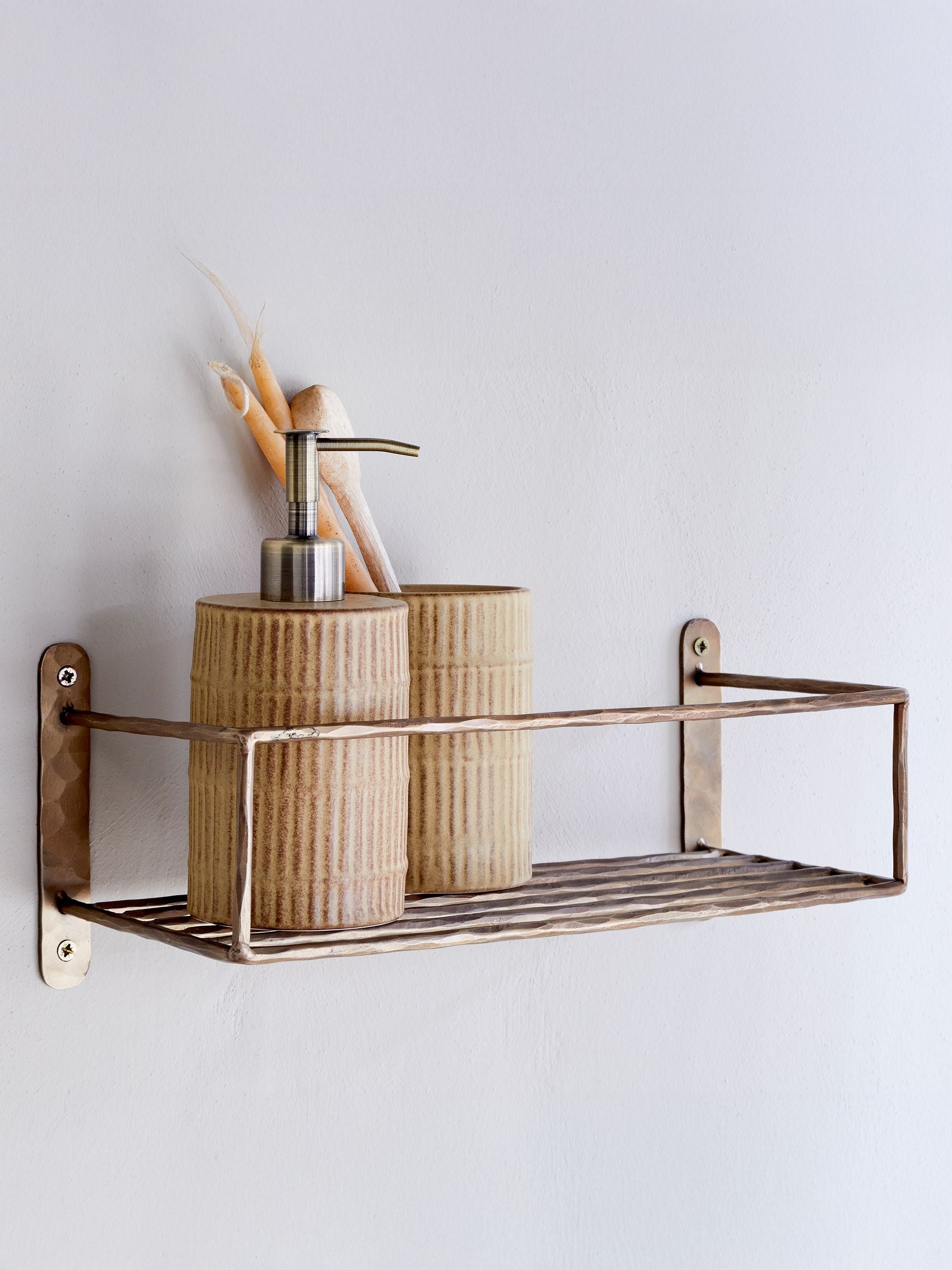
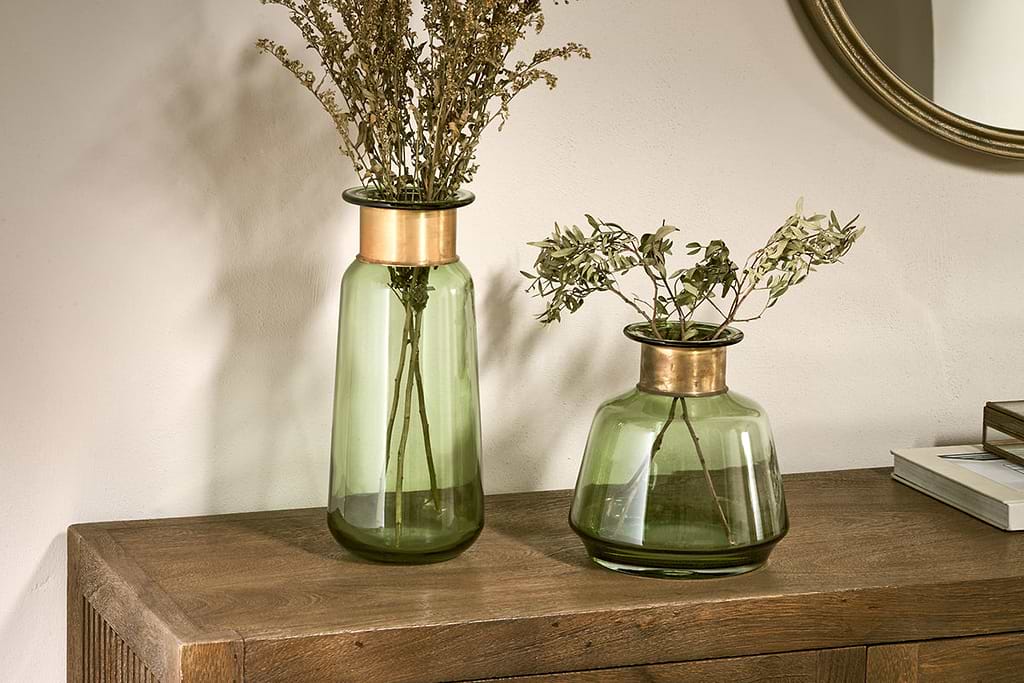
Some links above are affiliate links. If you buy through them we may earn a small commission at no extra cost to you. We only suggest pieces we think fit a calm, lived-in home.
Free guide
The Calm Leaf
12 quiet ways to bring dried botanicals, stems, and natural textures into calm spaces.