

Open shelving can make a room feel open or just messy. With rustic wall shelves, many people hope for that relaxed, natural look but end up with something that feels scattered, old books leaning, baskets bumping, picture frames balanced at odd angles. A shelf that’s a bit too deep or too short for the spot often leaves a wall off-balance.
This guide will help you choose the right wood, finish, and texture for shelves that actually look calm, not cluttered. You’ll learn how depth and length shape the feel of a room, what to avoid, and where rustic works best. This works especially well in a narrow hallway when you use open shelving for baskets and keys because it makes the space feel lighter and more organised.
The short version: Rustic wall shelves create calm when you match wood texture and shelf size to your room’s storage needs and light. Swap deep, overloaded shelves for simpler, solid wood options and plan what you’ll actually show.
Key takeaways
- Rustic wall shelves work best when depth and length fit the real items you keep out daily.
- Solid wood in matte or lightly distressed finish keeps a shelf from feeling shiny or cold.
- Reclaimed wood shelves in the UK typically range from £34 to £250, according to Project Reclaim.
- Leaving about one-third of each shelf empty helps avoid a crowded, busy look.
- Mixing one woven piece, like a basket, with wood keeps open shelves feeling natural.

What actually makes a wall shelf look rustic?
A rustic wall shelf uses wood with visible grain, knots, or tool marks and a matte or lightly worn finish, not high-gloss or smooth laminate. This texture is what sets it apart from more modern, shiny shelving.
Most people want rustic shelves to feel relaxed, not staged. That means you’ll see surfaces that aren’t perfectly flat or blemish-free, maybe a dent, a greyed edge, or the rippled line from where a saw bit through. Rustic wall shelves are often made from solid wood planks, scaffold boards, or reclaimed timber, and sometimes even boards sourced from old barns or floors.
A shelf that’s slick and glossy often feels more kitchen showroom than home. When you run your hand along a real rustic board, you’ll find spots that catch or dip, with grain you can trace with your finger, solid wood with its own marks, not printed-on patterns.
Unlike the cottage-core look, which leans floral and painted, rustic shelving focuses on the honest look of the material itself, letting the grain, knots, and texture show. Sunlight will catch different patches along a rough shelf, casting small shadows that soften a white or pale wall.
On a living room wall by a reading chair, a shelf made with visible tool marks looks inviting for storing a paperback and a clay mug. A glass shelf, by contrast, feels colder and less forgiving to everyday dings.
Handmade UK suppliers, like Timber Shelves and Urban Reclamation, provide options in true solid wood, often with custom lengths for odd corners or awkward wall runs. Choose a simple, matte finish to avoid glare and make things feel consistent from day to night.
Place a rustic shelf where you want a warm backdrop for everyday objects, by the kitchen door, in a hallway, or above a bed for books and baskets. A shelf with clear grain works best against a pale painted wall.
How do you choose the right shelf depth and length?
Shelf depth and length decide what fits comfortably, not just what looks good, so match your shelf to the objects you want to keep out. Shallow, long shelves look tidy in narrow rooms, while deep, short shelves risk looking heavy.
The most common depth for rustic wall shelves is about as wide as a hardback book or a woven basket, functional but never imposing. According to Urban Reclamation, popular shelf depths are 11cm for displaying decor or 22cm for fitting books and baskets. Most rooms need less depth than people expect, as a deep shelf collects clutter quickly.
A long, narrow shelf can help a small room feel wider, breaking up a bare wall with a horizontal line. In a low-light hallway, shallow shelves prevent bumping while still holding keys or a candle. The right length also means less awkward empty space or overhang, many homes look “off” when the shelf matches only the window or door instead of the whole wall.
Compared to wall-to-wall units or short, chunky box shelves, a longer plank fixes the eye in one direction, letting other items (frames, baskets, bowls) breathe. The shelf shouldn’t echo the length of a sofa or TV stand exactly; stagger slightly for a softer effect.
If you’re storing mainly small things, photos, a bowl, a plant, choose a shelf with less visual weight. Too many deep, flat shelves can make walls look stacked and heavy, especially in smaller homes.
A floating shelf looks lighter than one with chunky brackets. Planning ahead and picturing the real objects you’ll use keeps the balance right. Shelves above a radiator or doorway should be light and almost flush to avoid crowding the room.
For walls that feel cramped, or if storage is always running low, use shelves only as deep and as long as needed for daily items, then leave open space. This helps free up the floor and keeps things easy to reach in routine use.
Where this works best
Rustic shelves suit living rooms, kitchens, and hallways where everyday items stay out, but they need light and open wall space to stay calm. Avoid crowding small rooms with deep, dense shelving.
Open wood shelving fits best in rooms where clutter builds up, entryways, kitchen nooks, family rooms. With natural materials, a shelf can give visual storage for baskets that catch keys or mail. Light from a side window will make the wood look richer and warmer, bringing out grain and finish.
Kitchen walls above a counter often work for rustic wall shelves as a spot for mugs, jars, or small plants. Living rooms with pale walls benefit from a shelf for books and neutral vases, giving shape to what could be a blank wall.
Avoid heavy, deep shelving in a narrow bedroom or compact entryway, where the room quickly feels boxed-in. Picking a floating shelf or slim bracket here lets the wall breathe and keeps traffic moving without sharp corners in the way.
Shelves hung at eye level are easy to use and keep neat, especially for items used daily. Taller shelves up high are good for baskets or display pieces you don’t grab often, helping to split the visual weight across the wall and keep surfaces clean below.
A long hallway with white or clay-toned walls gains warmth from a shelf with visible planks and a single woven item. By contrast, heavy closed cabinets undercut the calm feel and block light.
Place rustic wall shelves in rooms that need gentler boundaries between storage and display, never in spaces already crowded by tall furniture. In a family bathroom, one shelf above the towel rack can hold a plant or soap, replacing what could otherwise be scattered on the windowsill.
How do wood types and natural textures change a shelf?
Choosing reclaimed, solid, or scaffold wood for a rustic shelf changes how it catches light, hides marks, and adds character. Rougher finishes show daily wear less and blend well with woven and ceramic decor.
Wood type makes the biggest difference, reclaimed pine, oak, or scaffold board each offers a distinct feel. Reclaimed wood brings knots, color variation, and old nail marks that give the shelf an easy, lived-in look. A sanded oak shelf will have a smoother face but still show grain, while scaffold boards are chunkier and show tool scars or saw grooves.
Surface finish decides how the light plays on the shelf: matte wax or oil keeps the look soft and skips harsh reflection. A natural wax coat adds a hint of smoothness while protecting against water spots, better for kitchens or bathrooms. Hard-gloss lacquers hide marks but feel less tactile and more artificial.
Texture also affects what you can put on the shelf. A rough plank supports baskets and clay vases without sliding, but glazed planters or slick frames may wobble on uneven wood. On a solid oak shelf, a linen pouch or handwoven basket brings softness, compared to a smooth metal canister that reads hard and cold.
Unlike painted boards with no visible grain, raw and natural textures don’t show dust as quickly and tend to hide chips or dings over time. This lets a busy kitchen shelf stay comfortable even when used daily, never too “precious” or showroom-fussy.
An exposed shelf in a high-traffic hallway can carry a basket or a small clay bowl for keys, while a shelf in a bedroom with a linen curtain can add gentle color variation and warmth. Choose reclaimed wood for spots where you want more texture and less maintenance.
Place a shelf with visible grain where sunlight or lamp light will hit, letting the natural finish create soft shadow. Avoid glass or shiny plastics that fight against the warm effect of raw wood.

What’s the difference between distressing and clean lines?
Distressed or reclaimed wood shelves show wear, tool marks, and uneven edges, while clean-line shelves use smooth boards and simple shapes. The choice affects how relaxed or crisp a room feels.
A distressed shelf might have scorched edges, uneven stain, or sanding marks that catch the eye and break up a plain wall. Compared to clean, CNC-cut boards, these shelves create a feeling of softness and depth, drawing the gaze along lines that aren’t perfectly straight.
Smooth, simple shelves suit homes with open-plan layouts or minimal furniture, usually floating shelves with hidden industrial brackets. These shelves keep detail subtle, so display objects or wall color become more prominent.
For parents or pet owners, distressed shelves disguise dents and scuffs better. In a busy kitchen, for instance, a distressed pine board absorbs the odd knock from a mug, while a smooth white shelf shows every scrape. Pair a distressed shelf with an open basket for easy day-to-day use.
Unlike chunky, bracketed shelves that look blocky (and sometimes overpower light walls), a lightly distressed board in natural wood blends, giving you storage without weight. A room with lots of sharp angles and hard surfaces benefits from one or two visible imperfections; these keep things relaxed.
Choose clean lines for renter-friendly spots like over a desk, where you want the space to read organized and light. Reserve distressed planks for rooms where everyday living leaves its marks, proof that the shelf is working, not just being shown off.
Clean shelves with hidden fixings work best beside smooth, pale walls. Set distressed, chunkier options where you want to break up a long, blank wall or make a busy space feel lived-in but not messy.
Styling and placement
A rustic shelf feels settled when you limit the color palette, mix textures, and leave open space, never packing everything edge-to-edge. Shelves work best as a single focal point, not just extra storage.
The best way to style a rustic shelf is to choose a simple anchor: a woven basket, a neutral mug, or a low vase. Arrange objects from largest to smallest, moving from one end of the shelf to the other. Keeping one-third of the surface empty helps avoid clutter, according to many decorators.
In a lounge or living area, pair the rough grain of a reclaimed shelf with soft items, a folded linen napkin, a clay bowl, or a hand-poured candle. This breaks up the hardness of the wood and gives the eye places to rest.
On open shelving in family kitchens, smaller items should group together in a tray or a small jute basket, so the shelf reads as a calm stretch rather than a scatter of odds and ends. A Nkomi Basket, for example, brings softness and a place for smaller objects.
Place a shelf where its length won’t exactly echo doorframes or furniture, stagger the placement to keep the wall feeling open and avoid awkward symmetry. One shelf above another or beside a framed print works, but three or more stacked vertically can look busy fast.
Compared to mixing lots of small trinkets, larger “quiet” items, like a folded tea towel or a plain white jug, maintain calm. Avoid using the shelf for extra storage only; style it as a visual anchor.
Quick calm checklist:
- Choose solid or reclaimed wood in a matte or wax finish.
- Mix one woven, one ceramic, and one matte metal accent per shelf.
- Limit shelves to a light-neutral palette or a single color family.
- Keep at least one-third of each shelf empty.
- Anchor the wall with a single shelf, not clusters of three or more.
In bedrooms, a single plank shelf above a bedside table can hold just a small vase and one favorite book, keeping the area relaxed. For more ideas, see these tips on how to style open shelves in different living spaces.
Why brackets matter more than people think
Bracket style and material decide whether a rustic shelf looks heavy, light, or “off,” and shape how much visual weight the shelf adds to the wall. Invisible or slim brackets keep shelves from feeling busy.
Brackets come in many types, L-shaped, floating, industrial raw steel, or chunky wood blocks. Heavy iron brackets announce themselves, giving a bolder look, while thin metal or hidden (floating) supports make the shelf seem to “float,” drawing less attention.
In a pale, minimalist room, thick black industrial brackets may look out of place or distract from softer decor, while in a kitchen with steel fixtures, raw steel or black iron brackets blend right in. Walls painted white or clay shades benefit from slim, powder-coated brackets that don’t cut harsh lines across the shelf.
Unlike visible corner braces, floating shelves let the wood and contents stay in focus, a strong option for smaller rooms or walls near windows, where too many lines can feel crowded. For chunky, deep rustic shelves, consider matching wood brackets to keep the look grounded but still relaxed.
Bracket choice also sets the tone for what a shelf can hold. Solid, steel brackets are safest for books or heavier baskets in a main living room. For lighter use, candles, art, or a single plant, small, hidden fixings work and don’t break up the wall.
| Bracket Type | Best For | Room Style |
|---|---|---|
| Floating (hidden) | Light decor, smaller items | Minimal, modern, rental-friendly |
| Industrial steel | Books, baskets | Kitchen, loft, mixed materials |
| Wooden block | Shorter, chunky shelves | Cottage, country, textured rooms |
On plasterboard walls, use special anchors or keep shelves shallow. For solid brick, any bracket style works with the right wall fixings. Plan ahead for what will go on the shelf before choosing bracket style, weight and finish should match both shelf and use.
Brackets work best when their lines and material either match the shelf or fade into the wall, not when they compete as a second focal point. For a more in-depth look at oak wall shelves with different supports, see our detailed breakdown.
A moment comes when you step back from a freshly hung shelf and something still feels unsettled. Maybe the shelf floats oddly above the sofa, the wood is too orange for the wall, or too many things crowd into one spot. For many homes, this “off” feeling traces back to how shelf size, placement, or texture clashes with the real life around it.
The practical shift is to choose one shelf as the anchor, right wood, right length, right depth, and keep to one texture and palette across the wall, leaving breathing room for light and movement. Suddenly the shelf supports daily use, not just decoration.
When shelf and wall fit together, things fall into place, storage works, the room feels quiet, and you notice the good details: the curve of a mug handle, the color in a woven basket.
Too often, a shelf goes wrong when it’s stacked deep with mix-matched bins, has a shiny finish that glares in the evening, or is bolted up off-centre so the wall looks lopsided. If brackets stick out too far, or baskets fill every inch, the shelf feels busy; if the wood tone or width jars against the wall, the whole corner reads unfinished. Fixing this means living with the wall for a while, moving things around, and editing until the shelf fades into its setting.
Once the right shelf, texture, and placement are set, the room calms down. Storage becomes easy, and the best things, natural materials, soft light, clear lines, stand out without shouting for attention.
Save this idea for later.
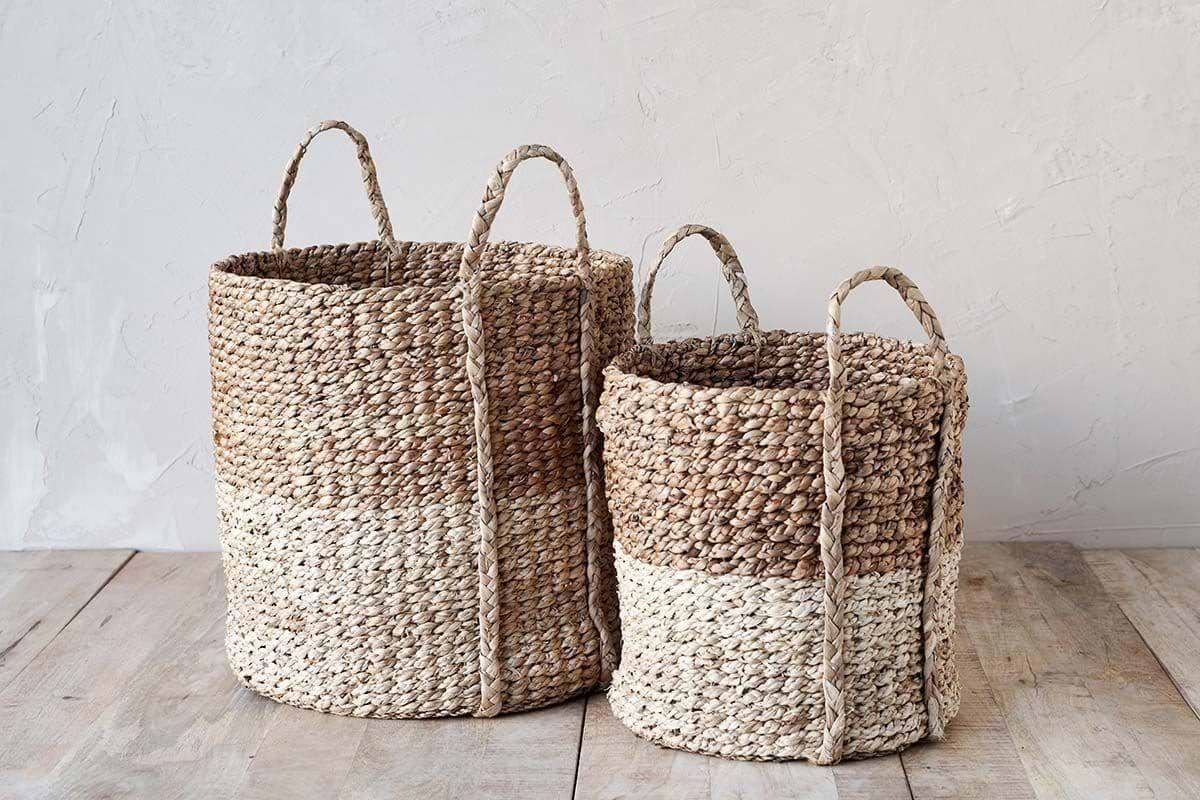
What tends to hold up with rustic shelf choices
Reviewers and decorators both note that rustic shelves keep their appeal because wood, once finished in matte or wax, hides wear and doesn’t show fingerprints. Solid woods and scaffold boards especially hold shape even on longer spans, and grain patterns set a calm mood against plain walls. Matte finishes get recommended again and again for shelves near windows, because they don’t catch glare the way a glossy tray does. Real baskets, whether jute or seagrass, outlast plastic bins and add visual lightness that’s hard to fake. Across many homes, the shelves that feel quietest are often those left partly empty, showing restraint instead of filling every inch.
, Mara, Loom & Glow
Common questions
Where can I buy affordable rustic shelves in the UK?
The most affordable rustic shelves in the UK are often found at places like B&Q, ManoMano, Timber Shelves, and Urban Reclamation. Prices for reclaimed or handmade options range from about £34 for smaller pieces to £250 for large, custom planks. Online specialist shops and local makers offer a range of finishes and lead times to suit most budgets.
What are the current trends in rustic wall shelves?
The top trend in rustic wall shelves is using reclaimed wood with chunky, visible grain and matte or lightly oiled finishes. Many UK brands highlight unique plank markings, making each shelf one-of-a-kind. Mixing shelves with soft, woven elements and keeping portions empty is also very popular for a calm, relaxed look.
How do I make my own rustic shelves?
To make your own rustic shelves, buy solid or reclaimed planks, sand lightly, then finish with clear wax or oil for protection. Use sturdy wall brackets or floating supports. Adding a basket or planting a small trailing plant gives them a finished look. Most home centers sell suitable timber and fixings.
Where can I buy affordable rustic shelves?
Affordable rustic shelves can be found at large retailers like B&Q and ManoMano, as well as specialist sites such as Timber Shelves and Urban Reclamation. Always check for reclaimed or discounted options, many brands offer seasonal deals or newsletter sign-up savings on handcrafted solid wood shelves.
what are the latest trends in wall shelves?
The latest trends in rustic wall shelves emphasise matched depth and length to your storage needs, with solid wood in matte or lightly distressed finishes rather than glossy surfaces. Popular depths are 11cm for displaying decor or 22cm for fitting books and baskets, and leaving about one-third of each shelf empty helps avoid a crowded look.
Explore more calm combinations inside our Shop The Look .
Shop the Look
Natural pieces that complement the warmth of wood and texture in rustic shelving displays.
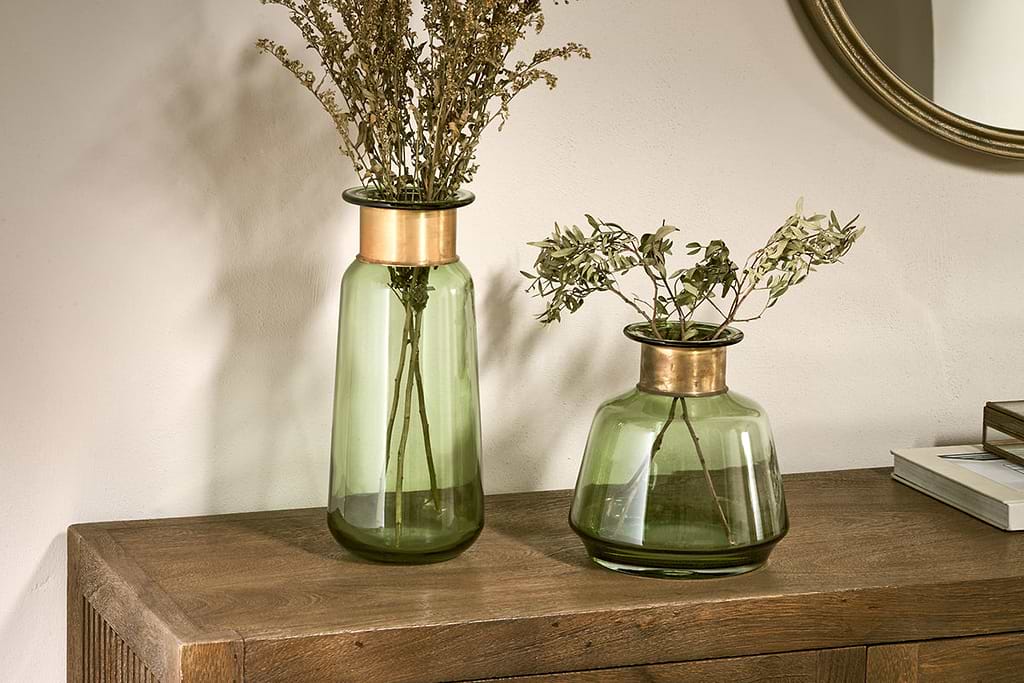
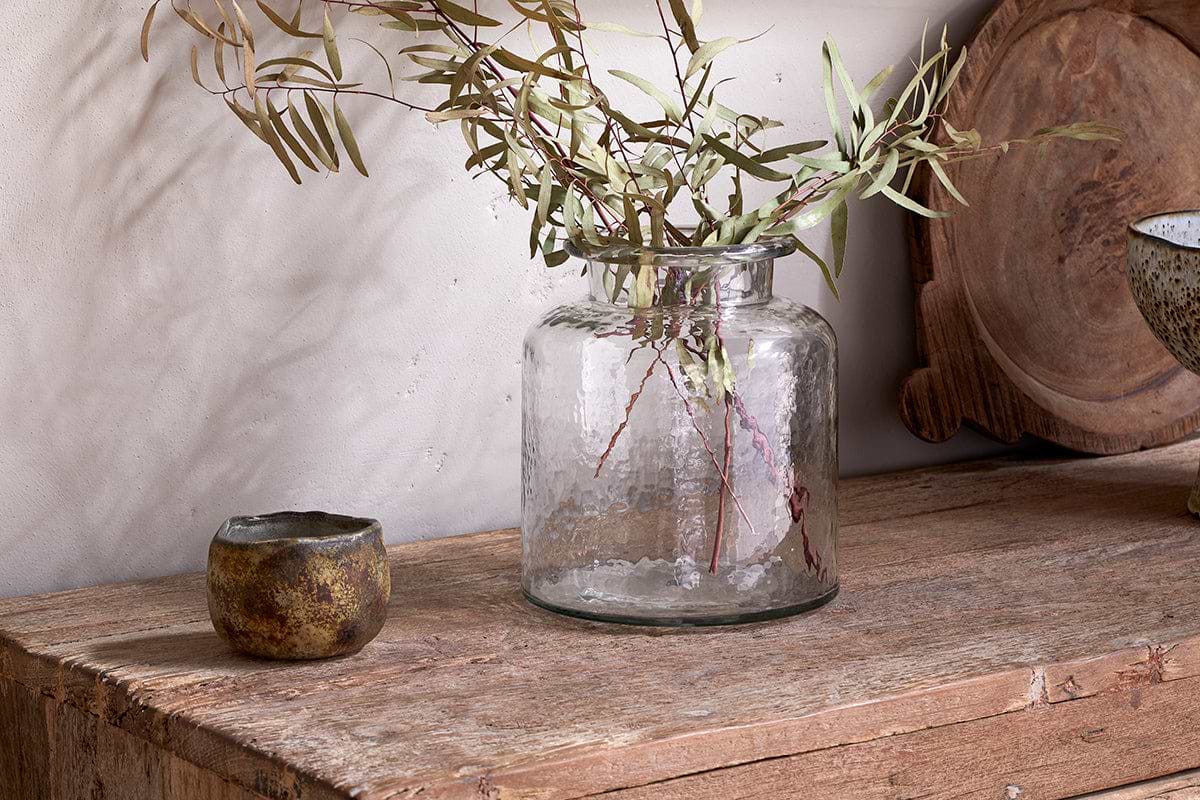
Akra Recycled Glass Vase
Clear cylindrical glass, pairs with stems or sits empty as a quiet accent.
View at Nkuku →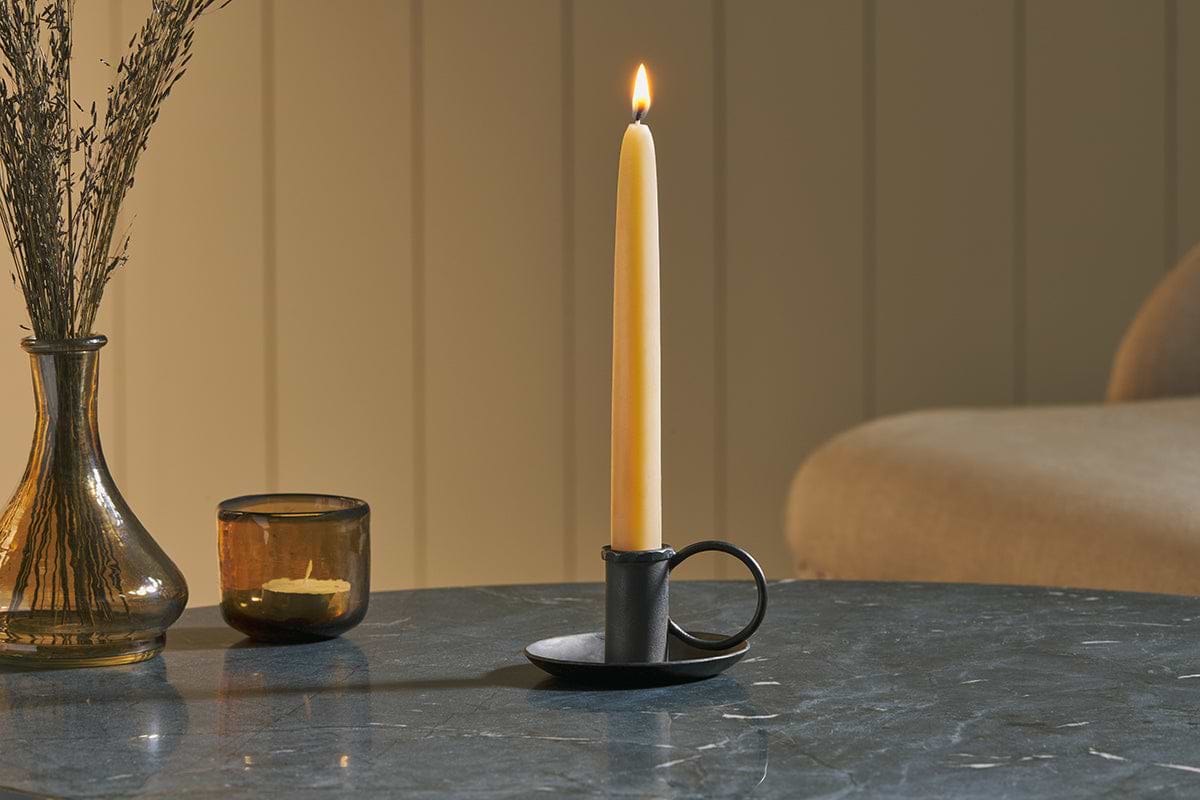
Amri Iron Candlestick
Slender iron with quiet presence, works alone or in clusters of three.
View at Nkuku →Some links above are affiliate links. If you buy through them we may earn a small commission at no extra cost to you. We only suggest pieces we think fit a calm, lived-in home.
Free guide
The Calm Leaf
12 quiet ways to bring dried botanicals, stems, and natural textures into calm spaces.