

Shared walls, strange corners, and nowhere to stack another basket, most small homes reach a point where the only way to store or display anything is up against the wall. Yet real oak shelves can feel expensive, heavy, or too permanent to suit everyday renters. Oak effect shelves appear in Pinterest boards for this reason: people want the warmth of wood, but without committing for years.
You can make a plain room feel calmer by choosing finish, placement, and proportion with intention. Instead of more storage cubes or plastic bins, today you’ll see how a simple switch to oak effect shelving can quiet busy walls, soften corners, and keep your decor flexible. This works especially well in a short hallway when rental rules limit drilling because wall-mounted oak effect shelves add surface without crowding the floor.
The short version: Oak effect shelves give you the look and warmth of real wood for less cost and less commitment, making them ideal for renters and small-space decorators. You can create lighter and more flexible storage by using oak effect in places where solid oak would feel bulky or permanent.
Key takeaways
- Oak effect shelves mimic the texture and tone of natural wood without the weight or high price of solid oak.
- Most floating oak effect shelves use invisible brackets to keep the support hidden and the wall line clean.
- A shelf works best when about two-thirds of the surface is left visibly clear for daily calmness.
- White stained oak is a practical finish that resists showing dust in busy rooms, according to IKEA’s product documentation.
- Made-to-measure oak veneer shelves are available for awkward gaps from UK suppliers.
- What problems do oak effect shelves solve in small spaces?
- Where this works best
- How do you pick the right oak effect shelf for your wall?
- Styling and placement
- Which oak effect finish is right for your look?
- Are veneer shelves durable enough for daily use?
- Where to buy affordable oak effect shelves in the UK

What problems do oak effect shelves solve in small spaces?
Oak effect shelves add much-needed storage and display without looking heavy or costing as much as real oak boards. This helps small rooms stay open and adaptable.
In a boxy flat or a new-build with plain painted walls, there are limited ways to bring in warmth or an organic look. Stacking floor shelving can eat up the little space available, making a hallway or living area feel even tighter. Oak effect shelves sit above sightlines, letting light pass through and making the room feel both taller and more finished.
Using an oak effect shelf above a sofa or desk supports baskets, photo frames, or even a few small plants. Compared to solid oak, which often needs deeper brackets and feels visually weighty, oak effect shelving looks lighter and fits rented settings where hardware changes are limited. A lighter shelf means you can update or move it with less worry.
Traditional bookcases can block sight lines and block sunlight. A floating shelf, especially in an oak effect, can hold as much as a small bookcase without crowding the corner. A bare shelf in pale wood looks unfinished and cold, but a shelf in oak effect sets a mood without being permanent or ostentatious.
Placing an oak effect shelf over a radiator or behind a dining banquette gives function without fuss. Many who live in flats with busy wallpaper or multiple door frames find that replacing a cluttered ledge or dark unit with a slim shelf in oak effect settles the room and reduces busyness.
Where this works best
Oak effect shelves work best in rentals, narrow halls, open-plan living rooms, and bedrooms where heavy storage doesn’t fit or is not allowed. These shelves offer a flexible way to use overlooked vertical space.
Rooms with limited floor space, such as entryways and small bedrooms, benefit most from wall-mounted shelves that don’t obstruct movement. In rental units, landlords rarely allow built-in cabinets, but self-supported oak effect floating shelves are usually accepted because they use fewer and smaller holes. Floating construction keeps cleaning easy and avoids the clunky look of freestanding units.
Adding an oak effect shelf above a bed or along a hallway makes space for display without adding clutter underfoot. A single shelf can reduce the sense of crowding and lets light bounce off nearby walls instead of being blocked by large furniture.
Avoid overloading these shelves with large stacks or heavy bins. Instead, keep each shelf light, no more than a few books, a plant, and one framed print. Unlike solid oak, which can support significant weight but draws attention, oak effect shelves suit smaller everyday items and keep the focus on function and calm.
How do you pick the right oak effect shelf for your wall?
The right oak effect shelf suits both your wall width and room need, and uses a finish that blends not fights your existing palette. A slightly shorter shelf often works better in tricky corners.
Choosing oak effect shelves depends on wall type, length, and what you want them to hold. For plasterboard walls common in apartments, look for shelves that use invisible mounting brackets and are rated for lighter objects. Some suppliers like made to measure oak veneer floating shelves allow you to select depth and width, which is good for narrow alcoves or above a desk.
Rooms with angled walls or blocked corners (such as between two doors) can take a thinner shelf. Most floating shelves are available at roughly the same depth as a paperback book, keeping everyday use simple and safe. Oak effect options usually weigh less than solid wood, making them easier to handle during installation or when moving out.
Practical detail: a general rule is to keep wall shelves about 80% the width of the wall section they’re on. Compared to running a shelf wall-to-wall, a slightly shorter oak effect shelf avoids feeling cramped and is easier to dust. Choosing a finish that matches floorboards or trim helps the shelf “settle” visually into the space, instead of popping out or looking tacked on.
Styling and placement
An oak effect shelf looks best when styled with natural materials and a clear visual pause, avoiding crowded or fussy displays. Use one framed photo, a small stack of books, and one plant or basket per shelf.
Begin with the surface: a shelf that is left too bare reads cold, but one packed with trinkets looks messy and weighs down the wall. Most stylists agree the rule of three works, arrange a small ceramic, a book or two, and one botanical or textured item. Balance both ends of the shelf so neither feels top-heavy or flat.
Compared to colder finishes like high-gloss white, the soft grain and tone of oak effect naturally softens everything around it, letting objects like the Kiko Brass Frame or a short basket stand out. Break up lines by staggering heights or mixing in something round (like a clay pot). Keeping the background wall light or neutral stops the shelf from looking busy.
If unsure, pull back: leave about one-third of the shelf empty. A shelf packed edge-to-edge with similar items feels like storage, not display. Unlike wall pegs or clip racks, shelves in oak effect offer a quiet, finished frame for your most-used objects.
Quick calm checklist:
- Choose only three types of materials (wood, ceramic, glass).
- Keep the palette to two main colors plus one accent.
- Allow open space between objects, at least the width of your hand.
- Anchor with one weighted object, like a vase or bowl, at one end.
- Use a contrasting background: white or pale walls soften warm oak effect.

Which oak effect finish is right for your look?
Choose from white stained, natural oak, or smoked brown finishes to match your room’s light level and style. Lighter tones blend in; darker finishes create stronger contrast and old-wood character.
Many oak effect shelves use a foil or veneer finish that mimics real grain, sometimes with a whitewashed or smoked look. IKEA’s LACK wall shelf in white stained oak effect is a budget-friendly, light option for bright rooms and gallery-style displays. It hides dust and fingerprints better than a darker finish, which is practical for households with routines that rotate objects seasonally.
Natural oak effect is warmer and suits rooms with wooden floors or beige textiles. Meanwhile, smoked brown oil and rustic oak finishes offer a darker base, echoing mid-century or country interiors. Use a smoked oak effect shelf to anchor a deeper palette, olive green, charcoal, or stone.
A natural finish looks best where sunlight hits, adding depth and a softer edge. In contrast, a pale white stain blends with North-facing walls that don’t get as much daylight. Keeping your room’s main wood tones in mind (furniture legs, floorboards, even door trims) prevents clashing. Compared to glossy or synthetic finishes, a matte oak effect shelving unit avoids glare and keeps the mood calm even with changing light.
| Finish Type | Best Room Fit | Visual Effect |
|---|---|---|
| White Stained Oak | Bright rooms, gallery walls | Light, minimal, hides dust |
| Natural Oak | Bedrooms, open-plan living | Warm, subtle wood grain |
| Smoked Brown Oil | Cosy corners, darker palettes | Rich, bold, adds weight |
| Rustic Oak | Country, vintage-inspired | Grainy, matte, textured |
Are veneer shelves durable enough for daily use?
Oak veneer shelves resist warping and scratches better than cheap laminate, provided the bracket or mounting matches the wall type. For everyday use, modern veneer stands up to typical books, decor, and baskets.
Oak effect shelves made from constructed board with an oak veneer surface hold up well if they’re mounted correctly and not overloaded. Unlike early laminates, modern oak veneers resist edge chipping and yellowing over time. According to DIY.com, most oak effect shelves are set up for light to medium weight, think books, photo frames, or potted herbs, but not heavy glass or electronics.
A shelf with invisible mounting brackets uses wall anchors behind the board. This keeps the attachment hidden and keeps weight distributed evenly. Unlike solid oak, which is rarely suitable for thin floating shelves in drywall, oak effect shelves are lighter and stress the fixings less. In general, floating shelves can hold as much weight as the supplied brackets allow, check manufacturer advice on all purchases.
Poorly mounted shelves sag and can leave ugly holes or scuffed paint when moved. Luckily, well-made oak effect shelves typically avoid bowing if kept within everyday usage. A solid rule: never load floating shelves in a rental with more than you can comfortably lift off alone.
Where to buy affordable oak effect shelves in the UK
UK buyers can find oak effect shelves at IKEA, DIY.com, Wickes, or smaller online makers who offer made-to-measure veneer options. Budget and finish vary, but all support mainstream wall types.
IKEA’s LACK white stained oak effect wall shelf is a popular standard for renters: lightweight, easy to install, and available in longer lengths for gallery and hallway walls. Its invisible mounting brackets allow for a clean install and minimal patching when moving out. This shelf fits rooms with low ceilings; its pale hue keeps spaces bright.
DIY.com stocks affordable oak effect wall shelves that work for bedrooms and utility spaces, while Wickes offers natural oak and smoked brown shelves as ready-to-hang units. Both are good for mid-budget updates, and options exist for short or long runs.
For more specific gaps or tricky alcoves, made to measure oak veneer shelves from local joiners or online suppliers (like CutMy) let you specify width and bracket placement. Some retailers, such as Timber Shelves, offer short, light, or rustic oak effect models. Unlike built-in cabinetry, these shelves let you update a wall without major change or cost.
Sometimes, the only indicator that a room is “off” comes from subtle clues: a wall that feels busy despite being bare, or shelves that sit too high or too low, throwing off balance. The moment you step back and see that the objects and textures aren’t adding up, you notice how a big upgrade often comes from subtraction, fewer pieces, synced finishes, or simply softening an edge.
The usual trap is adding more bins or baskets and expecting storage to feel calmer. The average home ends up with too many mismatched shelves or units, making quiet rooms feel full or still unfinished. This is especially true in rentals, where permanent changes are risky and floorspace is at a premium.
Correct the proportions and simplify placement, and everything starts to settle down. Life in the room feels steadier; lost keys, scattered mail, or loose cables fade into the background, finally corralled in a place that works and clears the air for daily routines.
Save this idea for later.

What tends to hold up with working with oak effect shelving
From reviewing rooms and products for shelves, one clear pattern stands out: shelves with clear gaps and materials that feel good to touch end up being moved and restyled often. Reviewers mention over and over that oak effect is easier to swap out or move than solid oak, which tends to dent walls or be too heavy for rental drywall. Matte finishes get recommended consistently for high-traffic spots because they hide fingerprints and dust much better than glossy shelves, particularly near doors and entryways. A shelf that’s proportioned to leave some space always works out better in the long run, styling never feels forced, and the wall is less likely to need patching after you move or rearrange.
, Mara, Loom & Glow
Common questions
Where can I find real oak floating shelves?
Real oak floating shelves are sold by specialist online retailers, local joiners, and larger stores like Wickes, which offers natural oak and rustic oak finishes. These shelves cost more than oak effect shelves. Look for made-to-measure options if your wall needs a specific length or depth, but expect a higher price and installation effort.
Are floating shelves out of style in 2026?
Floating shelves remain popular in 2026 for their simple lines and flexibility in small homes. They are especially common in modern and rental spaces, where full cabinetry isn’t practical. Trends move toward warmer natural finishes and mixed materials rather than plain white or high-gloss styles.
What are the trending shelf styles for modern homes?
The leading shelf styles for modern homes use oak effect, walnut, or black metal with natural accents. Rounded corners and thick, slab-style boards are common, as are invisible or recessed brackets. Neutral palettes favor matte finishes, and wall spacing avoids stacking shelves too closely together for a cleaner result.
What are some good alternatives to oak shelves?
Alternatives to oak shelves include bamboo, pine, walnut effect, powder-coated metal, and rattan wall shelving. Each material gives a distinct look: bamboo and rattan add warmth, while powder-coated metal fits utility or minimalist rooms. Choose based on your need for durability, color, and whether you want a wood grain look.
Explore more calm combinations inside our Shop The Look .
Shop the Look
A few Nkuku pieces to anchor warm oak shelving in small rooms.
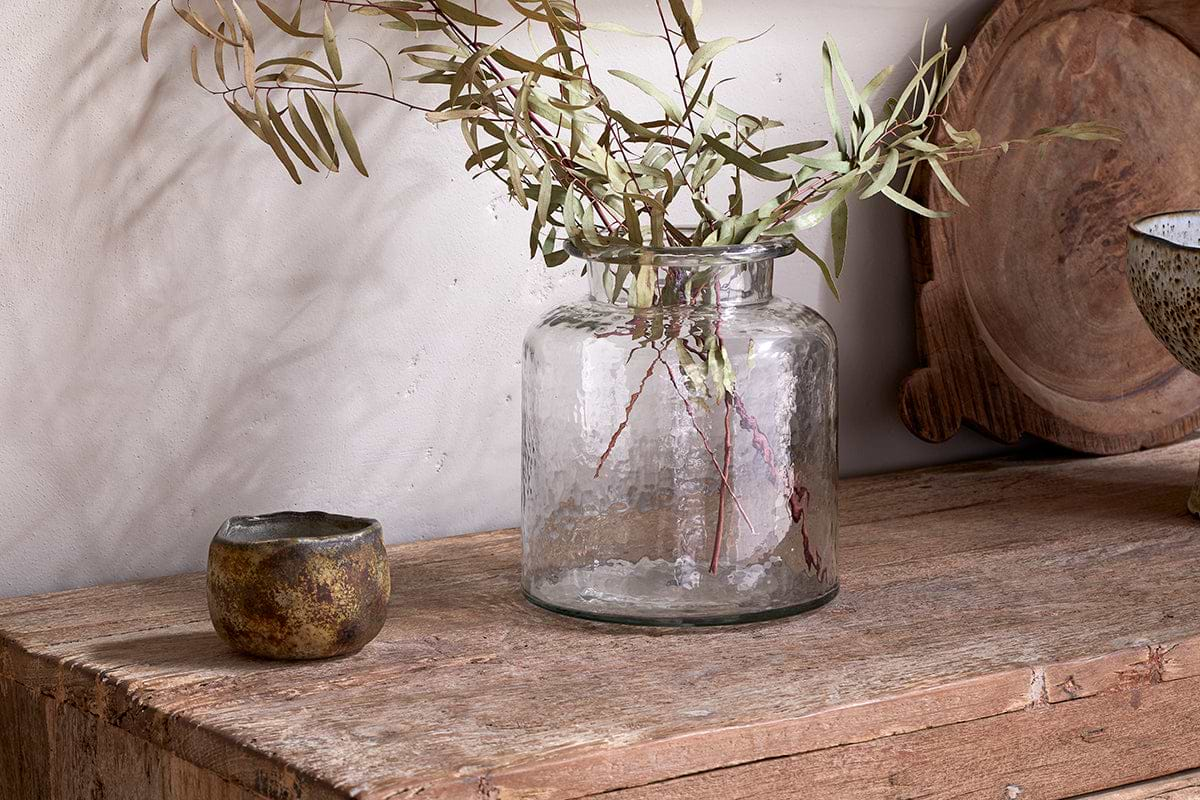
Akra Recycled Glass Vase
Clear cylindrical glass, pairs with stems or sits empty as a quiet accent.
View at Nkuku →Some links above are affiliate links. If you buy through them we may earn a small commission at no extra cost to you. We only suggest pieces we think fit a calm, lived-in home.
Free guide
The Calm Shelf
12 styling ideas to help you compose calm, balanced shelves in natural texture homes.