

It’s easy for a small mirror on a crowded shelf or console to make a room feel busier, especially when space is already tight. Many UK homes face awkward layouts, low light, or limited wall space, so even a simple mirror can throw off the calm feel if it looks like an afterthought.
A clear approach makes shelf styling less of a gamble. You’ll find which mirrors suit real rooms, what to skip, and subtle ways to set them so they brighten the mood instead of distracting. This works especially well in small living rooms with low natural light when the rest of the palette is quiet because it gently spreads light without pulling too much focus.
The short version: A small mirror placed on a shelf or console works best when it is sized to the objects around it and paired with quiet textures. Setting a single mirror to bounce light, instead of doubling up, keeps a calm mood and stops shelves from feeling cluttered.
Key takeaways
- A small mirror grouped with matte textures softens clutter without competing for attention.
- Round mirrors help break up shelves filled with straight lines and hard objects.
- Avoid placing a small mirror across from busy or messy spots, as this multiplies visual noise in small homes.
- Tabletop and freestanding mirrors suit rental homes where wall mounting isn’t preferred.
- Small decorative mirrors are mostly sold under £11, £11–£25, and over £25, according to eBay UK.
- Where this works best
- How can a small mirror do more than a big one?
- Which small mirror shape changes the mood?
- Styling and placement
- How to use a small mirror for better light in low rooms
- Wall mount, freestanding, or tabletop: what’s right for a rental?
- How to avoid small mirror mistakes that make a space feel busy

Where this works best
A small mirror softens a hallway, shelf, or tight console area where bigger mirrors would overwhelm the space. The effect is quiet, and the shelf still feels light.
Shelves by the entryway, short walls in a compact living room, or a console tucked in a narrow hallway are real contenders. These spots can feel boxy or shaded, making bigger mirrors seem out of place. A small mirror steps in without adding bulk or harsh glare.
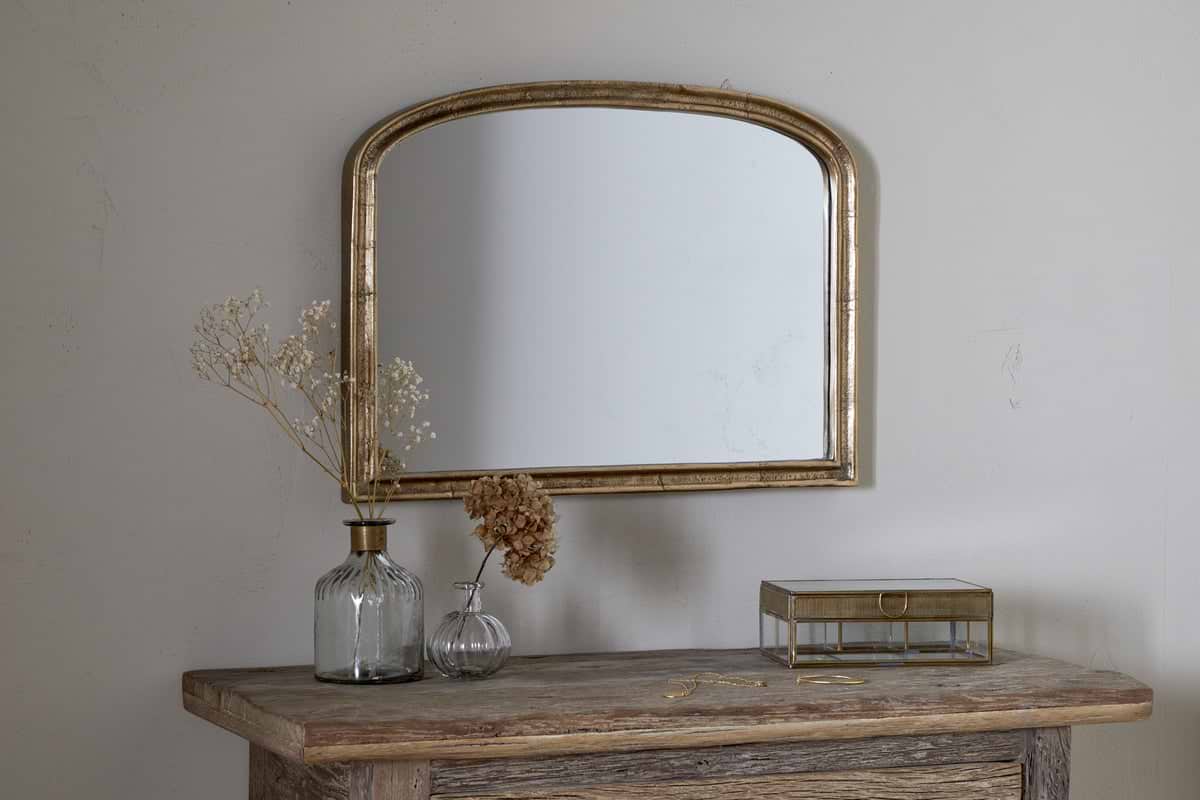
The daily win here is gentle—spreading daylight, breaking up the solids, and giving the eye a resting point. With bare plaster or wooden shelves, a brass or simple black-framed mirror fits in without clashing with textures already present.
Avoid putting a small mirror on a shelf stacked heavy with books or crowded with vases. Unlike a simple surface with low stacks or a bowl and a lamp, too much around the mirror reads as visual noise, and the reflective surface multiplies clutter.
Set a small mirror on a stone or wood shelf near the front door, where light is limited but you want to check your face fast before leaving.
How can a small mirror do more than a big one?
A small mirror shifts the feel of a room by catching light in dark corners without reflecting too much of the room back. This keeps a focused calm instead of amplifying distractions.
In a flat with open shelves and quiet tones, a large mirror can overstretch, pulling in too many images. Instead, a small mirror lets one corner feel brighter, but doesn’t double the visuals. That helps when you want calm, not chaos, in a shared space.
Reducing the reflective area is a subtle rule of thumb: one mirror, sized down, keeps a shelf from looking like a shop display. Unlike wall-scale pieces that draw every detail into view, a small mirror brings just enough light to make shoes or mail on a console feel less heavy.
A living room with light woven baskets and green plants softens even more with a single well-placed round mirror, where a bigger or cheaper piece would flatten out the look.
Place a small decorative mirror at the end of a low bookcase or on a cabinet beneath a window so it gives back just a gentle catch of daylight.
Which small mirror shape changes the mood?
Round small mirrors break up hard lines and make shelves look softer, while rectangular or arched mirrors set a quieter, more grounded tone.
For a shelf lined with books or ceramics, a round mirror is the fast way to calm it down. Rounded edges stop corners from looking sharp and help soften busier items. Circle mirrors with brushed brass or black edges avoid the stark glare of chrome or high-shine metal.
If the goal is structure, an arched or rectangular small mirror works well. Instead of competing with frames and edges on other objects, the mirror sits back, giving visual order without stiffness. Decorative mirrors in these shapes often echo doorways or shelving for a relaxed fit.
Unlike intricate shapes, which can look fussy, simple forms stay out of the spotlight. Buying guides for small mirrors treat matching the silhouette to the room’s lines as a basic first step.
Slot a round accent mirror between a clay bowl and a small plant on your shelf for an easy, relaxed grouping that doesn’t shout.
Styling and placement
A small mirror looks right on a shelf when placed low and layered between matte pieces, at an angle to catch soft light. Fewer, larger objects work better than crowding small things around it.
On a wooden or plaster shelf, set the mirror so the frame sits just in front of a stack of books or leaning against the wall beside a lamp. The key is always to let some empty space show, so the mirror feels like a gentle accent and not the star.
Matte textures—think linen, ceramic, woven seagrass—stop the shelf from feeling too cold or sharp with glass and metal alone. Compared to chrome or mirrored trays, these surfaces absorb light and keep the reflection in check. If you use a mirror with a shiny frame, make sure other shelf pieces are more textural or subdued.
Focal balance: a shelf looks calmer if a small mirror sits near the end instead of center stage. Unlike a centered arrangement, which pulls the eye hard, offsetting the mirror lets other objects feel anchored and keeps the look less stiff.
Quick calm checklist:
- Pick a frame in brass, black, or wood instead of chrome for softer light.
- Keep space to the left or right of the mirror clear—never stack too close.
- Limit shelf palette to three or fewer textures for a settled look.
- Use matte objects (clay bowl, woven tray, linen box) around glass.
- Lean the mirror at a gentle angle, not flat to the wall or shelf edge.
Try a Kiko Brass Frame mirror set toward the edge of a shelf above shoes in the entryway, with a woven tray opposite to catch keys or post.

How to use a small mirror for better light in low rooms
Placing a small mirror across from a window or lamp brings light into shaded spots without oversaturating the room, helping it feel fresher and less cramped.
A low-ground flat or back-of-house room often feels dim, and overhead lights cast short shadows. Setting a small mirror in line with a window or facing a soft lamp spreads light sideways, not straight back, so the eye sees more even brightness. Many IKEA’s small mirror designs start small enough for a windowsill or narrow shelf.
Glass near the wall or shelf edge reflects and multiplies sunlight into corners where plants and books usually look dull. Unlike large mirrors, these smaller ones skip harsh glare and keep even dark spots feeling open.
For actual bounce, a round or oval mirror works best, giving the light a twist instead of a straight return. If there’s a linen curtain or a jute basket close by, even the small mirrored surface feels lighter and less harsh.
Set a small tabletop or wall mirror on a shelf opposite a window, just far enough back it doesn’t reflect mess or cords, so the light looks clean.
Wall mount, freestanding, or tabletop: what’s right for a rental?
Freestanding and tabletop small mirrors suit rentals best, since they stay mobile and avoid drilling holes, while wall-mounted options offer a more fixed, finished look in owned homes.
Rental homes need low-commitment solutions. Freestanding or tabletop mirrors are easy to move or swap, leaving no holes to repair. They sit directly on top of a shelf, console, or mantel and can follow you from room to room, which matters in flexible, shared spaces.
Wall-mounted mirrors make sense for owners or long-term tenants willing to patch small holes later. They create a more permanent mood but can leave marks behind. Lighter mirrors with rear brackets or hooks work on even thin shelf walls or above consoles, and many are grouped as accent mirrors by sellers.
Some rooms do best with a simple leaner style: a small mirror resting against the wall—no hanging required. Unlike permanent installations, leaning mirrors avoid commitment and can shift if the room is rearranged.
| Type | Placement Ease | Rental Suitability |
|---|---|---|
| Freestanding | Sits on shelf—move any time | Best for rentals |
| Tabletop | No screws needed | Ideal for flexible homes |
| Wall-mounted | Requires drilling/hardware | Only for owned/long-term spaces |
Set a small freestanding mirror on your bedroom shelf, or keep a lightweight tabletop mirror near the sofa for quick changes as seasons or furniture layouts shift.
How to avoid small mirror mistakes that make a space feel busy
Too many mirrors on one shelf, or a mirror reflecting clutter, both make a small room seem noisier and less calm. The trick is restraint and placement.
A shelf with several mirrors—a trend on social media—often ends up looking like a store display instead of a home. Retailer guidance suggests grouping small mirrors only when you leave lots of breathing space and stick to one finish. Mixing frames or crowding different sizes together quickly distracts the eye.
Putting a small mirror where it bounces back a tangle of wires, a stack of letters, or even a doorway to a laundry room only amplifies what you don’t want to notice. Compared to a quiet, staged corner, the wrong placement doubles messiness and makes a space feel tighter.
One rule of thumb: a small mirror works best when it reflects open space, a soft curtain, or a simple shelf line. Unlike big mirrors, which can cope with a busier opposite wall, smaller ones use up their whole reflective budget on what’s directly in front of them.
Lean a small mirror where the only reflection you see is a plant, a section of wall, or diffused daylight. Avoid surfaces with chargers, cables, or scattered keys.
There’s usually a moment before you add or move a mirror when a room stops feeling restful. Something about the shelf starts to look scattered or awkward. This is where most rooms end up by default—stuffed or flat, never quite calm.
The fix is to choose one focal point. One well-placed small mirror, sized to the shelf and styled with gentler textures, breaks the tension. The shelf feels lighter, and daylight spreads further.
Many homes line up objects without a pause, filling every gap. Often the mirror gets lost, or else it turns the display busy. A shelf that’s simple, with space to spare, gains from one carefully chosen mirror. The benefit is more room for the eye to rest, and a shelf that never pulls too hard on your attention.
Save this idea for later.

What tends to hold up with small mirror styling
Reviewing many homes and product launches, certain patterns come up again and again with small mirrors. Matte-finish frames, especially in brass or natural wood, get recommended over shinier options for shelves near sunlight, since they avoid glare and let the glass itself do the work. Flat black frames almost always look grounded next to pale walls or unvarnished wood. Another safe move, reader questions keep circling back to: less is more—one mirror, one shelf, no stacking. When a room feels tense, the fix usually comes from removing a second or third reflective object, not layering more in.
— Mara, Loom & Glow
Common questions
What is a small mirror actually called?
A small mirror is often called a “decorative mirror,” “accent mirror,” or simply a “small wall mirror” by retailers. Some stores also group them as “tabletop” or “freestanding mirrors” depending on their mounting style. Category labels vary, but these terms are accepted across UK shops and guides.
Where should you never put a mirror?
Never put a mirror directly facing clutter, a bathroom toilet, or busy kitchen worktops in a small room. Reflected mess doubles the sense of chaos. Most designers also skip mirrors reflecting sharp hallway corners or low ceilings to avoid a room feeling compressed or anxious.
Where can you buy a small compact mirror?
You can buy a small compact mirror at high street shops, homeware chains, or through online retailers like eBay UK. Many brands group small mirrors under table, wall, or accent sections for easy browsing. Check return policies and style filters for sizing details.
What mirror styles are on trend right now?
Trending small mirror styles include round shapes with matte brass or black frames, arches for a softer edge, and minimalist rectangles. Natural wood and matte, non-shiny metals are popular for calm shelf styling. Retailers also note a rise in frameless and lightly etched glass for smaller accent mirrors.
Explore more calm combinations inside our Shop The Look .
Shop the Look
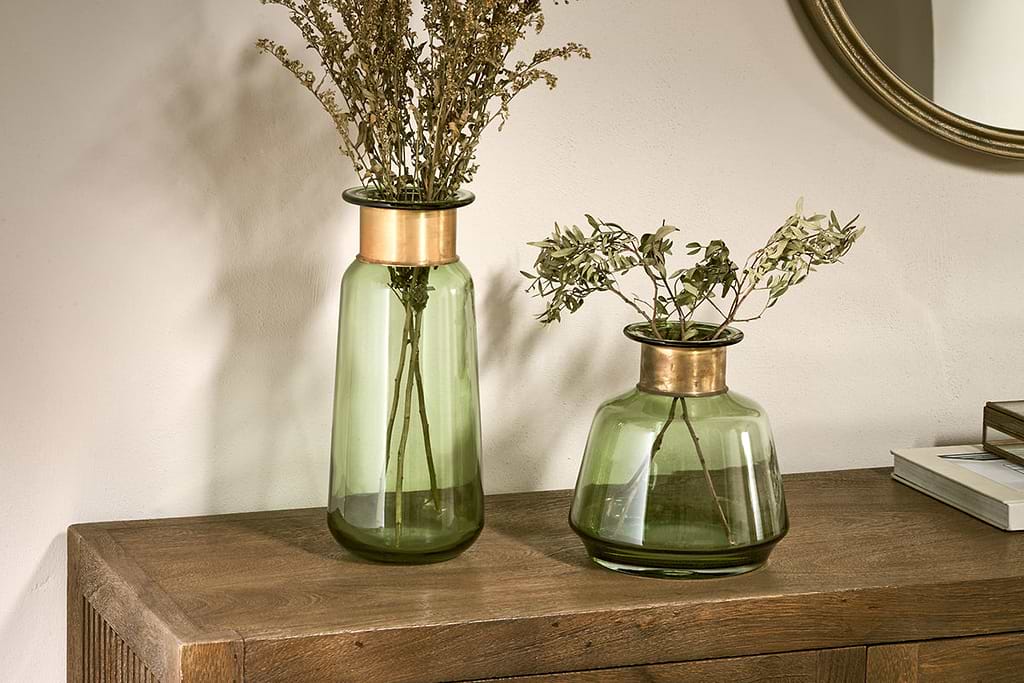
A small brass mirror and soft glass vase work together to lift light on a narrow shelf.
Some links above are affiliate links. If you buy through them we may earn a small commission at no extra cost to you. We only suggest pieces we think fit a calm, lived-in home.
Free guide
The Calm Shelf
12 styling ideas to help you compose calm, balanced shelves in natural texture homes.