

Bedrooms often need more storage, but adding another cabinet or dresser quickly makes things feel tight. Bedroom floating shelves ideas sound smart for saving space, but shelves crammed with books or perched above the headboard can throw off the calm of the whole room if done carelessly.
Today, you’ll see clear ways to add vertical storage without clutter or fuss. You’ll learn how to pare back what sits on the shelf, why a single anchored object feels steadier, and how shelf depth and finish change the look right away. This works especially well in a small bedroom with limited floor space when you need storage but want the walls to read calm because a floating shelf blends in instead of standing out.
The short version: Calm bedroom floating shelves ideas focus on slim shelf depth, light materials, and fewer, heavier objects to avoid a cluttered look. Limiting shelf count and styling gently lets small rooms breathe and keeps the wall steady, even when storage is tight.
Key takeaways
- A floating shelf works best when its length stays within the width of the bed or main furniture below.
- Mount bedroom floating shelves high enough to avoid bumping them while sitting up in bed.
- Using only one substantial item per shelf prevents a crowded, restless feeling.
- Light wood, matte finishes, and open wall space help shelves recede in a small bedroom.
- According to Shelf Expression, most bed-width shelves range from thirty-six to forty-eight inches wide.

Where this works best
Bedroom floating shelves work best in small rooms where floor space is limited, and you want to keep the area open and airy. A single wooden shelf adds useful storage without the heaviness of a closed cabinet.
For a narrow bedroom, trying to squeeze in a nightstand often makes movement cramped. In this scenario, floating a shelf beside or above the bed lets you keep nightly essentials close by, without blocking walkways or doors. In a rental, shelves mean less commitment than drilling for cabinets, so you don’t risk your deposit or over-customise a temporary space.
Many households put floating shelves above dressers or radiators where the footprint is tight. A slim shelf for a clay vase or a few folded scarves frees drawers for what can’t be seen. This works where heavy furniture would block light from the window or create an awkward wall gap that’s too shallow for a sideboard.
Avoid floating shelves in high-traffic doorways or behind doors that swing wide, where even a slim shelf risks knocks and lost wall space. Shelves that are too deep for the room will force you to sidestep or tiptoe around, this breaks the sense of ease and is especially common in kids’ rooms or guest bedrooms short on square footage.
The best fit is a solid shelf positioned along a wall that stays clear of movement paths, set within reach but not in the way. Pick the most needed wall, beside a bed, above a radiator, or opposite the wardrobe, rather than covering blank space for its own sake.
How high should a floating shelf go above the bed?
The ideal shelf height above a bed is at least eight inches above the top of the headboard, high enough to avoid bumps and low enough to reach easily. Keep shelf depth slim for comfort.
Mounting a floating shelf above the bed is tempting for display, but misplacing height or depth can make the wall feel top-heavy. According to Shelf Expression, shelves in the thirty-six to forty-eight inch range suit most queen or double beds, long enough to feel anchored by the headboard, but not overhanging the mattress sides.
Many threaded wall anchors will hold a floating shelf securely, but the real comfort comes from a depth of eight inches or less. This lets you rest objects while making sure nothing hangs directly over your pillow. Unlike a bulky wall cubby, a thin floating plank holds what you need, a framed print, a small clock, a pot plant, without the stress of worrying something might fall during the night.
Setting the bottom of the shelf around eight to ten inches above the highest point of the headboard is a time-tested rule. This avoids bumping when you sit up with a book and leaves enough reach to dust the shelf or adjust a photo when needed. If you stack two shelves, keep at least ten inches between them so both feel open, not packed together. A shelf over the bed should be a soft accent, not a storage tower competing with your rest.
Stop shelves from feeling oversized by keeping their length within the bed’s width instead of stretching them wall to wall. This causes the eye to settle on the arrangement instead of skimming over a row of floating planks. The difference is clear, headboard-length shelves add comfort, while bed-to-wall shelves can turn jumpy or off-balance.
What makes a floating shelf feel secure as a nightstand?
A floating shelf feels like a proper nightstand when mounted at mattress height and built of a single, solid wood plank. Simple metal or wood brackets add extra steadiness.
Bedrooms short on floor area often skip traditional tables and opt for wall shelves instead. Replacing a bedside table with a floating shelf lets you keep a light, glass of water, or a paperback close, without eating up much space. Setting the shelf at the same height as the mattress or slightly above is important, this keeps it within easy reach when lying down, much like a regular nightstand.
For a shelf mounted at nightstand height, about twenty-four to twenty-six inches from the floor, most adults find it keeps nighttime objects handy without bending or stretching. Unlike a closed box on the floor, an open plank encourages only the essentials, a linen handkerchief, a stoneware mug, maybe a phone charger, to live on top. Clutter drops away.
You can trust the shelf more when it’s screwed into studs or good wall anchors, but the most visible difference comes from weight and bracket style. A heavier wood shelf actually feels steadier and less “wobbly” than a thin, lightweight board, your hand rests more surely on it, and it matches the scale of other furniture. Compared to floating glass or plastic ledges, a simple natural wood shelf pairs warmth and calm with no fuss.
Placing the nightstand shelf within arm’s reach from the mattress transforms how the room feels at bedtime, no banging knees, no awkward storage cubes catching dust, just a simple surface that works every night. In a small guest room or a shared kids’ room, this frees up precious floor area without sacrificing comfort.
How do you keep reading nook shelves from turning messy?
Reading nook shelves stay tidy when each shelf holds just a few stacked books with one heavier object as a bookend. Let some shelf surface show for a relaxed look.
Tucked beside a window or at the end of a narrow bedroom, a reading nook often starts with a floating shelf for favorite books or a small lamp. But the shelf can turn busy fast if every surface is lined up with paperback spines or mismatched ornaments. In a calm bedroom, keeping even a third of the shelf empty makes a big difference, negative space rests the eyes and keeps dusting simple.
A simple arrangement might mean placing a stack of two or three novels at one end, with a clay bowl or stone bookend against them. The rest of the shelf remains bare, letting the wood or painted surface work as a visual pause. Unlike a stiff, color-blocked arrangement, this feels relaxed and still leaves room if you want to swap out a book next week.
If you try to fit more than four or five objects on a short shelf, the look starts to get jumpy. Instead, let the shelf act like a ledge at an art gallery, one bigger piece, one stack, maybe a single plant pot. Compared to lining up all books upright, laying a few flat or front-facing softens the row and won’t crowd in a tighter corner. A reading nook works better when everything on the shelf feels like it could be picked up and used, no museum rows or busy gallery walls needed.

Styling and placement
Styling a floating shelf works best when you use one anchor item and keep most of the shelf clear. Placement matters more than filling every inch.
A bedroom shelf isn’t a mantle or display case. Loading small objects, frames, and trinkets side by side leaves the room unsettled. Instead, put one object with some weight, like a ceramic lamp or a woven basket, at one end, and let the rest breathe. Even a pile of folded pillowcases or a linen-wrapped frame can anchor the look.
The shelf placement should echo furniture lines nearby. Mount it level with the bed or just above a low chair; don’t float it randomly on a tall open wall. This keeps the shelf “grounded” to something else in the room and avoids the floating shelf from feeling like a lost plank. Unlike mounting a shelf high near the ceiling, which leaves it looking forgotten, placing shelves at eye or hand level makes them feel usable.
For visual calm, stick with one or two colors on the shelf. Match wood or painted finish to the wall or the headboard. Mixing too many materials reads busy, while repeating a texture lets the shelf blend in.
Quick calm checklist:
- Pick sturdy materials, solid wood or painted MDF over light plastic.
- Keep spacing open, leave at least half of each shelf clear.
- Limit palette, repeat wall or bedding color for shelf or objects.
- Balance with one anchor object, never more than three per shelf.
- Let wall space show, don’t mount shelves edge-to-edge or in tight stacks.
A floating shelf that’s balanced and spare makes styling simple and daily life easier. Place it close enough to grab what you use, clock, glass, a favorite book, without needing to rearrange things every morning.
For more inspiration on creating a calm, simple look, read neutral shelf styling for rooms that feel quiet and welcoming.
Picking wood tones and brackets for a soft palette
Bedroom shelves blend best when the wood tone matches the main furniture or the wall color, and bracket style stays simple and low-contrast. Pale finishes feel lighter in smaller spaces.
Choosing finishes for bedroom shelves goes further than picking the “right” wood. A pale ash or birch shelf almost melts into a white or cream wall, keeping the whole look restful. Dark walnut reads more solid and can add weight if the rest of the room feels very light. Matching the shelf stain or paint to your bed frame or picture rails makes the shelf sit “naturally”, you don’t see the shelf first, you see the room as a whole.
Most floating shelves hide their brackets inside, but if you’re mounting with metal or wood supports, go for the color that matches the shelf or the wall behind. Brushed black or solid wood brackets work well in modern rooms, while white-painted metal almost disappears on a white wall. A shelf that matches its supports feels steadier and doesn’t pull the eye away from what’s on top.
Unlike industrial black metal brackets that suit kitchens or open shelving, bedroom shelves like brackets that are soft in shape, with no harsh angles. Painted hardware or rounded wood shapes stay calm, especially when mixed with a linen wall cover or smooth painted plaster. Picking one finish for all brackets in a room also keeps the mood consistent, so no shelf looks like it’s leftover from another house.
| Wood Tone | Best Pairing | Room Feel |
|---|---|---|
| Light oak or birch | White or pastel walls | Airy, clean, blends in |
| Walnut or chestnut | Rich bedding, clay accents | Grounded, warm, anchors room |
| Pale painted MDF | Minimal decor, soft lighting | Subtle, modern, low-profile |
Choosing bracket shape and finish is what keeps shelves feeling tied to the bedroom, not borrowed from the office or workshop. A floating shelf in a matched tone brings order to the wall without shouting for attention.
For more ideas on calm storage and styling, visit calm bedroom ideas for practical examples.
Should you add lighting to a bedroom shelf?
Shelf lighting works best when soft and hidden, like a slim LED strip under the shelf, so the effect glows without spotlighting the wall. Avoid bright overhead lighting on shelves.
Lighting a shelf can go wrong fast if it turns the display into a stage. Good bedroom shelf lighting is subtle, warm white LED tape under the shelf, or a single small lamp on top, creates enough glow to read by without flooding the wall with light. This step brings use to the shelf after dark, but the key is gentle, indirect lighting that doesn’t cast harsh shadows across the bed.
Many shelving kits offer built-in LED strips you can stick underneath. Aim for warm tones, never cold white or blue, which start to look like shop counters or kitchen cabinets. The result isn’t just aesthetic: a gentle under-shelf light doubles as a nightlight for reading or getting up late, without waking up anyone else in the room. Direct spotlights, on the other hand, throw heavy shadows and make the shelf stand out too sharply for a calm bedroom.
Using light only where it’s needed, on the shelf, not the whole wall, keeps things functional and relaxed. Lighting from behind or beneath the shelf reduces glare and lets textured objects like baskets or clay pots cast soft shadows, adding comfort. Mounted right, the shelf looks usable day and night, not like a display stand in a shop window.
For more ideas on what to show or hide, see decorating floating shelves for inspiration that works beyond bedrooms.
There comes a moment, often after a shelf goes up, when the wall still feels off, too many objects, mismatched heights, or a shelf that seems to float in isolation. The sense of calm gets lost in the noise, and you notice you’re less drawn to sit in the room. The shift that changes this most is choosing one anchor point, one shelf, one grouping, one repeated texture, so the eye lands softly and the space breathes again.
Most people try to solve storage by adding more shelves or filling up every bit of empty space. This makes the room heavier, not calmer. When things look busy, shelves can draw too much attention, making bedrooms feel unsettled instead of inviting. Choosing less, one well-spaced shelf, one set of matching accents, lets your favorite things stand out and helps the room work better in daily use.
Once the right shelf is in place, surfaces clear, and things find their spot, the whole room is easier to live in.
Save this idea for later.
What tends to hold up with bedroom floating shelves ideas
The routines that work longest with bedroom floating shelves are always spare and solid. Reviewers nearly always mention that heavier, matte shelves feel steadier and fade into the wall better than glossy or plastic choices. Most decorators still recommend hiding brackets when possible, matte shelves with covered supports avoid extra lines that busy up the wall. Empty space is not wasted; it’s what makes styled shelves calming, not sterile, even in homes with a lively mix of books or family photos.
Light palettes hold attention for months or years, and a single anchor object carries more visual weight than five tiny pieces grouped end to end. The best advice that comes up time after time? Fewer, sturdier, softer, because calm always holds up longer than “maximal” arrangements.
, Mara, Loom & Glow
Common questions
What to put on floating shelves in a bedroom?
The best things to put on floating shelves in a bedroom are one substantial item like a basket, lamp, or framed art, plus a few essentials you use daily. Plants, books stacked flat, and small bowls also work, so long as open space is left. Too many small objects make shelves look cluttered, not restful.
Are floating shelves a good bedroom option?
Floating shelves are often a good option for bedrooms with limited floor space or where traditional nightstands feel bulky. They provide a light, open way to keep things at hand without crowding the room. Sturdy mounting is important for safety and peace of mind.
Are floating shelves out of style in 2026?
Floating shelves are not out of style in 2026. Simple, practical storage keeps its place especially in bedrooms with tighter spaces or minimalist design. Natural textures and slim, understated shapes keep them current for many years, as long as styling remains understated and shelves aren’t overfilled.
Where should floating shelves be placed in a bedroom?
The best places to put floating shelves in a bedroom are above the bed, beside it as a nightstand, over a radiator, or in a reading nook. Put shelves where they can be used without blocking walking paths or being in the way when sitting up. Always check for studs to ensure shelves stay secure.
are floating shelves out of style in 2025?
Floating shelves remain a practical storage solution for bedrooms in 2025, particularly in small rooms where floor space is limited, provided they are styled with restraint. The key to keeping them current is using slim shelf depth, light materials, and fewer, heavier objects to avoid a cluttered look; a single substantial item per shelf prevents a crowded, restless feeling. Shelves in the thirty-six to forty-eight inch range work best, mounted at least eight inches above the headboard, allowing them to blend in and help small rooms breathe rather than standing out as dated.
what is the rule for floating shelves on a wall?
The main rule for bedroom floating shelves is to mount them high enough to avoid bumping when sitting up in bed, ideally at least eight inches above the headboard, and keep depth to eight inches or less; shelf length should stay within the width of the bed below, typically thirty-six to forty-eight inches wide.
Explore more calm combinations inside our Shop The Look .
Shop the Look
Soft glass vases anchor a floating shelf with quiet presence and gentle colour.
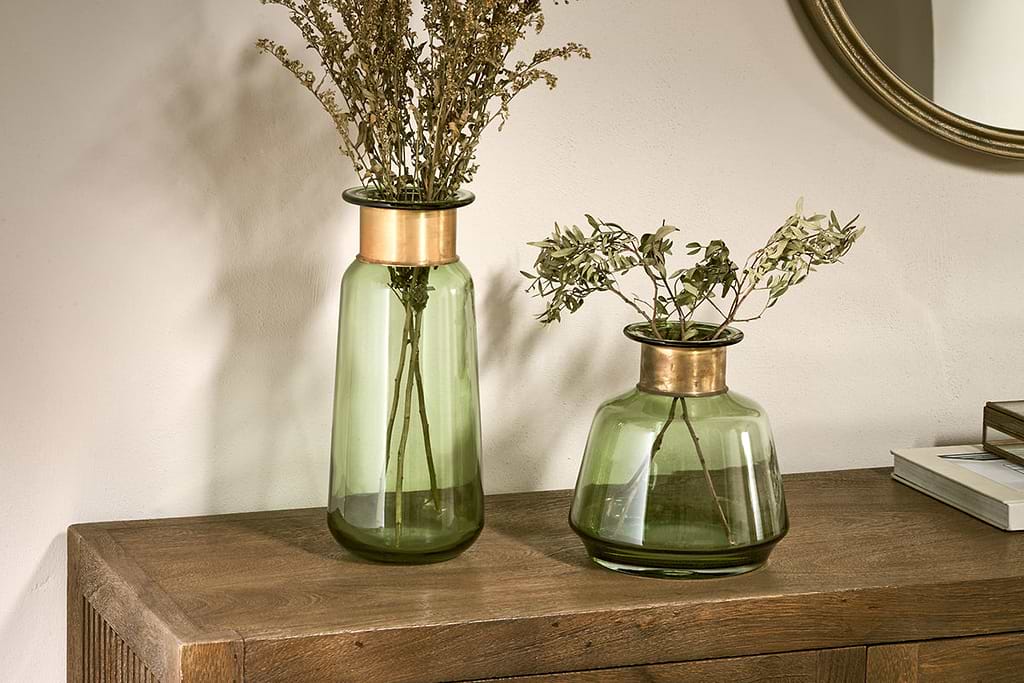
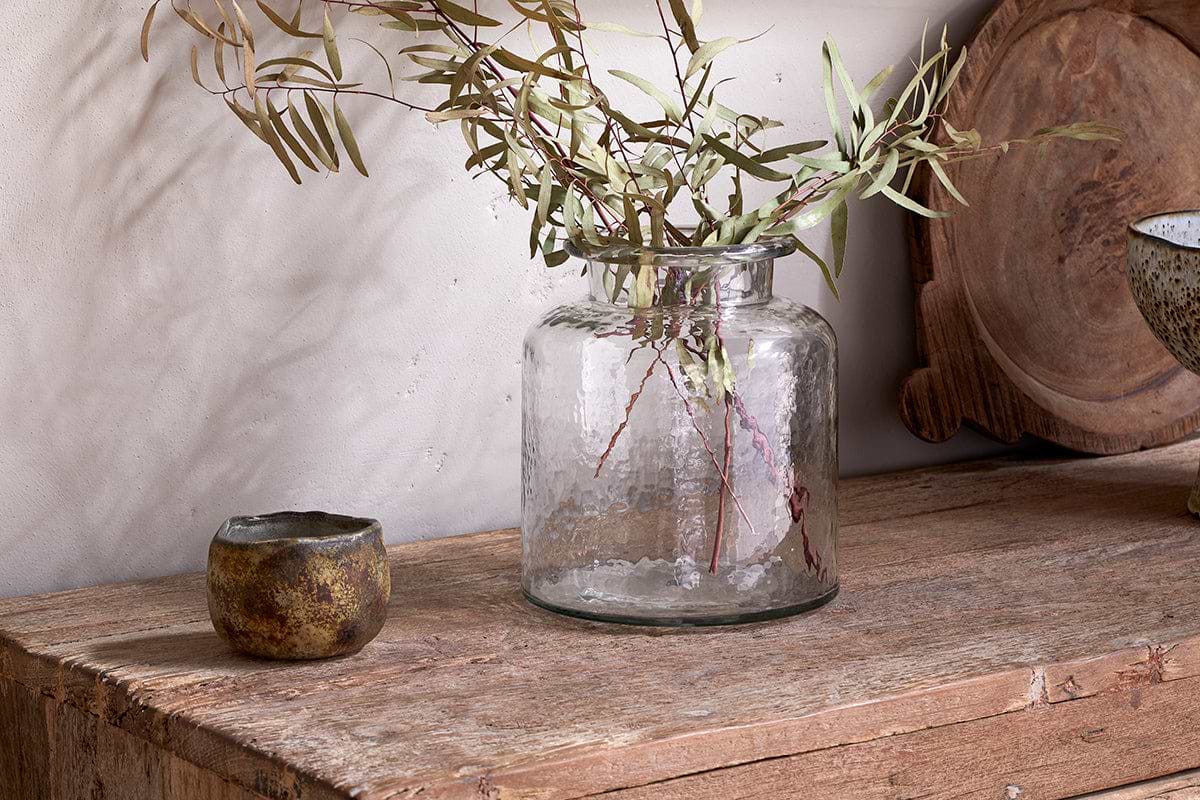
Akra Recycled Glass Vase
Clear cylindrical glass, pairs with stems or sits empty as a quiet accent.
View at Nkuku →Some links above are affiliate links. If you buy through them we may earn a small commission at no extra cost to you. We only suggest pieces we think fit a calm, lived-in home.
Free guide
The Calm Shelf
12 styling ideas to help you compose calm, balanced shelves in natural texture homes.